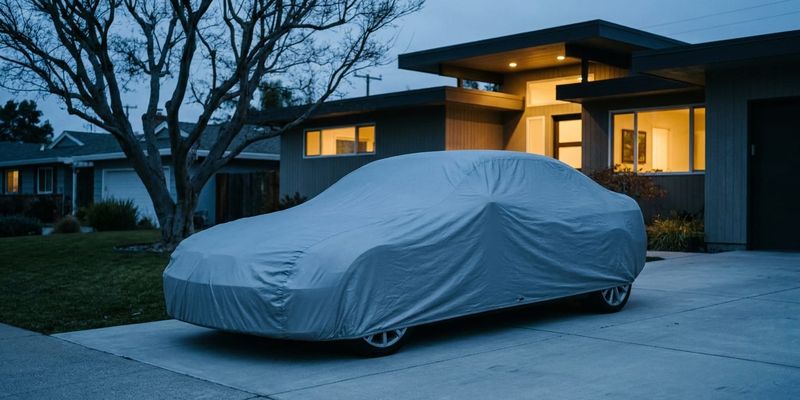
A loose cover is almost worse than no cover at all. It flaps around in wind, lets water pool in the folds, and over time that movement sands fine scratches into your paint. That's the whole point of running a cover in the first place, and a bad fit undoes it.
This is the problem most people run into when they search a car cover size chart for Honda Passport and expect one clean table with their exact measurements on it. It's not that simple, and here's why. The Passport has gone through a real model change: the current generation launched in 2019, but Honda sold vehicles under the Passport name in earlier years too, with different body dimensions. A chart built around "Honda Passport" without a specific year attached can steer you wrong.
So let's be upfront about what this article is and isn't. It won't hand you a single table of exact inches for your Passport. What it will do is explain how sizing charts actually work, what you need to measure yourself, and where to go to confirm fit before you check out, namely the size guide and the Coverfinder tool.
Why Getting Passport Sizing Right Matters
A cover that's too big billows in the wind. That movement does two things: it lets moisture get trapped against the paint instead of running off, and it creates friction points where the fabric rubs against the body every time a gust hits. Neither is good for a finish you're trying to protect.
Too small is its own headache. A cover stretched tight across a body it wasn't meant for puts stress on seams and elastic hems, and that stress adds up over months of use.
The Passport complicates this because it's not one static shape. The 2019-and-later generation is the one most people mean when they say "Honda Passport" today, but the nameplate goes back further, and those earlier vehicles don't share the same length, width, or roofline. A size chart that just says "Honda Passport" without a year range attached is already missing information you need.
How Car Cover Size Charts Are Typically Organized
Most size charts group vehicles first by category, SUV, sedan, truck, and so on, then narrow things down either by a length bracket or by a model-specific pattern. That second part is where the real difference in fit comes from.
A universal or semi-custom chart works off overall length ranges. Say a cover is rated for vehicles between 15 and 17 feet long. Every SUV in that range gets sorted into the same bucket, regardless of whether it's boxy or rounded, tall or low. It's a reasonable starting point, but it's a range, not a match.
A custom-fit pattern is built around one specific model's actual body lines, contours, mirrors, and roofline included. That's the closest you'll get to a cover that looks like it was made for your vehicle, because it was.
Here's the part a chart can't solve on its own though: trim level. Two Passports from the same model year can carry different add-ons, roof rails on one, none on the other, a factory spoiler versus a bare hatch, bigger mirrors on a higher trim. A chart organized purely by length and category won't flag any of that. It's one more reason to treat the chart as a starting point and not a final answer, something a sizing guide is built to walk through in more depth.
What to Measure on Your Honda Passport Before Buying
Before you lean on any chart, grab a tape measure and get your own numbers. Three measurements matter most:
- Length, bumper to bumper, front to back
- Width at the widest point, and note whether you measured with mirrors folded in or extended
- Height from the ground to the roofline
Walk around the vehicle while you're at it. Roof rails, running boards, a rear spoiler, or any aftermarket add-on changes the outer profile of the vehicle, and that changes how a cover sits, even if the cover is otherwise the right size. A cover that clears a bare roof might snag or gap around a rail.
And confirm your exact model year and trim before you buy anything. Honda tweaks exterior dimensions during mid-cycle refreshes sometimes, small shifts in bumper design or mirror size that don't show up unless you're checking spec sheets. Knowing your year and trim up front saves you a return later.
Universal, Semi-Custom, and Custom-Fit Options for an SUV Like the Passport
Three broad categories cover most of what's on the market, and they trade off fit precision against price.
Universal covers are sized by length range alone. They're the cheapest option and the easiest to find, but the tradeoff is slack fabric in places your Passport's body doesn't quite match the mold.
Semi-custom covers narrow things down by SUV body shape instead of just length, so you get something closer to the vehicle's actual silhouette. Still not pattern-specific to the Passport, but a step up from a flat length bracket.
Custom-fit covers are built around a specific make, model, and year. That means less flapping fabric, cleaner lines around the mirrors and bumpers, and generally the best protection for the cost. It's also the option where a custom-fit cover is worth a closer look if you're buying for long-term outdoor storage rather than occasional driveway use.
Where Fit Issues Usually Show Up
You can usually tell a cover is wrong within the first install. Watch for fabric pooling at the front or rear bumper, like there's too much material with nowhere to go. Gaps around the mirrors are another tell, loose fabric that won't sit flush no matter how you tuck it. And if the hem at the bottom won't cinch down snug against the rocker panels, that's a sign the cover's pattern doesn't match your vehicle's actual shape.
Tight is a problem too, just a quieter one. A cover stretched over a body it's not sized for puts constant tension on seams and elastic, and that kind of stress shows up as tears and worn-out elastic months down the line, not on day one.
This matters more if you're storing outside. Indoor storage is forgiving: no wind, no rain, a loose spot just sits there. Outdoors, loose fabric is an opportunity. Wind gets under it, rain pools in it, and every gap becomes a weak point. If your Passport lives outside, read up on outdoor car covers and waterproof car covers before you pick a fit category, because the stakes on a snug fit go up considerably.
How to Confirm Your Passport's Size Before You Order
Once you've got your measurements and you understand the fit categories, there are two places to actually confirm the right size for your vehicle. Start with the size guide to see how fit categories are defined and what separates universal from custom-fit in practice.
From there, use Coverfinder to enter your Passport's year and trim directly. That's the tool that actually matches your specific vehicle to available options, rather than leaving you to guess from a general chart.
Keep the measurements you took earlier on hand while you're doing this. If a question comes up at checkout, or if you need to double check a fit after the cover arrives, having your own numbers written down makes that conversation a lot faster.
Next Steps: Browse Honda SUV Covers
A size chart tells you roughly where your Passport falls. It doesn't replace actually measuring your vehicle or confirming fit before you buy, especially given how much the Passport nameplate has changed across model years.
If you want to see what's available across Honda's SUV lineup, the Honda SUV covers page is a good place to start browsing. Before you commit to anything, run your year and trim through Coverfinder or check the size guide. It takes a few minutes and it beats guessing off a chart that was never built around your exact Passport in the first place.
If you're still weighing options or just want to keep learning how fit and materials affect cover performance, our articles section has more guides worth a look before you buy.