


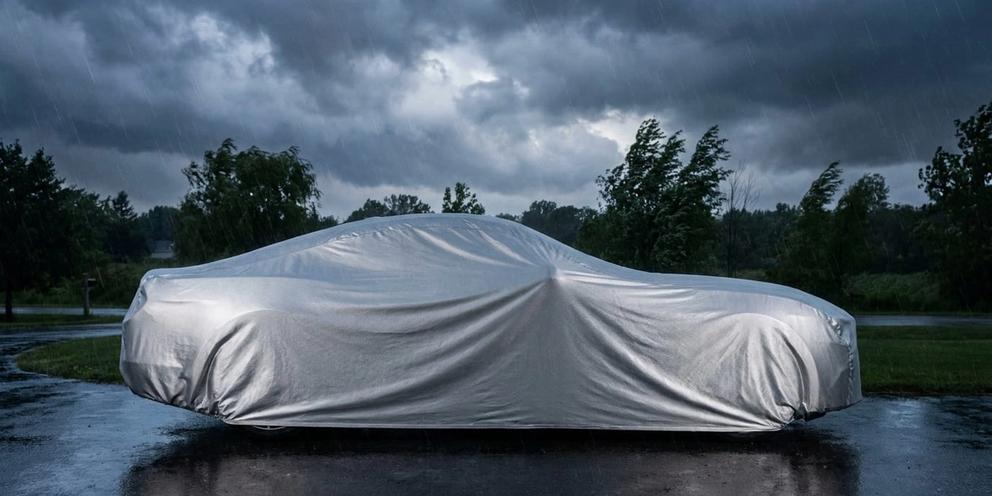
Car Cover for Hurricane Season: What Actually Protects Your Car
Hurricane season sneaks up on people who don't live near the coast. If you're in Florida, Texas, the Gulf Coast, or anywhere along the Atlantic seaboard, you already know the drill: watch the tropics from June through November, and start prepping the second a system gets a name. Part of that prep, for a lot of owners, is figuring out whether their car cover can actually handle what's coming. A regular car cover for hurricane season isn't the same thing as a cover for keeping pollen and dew off your windshield, and treating them the same is how people end up with a shredded cover wrapped around a tree in their yard.
Why Hurricane Season Changes What You Need From a Car Cover
The window is long. Six months, give or take, where any given week could bring a tropical storm, a direct hit, or just days of heavy outer-band rain from a system passing two states over. Owners in coastal and Gulf states start shopping for storm-ready covers as soon as a forecast cone shows up on the news, and that's the right instinct. Waiting until landfall is 48 hours out means you're picking from whatever's left in stock, not what actually fits your car.
Everyday covers are built for sun, dew, light rain, maybe some pollen and bird droppings. Hurricane conditions ask for a lot more: sustained wind that doesn't let up for hours, rain that comes in sideways instead of down, salt spray if you're near the coast, and debris that's actually moving through the air. That's a different job.
And to be clear about limits: a cover is one layer of protection, not a plan. If evacuation orders come down, or you have access to a garage, move the car. No cover replaces getting your vehicle out of the storm's path entirely.
What Hurricane-Season Weather Actually Does to an Uncovered Car
Wind-driven rain doesn't behave like rain falling straight down. It gets pushed into door seals, cowl vents, and sunroof drains that were never designed to handle water coming in horizontally. Once that water's inside, you're looking at mildew, musty carpet, and corroded wiring under the dash, none of which shows up until weeks later.
Sustained wind also turns ordinary yard debris into projectiles. Branches, loose gravel, chunks of siding, they all move once wind speeds climb, and none of it needs a direct hurricane hit to do damage. A storm passing 100 miles away can still send debris across a driveway.
If you're near the coast, add salt to the list. Salt-laden humidity works fast on exposed trim, wheels, and anything underneath the car, and corrosion doesn't reverse itself once it starts. On top of all that, the days before and after the storm, when the sky clears and the sun comes back hard, still do their own damage: UV exposure and swinging humidity levels fade paint and stress the clear coat. The cover's job isn't just the 12 hours of the storm. It's the full stretch of exposure around it.
What to Look for in a Car Cover for Hurricane Season
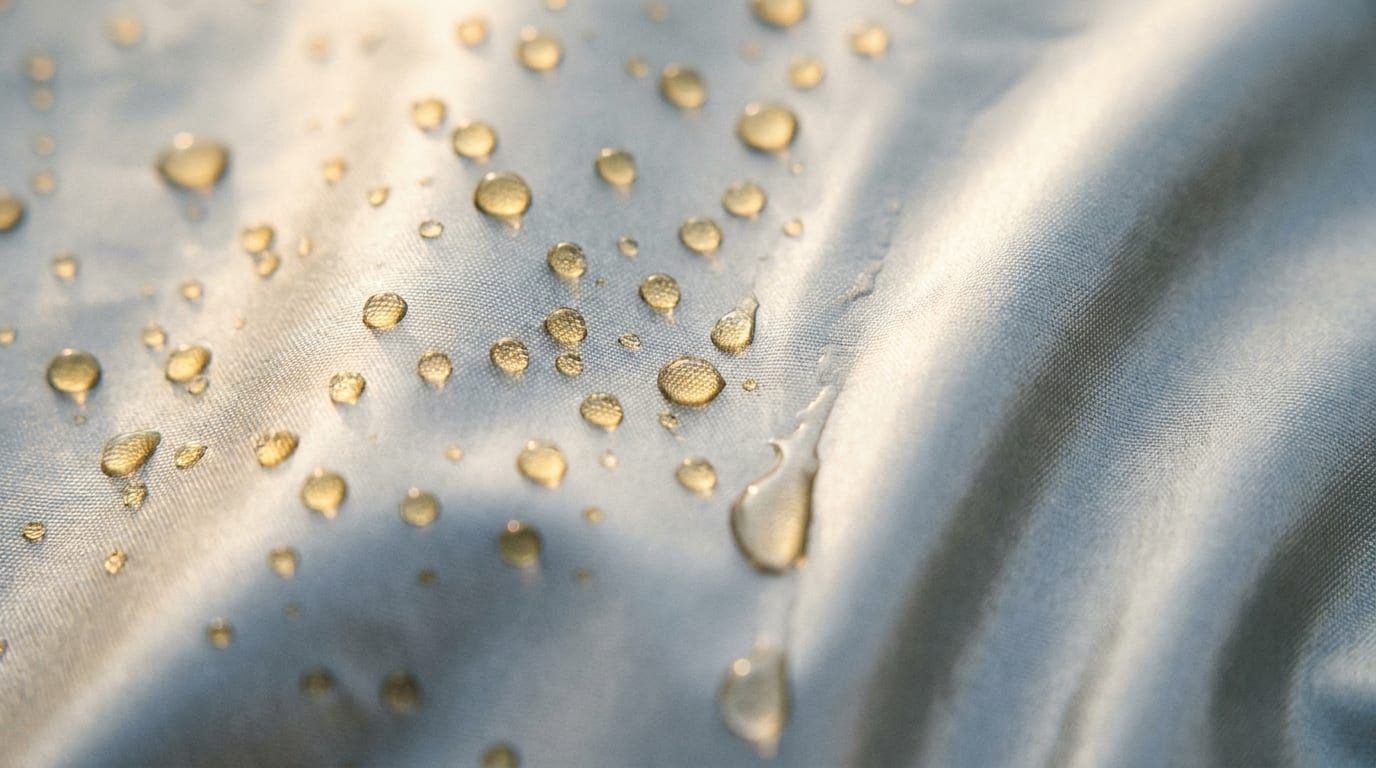
Start with waterproof, not water-resistant. Those two words get used interchangeably in product listings and they shouldn't be. Water-resistant covers shrug off sprinklers and light drizzle. A genuinely waterproof car cover has sealed seams built to keep wind-driven rain from working its way through, which is the only kind of rain you'll be dealing with in a storm.
Fabric matters just as much. You want something heavier and tightly woven, built to resist tearing when debris hits it or when it's flapping against the body for two straight days of gusts. Thin, single-layer covers wear through fast under that kind of repeated stress. If you want the deeper breakdown of fabric types and what holds up where, this material guide covers it in more detail than I'll get into here.
Breathability underneath that waterproof layer isn't optional, either. If a storm keeps you sheltering in place for three or four days and the car sits covered the whole time, trapped humidity with nowhere to go turns into mold on the paint. A cover that's waterproof on the outside but breathable underneath avoids that problem entirely.
Last piece: the hem. Elastic or a cinching drawstring at the bottom keeps the cover snug against the body instead of loose enough for a gust to get underneath and start peeling it off. For the full spec breakdown on outdoor-rated covers, this outdoor cover guide and this guide to using a car cover outdoors both go deeper than a single section can.
Securing the Cover So Wind Doesn't Rip It Off
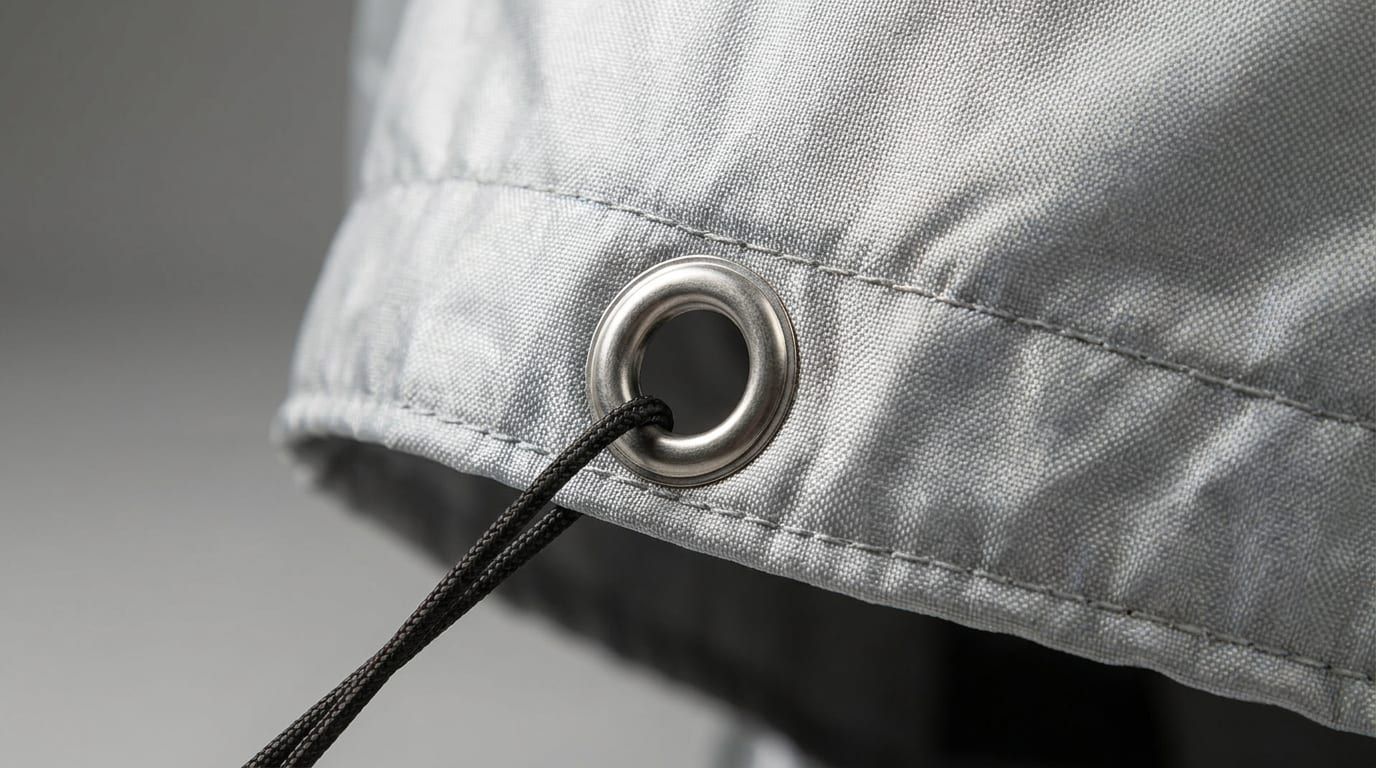
A cover that fits well and still ends up in your neighbor's yard did you no good at all. Straps and grommets matter a lot more here than they do for everyday outdoor storage, because everyday storage doesn't include sustained 40, 50, 60 mph gusts trying to peel the cover off the body panel by panel.
Gust straps that run underneath the car and cinch at the base are the baseline. Not an upgrade, not optional, the baseline. If you haven't installed a set before, this gust strap installation guide walks through it step by step, and it's worth doing before the forecast turns, not during it.
If you're parking near a garage, carport, or fence, grommet and cord anchor points let you tie the cover down to something fixed instead of relying on straps alone. And if the car's going to sit covered and unattended, say you're evacuating and leaving it behind, a cable lock adds a layer that keeps the cover (and the car under it) from becoming an easy target while you're gone.
One honest note here: no strap system is rated against Category 3 winds and up. At that point you're not choosing between a good cover setup and a bad one, you're choosing between outdoor and indoor. Garage or covered parking wins every time a storm like that is inbound.
Car Cover vs. Tarp vs. Garage: What Actually Holds Up in a Storm
People reach for a tarp because it's cheap and already in the garage. It's also the wrong tool for this job. A tarp has no fitted shape, so wind gets underneath it immediately and starts flapping it against the paint like sandpaper. The grommets that came punched into a generic tarp aren't built for sustained wind load, either, they tear out, and once one corner goes, the whole thing goes.
A fitted, weatherproof car cover solves the fit problem by design; it's shaped to the vehicle, so there's less loose material for wind to grab. Paired with a paint-safe lining and proper strap anchoring, it holds its position instead of thrashing around for hours. That difference in fit alone is most of why a cover outperforms a tarp once wind speeds climb. For the full side-by-side, this tarp vs. car cover breakdown is worth a read if you're on the fence.
But let's be straight about the ceiling here: an enclosed garage beats any outdoor cover for a direct hurricane path, full stop. A cover is the best option when indoor parking isn't available, not a replacement for it when indoor parking is available.
Prepping the Car and Cover Before the Storm Hits
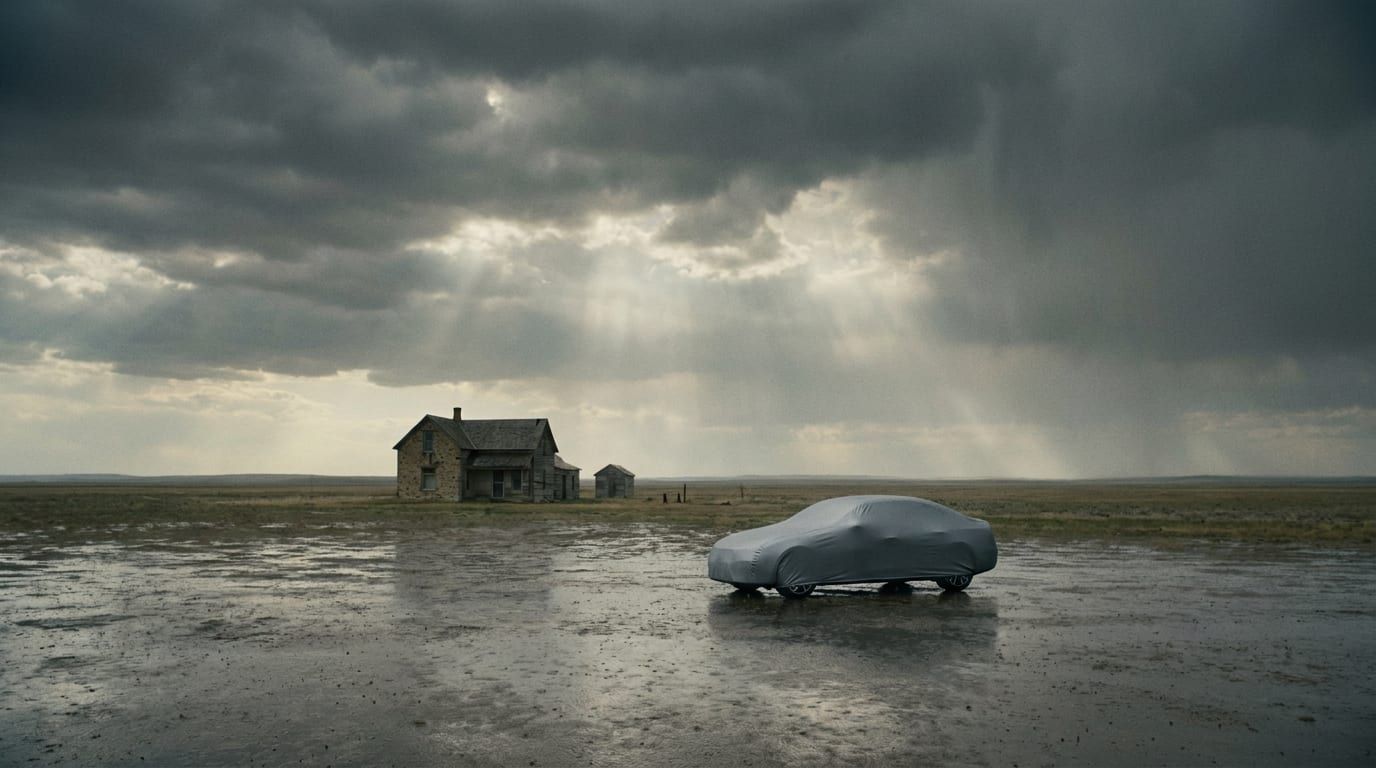
Wash and dry the car before you cover it. Grit and dust sitting on the paint under a flapping cover works like sandpaper during hours of wind, and a clean surface avoids that entirely.
Check the cover itself, too. Worn seams, thinning fabric, a hem that's lost its elasticity, all of that fails faster once real wind shows up. Storm season is the wrong time to discover your cover's already past its useful life. Check it in the calm weeks, not the day a storm gets named.
Where you park still matters, cover or not. Move away from trees, power lines, and anything overhead that could come down. A cover protects against wind and rain, not a falling branch.
Fold in the mirrors, and pull off antennas or roof racks that could puncture the cover or catch enough wind to work it loose. Small thing, easy to forget, and it's the kind of detail that makes the difference between a cover that stays put and one that doesn't.
Get Your Car Storm-Ready Before the Forecast Changes
The best time to sort out hurricane prep is a quiet Tuesday in early June, not the afternoon a storm gets a name and every store nearby is picked over. Get the fit right, check your straps, confirm the fabric's still in good shape, and you're not scrambling later.
If you're still weighing your options, it's worth spending a few minutes with our other car care guides before the next system starts forming. No pressure, just good information to have on hand before the forecast changes.
Updated