Articles Seasonal & Weather Car Care Tips
Best Car Cover for Oklahoma City, OK Hail and Severe Storms: A Local Buying Guide
Published
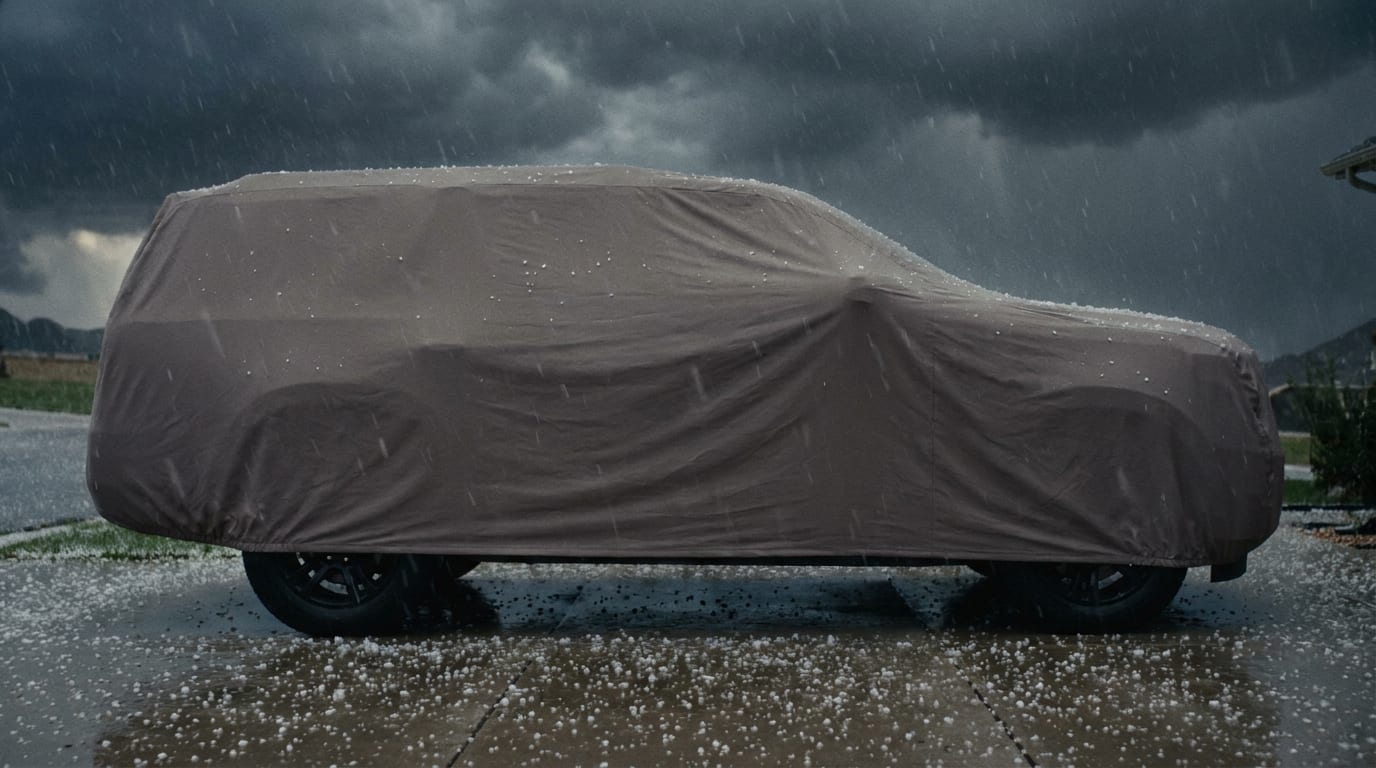
Oklahoma City doesn't do mild weather. One week it's 85 degrees and sunny, the next a supercell is dropping hail the size of baseballs on cars parked outside the Chesapeake Energy Arena. If you're searching for the best car cover for Oklahoma City, OK hail and severe storms, you already know the stakes: this isn't about keeping dust off your paint. It's about keeping your windshield intact.
Why Oklahoma City Vehicles Need More Than a Basic Cover
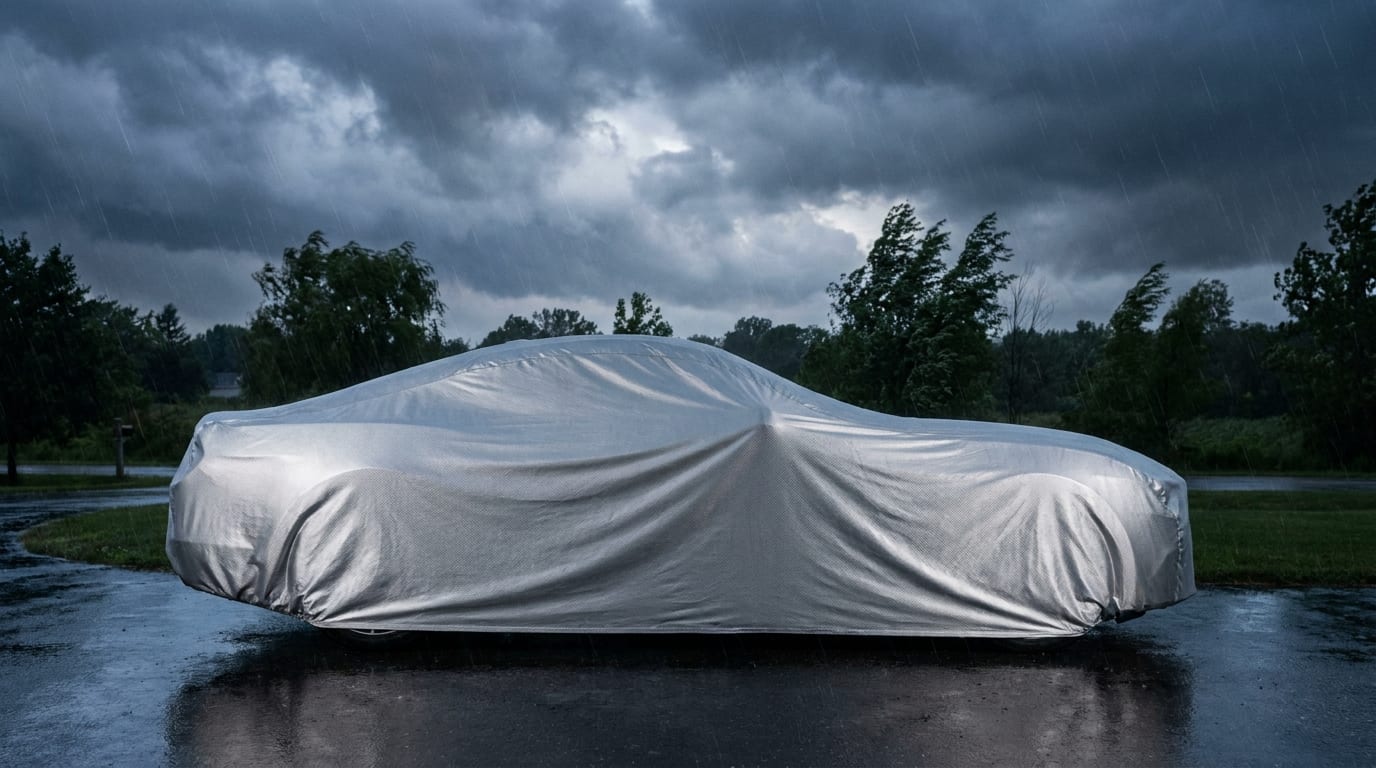
OKC sits inside what meteorologists call Hail Alley, and it's not a cute nickname. Peak hail season runs April through June, and stones the size of golf balls, sometimes baseballs, aren't rare events here. They're a seasonal expectation.
Hail is only half the problem. Pair it with OKC's frequency of severe thunderstorm watches and tornado warnings, plus wind gusts that regularly blow past 40-50 mph during spring systems, and you've got a weather pattern that attacks a parked vehicle from multiple directions at once. A thin universal cover, the kind made for light rain and bird droppings, just isn't built for this. Neither is a tarp from the hardware store. Both will either let hail punch straight through to your paint or rip loose and blow across the parking lot the second a gust front arrives.
This article matches specific OKC threats to specific cover features: the fabric tiers that resist impact, the waterproofing that actually holds up, and the strap systems that keep a cover attached to your car instead of your neighbor's fence.
What Actually Protects a Car From Hail: Fabric and Padding to Look For
Here's the honest distinction. A single-layer outdoor fabric is designed to shed water and block UV rays. It is not designed to cushion an impact. A padded, multi-layer hail-rated cover adds a buffer of foam or fiberfill between the stone and your clearcoat, which is the only mechanism that actually reduces damage from small to medium hail.
Let's be clear about limits, too. No cover eliminates dent risk from a large, fast-falling hailstone. Physics wins that fight. What a good padded cover does is reduce the surface chipping, the cracked windshields, and the smaller dings that come from the more common, smaller stones that make up most hailstorms.
On a spec sheet, "heavy-duty" usually comes down to denier (the thickness of the fibers) and layer count. A higher denier outer shell resists abrasion and puncture better, and multiple layers stacked together, outer shell, padding, soft inner lining, do more work than a single thick sheet. If you're shopping specifically for storm protection, start with the breakdown at hail car covers to see how the padded options are actually constructed.
Wind and Rain: The Other Half of an OKC Storm Cover

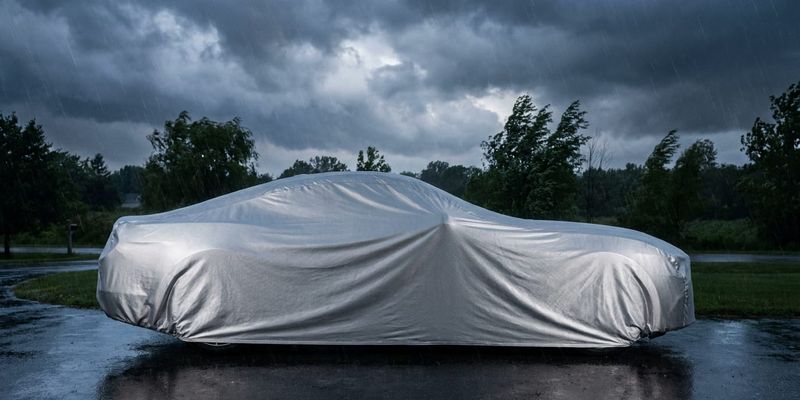
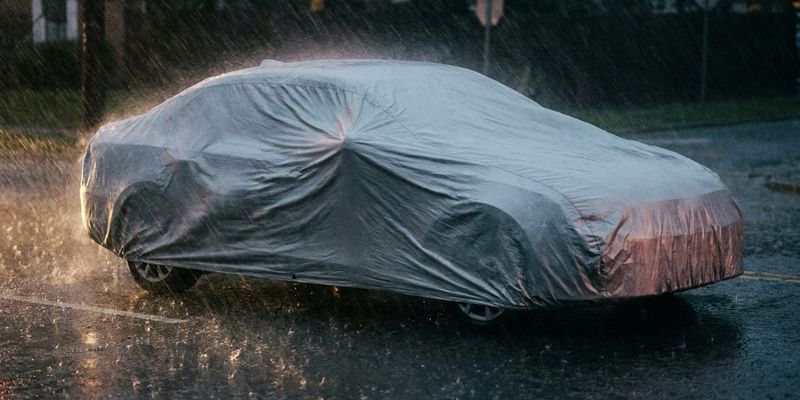
Hail rarely shows up alone around here. It comes wrapped in heavy rain and sustained wind, which means your cover needs a genuine waterproof barrier, not a water-resistant coating that wears off after a few washes.
The tell is in the construction. Seam-sealed seams keep water from wicking through stitch holes, and a soft lining on the underside means moisture that does get through isn't sitting directly against your paint. A basic splash-guard cover skips both of these, which is fine for a light drizzle and useless in an OKC downpour.
Then there's wind. Grommets, elastic hems, and built-in strap loops are what keep a cover anchored to the vehicle instead of becoming a wind-blown projectile across the parking lot during a gust front. Without them, you're just hoping the cover stays put. For the full rundown on what separates a true waterproof design from a marketing label, see waterproof car covers and the material-level detail in waterproof fabrics.
Custom-Fit vs. Universal: Which Matters More in Severe Weather
A loose universal cover acts like a sail in high wind. Air gets underneath it, it balloons, and either it tears at the seams or it slides right off the car. A custom or semi-custom fit hugs the body lines instead, which means less surface area for wind to grab.
Fit matters for hail protection too, not just wind. A snug cover keeps the padded layers sitting exactly where they need to be, over the hood, roof, and trunk, instead of shifting around mid-storm and leaving a panel exposed. That's the whole point of the padding, and it only works if it stays in place.
If you've got a garage or carport for part of the year, you've got more flexibility. But plenty of OKC drivers are working with street parking or an uncovered driveway through storm season, which makes the outdoor-rated, fitted option worth the extra cost. Compare the options at custom-fit car covers and outdoor car covers before you decide.
Securing the Cover: Straps, Cable Locks, and Install Tips for High Wind
A cover is only as good as what's holding it down. Gust strap systems cinch underneath the vehicle and keep the cover from lifting or tearing loose in the leading-edge winds that show up ahead of a storm cell, which in OKC can arrive with almost no warning.
If your car sits covered outside for stretches of storm season, a cable lock is worth adding too. It's not just theft deterrence for the cover itself, it's peace of mind for anything left on the vehicle while it's sitting unattended for days at a time.
Before a warned severe thunderstorm or tornado watch, run through a short checklist: check the forecast one more time, confirm your straps are cinched, and double-check grommet tension so nothing's already working loose. It takes five minutes and it's the difference between a cover that survives the storm and one you're chasing down the street afterward. Full install walkthroughs are here: installing gust straps and wind straps and installing a cable lock.
Timing It Right: OKC's Storm Season Calendar
The pattern is fairly predictable, even if individual storms aren't. Spring, April through June, is peak severe weather and hail season in central Oklahoma. There's a secondary bump of risk in fall, though it's usually less intense than spring systems.
The smart move is having a hail-rated cover installed and ready before the season ramps up, not scrambling to order one the week after a storm already cracked your windshield. Reactive shopping means driving an unprotected car through the exact weeks it's most at risk. For a sense of how destructive a single storm event can get, the history in the 22 worst hailstorms in U.S. history is a useful reminder that this isn't hypothetical damage.
And the cover doesn't go idle once storm season winds down. OKC summers are brutal on paint and interiors from UV exposure, and a lined cover doubles as pollen protection in the shoulder seasons. You're not buying single-use gear.
Choosing and Caring for Your Cover Long-Term
The decision path is pretty simple once you break it down: match your hail and wind exposure to a fabric tier, confirm the fit type that suits how and where you park, then add the strap and lock accessories that keep everything in place.
Given how much use this cover will see in a given Oklahoma year, warranty coverage isn't a minor detail. It's the backstop for a product that's getting hammered by UV, hail, and wind for months at a stretch, so it's worth checking what's covered before you buy. Lifetime warranty coverage on car covers is worth reading through for exactly this reason.
After a storm, don't just leave the cover on and move on with your day. Rinse off hail debris and grit, let it dry fully, then store or reinstall it. Trapped moisture and grit sitting against the fabric is how you get abrasion and mildew over time, undoing a lot of the protection you just paid for.
If you're not sure which cover actually fits your vehicle, skip the guesswork. Use find my car cover or the cover finder tool to match your exact make and model to the right size and fit.
Get Your Vehicle Storm-Ready
OKC's combination of hail, straight-line wind, and fast-moving severe storms isn't something a generic, one-size-fits-all cover is built to handle. A padded, genuinely waterproof cover with a proper fit and a real strap system is the baseline, not an upgrade.
Take a look through car covers to compare options by vehicle type before the next system rolls through. Check the fit tools first, confirm the size matches your vehicle, and you'll know the cover will actually hold up when the wind picks up and the sky turns green.