Articles Seasonal & Weather Car Care Tips
Best Car Cover for Boston, MA Nor'easters and Snow: A Local Buying Guide
Published
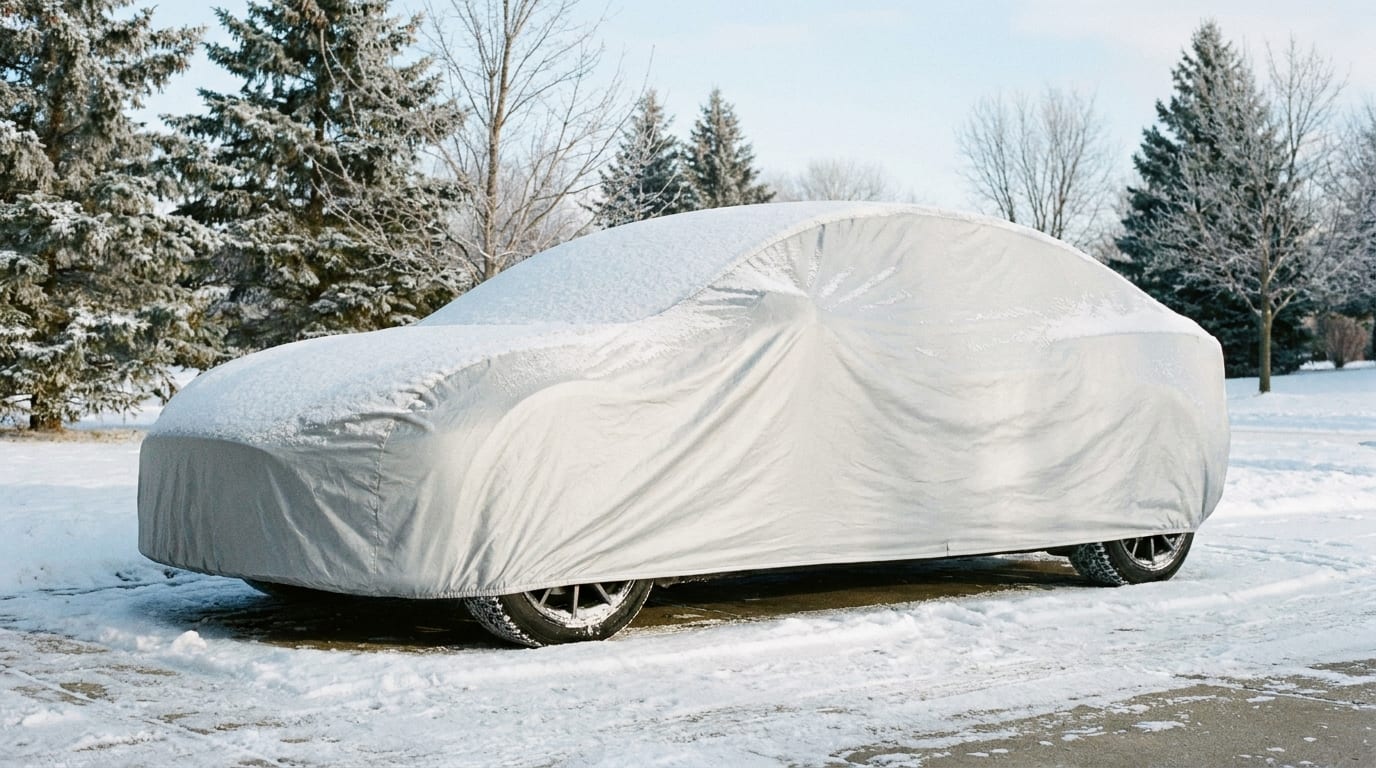
Boston doesn't get "winter weather," it gets winter events. A nor'easter rolls in off the Atlantic, dumps a foot of wet snow in six hours, and throws 50 mph gusts at anything parked outside while it does it. If you're trying to find the best car cover for Boston, MA nor'easters and snow, generic "all-weather" marketing copy isn't going to cut it. You need a cover built for this specific combination of wind, moisture, and salt, not just one rated for "winter" in some mild climate zone.
Why Boston Winters Are Rough on Car Covers
A nor'easter isn't just a snowstorm. It's a wind event with snow attached. The counterclockwise spin pulls moisture off the ocean and slams it into the coast, which is why gusts of 40 to 60+ mph are routine during a strong storm. Combine that with snow that's often heavy and wet (thanks to that same ocean moisture) rather than the light, dry powder you'd get in Denver or Minneapolis, and you've got a cover dealing with real weight and real lift at the same time.
Then there's the freeze-thaw cycle. Coastal Massachusetts doesn't stay locked at 20 degrees all winter. It swings. Snow melts a little during the day, refreezes overnight, and that repeated expansion and contraction is brutal on cheap seams and brittle fabric. A cover that's fine in a dry cold snap can start cracking after a few of these cycles.
And don't forget what's on the roads themselves. Salt spray and slush kicked up by passing traffic settle on anything parked near a street, cover or no cover. It's a corrosion risk that sits right at the edge of your vehicle even when you think you've got it protected.
This guide isn't a generic "best covers" roundup. It's about matching specific features to these specific conditions.
What a Nor'easter-Ready Cover Actually Needs
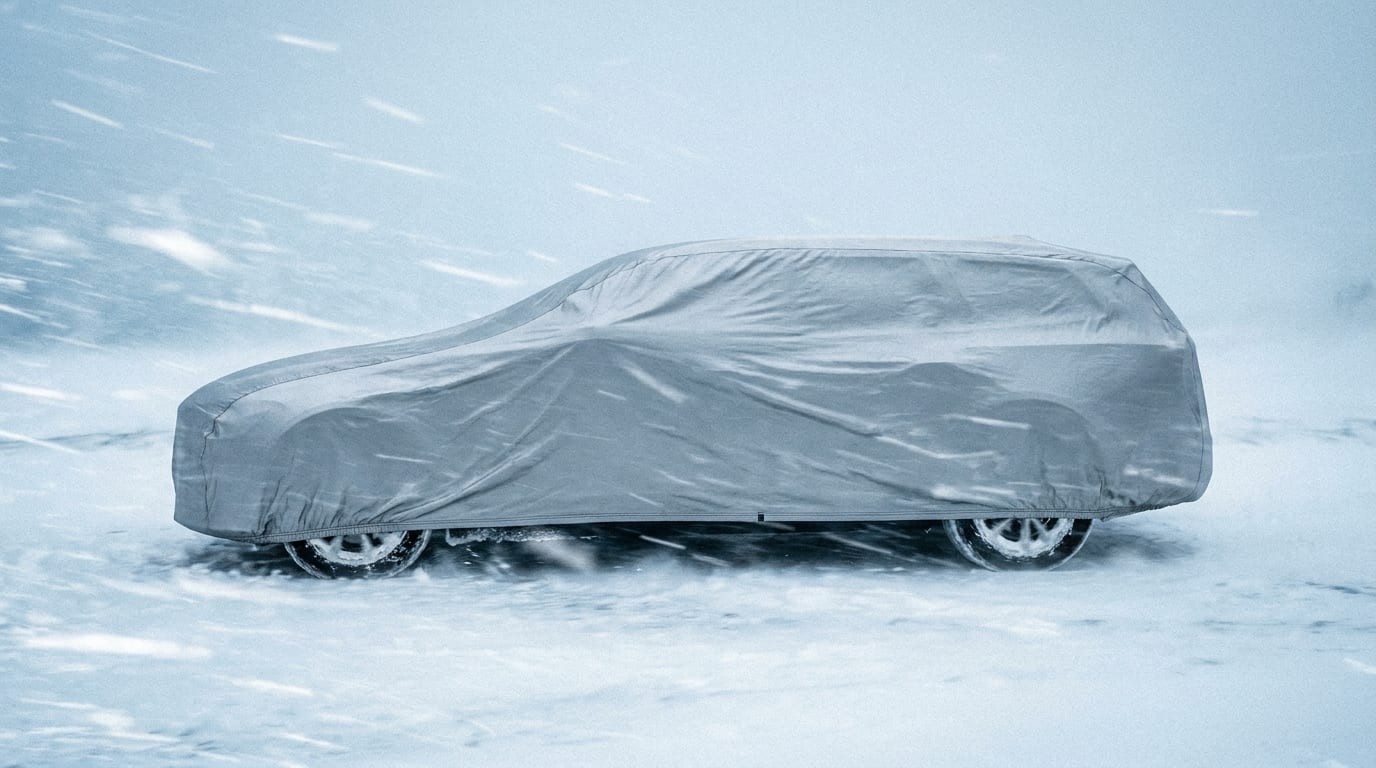
Start with wind. A cover held down by nothing but its own hem is going to balloon the second a gust gets underneath it, and ballooning covers tear, flap against paint, or just blow away entirely. You want grommets paired with an actual gust or wind strap system, something that cinches the cover down and keeps it from lifting in sustained coastal wind.
Next, the fabric needs to be waterproof without being a sealed plastic bag. Wet snow has to shed off the top layer, but moisture that gets trapped underneath (from road grime, condensation, whatever) needs somewhere to go. A multi-layer, breathable fabric does both jobs. A tarp does neither.
Seams matter more than people think. A few inches of wet, heavy snow sitting on a cover puts real weight on every stitch line. Reinforced seams and elastic hems hold that load without stretching out of shape or tearing at the corners.
Last, anchoring. Grommets and straps are the first line, but a cable lock adds a second layer of security, both against wind lift and against anyone deciding your covered car looks like an easy target during a storm when nobody's outside watching.
Outdoor Waterproofing 101 for New England Drivers

"Waterproof" gets thrown around loosely in this industry, so here's what it should actually mean for a Boston winter: a tight weave or coating that blocks wind-driven snow and sleet, not just the kind of light drizzle resistance you'd need for a mild spring shower.
Breathability matters just as much as the waterproofing itself. A fully sealed, non-breathable cover traps moisture underneath it, and that moisture doesn't just sit there quietly. It leads to mildew, and over a season it can start affecting your paint. The goal is a fabric that keeps precipitation out while still letting trapped vapor escape.
This is where single-layer covers start to fall short. They're fine for dust and light rain, but Boston's version of snow (wet, heavy, repeated storm after storm) asks more of the material than a single layer can usually deliver. A multi-layer construction holds up better across a full season of real nor'easters, not just one storm. If you want the deeper breakdown of how these fabrics are built, waterproof fabric options are worth a read before you buy.
One more thing people forget: the days between storms. Boston gets plenty of bright, cold, sunny days in January, and UV exposure on those days dries out and fades cheap cover material faster than the storms themselves do. A UV-resistant layer protects against both ends of the weather swing, not just the snow.
For a full walkthrough of outdoor-specific considerations, this guide to using a car cover outdoors covers wind, waterproofing, and UV exposure together.
Fit Matters More in High Wind: Custom vs Universal
A loose cover is a wind magnet. If there's slack fabric anywhere, a 50 mph gust will find it, get underneath, and start working the cover loose, sometimes abrading your paint in the process as it flaps. That's the real argument for custom fit in a place like Boston, not just aesthetics.
A custom-fit car cover follows the actual contours of your vehicle. Less slack means less surface for wind to grab, and fewer gaps where snow can pool and refreeze overnight.
If a custom option isn't available for your specific vehicle, an older model or something less common, sizing still matters a lot. Check the sizing guide for your vehicle before buying a universal cover rather than guessing based on vehicle class alone. A cover that's even a few inches too generous in the wrong spots defeats half the purpose.
Common vehicles around the Boston area also tend to have dedicated brand-specific options, which is worth checking if you want the closest possible fit without going fully custom.
Securing and Installing Your Cover Before a Storm Hits
Installation order matters more than most people assume. Start at the front, work your way back, and secure straps as you go. Done right, there's no loose section for wind to sneak underneath before you've finished anchoring the rest.
If you're in an exposed driveway or parking on the street (common across a lot of Boston neighborhoods), gust straps aren't optional extras. They're the difference between a cover that survives the storm and one you're chasing down the block the next morning. Here's a walkthrough on installing gust straps if you haven't set one up before.
Street parking brings a second concern beyond weather: tampering. A cable lock threaded through the grommets keeps the cover secured to the vehicle itself, which matters both for wind and for peace of mind when your car's sitting at the curb overnight.
One habit worth building: install the cover before the storm hits, not after snow's already piled on the car. Putting a cover over an already-snow-covered vehicle traps moisture underneath from the start and makes the whole setup heavier and harder to secure properly. Check the forecast, get the cover on early, and you're not fighting wind and snow at the same time.
After the Storm: Cleaning Salt, Snow, and Slush Off Your Cover
Brush snow off as soon as you reasonably can after a storm passes. Wet snow left sitting compacts and gets heavier by the hour, putting extra strain on seams and straps that are already doing a lot of work. A quick brush-off before it hardens saves the cover from unnecessary stress.
Road salt is its own problem. Boston salts aggressively all winter, and the spray that lands on a parked car's cover carries the same corrosive residue that eats at a vehicle's undercarriage. Left on fabric over multiple storms, that buildup degrades the material faster than the cold ever would.
Give the cover a proper clean periodically through the season, not just at winter's end. This step-by-step cover cleaning guide covers the right method, and drying fully before folding it away for storage matters just as much as the cleaning itself. A damp cover stored between storms is exactly how mildew gets started.
Worth noting: fabric choice affects how much of a chore this actually is. Smoother, higher-quality multi-layer fabrics shed salt residue and snowmelt more easily than cheaper, rougher materials that let grime work into the weave.
Matching the Cover to Your Vehicle Type
Sedans and coupes sit low, which means less surface area for wind to catch, a real advantage during a nor'easter. But fit at the wheel wells still needs to be tight. Gaps there are where wind gets a foothold even on a lower-profile car.
SUVs and trucks, which make up a big share of what's actually driven around New England in winter, have the opposite problem. More height means more surface area exposed to gusts, so the strap system carries more of the load. If you're covering a truck or SUV, don't treat the strap setup as an afterthought. It's doing more work on a taller vehicle than it would on a sedan.
Larger vehicles in general deserve extra attention to anchoring. More surface area exposed to sustained coastal wind just means more force trying to lift the cover, so don't skimp on the strap and lock setup because the vehicle "seems too heavy to blow around." The cover is what's catching the wind, not the vehicle.
If you're not sure what your specific make and model needs, skip the guesswork. Finding the right cover for your exact vehicle beats estimating based on general vehicle type.
Finding Your Boston Winter Cover
Run through the checklist one more time: multi-layer waterproof and breathable fabric, a cover that works with wind straps, reinforced seams that can take the weight of wet snow, and a fit that's actually tight on your specific vehicle. Skip any one of those and you're gambling on a storm that doesn't test it.
Warranty coverage is also worth a second look before you buy. A cover facing a full New England winter, every year, for years, needs a company standing behind it. Check what's covered under the lifetime warranty terms before you commit to one.
If the next storm system is already on the radar, now's a good time to look up the right cover for your make and model rather than waiting until the flakes start flying. And if you want more of this kind of practical, region-specific car care advice before the next nor'easter rolls through, keep an eye on our other guides. It's a lot easier to prep in October than to improvise in a driveway during a February blizzard.