Articles Seasonal & Weather Car Care Tips
Best Car Cover for Charlotte, NC Humid Summers: A Local Buying Guide
Published
What Charlotte Summers Actually Do to a Parked Car
Charlotte doesn't do subtle summers. Highs sit in the low 90s most afternoons from June through August, but the real story is the air itself: dew points that push the heat index well past 100°F, and humidity that rarely drops below 60-70% even after the sun goes down. Your car sits in that soup all night, every night, for months.
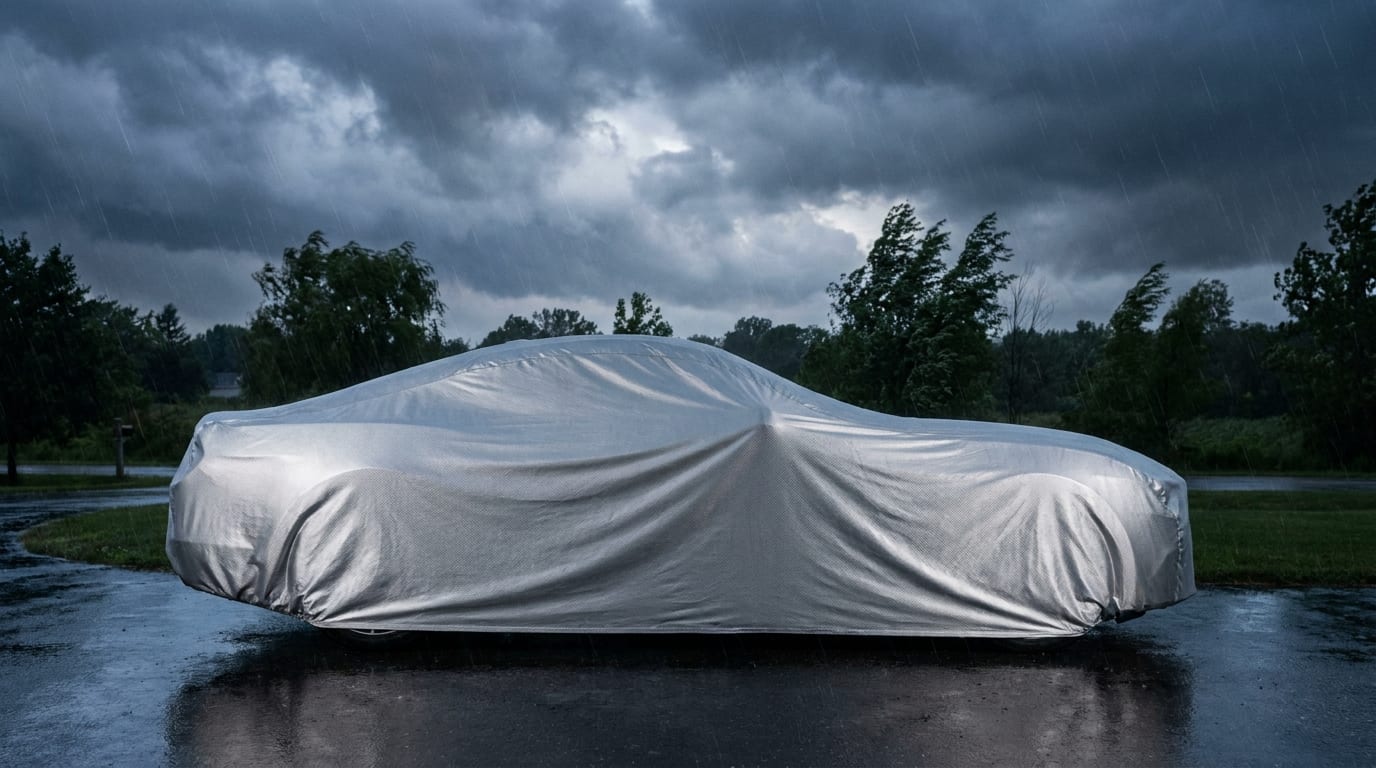
Then there's the sun. The Piedmont's summer UV index regularly hits 8 to 10, which is intense enough to fade paint, crack dashboards, and turn rubber trim brittle on anything left uncovered for a season. Add Charlotte's habit of throwing up fast-forming afternoon thunderstorms with almost no warning, and you've got a climate that tests a car cover on three fronts at once: heat, UV, and sudden wind-driven rain.
That combination is exactly why picking the best car cover for Charlotte, NC humid summers isn't as simple as grabbing whatever's cheapest at the auto parts store. You need something thick enough to block UV rays and shrug off a downpour, but breathable enough that it isn't sealing moisture against your clear coat overnight. Those two requirements pull in opposite directions, and most budget covers pick one at the expense of the other. The rest of this guide is about finding one that doesn't.
Why Humidity Changes the Cover Equation (Not Just Rain)
Here's the thing most people miss: rain isn't actually the hardest problem to solve. Breathability is.
A non-breathable cover, the kind made from cheap vinyl or tarp material, works fine in Phoenix or Denver where the air is dry and whatever condensation forms burns off fast. Throw that same cover on a car in Charlotte at 70%+ overnight humidity, and you've built a tiny greenhouse. Moisture gets trapped between the cover and the paint, has nowhere to go, and just sits there till morning. Do that night after night through a Carolina summer and you're inviting mold and mildew onto your clear coat.
The warning signs are pretty specific. Water spotting that won't buff out. A musty smell when you pull the cover off. Clear coat that's gone soft, hazy, or started peeling at the edges. If you've seen any of those, your cover is probably the problem, not the weather.
This is why breathability isn't a nice-to-have feature for Charlotte drivers, it's a baseline requirement. A waterproof car cover that also vents trapped moisture is doing a fundamentally different job than one that just keeps rain off. In this climate, you need both, not one or the other.
The Feature Checklist for a Charlotte-Ready Cover
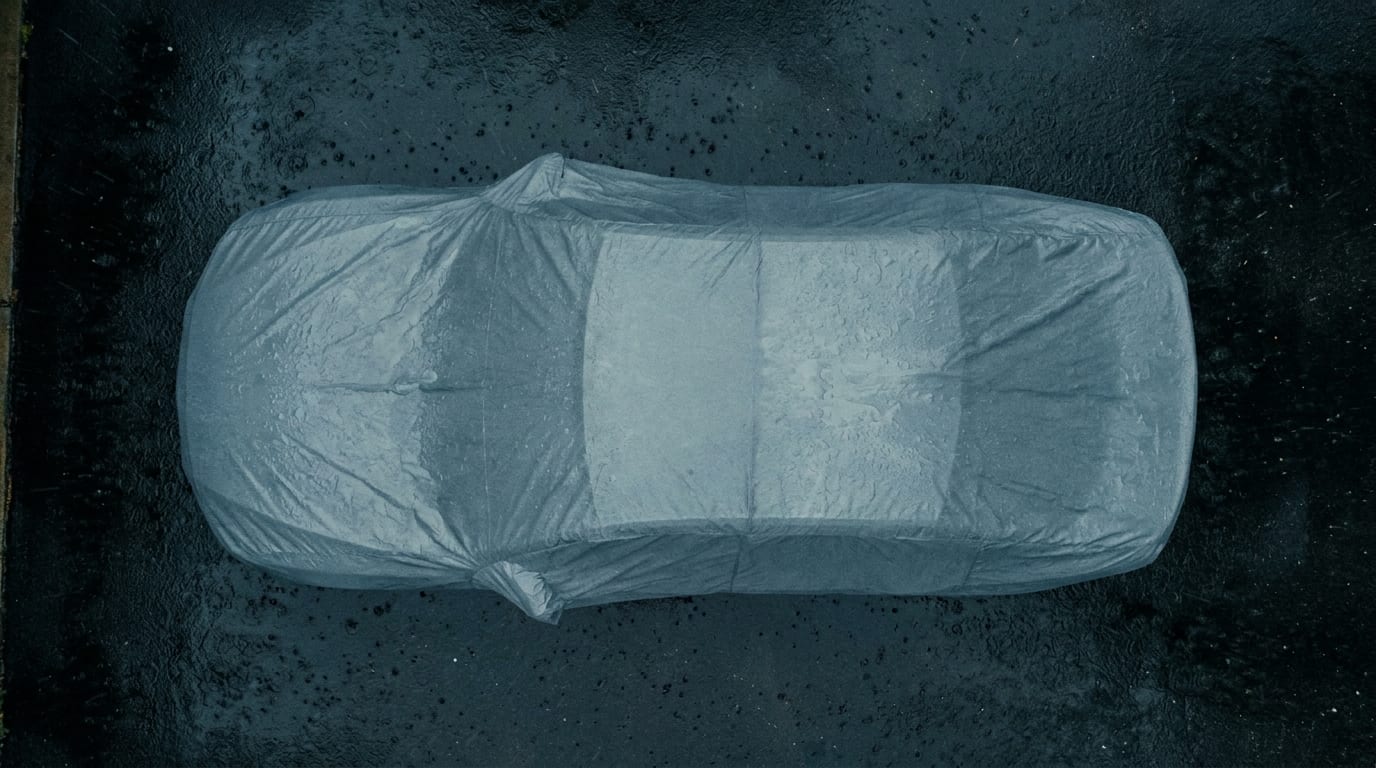
A few specs matter more here than they would in a milder, drier market. Look for:
- Multi-layer breathable fabric. Skip single-ply vinyl or tarp-style material. You want layers that block UV and rain on the outside while still letting trapped moisture escape.
- UV-stabilized outer layer. Charlotte cars spend real hours sitting in direct summer sun, driveway or street parking especially. The outer shell needs to be rated for sustained exposure, not just "resistant."
- Waterproof seams and a true water-resistant rating. Not water-repellent, which is a lighter standard. Piedmont storms can dump a lot of rain fast, and seams are usually where a cheap cover fails first.
- Soft inner lining. Charlotte's tree cover means pollen grit and falling debris are a near-constant issue. A rough inner lining will grind that debris into your paint every time wind shifts the cover.
- Elastic hem or integrated straps and grommets. Those sudden thunderstorm gusts will get under a loose cover fast, and a cover flapping in 40 mph wind can do its own damage.
Matching Cover Type to How You Park
Your parking situation changes which features actually matter.
If you're parking outdoors every day with no garage or carport, prioritize a custom-fit outdoor car cover over a universal one. Fit accuracy isn't cosmetic here, it's functional: a cover that's cut loose around the edges is exactly what lets wind get underneath during a storm and start working the fabric against your paint.
If you've got garage or carport parking, don't assume you're off the hook. Covered parking still traps humidity and dust, so a breathable indoor car cover still earns its keep, just with less emphasis on UV blocking.
Worth a mention too: the Piedmont region does see periodic hail, and if you're in one of Charlotte's hail-prone pockets, it's worth weighing a cover with added hail protection. Hail damage isn't rare enough nationally to ignore, either, the history of major U.S. hailstorms makes that pretty clear.
Quick gut check: if you're parking outdoors daily in Charlotte's humidity, breathability and fit should outrank price. A cheaper cover that traps moisture will cost you more in paint damage than you saved up front.
Materials: What Holds Up in Heat and Humidity vs. What Doesn't

Not all "car cover material" is the same material, and the differences matter more in this climate than most.
Basic polyethylene or tarp-style covers are the ones to avoid. They trap heat, they trap moisture, and under constant Southeastern UV exposure they degrade faster than better-built alternatives. They're cheap for a reason.
Multi-layer woven polypropylene or similar breathable composites are the better fit for Charlotte's specific mix of heat, UV, and sudden rain. These fabrics are built to do two jobs at once: shed water on the outside, vent moisture from the inside. That's the whole ballgame in a humid climate.
Indoor-only satin or fleece covers deserve a separate mention, because people sometimes buy the wrong one. Those are built for garage dust and scratch protection, not humidity management, and they are not a substitute for outdoor protection if your car ever sits outside.
One more thing worth checking before you buy: waterproof doesn't automatically mean breathable. Those are two separate specs, and a product page that only advertises one of them is worth a second look. Understanding the difference between waterproof fabric types will save you from a cover that blocks rain but still cooks your paint in trapped humidity.
Keeping a Cover in Good Shape Through a Humid Season

Buying the right cover is half the job. Using it right through a Charlotte summer is the other half.
Let the car (and the cover, if it got wet) dry fully before you put the cover back on after a storm. Covering a wet car seals moisture in, which defeats the whole point of buying a breathable cover in the first place.
Spring into early summer is pollen season here, and that pollen builds up as fine grit under a cover whether you notice it or not. A regular cleaning cadence during those months keeps grit from scratching paint every time the cover shifts. When you do clean it, clean the cover itself the right way, not just the car. A cover stored damp or folded tight is a mildew problem waiting to happen.
Between uses, store the cover loosely folded, dry, and somewhere ventilated. Tossing a damp cover into a tight trunk bag is how you end up with a musty, mildewed cover before July is even over.
And check your straps and grommets periodically. Heat and humidity break down elastic faster here than they would in a drier climate, so a strap that looked fine in May might be stretched out and useless by August.
Finding the Right Fit for Your Vehicle
All of this, the breathable fabric, the UV rating, the waterproof seams, falls apart if the cover doesn't actually fit your car. A loose or generic "universal" cover gives wind room to work underneath it, and one good Charlotte thunderstorm can turn that gap into a problem.
Size by your exact make and model, not just a general vehicle class like "mid-size sedan" or "full-size SUV." A custom-fit car cover sized correctly is going to outperform a generic one on UV protection and rain resistance every time, simply because there's no slack for wind or water to exploit. If you're not sure what that looks like for your specific vehicle, there's a straightforward guide to figuring out the right car cover size worth checking before you buy anything.
Done right, a properly fitted, breathable cover should get you through a full Charlotte summer without trapped moisture, without UV fade, and without a flapping edge during a storm. That's the bar.
If you want to skip the guesswork, use a cover fit tool to match your exact vehicle before you spend money on something that's close enough. And if you're curious what else is out there, it's worth browsing the full range of car cover options to see how fit, material, and price trade off against each other. Either way, give your car the kind of summer protection this climate actually demands, not the generic kind.