Articles Seasonal & Weather Car Care Tips
Best Car Cover for Tampa, FL Afternoon Thunderstorms: A Local Buying Guide
Published
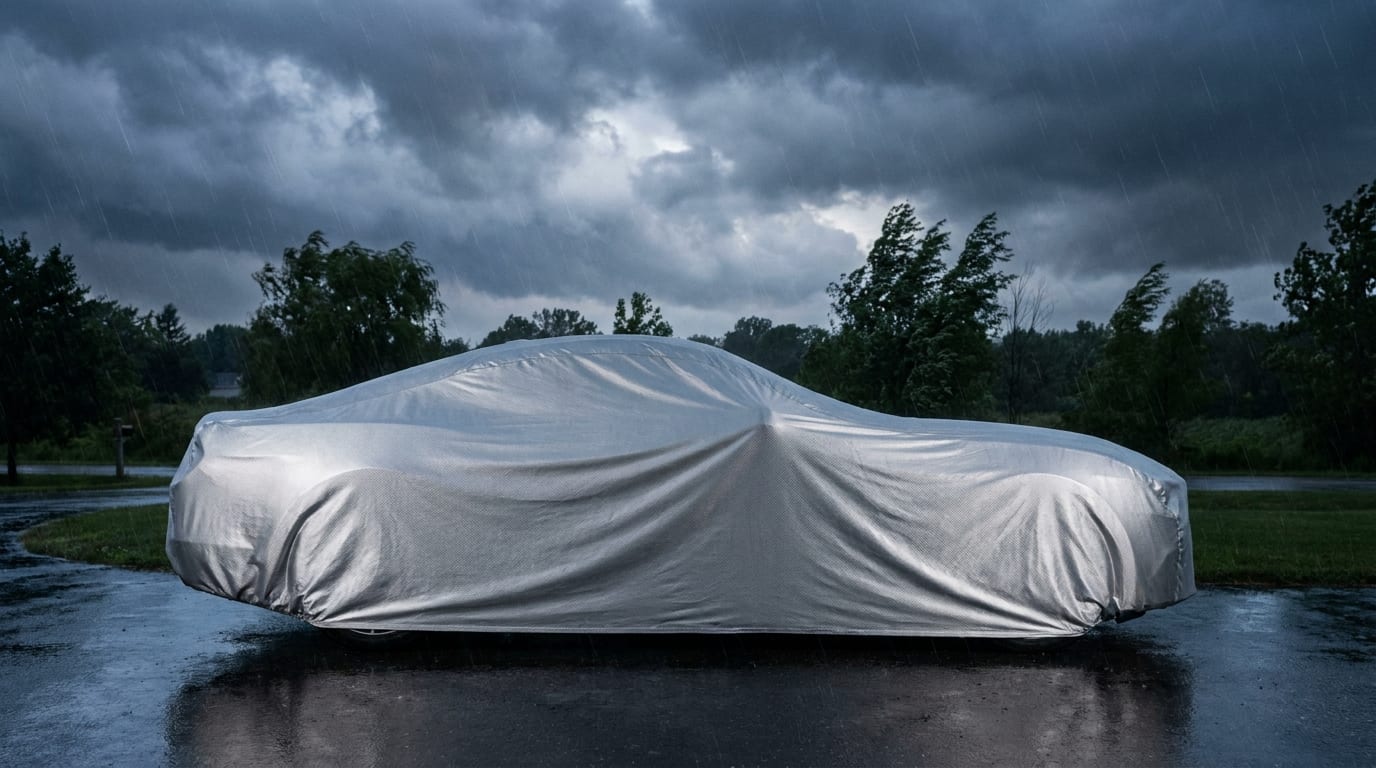
Tampa drivers already know the drill: blue skies at noon, then a wall of gray by 2:30, then it's pouring sideways for twenty minutes before the sun comes back out like nothing happened. If you park outside, which most people here do, finding the best car cover for Tampa, FL afternoon thunderstorms isn't a luxury purchase. It's basic paint insurance. Tampa racks up 80 to 100+ thunderstorm days a year, most of them clustered in a predictable afternoon window from June through September, and that pattern beats up a cheap cover fast.
A generic cover, or one bought mostly for looks, tends to fail here in a specific way. It's not one big storm that kills it. It's the daily cycle: soaked, baked dry, soaked again, for months straight. Add intense UV between storms and the gusty outflow winds that show up minutes before the rain does, and you've got conditions that expose every shortcut a budget cover took. This guide isn't going to tell you to "buy something waterproof" and call it done. It's going to walk through which specific features actually hold up against Tampa's particular brand of weather abuse.
Why Tampa's Afternoon Storms Demand a Different Kind of Car Cover
Most places deal with weather. Tampa deals with a schedule. Afternoon storms here aren't random, they're the product of sea-breeze convergence, warm moist air rolling in from both coasts and colliding right around the central peninsula, which is more or less where Tampa sits. The result is a storm cell that builds fast and hits hard, almost every day, during the exact hours most people's cars are sitting outside at work or at home.
A cover built for, say, a dry climate with occasional rain just isn't engineered for that rhythm. It might handle one soaking fine. It starts failing on cycle fifteen. Seams weep, coatings degrade, and fabric that was "water-resistant" on day one starts letting moisture through by August. The goal of this guide is matching cover features to the actual behavior of Tampa's weather, not chasing a vague waterproof label on a box.
Understanding Tampa's Weather Pattern: Heat, Humidity, and Sudden Downpours
Here's the mechanism, briefly. Warm, humid air moves inland from the Gulf and from Tampa Bay, and when those two sea breezes meet somewhere over the interior, they shove air upward. That upward motion builds towering cumulus clouds through the morning, and by early-to-mid afternoon, usually somewhere in that 2 to 6pm window, they let go. It's reliable enough that locals plan errands around it.
The stress this puts on a car cover is layered, not single. Midday sun pushes surface temperatures well past 90°F with high UV intensity, since Florida sits at a lower latitude with less atmospheric filtering. Then the storm hits, dumping heavy rain in a short burst. Then it clears, and humidity sends everything back toward damp within the hour. That's heat, then soaking, then slow evaporation, repeated daily for roughly four months straight.
Wind is the part people underestimate. The gusts that arrive ahead of a storm cell, the outflow boundary, can hit well before the rain does, and they're often the strongest part of the whole event. A cover that isn't secured well can start flapping or peeling back in that window, sometimes before a single drop falls. And since outdoor parking, driveways, apartment complex lots, street parking, is the norm across most of Tampa Bay, there's no garage fallback for a huge share of drivers here. The cover is the only protection the car gets.
Must-Have Features for a Tampa-Ready Car Cover

Three things actually matter for this climate, and it's worth being specific about each one.
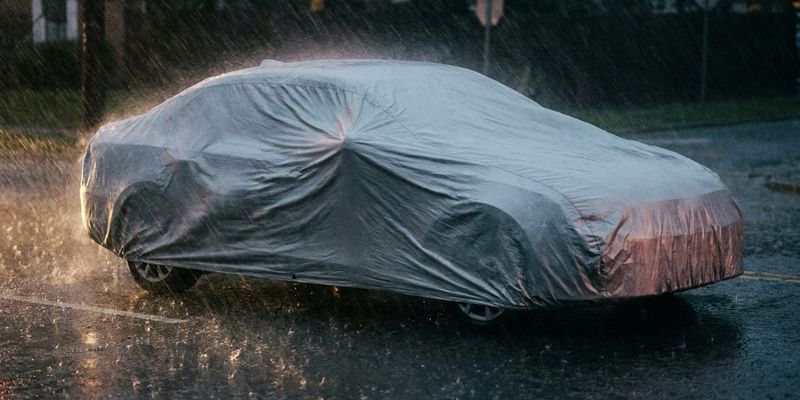
Waterproofing first. "Water-resistant" and "waterproof" get used interchangeably in marketing copy, but they're not the same claim. Water-resistant fabric sheds light moisture, a drizzle or morning dew. Tampa's afternoon storms aren't that. They're driving rain, sometimes nearly horizontal when the wind's up, and a cover needs a real waterproof rating to block that, not just bead it off for a few minutes before soaking through. Check the waterproof car cover category specs rather than trusting a single word on the packaging.
UV resistance is the second piece, and it's easy to overlook because sun damage is slow. A cover sitting outside in Tampa gets hammered with UV on every clear morning, even on days with an afternoon storm. Fabric that isn't UV-stabilized starts to chalk, thin, and weaken months before it visibly fails, which means it's often already compromised by the time a storm actually tests it.
Breathability rounds it out, and it's the one people get backwards. A fully sealed cover that blocks rain perfectly but doesn't vent will trap moisture against the paint, and in Florida humidity, that's a mildew problem waiting to happen. The better outdoor car covers are built to shed rain on the outside while still letting trapped moisture escape, which matters more here than in a drier climate. For a fuller rundown on balancing all three of these at once, the guide to using a car cover outdoors covers the tradeoffs in more depth.
Material Matchups: Which Fabrics Hold Up Best in Florida Humidity
Single-layer fabrics are cheaper, and they're fine in mild climates. In Tampa, they tend to struggle, because a single layer has to do everything at once: block water, resist UV, and still breathe. Something usually gives.
Multi-layer builds split that job up. Typically you'll get a water-blocking outer layer paired with a softer inner layer, and that inner layer is doing real work, it keeps whatever moisture does get through (or condenses from temperature swings) from sitting directly against clear coat. That combination handles the daily soak-bake-soak cycle better than a single sheet of coated fabric, which tends to break down faster under repeated UV and moisture stress.
Heavy canvas-style covers are worth a specific callback here. They're durable and they handle cold, dry climates well. In a humid one, they hold water longer after a storm, simply because of how dense the weave is, and that extended damp period is exactly the condition mildew needs. It's a bigger downside in Tampa than it would be in, say, Arizona. For anyone who wants the deeper technical breakdown of how these fabric types are actually constructed, this article on waterproof fabrics goes into the layering and coating methods in more detail.
Getting the Fit and Securement Right for Gusty Storm Winds
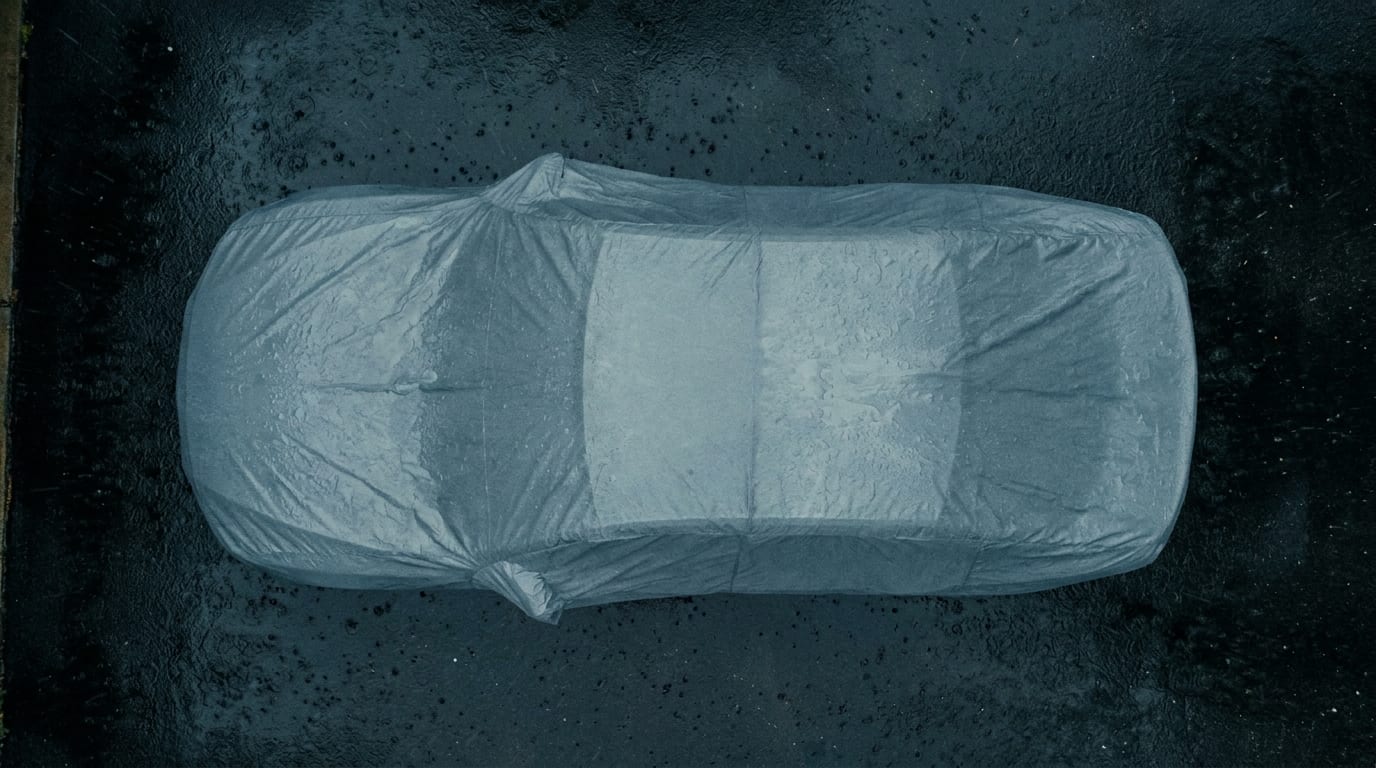
A loose, generic-fit cover is a liability the moment outflow winds show up ahead of a storm. Extra fabric flaps, that flapping rubs against paint, and in a strong enough gust the whole cover can lift off entirely, sometimes ending up in a neighbor's yard. None of that requires the storm itself to have arrived yet.
A properly sized, snug cover behaves completely differently in wind. Less excess fabric means less surface area for a gust to grab, so there's less lift to begin with. This is one of those cases where "universal fit" and "good fit" aren't the same claim, and the difference actually shows up in a storm rather than in a showroom.
Grommets, straps, and underbody tie-downs are the next layer of defense, and a gust strap add-on specifically addresses the wind-lift problem rather than just the waterproofing one. Installing one isn't complicated, and the guide to installing gust straps walks through the process step by step. Before any of that matters, though, the cover has to actually fit the vehicle, so it's worth checking sizing against the car cover sizing guide before buying rather than after the first storm proves it wrong.
Maintenance & Care Tips to Extend Cover Life in Florida's Climate

Let the cover dry completely before folding it up or stashing it in the trunk. This sounds minor, but in Florida's humidity, packing away a damp cover is basically incubating mildew, and once mildew sets into the fabric it's hard to fully get rid of.
A regular rinse-and-dry routine helps too, clearing off pollen, storm grit, and, for anyone closer to the Bay, salt air, all of which slowly wear down fabric coatings over time. It doesn't need to be elaborate, just consistent. The full process, including what to avoid (certain detergents and high heat can damage coatings), is laid out in the cover cleaning guide.
Worth checking before you buy, too: how the warranty handles UV and fabric breakdown specifically, since that's the failure mode Tampa's climate is most likely to trigger over time. The lifetime warranty details page spells out what's actually covered.
Choosing the Right Cover for Your Vehicle
Boil it down and there are three non-negotiables for Tampa drivers: real waterproofing (not just water-resistant marketing), UV-stabilized fabric, and a securement system that holds up to pre-storm gusts. Skip any one of those and you're gambling on which storm finally exposes the gap.
Fit matters just as much as fabric choice. A cover sized for your exact vehicle sheds water and resists wind better than a generic universal one draped over it and hoping for the best. If you're not sure where to start, browse car covers by vehicle type, or use the find your cover tool to match one to your exact make and model.
Get this right once and you skip the repeat paint damage, the mildew smell, and the premature replacement that comes from guessing through Florida's long storm season. If you're curious about more seasonal care tips for keeping a vehicle protected year-round, it's worth poking around the rest of the blog while you're at it.