Articles Seasonal & Weather Car Care Tips
Best Car Cover for Portland, OR Year-Round Rain: A Local Buying Guide
Published
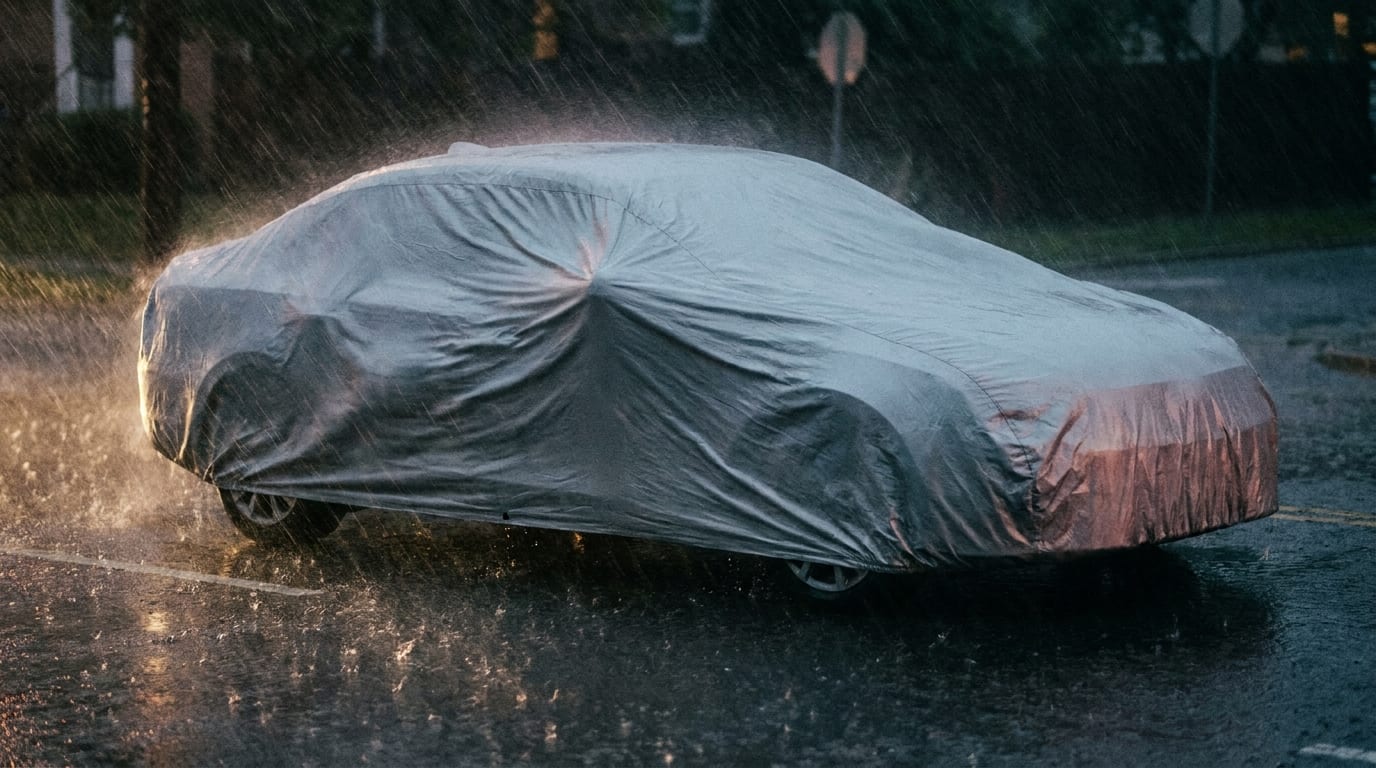
Rain in Portland isn't an event. It's a season, and that season lasts about eight months. If you're parking outside anywhere from the West Hills to Hillsboro, you already know a cheap cover from the hardware store doesn't stand a chance. Finding the best car cover for Portland, OR year-round rain means thinking past "waterproof" as a marketing word and looking at how a fabric behaves after week six of continuous damp, not just during one dramatic downpour. This guide walks through what actually matters here: the weather patterns, the fabric features, and how to match a cover to your specific parking situation instead of guessing off a size chart.
Why Portland's Rain Demands a Different Kind of Car Cover
Portland averages somewhere north of 150 rainy days a year. That number changes the whole equation. A car cover in Phoenix or Denver needs to survive the occasional storm. A car cover here needs to survive months of near-constant moisture exposure without ever fully drying out between rounds.
That's a different engineering problem. Surviving one storm just means the water doesn't get through. Surviving a Portland winter means the cover has to breathe, shed water fast, and resist mildew while sitting damp for days at a stretch. A lot of covers that test fine in a rain simulator fail here, because nobody tested what happens after three straight weeks of drizzle.
This guide covers Portland's specific weather patterns, the fabric and build features that actually hold up under them, and how to pick the right cover tier depending on where and how you park.
Understanding Portland's Weather Patterns That Affect Your Car
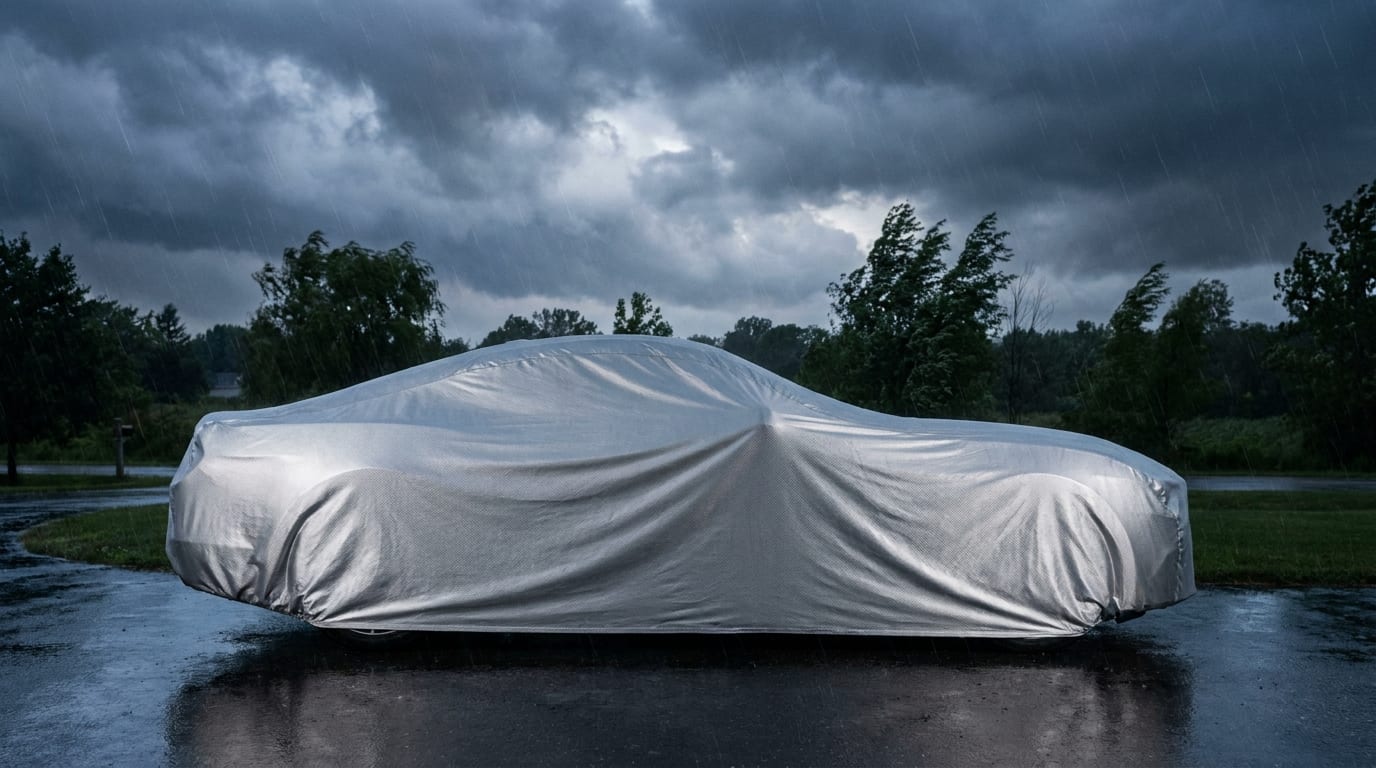
Portland doesn't really do downpours most of the year. It does drizzle. Long, low-intensity, all-day mist that soaks into everything slowly rather than hammering it all at once. That matters because a cover rated for "heavy rain" in a lab test isn't necessarily built for sustained low-grade moisture, which is actually the harder condition to manage. Breathability ends up mattering as much as waterproofing, maybe more.
Then there's the October through March stretch, when falling leaves and shaded, damp surfaces create ideal conditions for moss and mildew. If your car sits under a maple for a season, you'll know what that looks like under a trapped-moisture cover: dark spots, a musty smell, and fabric that doesn't fully dry even on the rare sunny day.
Microclimates matter too. West Hills parking under heavy tree cover deals with more fog, more drip, and more organic debris than open exposure out in Hillsboro, Gresham, or across the river in Vancouver. A cover that's fine in one neighborhood might struggle in another a few miles away.
And don't forget the cold snaps. Portland gets the occasional hard freeze or freezing rain event, and cheap vinyl covers get brittle fast in that kind of cold. Seams crack, grommets tear, and you're left with a cover that's falling apart by February.
Must-Have Features for a Portland Rain-Ready Car Cover

Waterproof and water-resistant are not the same thing, even though they get used interchangeably online. Water-resistant fabric handles light splash and short exposure. Waterproof fabric is built to keep water out under sustained, repeated saturation, which is exactly what Portland throws at it for most of the year. If you're shopping based on specs, look specifically for waterproof car covers rather than anything just labeled "weather-resistant."
Breathability is the feature people skip past, and it's the one that bites them later. A fully sealed, non-breathable cover traps moisture underneath it, and that moisture has nowhere to go. That's how you end up with mildew on your paint under a cover that technically kept the rain out. Good fabric construction lets vapor escape while still blocking liquid water. It's worth reading up on waterproof fabric types before deciding, since not all "waterproof" materials handle breathability the same way.
UV protection still earns its keep here too. Portland summers bring real sun breaks between rain systems, and a cover without UV-resistant layers will fade and degrade faster than you'd expect for a city known for clouds.
Wind matters more than most people think. The Columbia Gorge produces wind events that reach into the metro area, and a cover without a solid elastic hem, grommets, and a strap or cable lock system will end up half off your car after one bad night. For general outdoor setup guidance, the guide to using a car cover outdoors covers wind, UV, and waterproofing together in more depth.
Matching Cover Tiers to Your Portland Parking Situation
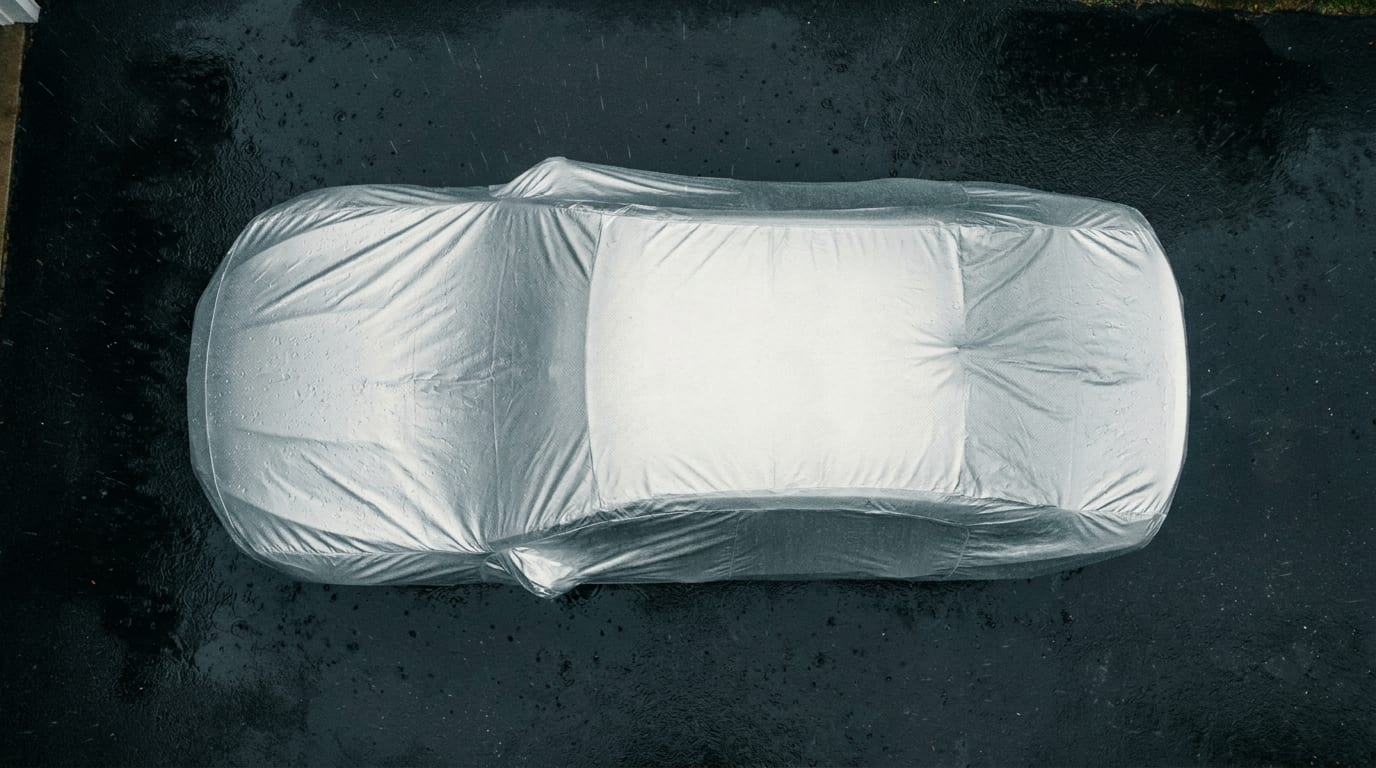
Not every car needs the same cover, and buying the heaviest-duty option across the board is overkill for some situations and underkill for others.
Street parking in close-in neighborhoods like Alberta or Hawthorne, fully exposed with no overhang, calls for the most heavy-duty multi-layer waterproof cover you can get. No tree canopy to soften rain impact means the fabric takes the full brunt of every storm, so this isn't where you cut corners. Start with the outdoor car covers category and look at the top-tier options.
Driveway or carport parking under partial tree cover is a slightly different problem. Rain exposure is lower, but falling leaves, sap, and bird mess pile up fast, so moisture-wicking fabric that sheds debris easily still matters even if you don't need the heaviest-duty build.
How often you drive the car changes the calculus too. A daily commuter needs a cover you can get on and off in under a minute without wrestling it in the rain, versus a weekend or seasonal vehicle that can wear a heavier, more protective cover long-term since it's not coming off every morning.
Trucks and SUVs used for Gorge trips or Mt. Hood weekends deserve a specific mention. These vehicles often sit outside for stretches between outings, caked in mud and grit from the last trip, so durability at the wheel wells and mirrors matters more than it does for a car that just sits in a driveway.
Getting the Right Fit for Your Vehicle
Universal covers gap. It's just a fact of generic sizing: they're cut to fit a range of vehicles loosely, which means water finds the slack at the wheel wells and wicks in underneath during driving rain or wind-blown mist. A custom-fit car cover seals tighter along the body lines, which matters a lot more here than in a drier climate where a loose fit is just a cosmetic annoyance.
Getting the measurements right isn't complicated, but it's easy to skip. You need overall vehicle length, mirror placement (since some covers accommodate mirrors and some don't), and antenna position if you've got a fixed antenna that needs a cutout or patch. Skipping this step is the most common reason people end up with a cover that bunches at one end or won't close around the mirrors.
Portland's vehicle mix leans heavily toward Subarus, trucks, and SUVs built for all-weather driving, and those body styles have more seams and contours where water can pool if the fit isn't precise. If you're not sure what size you need, the sizing guide walks through it, or you can run your vehicle through the cover finder tool directly instead of estimating.
Installing and Maintaining Your Cover Through Rainy Season
Installation order actually matters in wind-prone spots. Secure your straps and cable locks first, before you worry about getting the cover perfectly smooth, because a gust can undo loose fabric before you've finished adjusting it. Once it's secured, check that the coverage is taut and even. Water needs somewhere to sheet off; a loose, baggy cover creates low spots where it just sits and soaks instead. The installation guide breaks the process down step by step if you want a reference.
During the wet season, wash the cover periodically rather than waiting until it looks visibly dirty. Mildew builds up fast in damp, folded fabric, and once it sets in, it's a lot harder to get out than it is to prevent. Always let the cover dry fully before folding it away or storing it. A damp cover folded into a bag is basically a mildew incubator. The cover cleaning guide has the specifics on detergents and drying.
After a heavy rain event, walk around the car and check for pooling spots. If you find one, it usually means the tension needs adjusting. Standing water adds weight, and over time that weight stretches the fabric and stresses the seams right where you don't want it.
Finding Your Best Fit: Next Steps and What to Expect
The short version: waterproof and breathable fabric, a strap or cable lock system built for wind, a custom fit instead of a universal guess, and construction durable enough for Portland's parking reality, whether that's an open street spot or a gravel driveway at the base of Mt. Hood.
Honestly, fit is where most people get it wrong. It's tempting to eyeball a size chart, but running your vehicle through a fit finder tool takes the guesswork out and saves you from a cover that gaps at the wheel wells on day one.
Worth checking too: whether the cover comes with real warranty backing. A cover here works harder year-round than one in a drier state, and that kind of mileage is exactly what a warranty should account for.
If you're still weighing options, it's worth browsing the full car cover lineup and comparing a few builds side by side before you commit. Take your time with it. The right cover sized specifically for your vehicle will save you a season's worth of headaches, and that beats re-buying a cheap one every winter.