


Car Cover With Straps and Grommets: How to Choose and Use One
What "Straps and Grommets" Actually Means on a Car Cover
If you've searched for a car cover with straps and grommets, you've probably already lived through the alternative: a cheap universal cover that ballooned in the wind or ended up three parking spots away. So let's get specific about what this hardware actually is.
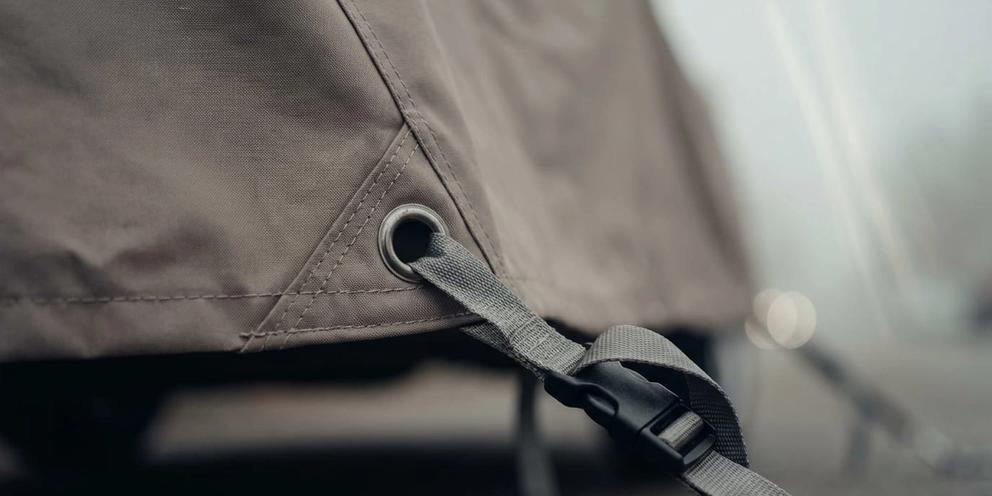
Grommets are small reinforced eyelets, usually metal or molded plastic, sewn into the hem or underside panels of the cover. Straps are the fabric webbing (sometimes with a buckle, sometimes with a cord-lock) that threads through those grommets and pulls the cover tight against the car's body. Together, they're what keep a cover from turning into a parachute the second a gust rolls through.
Most people land on this exact phrase after a bad experience. A cover slipped off overnight, flapped loose for a week, or just sailed off the hood on a windy afternoon. If that's you, the rest of this guide covers three things: how to confirm a cover actually has this feature, how to pick the right version for your situation, and how to install it so it does its job.
What Grommets and Straps Are Actually For
The grommets create fixed anchor points, usually at the hem, sometimes at the front and rear too, so a strap or cord has something solid to pull against. Without them, you're just cinching fabric, and fabric stretches and slips.
The straps themselves route underneath the car, tucking under the rocker panels, around the bumper, or through the mirrors depending on the design. That routing is the whole point: it stops wind from getting underneath the cover and lifting it like a sail. A cover that fits snug on a still day can still flap loose the moment wind gets under the edge, and that's exactly what this hardware is built to prevent.
One thing worth being clear on: this is a wind-security feature, not a theft-deterrent one. It keeps the cover on your car. It does nothing to keep someone from pulling the whole cover off and taking whatever's under it. That's a separate system entirely (more on that below).
Placement also varies a lot by cover quality. Some budget covers put grommets only at the four corners, which barely helps once wind gets under the middle of the panel. Better covers run grommets along the full hem, giving you tension points all the way around instead of just at the corners.
When This Feature Actually Matters for Your Car
If your car lives in a garage, you probably don't need to think about any of this. But outdoor, unsheltered storage is a different story, especially in windy regions, coastal areas, or anywhere with open, unobstructed exposure. Nothing to block the wind means nothing to stop it from getting under your cover.
It matters even more for long-term outdoor storage. A cover that shifts overnight is annoying. A cover that shifts for eight weeks straight, working a corner loose a little more each night, is how you end up with scratches, water intrusion, or a cover that's just gone one morning.
If you've already had a cover flap, shift, or fly off in a storm, you already know why this feature exists. You're not the audience that needs convincing, you're the audience that needs the right hardware this time. For a broader look at matching a cover's build to how exposed your parking situation actually is, the outdoor car cover buying guide walks through that in more detail.
How to Choose the Right Strap-and-Grommet Setup
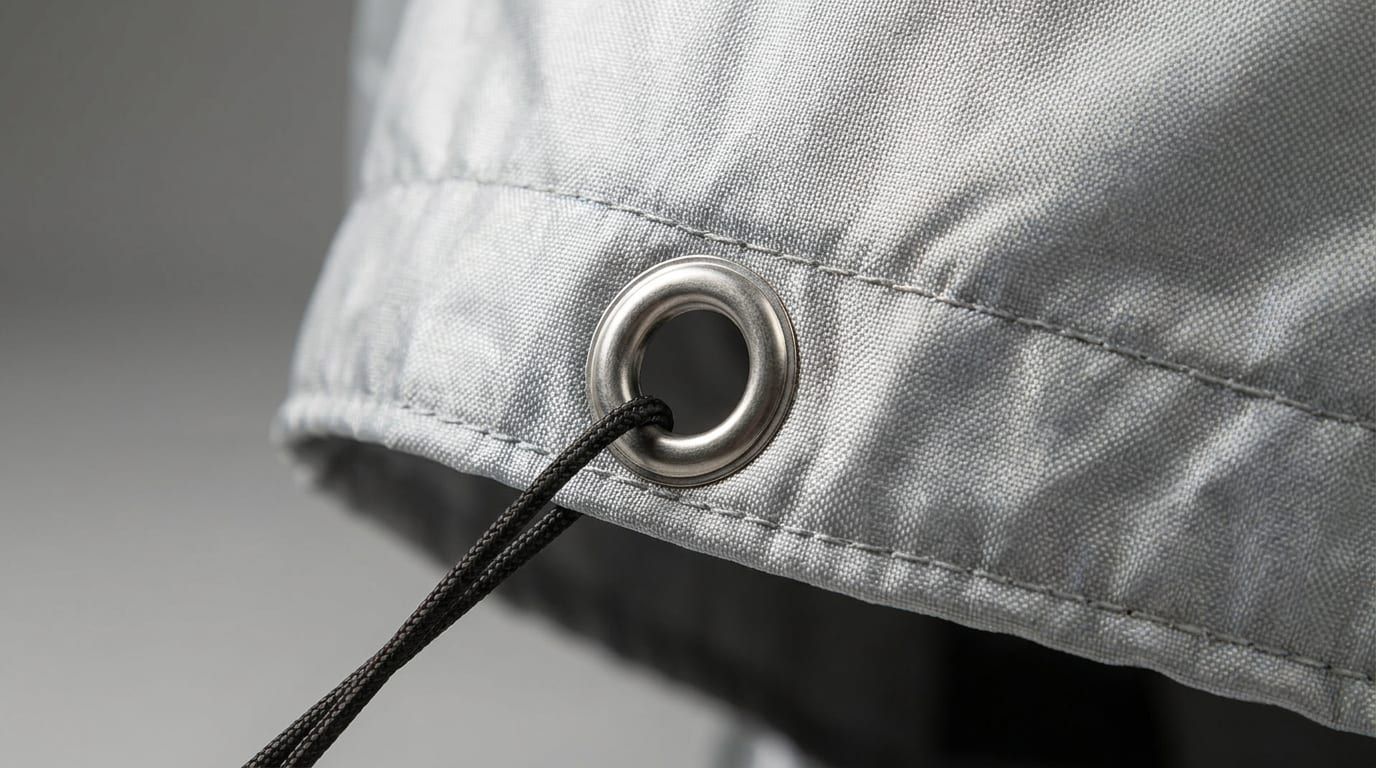
Not all grommets and straps are built the same, and the differences matter more than they look on a product photo.
Start with the grommets themselves. Metal grommets hold up better over time and resist tearing out of the fabric. Molded plastic ones are lighter and cheaper to manufacture, but they're more prone to cracking or pulling loose under repeated tension, especially in cold weather when plastic gets brittle.
Then look at the straps. Webbing straps with actual buckles hold tension far better than a plain elastic cord. Elastic loosens over time and doesn't give you a fixed, repeatable tightness. A buckle or cord-lock lets you cinch it down the same way every time, and you can feel when it's actually snug.
Here's the part people skip: not every universal cover on the market includes grommets and straps at all. It's not a standard feature, it's an added one, so check the actual product listing before you buy instead of assuming it's there because the cover looks heavy-duty in a photo.
In general, semi-custom and custom-fit covers are more likely to include a full grommet-and-strap system than a basic universal cover, since they're built for a tighter, more consistent fit in the first place. If you're weighing that tradeoff, the custom-fit car cover guide breaks down when the upgrade is worth it.
None of this hardware matters if the cover itself is the wrong size. A cover that's too big will have grommets landing in the wrong spot entirely, too far from the rocker panel to route a strap properly. Check the car cover sizing guide before you buy so the straps and grommets actually end up where they need to be.
Installing and Securing the Straps and Grommets Correctly
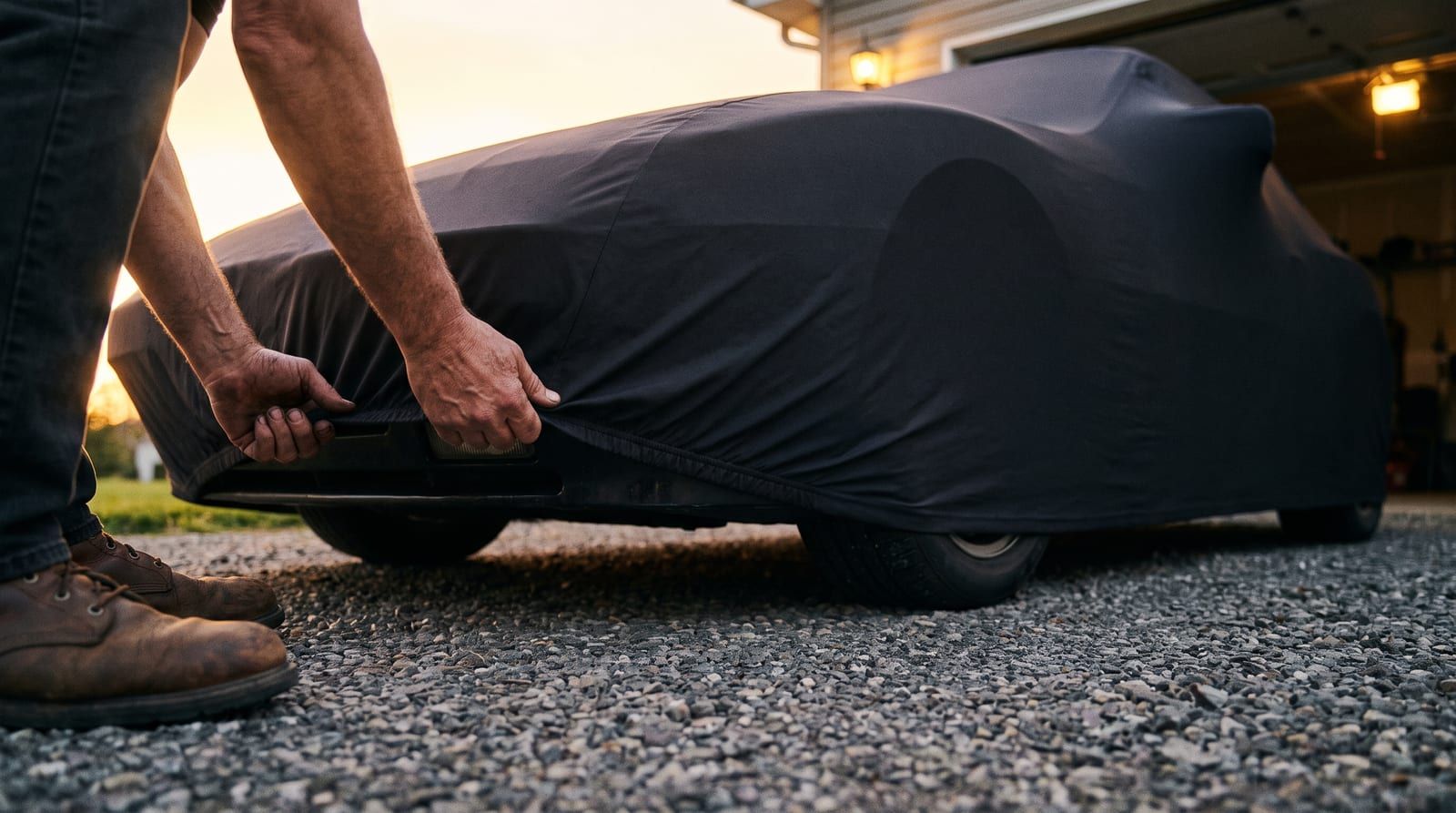
Getting the hardware right on paper doesn't help if it's installed wrong. The good news: the process itself isn't complicated.
Drape the cover over the car first, centering it front to back. Locate the grommets along the hem. Thread the straps through them and route each one underneath the vehicle, under the rocker panels or around the bumper depending on how the cover's designed. Cinch each strap to snug, not white-knuckle tight. Overtightening stresses the grommet and can pull it loose from the fabric over time, which defeats the purpose.
That's the short version. For the full step-by-step, including how to handle mirrors, antennas, and trickier body shapes, the gust strap installation guide covers it in detail.
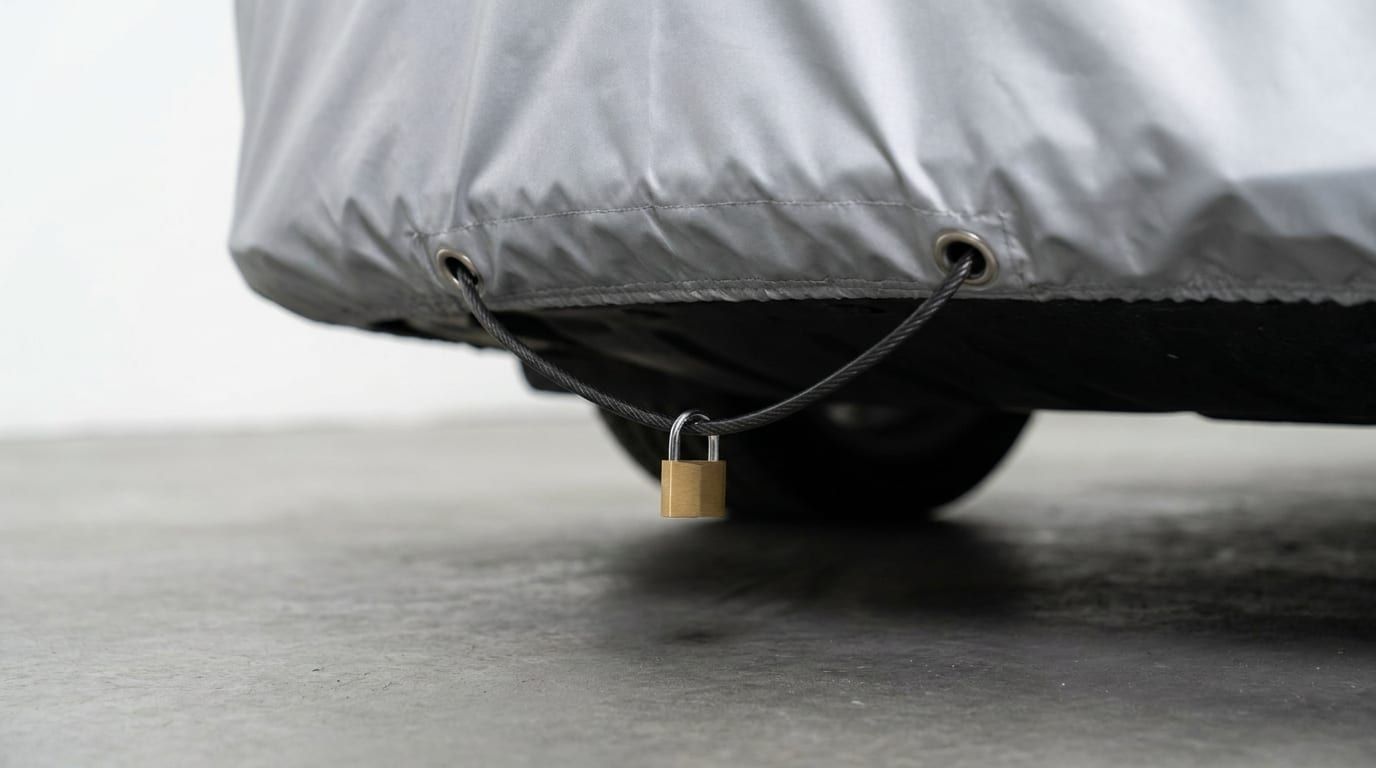
While you're at it, consider running a cable lock through those same grommets. It won't stop wind on its own, but it adds real theft deterrence on top of the wind security you're already getting, and the grommets are already there to use. The cable lock installation guide shows how to set that up alongside the straps.
One more thing people skip: check the grommets and strap stitching periodically for wear. Fraying webbing or a grommet starting to pull loose is a lot cheaper to catch early. Cleaning the cover per the car cover care guide also keeps grit and moisture from working into the hardware and corroding metal grommets over time.
Straps and Grommets vs Other Wind and Security Add-Ons
Straps and grommets solve one specific problem: wind lift. They don't stop theft, and they don't do anything about water pooling on the roof. It's easy to assume one accessory covers everything a cover needs, but each one here solves a different failure point.
Straps and grommets
- Problem solved: Wind lift and cover slippage
- Doesn't solve: Theft, water pooling on the roof
Cable locks
- Problem solved: Theft deterrence
- How it connects: Threads through the same grommets straps use
Support poles
- Problem solved: Rain or snow pooling on the roof panel
- Doesn't solve: Wind security, this is a separate concern entirely
Antenna patches
- Problem solved: Fit around roof-mounted antennas
- Note: This is a fit issue, not a wind issue
These stack, they don't compete. A car sitting outside through a full winter, exposed to wind and snow, usually needs more than one of these at once, straps and grommets plus a lock, sometimes a pole too. If you're dealing with a truck bed or taller roofline, the truck support pole installation guide is worth a look, and if your vehicle has a roof-mounted antenna, check the antenna patch guide so the cover fits clean instead of tenting around it.
Shop Car Covers Built With Straps and Grommets
If you've gotten this far, you already know what to look for: full-hem grommets, webbing straps with real buckles, and a fit that's tight enough for the hardware to matter. Browse the car cover collection and filter for outdoor-rated, strap-equipped options, or use the cover finder tool to match your exact year, make, and model to a cover that includes this hardware standard.
Not sure if you're overpaying for peace of mind? Check the lifetime warranty details before you decide, it covers exactly the kind of long-term outdoor use this whole article is about.
Pick your vehicle, confirm the listing actually mentions grommets and straps, and order. And if you're still deciding what else your setup needs, poke around the rest of our car cover guides. There's a good chance the next question you're about to ask is already answered.
Updated