Articles Seasonal & Weather Car Care Tips
Covers for Raining Season: What a Waterproof Car Cover Actually Does
Published

One good storm, your car dries out in an afternoon and nothing happens. Weeks of rainy season is a different problem entirely. Paint stays damp, seals never fully dry, and water finds every low spot on the body and just sits there. That's the kind of exposure that actually causes damage, and it's why covers for raining season need to do more than just repel water during a downpour.
Why Rainy Season Is Harder on a Car Than a Single Storm
A single rainstorm is basically a non-event. Water hits the paint, rolls off, the sun comes out, everything dries. Rainy season doesn't give you that recovery window. Rain comes back before the car, the trim, or the rubber seals have had a chance to dry out completely, so moisture just keeps accumulating in places it shouldn't.
Three things tend to go wrong when that pattern repeats for weeks. Paint starts oxidizing from prolonged moisture sitting on the surface. A musty, mildew smell shows up, usually from humidity trapped under a cover or in a closed-up garage. And rust starts creeping in at the wheel wells, tire contact points, and trim seams, anywhere water pools instead of draining away.
A good waterproof outdoor cover handles most of this. But it's not a universal fix. Where the car is parked, how it drains, and how much airflow it gets all matter just as much as the cover itself.
How Trapped Moisture Actually Damages a Car Over Weeks of Rain
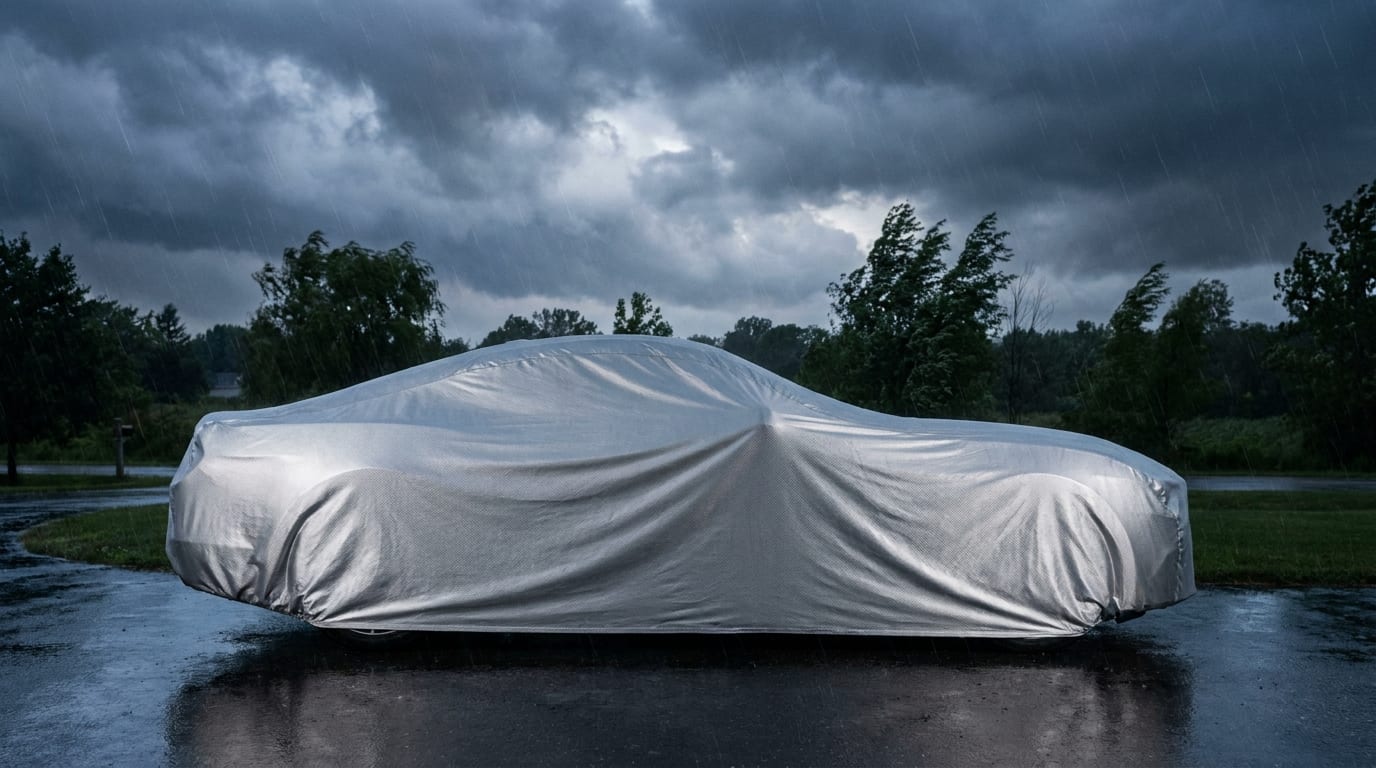
Paint oxidation doesn't need a flood to get started. It just needs standing water sitting on a horizontal panel, like the hood or roof, combined with UV exposure in the gaps between rain. That cycle of wet, then sun, then wet again breaks down the clear coat faster than constant rain or constant dryness would on their own.
The mildew smell is a different mechanism but the same root cause: trapped moisture with nowhere to go. A cover that isn't breathable seals in the condensation forming underneath it overnight, creating a stagnant, humid pocket right against the paint and seals. That's the same environment that causes musty odors inside a car with a cracked window, just happening on the outside.
Rust is the slowest of the three, but it's the one owners usually notice last. It shows up first at wheel wells, rocker panels, and door bottoms, the low points where water naturally collects and doesn't drain. Cars parked on uneven ground or grass are especially exposed, since water pools right at the tire line and just sits.
None of this happens in a day. It builds over a full rainy season, which is exactly why so many owners don't connect the damage to where they parked until it's already visible on the paint or showing up as a smell they can't get rid of.
What to Look for in a Waterproof Outdoor Car Cover
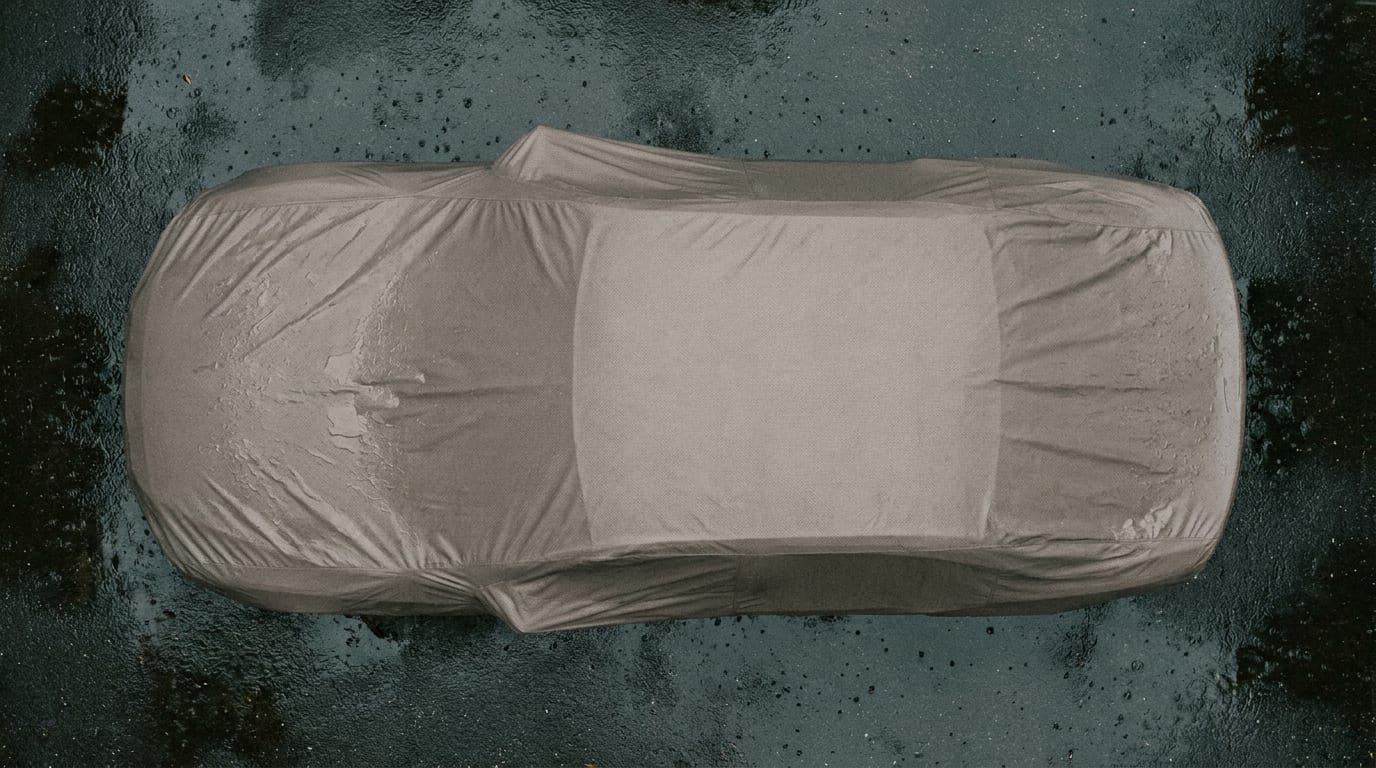
Not every cover that claims to be waterproof actually handles rainy season well. The fabric matters more than the marketing term.
Look for a breathable waterproof fabric, one engineered to block rain from the outside while still letting interior moisture and condensation escape. That's the real difference between a proper outdoor cover and a cheap plastic tarp-style cover, which blocks rain just fine but traps humidity underneath it just as effectively.
Sealed seams matter too. Stitching alone leaves tiny needle holes that water wicks through over repeated exposure, even if the fabric itself is waterproof. A cover with taped or sealed seams closes off that leak point entirely.
And fit matters more than people expect. Elastic hems, included straps, or grommets for a cable lock all keep the cover anchored so wind doesn't work it loose or flap it against the paint during a storm. A cover that shifts around in wind causes its own kind of damage.
If you're comparing options, CarCovers' guides on waterproof car covers and outdoor car covers walk through these fabric and fit differences side by side, which is worth doing before you buy rather than after.
When a Cover Helps vs. When You Need a Garage or Carport
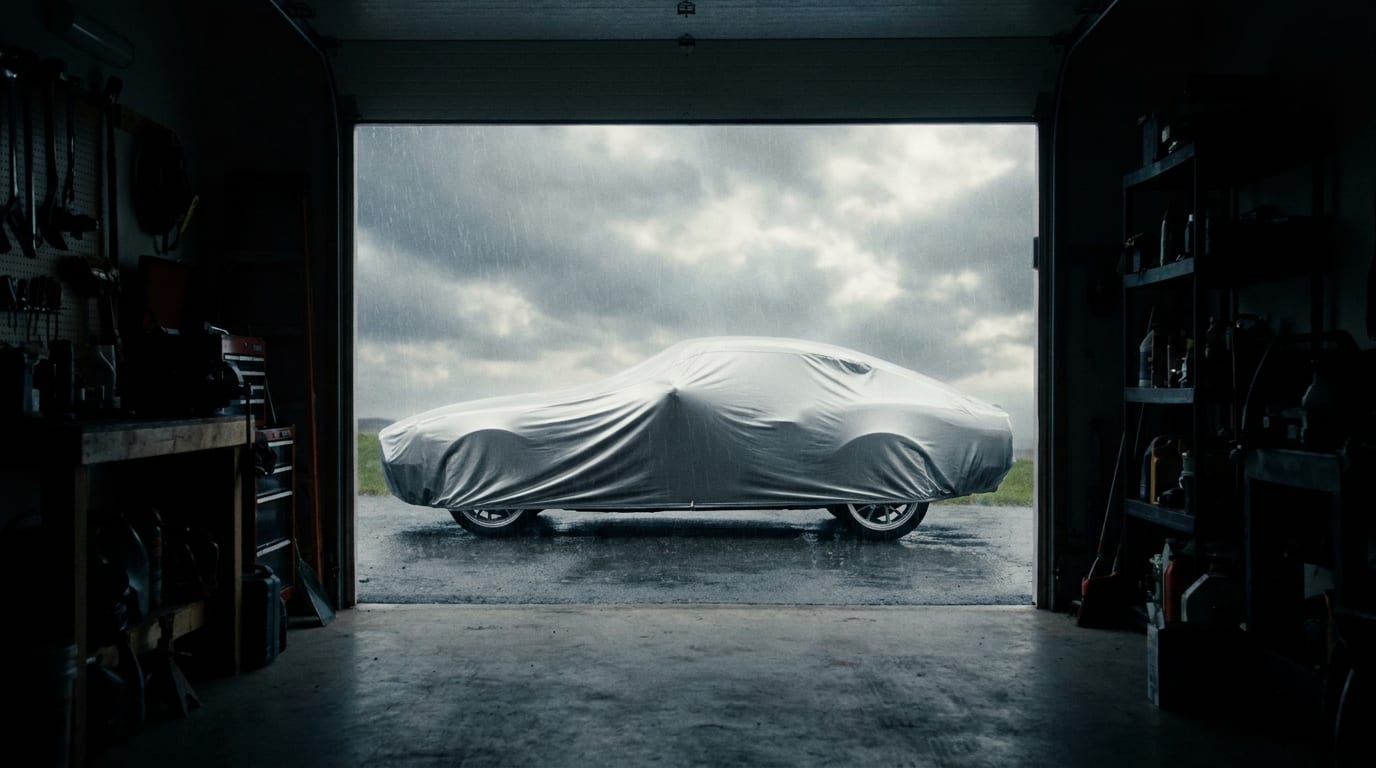
Here's the honest answer: a cover is the right tool for some situations and the wrong one for others.
If you park outside most of the time and a garage just isn't an option, a quality waterproof outdoor cover is exactly what you need. It's doing the job it's designed for.
Where a cover stops being enough is when standing water regularly pools under the vehicle itself, flood-prone driveways, low spots with bad drainage, that kind of thing. A cover protects the car from above. It can't stop ground moisture from wicking up into the wheel wells and rocker panels from below. That's a drainage problem, and the only real fix is a garage, carport, or any kind of covered parking that gets the car off standing water entirely.
If your car already sits under a carport or similar structure, you probably don't need full waterproof protection at all. A lighter indoor car cover is often enough, since it's only dealing with dust and light condensation rather than direct rain.
The real question isn't "does a cover help in rain." It's matching the cover type to how exposed the car actually is.
Fitting and Securing the Cover So Wind Doesn't Undo the Protection
A cover that fits loosely causes problems of its own. Wind gets underneath it, it flaps against the paint, and that constant motion can scratch the clear coat faster than just leaving the car uncovered. Loose edges are also exactly where wind-driven rain gets pushed in underneath, defeating the whole purpose.
Gust straps or a cable lock solve this. They anchor the cover to the vehicle so wind can't lift or shift it during a storm, and they're worth the extra five minutes of setup every time. CarCovers' guide on installing gust straps walks through the process if you've never set one up.
Check the fit around mirrors and the antenna too. These are small protrusions, but they're common spots where a cover bunches up or gaps slightly, giving water a path in even when the rest of the fit looks solid. A couple extra minutes tensioning the cover around these points is the difference between a snug fit and one that leaks exactly where you can't see it.
Keeping a Rain-Season Cover Working All Season Long
Even during a stretch of consecutive rainy days, pull the cover off when you get a dry window and let both the car and the underside of the cover air out. Covers left on nonstop, even good ones, don't get a chance to release built-up moisture.
Cleaning matters more during rainy season too, not less. Dirt, road grime, and tree sap sitting against the fabric can abrade the waterproof coating every time you put the cover on or take it off, which adds up over a season of frequent use. A simple regular cleaning routine keeps the coating intact instead of wearing thin at the fold points. For a full walkthrough, CarCovers also has a step-by-step cover cleaning guide worth following.
Know the signs it's time to replace the cover, too: fabric that no longer beads water the way it did when new, seams that visibly leak during rain, or a coating worn thin at the friction points around mirrors and fold lines. Once any of those show up, the cover isn't doing its job anymore, no matter how waterproof it was on day one.
Protecting Your Car Through the Rest of Rainy Season
The decision tree here is pretty simple. If you're parking outside daily, get a breathable waterproof cover with sealed seams and a secure fit. Those aren't optional extras, they're what actually separates a cover that works from one that traps moisture against the paint. And if the real issue is standing water pooling under the car, no cover fixes that. You need a garage or carport instead.
Rainy season tests a cover more than almost any other weather. If you're still figuring out which covers for raining season actually fit your car and your parking situation, it's worth browsing CarCovers' car cover options and comparing the buying guides before the next storm rolls through.