Articles Seasonal & Weather Car Care Tips
The Best Car Cover for Monsoon Season: How to Protect Your Vehicle from Heavy Rain, Wind, and Flooding
Published
Why Monsoon Season Is Tougher on Your Car Than You Think
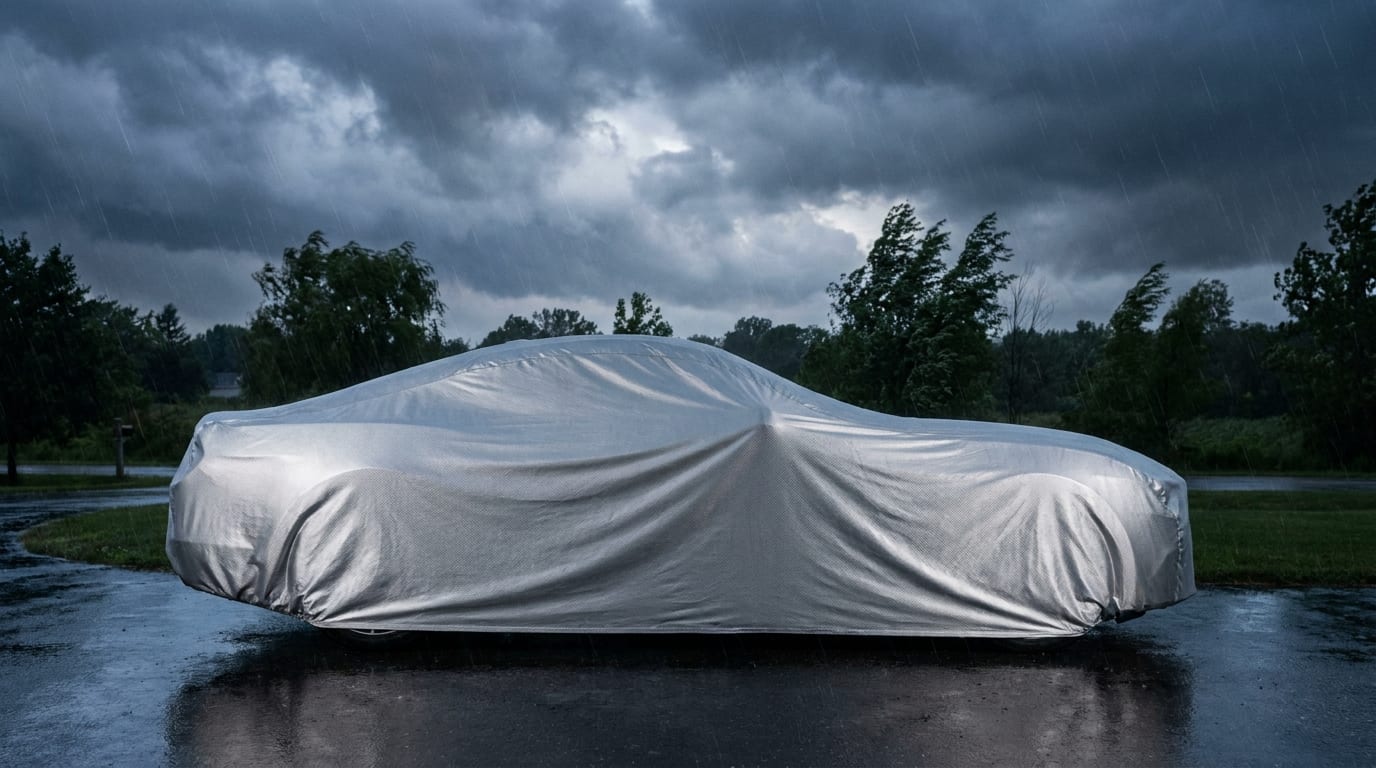
Monsoon season doesn't mean one bad storm. It means weeks, sometimes months, of sustained heavy rainfall, sudden downpours that show up with zero warning, thick humidity, gusty wind, and in some regions, hail mixed in for good measure. If you park outside during that stretch, your car is taking a beating you can't always see.
Standing water pools in the wrong places: along trim lines, in the cowl, around the base of the windshield. Given enough time, that water finds its way through door seams and sunroof drains that weren't built for constant saturation. Once moisture gets into the cabin, it doesn't leave on its own. It sits in the carpet padding, and a few weeks later you've got a musty smell that's nearly impossible to fully get rid of. Underneath the car, repeated wet-dry cycles accelerate rust on exposed metal and undercarriage components, especially if your vehicle already has some age on it.
Here's the part people forget: monsoon season isn't all clouds. It alternates violently between downpour and blazing sun, sometimes in the same afternoon. That sun exposure between storms still bakes paint and dries out rubber seals, so you're dealing with two kinds of stress, not one.
A basic dust cover isn't built for any of this. A real car cover for monsoon season has to handle water, wind, and UV in rotation, which is a different job entirely than keeping pollen off your hood in the garage.
What Makes a Car Cover Monsoon-Ready

"Water-resistant" and "waterproof" get used interchangeably in product listings, and they shouldn't be. Water-resistant fabric slows water down. Waterproof fabric blocks it. For a car sitting outside through repeated storms over weeks, that difference is the whole ballgame. A cover that's merely resistant will eventually saturate, and once it does, it's holding water against your paint instead of shedding it.
But waterproofing alone isn't enough. A cover also needs to breathe. If it blocks rain but traps the moisture that's already there, condensation builds up underneath and you've basically built a greenhouse for mold. The fabric needs to let vapor escape while still keeping rain out, which is a harder manufacturing problem than it sounds like and it's why cheap covers skip it.
UV resistance still matters here too. It's easy to assume a rainy season doesn't need sun protection, but the sun that follows a storm is often intense, and it's working on both your paint and the cover fabric itself. A cover without UV-resistant coating will fade and get brittle by the end of the season, right when you need it most.
Last detail: reinforced seams and elastic hems. Wind-driven rain doesn't fall straight down, it gets pushed sideways into any gap it can find, and that's usually at the seams or where the hem meets the body. For the full rundown on fabric layers and weatherproof construction, the outdoor cover buying guide walks through it in more depth, and the waterproof fabrics guide breaks down what's actually inside these materials.
Getting the Fit Right Before Monsoon Hits
A loose cover is arguably worse than no cover once the wind picks up. Fabric that flaps works like sandpaper against your clear coat, and every gap at the edges is an entry point for water. Universal-fit covers are built to approximate a size range, which means there's always slack somewhere, and slack is exactly what storms exploit.
Custom-fit covers are cut to your vehicle's exact dimensions, so there's less fabric to flap and fewer gaps for water to find. Semi-custom options split the difference, they're better than a generic universal cover but not quite as tight as custom. For monsoon conditions specifically, where wind and sustained rain are both in play, the tighter the fit, the better your odds.
Getting the size right isn't just "small, medium, large." You want the correct length for your make and model, mirror pockets that actually line up, and antenna cutouts if your vehicle has a fixed antenna. The goal is water sheds off the cover's natural contours instead of pooling in low spots and sitting there for hours. If you're not sure what you need, the guide to sizing a car cover for your vehicle covers how to measure properly, and the custom-fit car covers page is worth a look if you're parking outside for the whole season.
Securing a Cover Against Wind and Flash Flooding
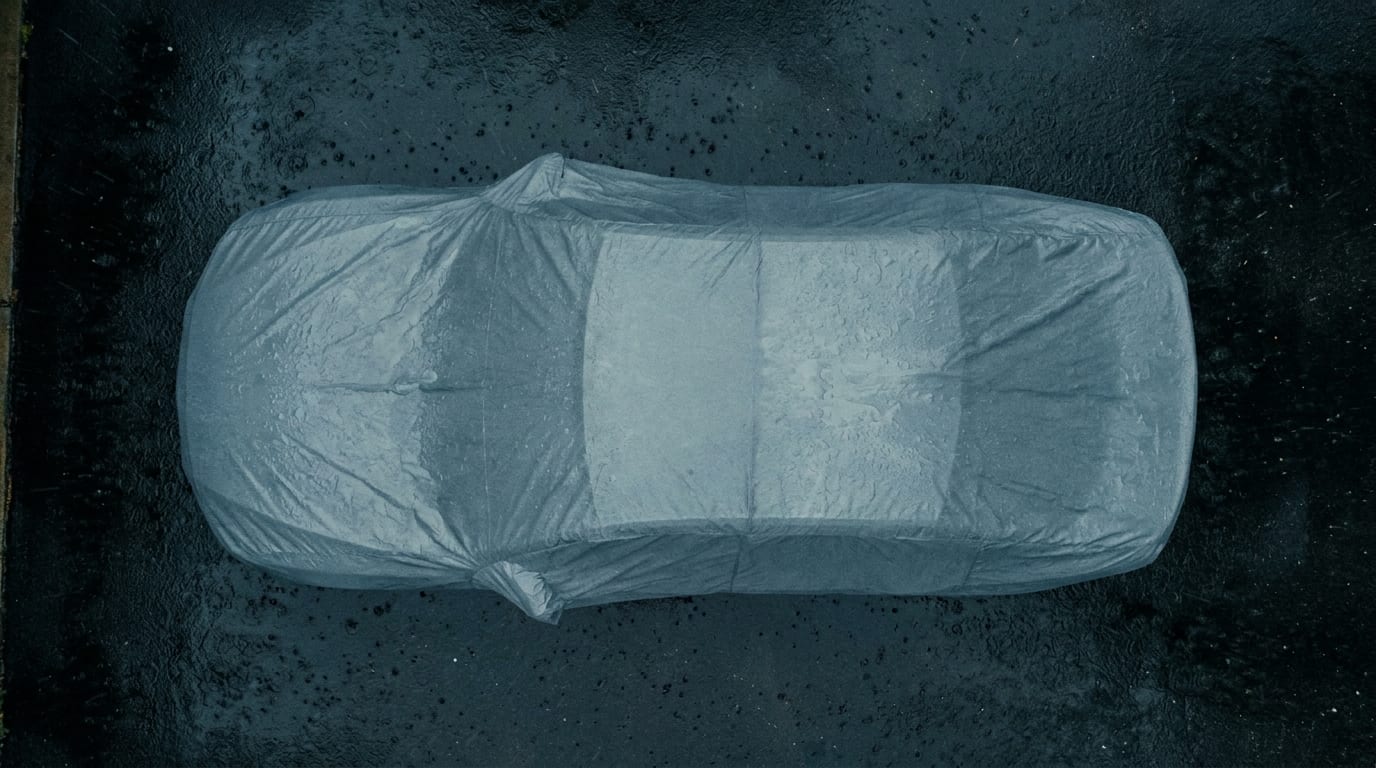
Monsoon wind doesn't blow steady, it gusts. A cover that fits well can still get caught by a hard enough gust and start working its way loose at the corners. That's what gust straps are for: they run underneath the vehicle and cinch the cover down so it can't lift or shift during a squall. Skipping this step is one of the more common mistakes people make, because the cover looks secure on a calm day and then fails the first time the wind actually tests it. The gust strap installation guide shows exactly where they go and how tight they should sit.
There's also a less obvious risk: theft of the cover itself. During a multi-week rainy stretch, a car cover often sits untouched and unattended, which makes it an easy target. A cable lock threaded through the grommets solves that cheaply, and the cable lock installation guide is a quick read if you've never set one up before.
Parking location matters too, cover or not. Flash flooding doesn't care how good your fabric is. Avoid low-lying spots, areas near storm drains, and anywhere runoff tends to collect, especially if you're leaving the car for more than a day or two during an active weather system.
For strap placement, run them under the vehicle and through the wheel wells rather than just across the hood or roof. That's where you get the most resistance against lifting, and it's the difference between a cover that survives a windy night and one you find three driveways down in the morning.
Caring for Your Cover Through a Rainy Season
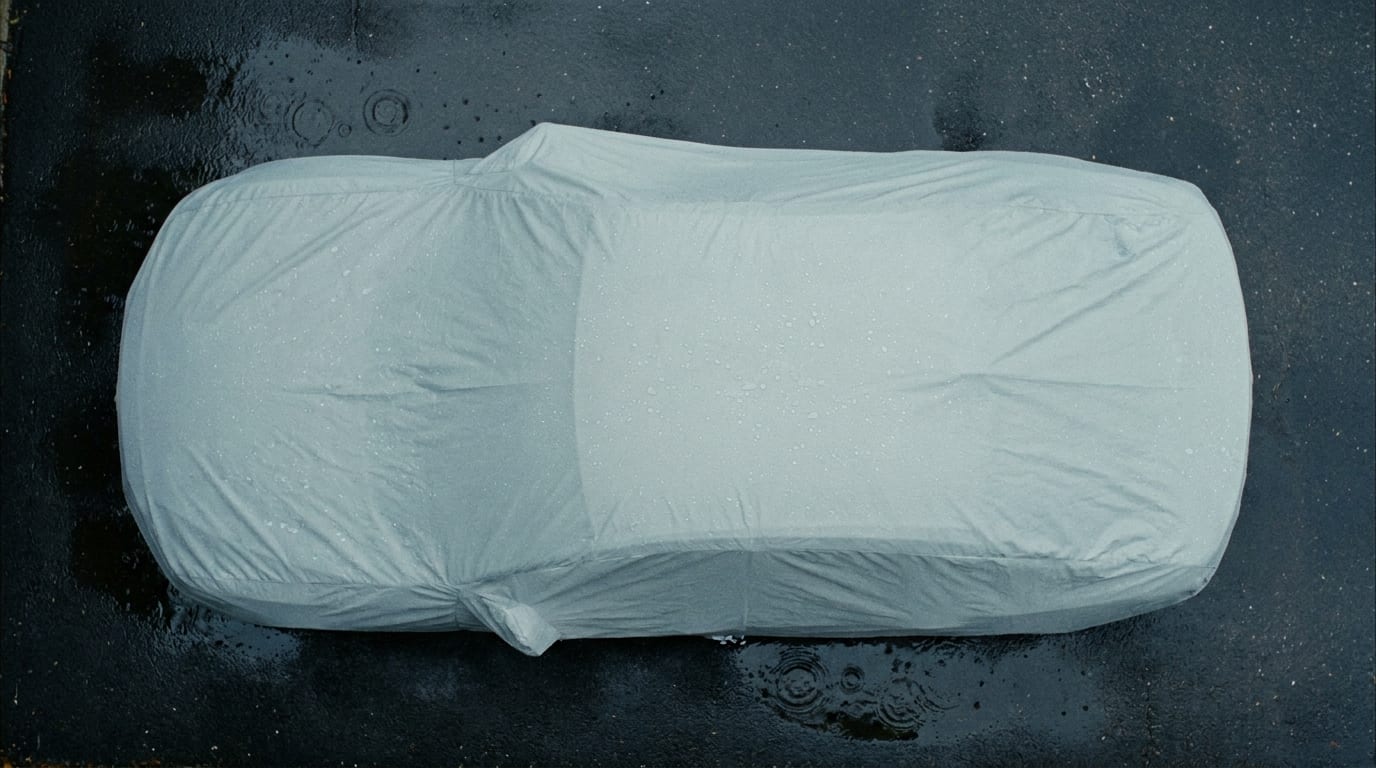
A cover that stays wet for days starts smelling like a damp basement. That's not a defect, it's just what happens to fabric exposed to constant moisture without a chance to dry out. During monsoon season, that cycle repeats constantly, so the maintenance routine has to be more active than it would be in a dry climate.
Keep it simple: shake off standing water whenever you get a dry window, check underneath for trapped moisture every so often, and clean the cover on an actual schedule rather than waiting until it visibly smells or shows spots. Waiting for visible mold means you're already behind.
A few things to avoid entirely. Don't machine-dry on high heat, it can warp the fabric and break down the waterproof coating. Don't reach for harsh detergents either, for the same reason, they strip the very treatment that makes the cover work in the first place. Mild soap and a proper rinse goes a lot further than people expect. For the full wash process, the step-by-step cover cleaning guide and the cover care guide both lay out what to use and what to skip.
Choosing and Buying the Right Cover for Your Vehicle
If you're shopping with monsoon season in mind, run through this short checklist: waterproof-rated fabric (not just water-resistant), a fit that's correct for your specific vehicle, compatibility with wind straps, and breathable construction that won't trap moisture against the paint. Miss any one of these and you're left with a cover that handles some storms but not all of them.
Coverage needs also shift depending on what you're protecting. A sedan sheds water differently than an SUV, and a truck bed changes the equation again. If you're browsing by vehicle type, the car covers category page is the place to start comparing options across body styles.
One more thing worth checking before you buy: warranty coverage. A cover meant to survive a full rainy season, not just one storm, should be backed by something more than a vague return policy. The lifetime warranty on car covers is worth reading through if you want some reassurance that the cover is built to actually last.
If you haven't installed one before, it's a five-minute job once you know where things go, and the simple guide to installing your car cover walks through it step by step.
Monsoon season doesn't wait for you to be ready. If your current cover is a few years old or you've never had one built for sustained rain and wind, now's the time to look at your options before the first real storm rolls in.