Does a Car Cover Come With an Anti-Theft Cable Lock? What's Actually Included
Published
Short answer: no, not usually. Whether a car cover comes with an anti-theft cable lock depends entirely on the brand, the product tier, and whether the listing specifically mentions "cable lock" or "theft protection" as an included accessory. Some premium fitted covers bundle one in. Most basic universal covers don't. The only way to know for sure is to check the included-accessories list on the exact product page before you buy.
Does a car cover come with an anti-theft cable lock?
Here's the honest breakdown: if you're asking "does a car cover come with an anti-theft cable lock" because you assume it's a standard part of every cover, it's not. Cable locks show up more often on higher-tier or custom-fit covers than on cheap universal ones, since brands selling a premium product tend to pack in extras like straps, storage bags, and locks to justify the price.
But "more often" isn't "always." A $40 universal cover and a $150 custom-fit car cover can both leave the cable lock out entirely, or both include it, depending on the manufacturer's packaging decisions that year. Don't assume. Read the product description, check the box contents list, and if it's not spelled out, ask before you check out. It takes thirty seconds and saves you from unboxing a cover with grommets but nothing to run through them.
How does a car cover anti-theft cable lock actually work?
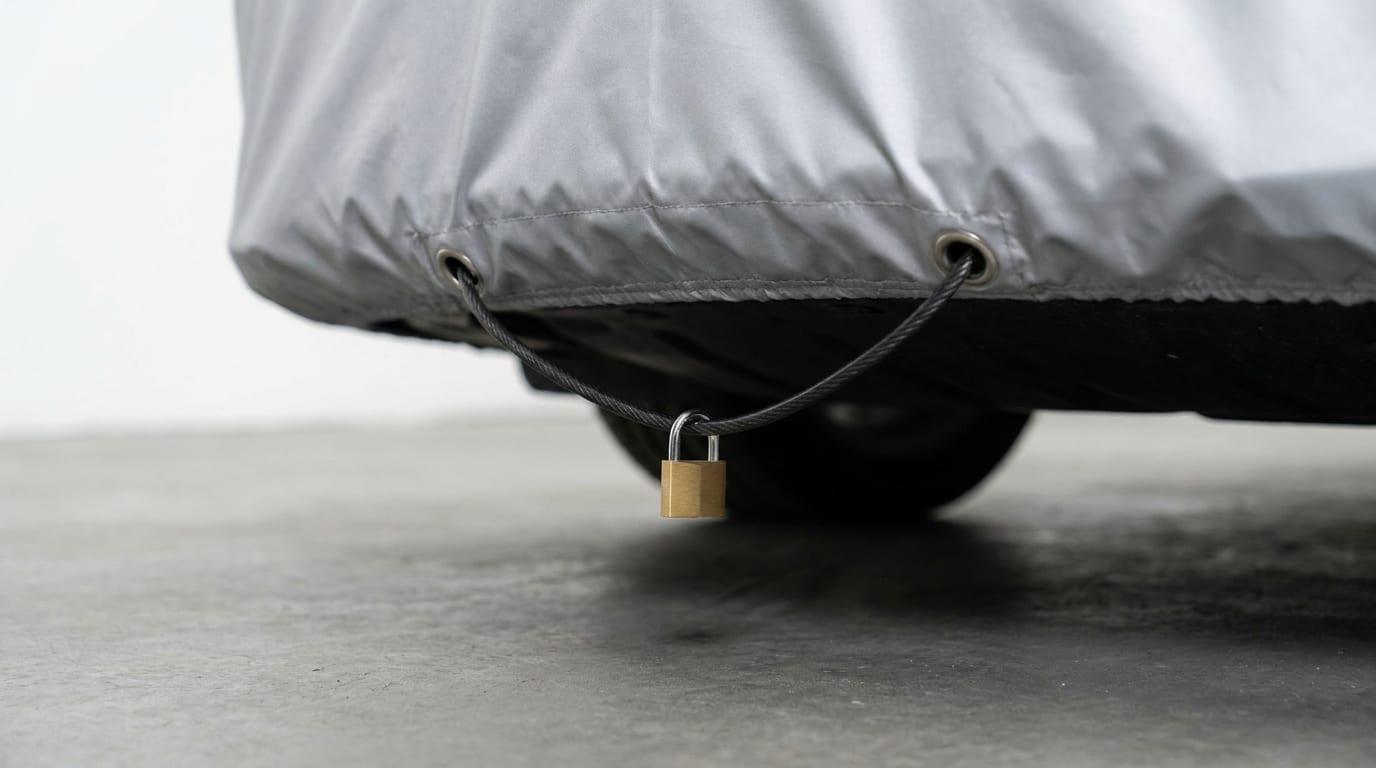
The mechanism is simple. A coated steel cable threads through small grommets or eyelets sewn into the cover's hem, loops around something the car isn't going anywhere without (a wheel, a strut, a suspension arm), and clips shut with a compact padlock. That's it. No wiring, no electronics, no app.
The coated steel matters more than people realize. A plain rope or a bungee cord does nothing against someone with a pocketknife. Coated steel cable takes real effort and the right tool to cut through, which is usually enough to make a casual thief move on to an easier target instead of bothering with yours.
One thing worth being clear-eyed about: this isn't a vehicle anti-theft device. It won't stop someone from breaking a window or hot-wiring the car. What it does is make the cover itself harder to yank off and walk away with, which matters more than people expect once you understand why covers get stolen in the first place (they're easy to grab, fold up small, and resell).
Does a car cover deter thieves?

On its own, a cover mostly deters opportunistic theft, the kind where someone's walking through a parking lot, sees something worth grabbing through a window, and acts on impulse. A cover hides the interior and the vehicle's identity, which removes that temptation entirely. It also slows down anyone trying to get at the car itself, since pulling off a secured cover takes time nobody casing a lot wants to spend.
Add a cable lock and you've added a second obstacle: now the cover can't just be grabbed and tossed in a trunk. Someone has to deal with the lock first, and most won't bother.
But let's be straight about limits. A cover, even with a lock, is not a substitute for a steering wheel lock, an alarm system, or parking somewhere secured and well-lit. It's one layer in a stack, not the whole stack. Anyone telling you a car cover alone is real theft protection for the vehicle itself is overselling it.
What are the downsides of using a car cover?
Covers aren't a flawless solution. Non-breathable materials trap moisture underneath, which, over weeks, causes exactly the kind of damage you bought the cover to prevent. Dirt and grit trapped under a cover can also grind against the clear coat every time wind makes the fabric shift, leaving fine scratches you won't notice until you pull the cover off and wonder what happened.
There's also the practical annoyance factor. If you drive daily, putting on and folding up a full cover every single time gets old fast. It's one more thing standing between you and leaving the house.
And here's a downside that connects straight back to theft: a cover that's loose or doesn't fit well flaps in the wind. That flapping isn't just annoying, it's abrasive, and it also makes the cover an easy grab. Something to understand why you'd buy a car cover in the first place: protection only works if the cover actually stays put. That's where a cable lock, or a gust strap for wind specifically, earns its keep. A cover that's locked down and strapped tight isn't flapping around or inviting someone to tug it loose.
What's the most effective anti-theft setup if your cover doesn't include a cable lock?
If your cover showed up without one, don't treat that as a dead end. The most effective setup is a custom-fit cover paired with a cable lock bought separately and looped through the existing grommets, secured around a wheel. That combination covers both problems: the car's hidden, and the cover itself can't be walked off with.
When you're shopping for a lock separately, look for three things:
- Coated steel cable, not bare wire or anything that looks like it belongs on a bike rack. Bare cable corrodes and cuts easier.
- A weather-resistant lock body. It's going to live outside, so a lock that seizes up after one rainstorm isn't worth the money.
- Enough length to actually reach a fixed point like a wheel or axle. A cable that's too short to loop around anything useful is just dead weight.
This is a cheap add-on, not a special order. You can find these kinds of accessories in most cover accessories collections, and once it arrives, setup takes minutes. For the exact steps, the cable lock installation guide walks through it start to finish.
Is there such a thing as an automatic car cover with built-in anti-theft features?
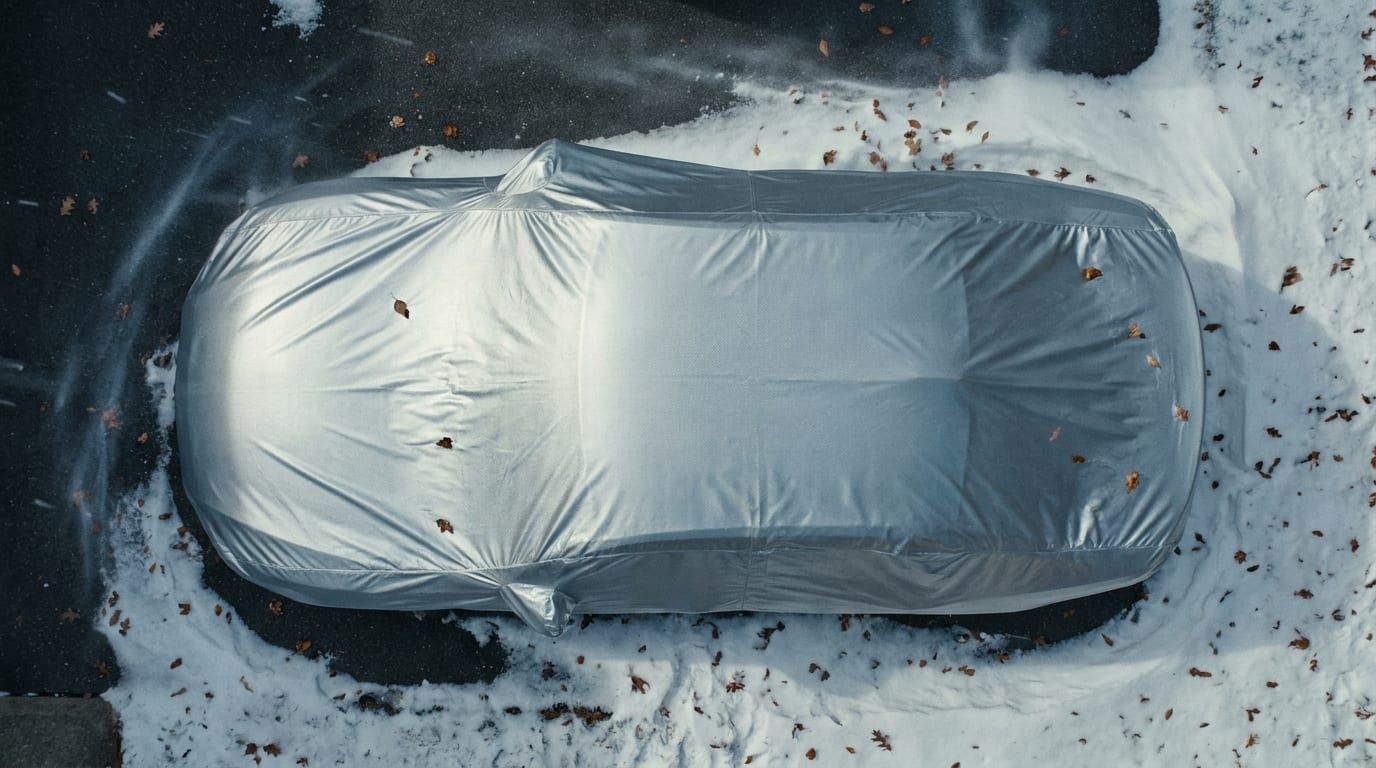
Yes, automatic or retractable cover systems exist, but they're a different category altogether from the fitted covers most people are buying when they search for one. They're motorized, they cost significantly more, and whether they include anti-theft integration varies a lot by manufacturer. Some do, some don't.
I won't name or rank specific products here, because the market shifts and claims about what's "included" change by model year. What I will say: treat the included-accessories list the same way regardless of what tier of cover you're looking at. If "cable lock" or "theft protection" isn't listed in writing, don't assume it's in the box.
What's more common, and more relevant for most shoppers, is that premium fitted-cover tiers (not the automatic/retractable systems, just the higher-end fitted covers) often bundle extras like cable locks, straps, and storage bags as part of the package. That's worth comparing before you decide a pricier cover isn't worth it. Sometimes the extra cost is the accessories, not just the fabric.
How to add a cable lock to a cover that doesn't include one

If yours didn't come with one, adding a cable lock is genuinely one of the easier upgrades you can make. No tools, no drilling, no modifying the cover itself.
- Find the grommets or eyelets. Most covers have these built into the lower hem specifically for this purpose.
- Thread the cable through them, working your way around the car so the cable passes through each anchor point.
- Wrap the cable around a fixed point, like a wheel or a suspension arm, something the car can't drive away and leave the cable dangling.
- Close the padlock and give the cover a tug to make sure it's actually secured, not just resting against the cable.
Once you know where the grommets are, this takes under five minutes. For the full walkthrough with photos and specifics on positioning, the cable lock installation guide covers it step by step.
Bottom line: check before you buy
Whether a car cover comes with an anti-theft cable lock really does come down to the specific product, not some industry standard you can count on. Some do, plenty don't, and the only reliable way to know is checking the listing before you buy instead of assuming.
If you're shopping now, take a minute to look at car covers and outdoor car covers with the included-accessories list open, and if the one you land on doesn't include a lock, don't let that be a dealbreaker. Adding one after the fact is quick and inexpensive, and now you know exactly what to look for and how to install it.
Got more questions about fit, materials, or what's actually in the box? Our FAQ page covers a lot of the common ones, and it's worth a skim before you check out.
Frequently asked questions
How does a car cover anti-theft cable lock work?
A coated steel cable threads through the cover's built-in grommets or eyelets, loops around a fixed point like a wheel or suspension component, and secures with a small padlock. It resists cutting better than rope or bungee tie-downs, but it's a deterrent against the cover being pulled off, not a vehicle anti-theft device by itself.
Is there an automatic car cover with built-in anti-theft features?
Automatic or retractable cover systems exist, but they're a higher-cost product category separate from the fitted covers most people buy, and anti-theft integration varies by manufacturer. Check the specific product's included-accessories list rather than assuming.