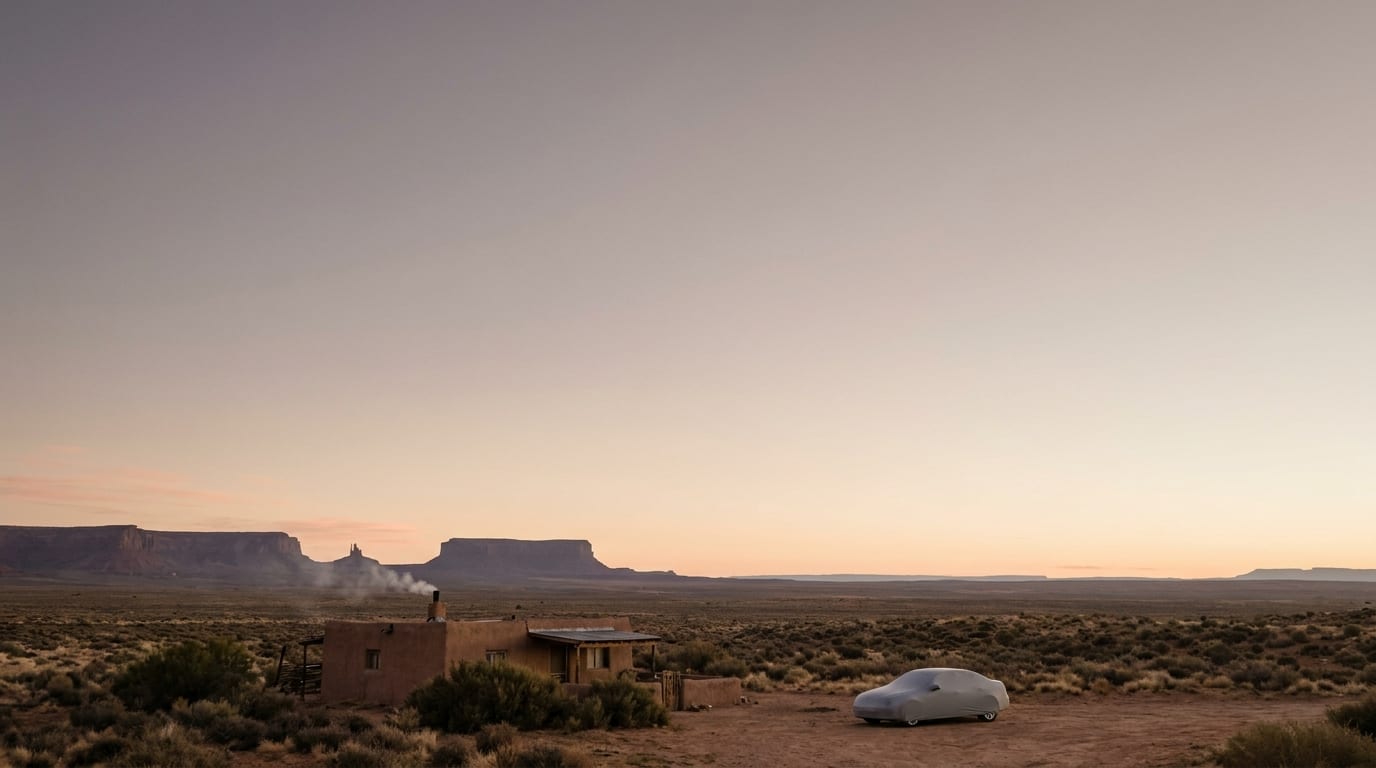
Does a car cover help during wildfire ash season?
Yes. A breathable, waterproof outdoor cover keeps falling ash, soot, and airborne debris from bonding directly to your paint, glass, and seals, so you can rinse it away instead of grinding it in. That's the short answer to does a car cover help during wildfire ash season, and it holds up as long as you use the cover correctly.
Here's the catch: the cover has to go on clean. Shake off any loose grit and rinse the car before you drape a cover over it, or you'll just be pressing sandpaper against your clear coat every time the wind shifts. And to be clear, a car cover isn't a fire-safety device. It won't protect a vehicle parked in an evacuation zone or near active flame. What it does is protect the finish from the daily grind of ash, UV, and moisture that wildfire season throws at anything parked outside for weeks at a time.
What does wildfire ash actually do to a car's paint, glass, and seals?
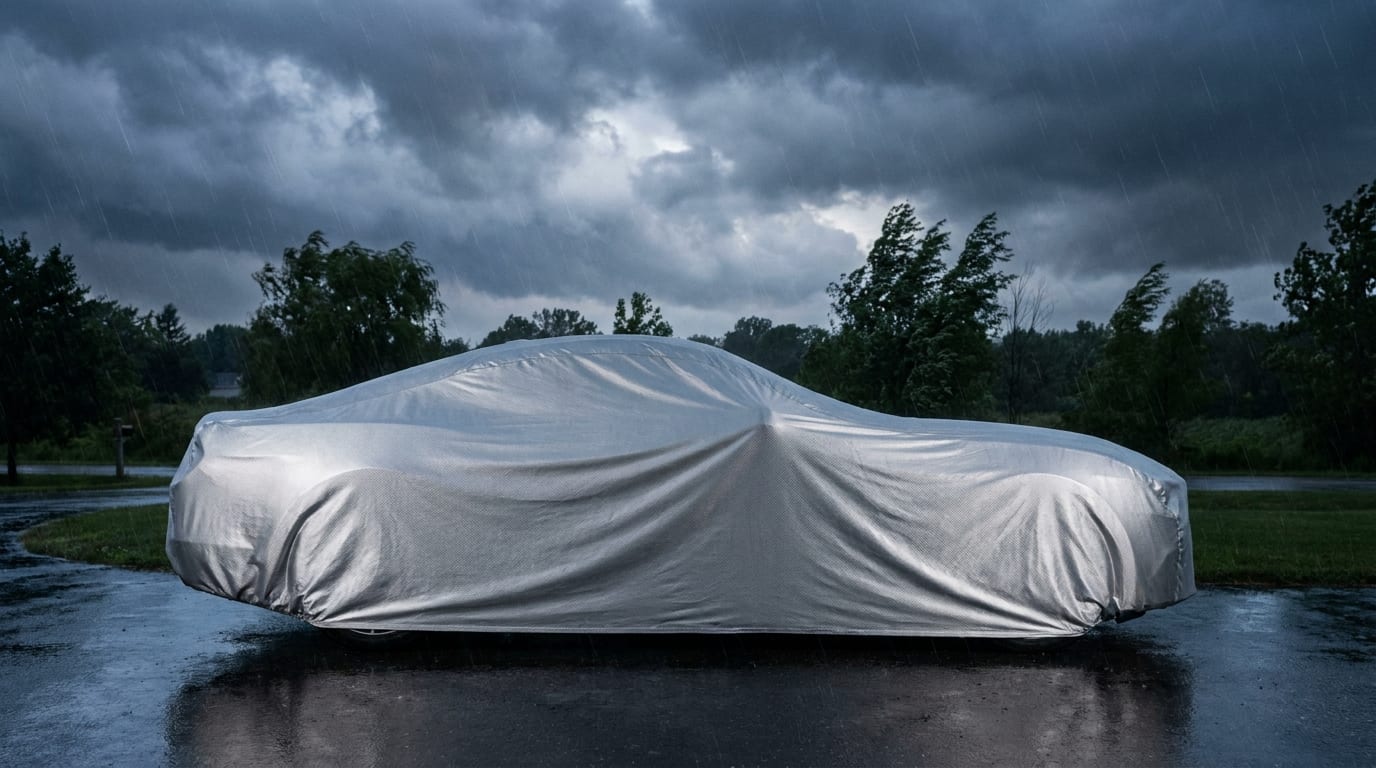
Wildfire ash isn't just dirt. It's alkaline, and when it mixes with morning dew, sprinkler overspray, or even just humidity, it turns into a mildly corrosive film sitting right on your clear coat. Left there long enough, that film etches.
It's also abrasive in its dry state. Wipe it off with a dry towel, the way you'd brush off a layer of pollen, and you're dragging thousands of tiny mineral particles across the paint. That's how you end up with fine scratches and swirl marks that show up under direct sun, usually right after you thought you'd cleaned the car.
Ash doesn't stop at the paint, either. It works into door seals, settles in cowl vents, and gets pulled straight into the cabin air filter through the HVAC intake. A cover handles the exterior. The seals and filter are a separate maintenance item during a bad ash season, worth checking even if the paint looks fine.
What are the downsides of using a car cover during ash season?
A cover only helps if the ash is gone before you put it on. That's the part people skip. Ash sitting on the paint under a cover doesn't just sit there quietly. Wind flutters the fabric, the car settles on its suspension, and every bit of movement grinds that grit into the clear coat from the inside. You've basically built a sanding pad and bolted it to your hood.
During active ash fall, the cover itself needs more attention too. A cover that's picked up a layer of soot and then gets folded up, thrown in the trunk, and reinstalled the next day is just reapplying the problem. Wash it on a regular cadence during heavy ash weeks, not just at the end of the season.
Material matters more here than people expect. A non-breathable cover traps moisture underneath it, and when that moisture meets a layer of ash, you get a thin, sticky paste that's genuinely harder to remove than dry ash would have been. That's the argument for a breathable, waterproof car cover over whatever generic tarp happens to be in the garage. It sheds water from above while still letting trapped moisture underneath escape, instead of stewing.
Is it better to cover a car or leave it uncovered during heavy ash fall?

Covering wins, but only after a rinse. An uncovered car during heavy ash fall doesn't get one layer of grime, it gets layer after layer, each one baking a little harder in the sun before the next batch lands. By week two of a bad air quality stretch, you're not wiping off ash anymore, you're scrubbing off a crust.
If you've got a garage, use it. Indoor storage sidesteps the whole problem, since ash never reaches the paint in the first place. But most people don't have that luxury, especially if the garage is already full or the vehicle sits in a driveway or carport near a wildfire-impacted area.
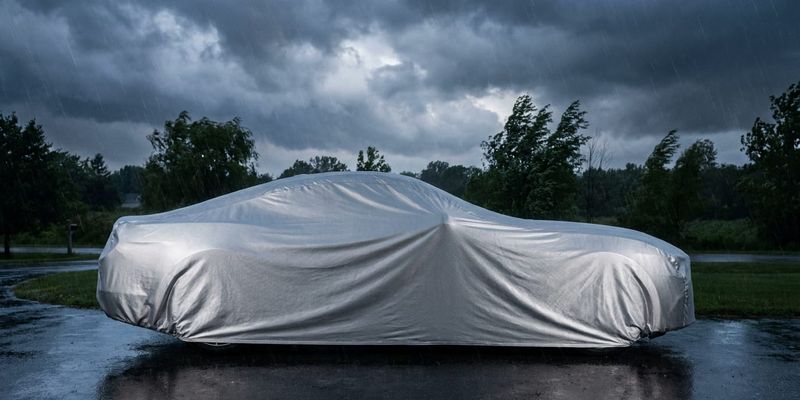
For outdoor parking, a waterproof, UV-resistant outdoor car cover is the more realistic move. It won't stop ash from falling on the car, but it stops that ash from reaching the paint directly, and that's the entire game here.
Will a car cover prevent frost, and does that matter during wildfire season?
Yes, a solid outdoor cover blocks frost and dew the same way it blocks ash. That matters more than it sounds like it should, because moisture is the thing that turns loose, dry ash into a bonded film overnight. Dry ash brushes off. Ash that's been dampened by frost and then baked by morning sun does not.
This comes back to fabric construction. The same multi-layer material that's rated for UV resistance and water resistance is also what keeps frost from forming directly on the paint, which means there's no moisture around to lock ash in place while the car sits overnight. One cover, two problems solved by the same mechanism.
If you want the deeper breakdown on waterproofing ratings, wind resistance, and UV protection levels, the guide to using a car cover outdoors covers it in more detail than makes sense to repeat here.
Does insurance cover a car that catches fire from a wildfire?
Generally, yes, if you've got comprehensive coverage. Comprehensive is the policy type that handles fire, falling debris, and other non-collision events, unlike liability-only or collision-only coverage, which typically won't. Confirm the specifics with your own insurer, since policy language varies.
Worth saying plainly: a car cover has nothing to do with this. It's not a fire-safety product, and it won't factor into a fire damage claim one way or the other. Its job is daily protection against ash, sun, and moisture, not flame resistance. Keep those two things separate in your head, because they solve completely different problems.
How to clean ash off a car and its cover safely

Don't start with a towel. Start with water.
- Rinse the entire vehicle with a low-pressure hose or sprayer first, working top to bottom, to float as much loose ash off as possible before anything touches the paint.
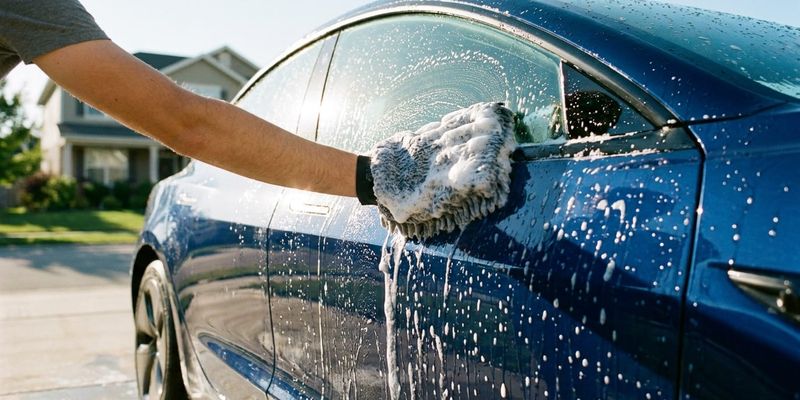
- Switch to a soft wash mitt and a proper car soap once the bulk of the ash is gone. Rinse the mitt constantly so you're not reintroducing grit.
- Skip dry towels, dusters, and brushes on ash entirely. They're the fastest way to turn a light dusting into a field of swirl marks.
- Wash the cover separately, following a process that actually lifts the grit out of the fabric rather than just redistributing it. The cover care and cleaning guide walks through the right detergents and drying steps so you're not reinstalling a dirty cover on a clean car.
For anyone dealing with recurring wildfire seasons year after year, pairing a cover with an actual paint protection layer (ceramic coating, a quality sealant, or paint protection film) gives the clear coat a buffer against the alkaline chemistry in ash. The guide to paint protection options breaks down which of those makes sense for a daily driver versus a car that mostly sits outside.
Choosing a cover built for ash, smoke, and sun
Not every cover is built for this job. A basic indoor dust cover is fine in a garage, but it's the wrong tool for a driveway during wildfire season. You want something breathable so moisture doesn't get trapped, waterproof so dew and ash don't team up, and UV-rated so months of smoke-hazed sun don't degrade the fabric itself.
Vehicle fit matters more than people assume, too. A cover that gapes at the wheel wells or rides up in the wind lets ash sneak in at exactly the spots you're trying to protect. If you're not sure what fits your vehicle, the cover finder tool matches cover type to your specific make, model, and climate instead of guessing off a generic size chart. Browsing the full car cover lineup is also a reasonable starting point if you'd rather compare options directly, and anyone restocking cleaning or storage gear can check car care essentials while they're at it.
One more thing worth knowing before you buy: a cover that's doing this much work season after season should be backed by something real. Look for a lifetime warranty on car covers rather than a short-term one, since heavy, repeated use during ash season is exactly the kind of wear a cheap cover won't survive.
If you're still narrowing down what fits your situation, it's worth digging through a few more guides before you buy; subscribe or poke around the rest of the car care articles for the regional and seasonal specifics that apply to your area.