Can You Machine Dry a Car Cover?
No. Most car covers should never go in a machine dryer, not even on low heat or the air-fluff setting. That's the short answer, and it's worth repeating before you load one into the dryer out of habit: can you machine dry a car cover and expect it to come out fine? You can't, and the reason comes down to basic material science, not brand preference.
Heat is the problem. Dryers run hot enough to damage the waterproof coatings, breathable membranes, and elastic hems that make a cover actually work. Once that coating breaks down, the cover stops shedding water the way it's supposed to, and the fit starts to sag.
This isn't a quirk of one product line either. Whether you're covering a sedan, a full-size truck, an SUV, or an RV parked in the driveway all winter, the fabric science is identical. Laminate layers and elastic components react to heat the same way no matter how big the cover is.
So what actually happens inside that dryer drum, and what should you do instead? That's the rest of this guide.
Why Machine Drying Damages Car Cover Material

Tumble dryers run hot, even on their gentlest cycle. We're talking 125°F or more, which doesn't sound extreme until you remember these covers are built with polyurethane coatings and laminated layers designed to block water, not survive an oven-like cycle. That heat can melt or crack those coatings outright. Once cracked, they don't heal. The waterproofing is just gone in those spots.
Then there's the tumbling itself. Dryers don't just heat fabric, they throw it around for 30 to 60 minutes at a stretch. For a cover with stitched seams, grommets, and reinforced corners, that repeated stress adds up. Small tears start at the weak points and spread with every cycle after.
Elastic hems take a beating too. The stretch that holds a cover snug around your bumper or wheel wells depends on the elastic retaining its memory. Dryer heat cooks that out of it. The elastic doesn't snap immediately, but it loses recoil, and a few trips through the dryer later, you've got a cover that flaps in the wind instead of hugging the body.
One thing people don't expect: lint and static. Dryers generate both, and that buildup can work its way into the cover's fibers. If your cover has a UV-reflective or UV-resistant layer, that's exactly the kind of surface lint dulls over time. It's a slow fade, but it's real, and it's one more reason the answer to can you machine dry a car cover stays a flat no.
Is It Okay to Put a Car Cover in the Washing Machine?
Here's the good news: the washing machine isn't off limits the way the dryer is. Many car covers can go in a washing machine, but only on a gentle or delicate cold-water cycle, and only if the manufacturer's care tag doesn't specifically say hand-wash only. Check that tag first. It's there for a reason.
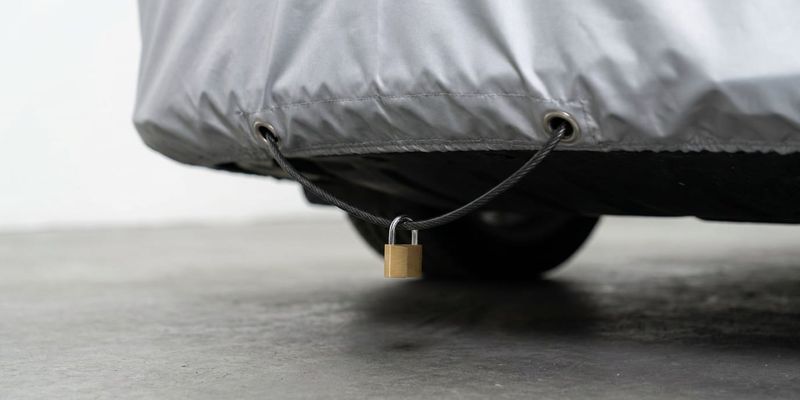
Before anything goes in the drum, strip off the extras. Cable locks, support poles, antenna patches, anything hard or metal needs to come off. Leave them attached and you risk punching holes in the fabric or jamming the machine itself.
Soap matters more than people think. Skip regular laundry detergent and definitely skip fabric softener. Both contain chemicals that strip waterproof coatings right off the fabric. A mild, non-detergent soap does the job without the damage.
If your cover is oversized, like something sized for an RV or a crew-cab truck, it may not even fit a standard home washer properly. In that case, you're better off hand-washing in a bathtub or hosing it down outside on a clean driveway. For the full rundown on what's safe for your specific cover material, the step-by-step cleaning guide walks through it by fabric type.
What's the Best Way to Wash a Car Cover?
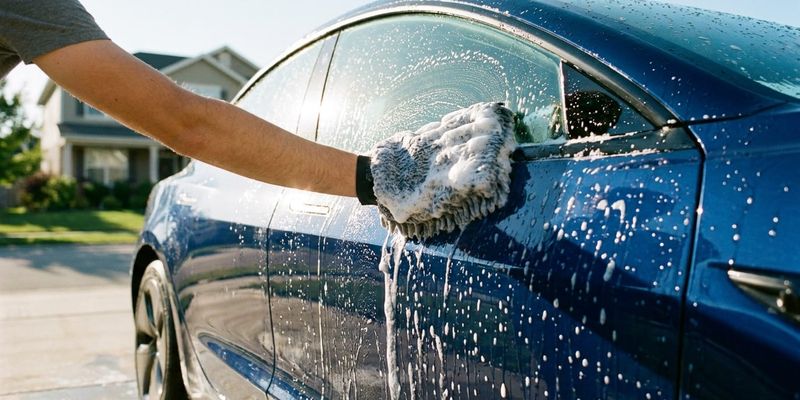
Start small. Bird droppings, dust, light grime, a soft brush and some mild soap handle most of that without a full wash cycle. Spot cleaning first saves you from running the whole cover through water it didn't need.
When a full wash is actually necessary, lay the cover flat if you're hand-washing, or use that gentle machine cycle if the care label allows it. Either way, rinse it thoroughly afterward. Soap residue left in the fibers can attract dirt faster and interfere with water repellency, which defeats the purpose of washing it in the first place.
Avoid bleach. Avoid stain removers. Avoid pressure washers, too, even though a power washer feels like the fast, satisfying option. All three break down the protective coatings that keep your cover waterproof, and none of that damage is reversible.
For cover-specific instructions depending on what your cover is made of, the full guide to cleaning a car cover covers the differences between materials like multi-layer outdoor fabrics and softer indoor covers.
How to Dry Out a Car Cover the Right Way
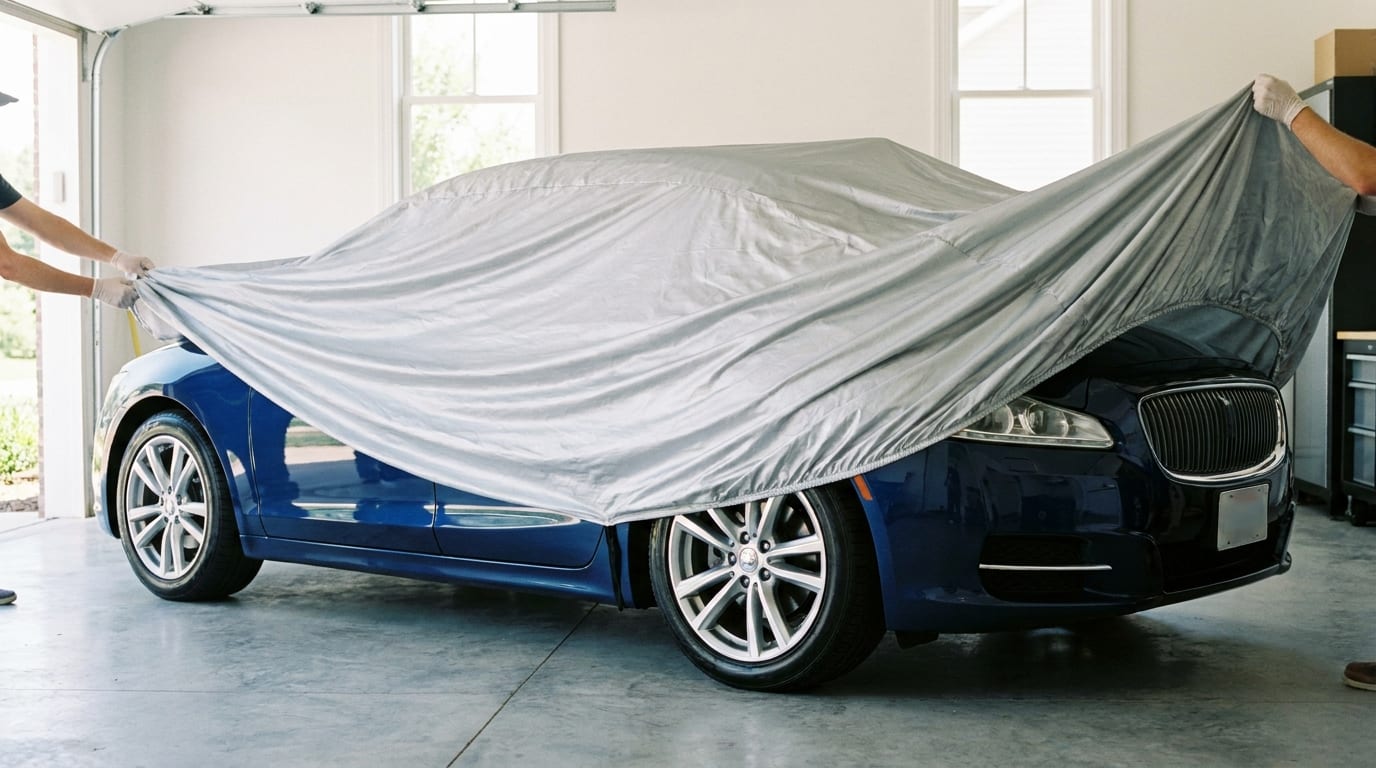
Once it's washed, shake out as much water as you can, then hang the cover somewhere with airflow: a railing, a sawhorse, a clothesline, whatever's available in a shaded spot. The shade part matters almost as much as the shade from heat. Direct sun for hours at a time can degrade some coatings too, just more slowly than a dryer would.
Drape it so air gets to both sides. A cover bunched up on one rail or folded over itself while still wet just traps moisture in the folds, which defeats the whole point of air drying.
And don't rush the last step. Never fold a damp cover back into its storage bag thinking it'll finish drying in there. It won't. It'll sit in a sealed bag, develop mildew, and start smelling musty, which is a much bigger headache than giving it another hour on the line. If you're setting the cover back on the vehicle outdoors once it's dry, the guide to using a car cover outdoors covers what else affects long-term durability out there, like wind and UV exposure.
How Long Does It Take a Car Cover to Air Dry?
Most covers are dry within 2 to 6 hours, depending on material thickness, humidity, and how much airflow they're getting. A breezy, dry afternoon gets you to the low end of that range. A still, humid day pushes you toward the high end.
Material plays a role too. Thin, single-layer covers dry fast. Thicker multi-layer covers, or the softer satin-style fabrics used for indoor car covers, hold onto moisture longer and need more patience.
Don't just eyeball the outer surface and call it done. Check the inside seams and the elastic hem specifically, since those are the spots where water hides longest. A cover that looks dry on top can still be damp where the elastic is sewn in.
If weather forces you to dry the cover indoors, point a fan at it. Don't reach for a space heater or any other heat source to speed things along, that's the same mistake as the dryer, just in a different room.
What to Do If Your Car Cover Still Smells or Feels Damp
A musty smell almost always means the cover went into storage before it was fully dry. The fix is straightforward: rewash it, then air dry it completely this time before it touches your car or a storage bag again.
Speaking of storage, use a breathable bag, not a sealed plastic bin. Breathable storage lets any residual moisture escape instead of turning into a mildew problem between uses.
If the smell won't go away even after a proper rewash and dry, or if you're seeing actual mold spots, that's usually a sign the waterproof coating has broken down for good. At that point, washing harder isn't going to fix it. The material itself has failed.
If that failure happened earlier than it should have, especially on a cover that's still fairly new, it's worth checking your warranty coverage before assuming you're stuck buying a replacement out of pocket.
Keep Your Cover's Protection Intact
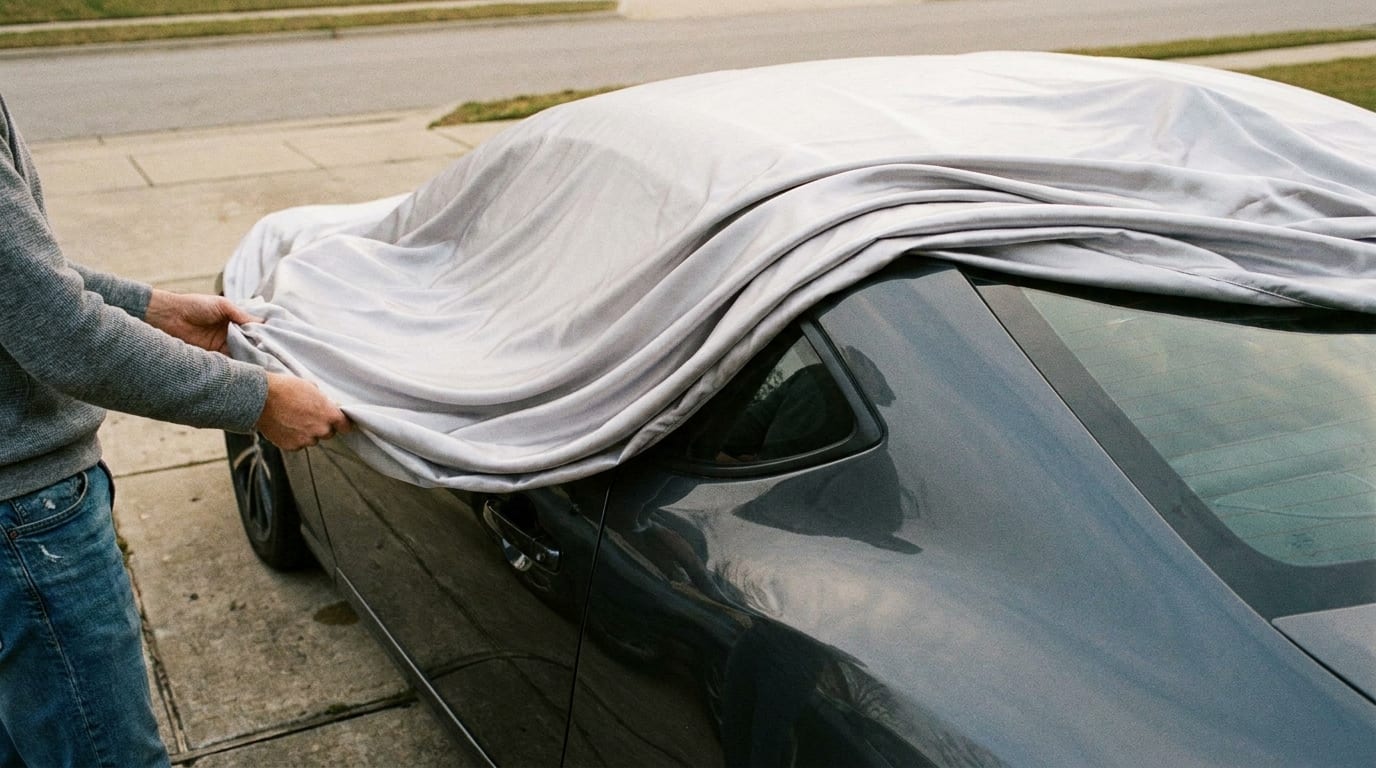
So, can you machine dry a car cover and get away with it once or twice? Maybe without visible damage the first time. But it's not worth the gamble when the fix is this simple: skip the dryer, wash gently, and let it air dry completely before it goes back on your vehicle or into storage.
Taking care of the washing and drying side of things is really what keeps the waterproofing and the fit intact, which is the entire reason you bought a cover rather than just parking the car bare. A cover that's lost its coating isn't protecting much of anything anymore.
If yours is already past the point of saving, no amount of careful washing brings a cracked coating back. Worth browsing a replacement built to hold up over repeated washes before another storm season tests the one you've got. And if you want more car care reading like this, our articles page is a good place to poke around when you've got a few minutes.
Frequently asked questions
What if my car cover still smells musty after washing?
A lingering musty smell usually means the cover was stored before it fully dried. Rewash it and air dry it completely. If the odor or mold persists, the waterproof coating may have broken down and the cover may need to be replaced.