
Hatchback in a Humid Climate Like Florida? Here's the Car Cover You Should Buy
Published

The Quick Answer: Best Car Cover for a Hatchback in Florida
If you have a hatchback and live in a humid climate like Florida, what car cover should you buy? A breathable, multi-layer, UV-resistant outdoor cover, cut to your hatchback's specific body style, with a soft non-scratch inner lining and a fabric treated to resist mold and mildew. Skip anything marketed as simply "waterproof" with no mention of breathability. That one word, waterproof, sounds like the safe choice, but in Florida it's often the wrong spec entirely: a fully sealed cover traps condensation against your paint, and trapped moisture under plastic does more damage than no cover at all.
Here's how the main cover types stack up for a hatchback owner dealing with Gulf Coast or Atlantic-side humidity:
| Cover Type | Breathability | UV/Fade Protection | Mold/Mildew Resistance | Best For |
|---|---|---|---|---|
| Universal Poly/PVC cover | Poor | Low to moderate | Poor | Short-term, dry-climate use |
| Tarp or generic all-purpose cover | None | Low | Poor | Equipment, not vehicles |
| Breathable Outdoor Custom-Fit cover | Good | High | Good (if treated) | Florida hatchbacks parked outside |
| Indoor-only Dust cover | Good indoors | None | N/A indoors | Climate-controlled garages only |
Only one row checks every box for a Florida hatchback parked in a driveway or open lot: the breathable, custom-fit outdoor car cover. Everything else is a compromise on at least one front, and in a climate this punishing, those compromises show up fast as water spots, musty interiors, and fading paint.
Why Humid Climates Like Florida Are Hard on Car Covers
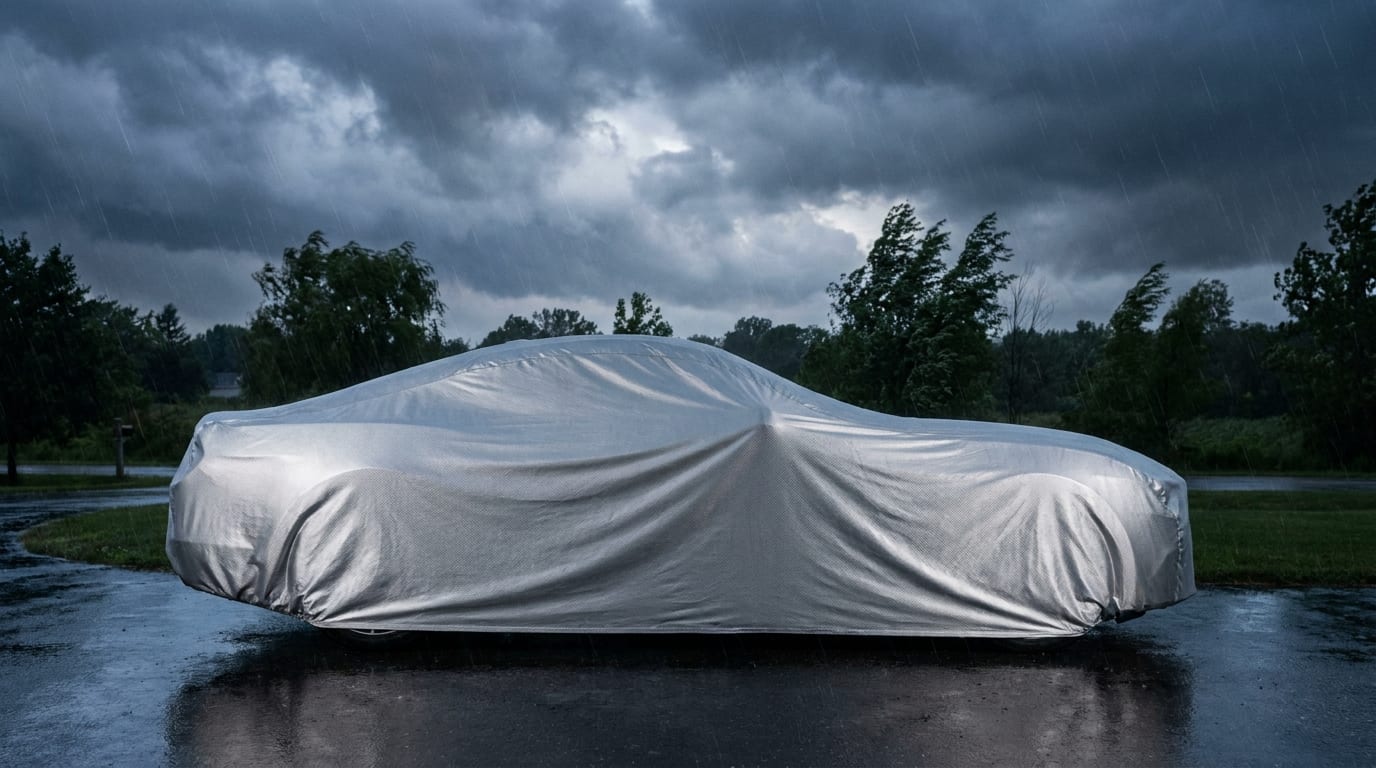
Here's the mechanism nobody explains on the box: non-breathable fabric doesn't stop moisture, it just relocates it. Warm, humid air gets trapped underneath the cover, condenses against the cool metal and glass overnight, and sits there all day with nowhere to go. The top of the cover looks bone dry. Underneath, you've basically built a terrarium for mold and mildew, plus water spotting that etches into clear coat over time.
Florida makes this worse on three fronts at once. Afternoon thunderstorms roll through most of the year, so the cover is getting wet and drying (or not drying) on a near-daily cycle. Ambient humidity stays high even on cloudless days, so there's rarely a true dry stretch for a cover to fully breathe out. And the UV index runs intense and consistent year-round, which cooks both your paint and the cover fabric itself from above.
If you're near the Gulf or the Atlantic, add salt air to the list. Airborne salt accelerates corrosion on exposed metal trim, wheels, and undercarriage components, so a cover rated only for moisture and not for salt exposure is leaving part of the job undone.
Put it together and you get the real answer to "I have a hatchback and live in a humid climate like Florida, what car cover should I buy": one where breathability and UV resistance carry as much weight as water resistance. A cover that's only rated "waterproof" is solving half the problem and creating the other half.
What to Look for in a Cover Fabric for Hatchbacks in Humidity
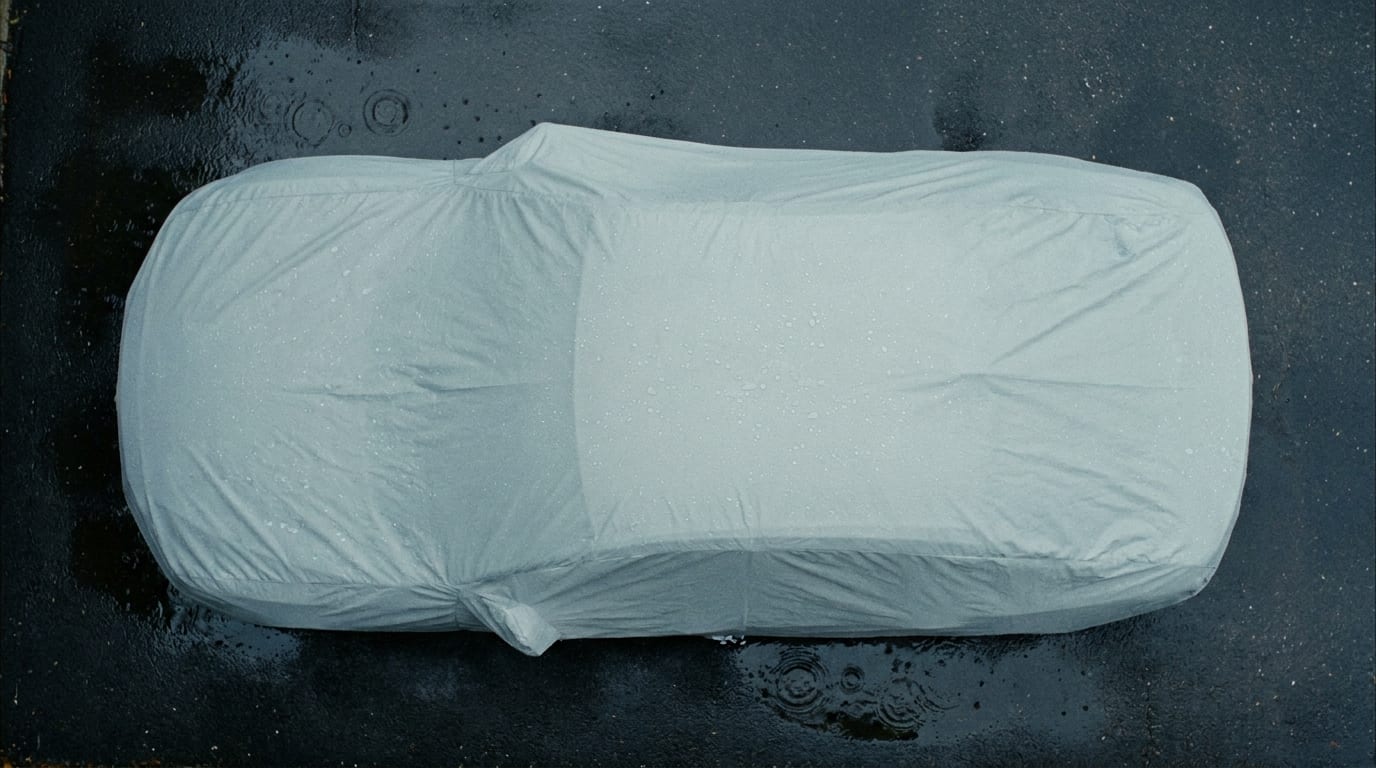
The ideal fabric here is a multi-layer woven or laminated material. Liquid water from a thunderstorm beads and runs off the top layer, while water vapor from underneath (the condensation problem above) can still escape through the fabric. That's the whole trick. A single-layer sheet of plastic can't do both jobs at once, which is exactly why "waterproof" alone misses the point in a climate like this.
UV-stabilized outer layers matter just as much in Florida as the water handling. Standard, untreated fabric chalks, stiffens, and starts cracking at the seams within a season or two under constant intense sun. A UV-stabilized layer slows that breakdown and protects the paint underneath from the sun bleaching it through a thin or worn cover.
Hatchbacks specifically benefit from a soft microfiber or fleece inner lining. The body style tends to have more exposed trim pieces, rear spoilers, and a steep rear glass angle, all of which can get scuffed by a stiff or scratchy cover material rubbing against them every time the wind moves it. A soft lining protects those spots the way a sedan's simpler rear end doesn't need as much.
Last thing: don't assume mold and mildew resistance is baked into every "weatherproof" listing. It's often a separate treatment, and separately worth checking for by name. If a listing talks about waterproofing but says nothing about mildew resistance or breathability, read that as a gap, not an oversight. For a deeper look at how different fabrics actually perform, this breakdown of car cover materials is worth a read before you buy, along with this explainer on waterproof fabrics if you want the technical side of why "waterproof" and "breathable" aren't the same claim.
Custom-Fit vs. Universal: Why Fit Matters More on a Hatchback
Hatchbacks have a shorter rear overhang and a steeper liftgate angle than a typical sedan. Generic universal covers are built off sedan-ish proportions, so they tend to gap loose at the back or bunch awkwardly around the hatch. That gap is exactly where rain gets in and humidity collects, undoing whatever good the fabric itself was doing.
A loose fit also flaps. Every gust of wind off a Florida storm front catches the slack fabric, and that constant movement wears through the material faster than age alone would, sometimes enough to scratch clear coat right where the cover rubs. A custom-fit car cover follows your hatchback's actual lines instead of a generic silhouette, which does two things at once: seals out moisture more effectively, and reduces wind lift because there's no loose fabric left to catch air.
Before you buy, confirm fit by year, make, and model, not by a generic size letter (S, M, L) on a chart. Size letters assume rough proportions across wildly different hatchback shapes, from a Honda Civic hatchback to a Volkswagen Golf to a Toyota Corolla hatchback, and those three don't share a body line. If you're shopping by brand, you can start from the Honda, Toyota, or Volkswagen cover pages and work down to your exact model, or run your year/make/model through a proper sizing guide first.
Outdoor vs. Indoor Covers: Which One Does a Florida Hatchback Owner Actually Need

Most Florida hatchback owners, parking in a driveway, carport, or open apartment lot, need an outdoor-rated cover. Full stop. Indoor car covers aren't built for moisture or sun exposure at all. They're designed to keep dust off a car sitting in a closed garage, nothing more, and using one outside in Florida is asking it to do a job it was never made for.
There's one narrow exception: if your hatchback lives in a climate-controlled or fully enclosed garage with minimal humidity swings, an indoor cover is fine and honestly a lighter, softer option than an outdoor-rated one.
Most people aren't in that situation full time, though. If you split time between a garage and the driveway, the simpler move is owning one true outdoor cover and using it in both places. It'll handle the garage fine. An indoor-only cover used outside, on the other hand, will fail fast, soaking through or breaking down under sun it wasn't built to take.
Outdoor covers also typically come with reinforced grommets or strap points for securing the cover against wind, something that matters a lot more in open Florida parking than it ever would inside a garage. That's a feature worth checking for specifically if you're comparing a couple of options side by side.
What Not to Use: Tarps and Cheap Non-Breathable Plastic Covers
A generic tarp is tempting because it's cheap and it's already sitting in your garage. Don't use it. A tarp has no shape, so it doesn't follow your hatchback's body lines at all, it just sits on top and rubs against the paint every time wind moves it. Low spots on the roof or hood pool water instead of shedding it, which means standing water sitting directly against your clear coat for hours. And a tarp has zero breathability, so you get the full condensation problem described earlier, just with cheaper material.
Cheap PVC or vinyl "one size fits most" covers aren't much better in this climate. They behave like a greenhouse: on a sunny Florida afternoon, heat builds up under that sealed vinyl and traps humidity against the car even when it hasn't rained in days. You might as well leave the car uncovered.
Weigh the math honestly. The cheap tarp or universal vinyl cover costs less upfront, sure. But paint correction for water etching, or getting mold and mildew smell out of a cabin after months of trapped moisture, costs a lot more than the difference between a $30 tarp and a proper breathable fitted cover would've been. Here's a more detailed look at why a tarp falls short as a car cover if you want the fuller case before you decide.
Keeping Your Cover Working in a Humid Climate
Even the right cover needs upkeep in this climate. Before you fold it up and stash it, shake it out and let it air-dry fully, even if the surface looks dry already. Folding a damp cover into a bag is a great way to grow mildew in storage, which defeats the whole purpose of buying a mildew-resistant fabric in the first place.
When it's time to wash it, stick to a non-detergent cleaner made for cover fabric. Regular detergent strips the water-repellent and UV-inhibiting coatings over time, which shortens the life of the exact features you bought the cover for. This guide to cleaning a car cover walks through the process in more detail.
Worth remembering too: the heat problem doesn't stop at the cover. A hatchback sitting under intense Florida sun all day heats up regardless of what's covering it, so pairing your cover routine with general summer heat management habits protects the interior as much as the cover protects the paint.
Last practical note: check what the warranty actually covers on stitching and coatings before you buy, not just the fabric itself. Humid-climate use puts more ongoing stress on seams and treatments than a cover sitting in a dry garage ever would, so that coverage matters more here than it would for a lot of other buyers.
Bottom Line: What to Buy and Next Step
So, to put it plainly one more time: if you have a hatchback and live in a humid climate like Florida, buy a breathable, UV-resistant, custom-fit outdoor cover with mold and mildew resistance built in. That combination handles the thunderstorms, the sun, and the humidity all at once, instead of solving for one and ignoring the others.
The one thing to walk away from is anything marketed purely as "waterproof" with no mention of breathability. That spec alone tells you the cover will trap moisture, not shed it.
Before you buy anything, run your car through a vehicle finder tool to match year, make, and model, since fit is what actually determines whether a cover does its job on a hatchback's shorter rear end and steeper glass.
If you want to see what a proper fit looks like for your car, it's worth a few minutes to browse car covers by vehicle and compare your options before the next storm rolls through.






