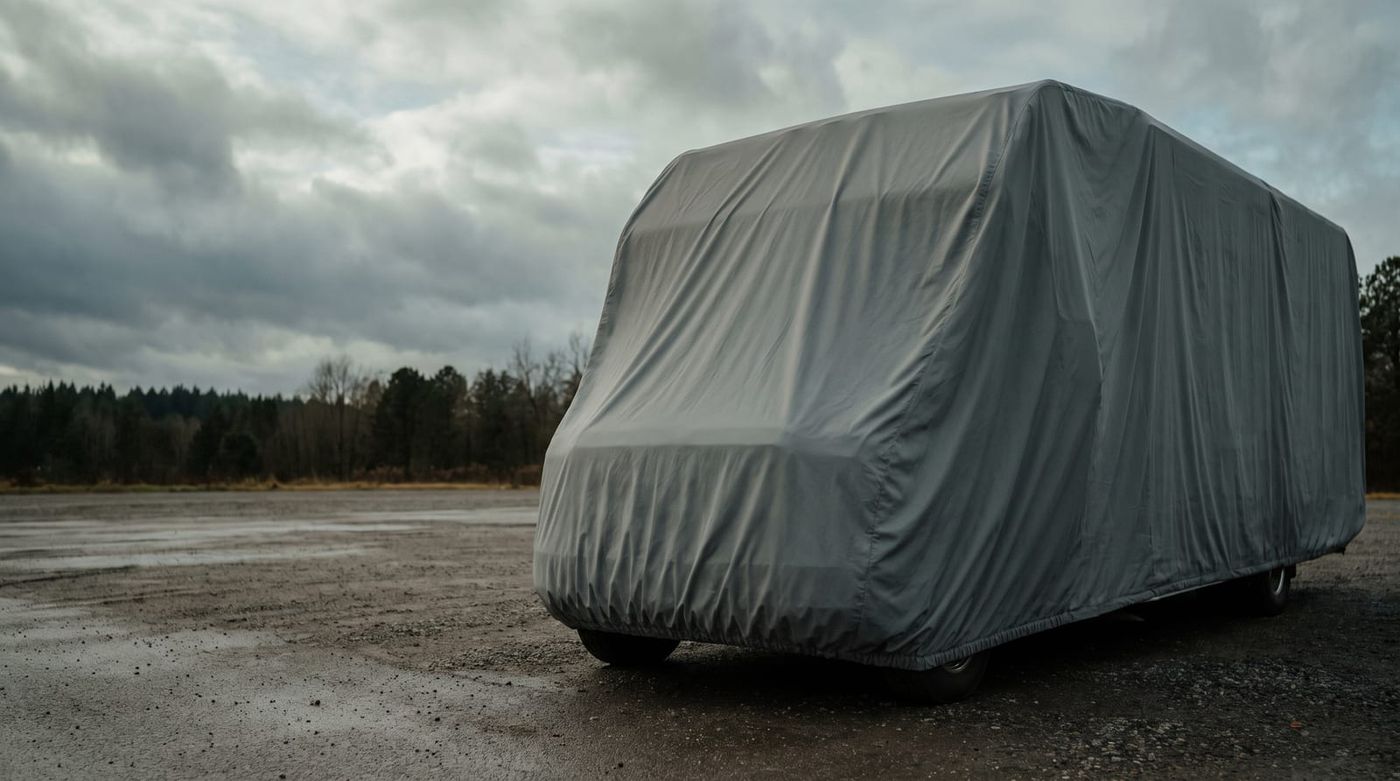
How do you measure an RV for a cover? You need three numbers: overall length from bumper to bumper (including the hitch and ladder), overall height from the ground to the tallest fixed point (usually the roof AC unit), and width at the widest point with mirrors folded in. Most RV cover sizing charts work off length ranges and vehicle type rather than exact custom dimensions, so these three measurements are what you'll match against a size chart once you have them.
Grab a tape measure, rope in a second person to hold the other end, and do this on level ground. A driveway works better than a sloped yard, and you'll get a straighter line with two sets of hands than trying to measure solo. The rest of this guide walks through each measurement in detail, plus what changes depending on whether you're covering a Class A diesel pusher or a teardrop trailer.
What Measurements Do You Need Before Buying an RV Cover?
Three numbers, in order of importance: total length, height, and width. Length drives which size bracket you land in. Height and width mostly determine how snug the fit feels once the cover is on.
Here's why cover makers sell by range instead of exact feet and inches: a 24'-28' bracket, for example, isn't sloppy sizing, it's accounting for the fact that covers have elastic hems and adjustable straps built in to flex across that span. Nobody's cutting a cover to your RV's exact 26 feet, 3 inches. They're cutting it to fit anything from 24 to 28 feet snugly enough to stay put in wind.
You also need to know your RV's class or type. Class A, Class B, Class C, travel trailer, fifth wheel, pop-up, teardrop, truck camper, these all have different rooflines and profiles, so the cover shape differs even at the same length. A Class C's over-cab bump and a travel trailer's flat gooseneck front aren't the same silhouette, and a cover cut for one won't drape right on the other.
Before you pull out the tape measure, check your owner's manual or the manufacturer's spec sheet first. A lot of RVs list overall length, height, and width right there, and it can save you a trip up a ladder. Just double check that the listed figure includes bumpers and any factory-installed ladder or rack, since some spec sheets only list the body length. For a general refresher on how cover sizing logic works across vehicle types, this guide on car cover sizing covers the same principles that apply here.
How Do You Measure the Length of Your RV Correctly?
Length is the number that matters most, so get this one right. Measure from the very front of the front bumper to the very back of the rear bumper, not just the edges of the living space. People get this wrong constantly: they measure the box and forget the bumpers add a foot or more on either end.
If you've got a ladder, spare tire mount, or bike rack permanently bolted to the back, include it. These aren't cosmetic details. They can push your RV into the next size bracket entirely, and a cover that's sized without them will come up short right where you need the coverage most.
For trailers, don't forget the tongue. Measure from the ball mount at the hitch all the way back to the rear bumper. Skip the tongue length and you'll end up with a cover that doesn't reach the front, leaving the hitch and coupler exposed to rain and road grime.
One more thing: if your total falls right on the line between two size brackets, say 23'8" when the ranges break at 24 feet, round up. A cover that's a touch roomy is a minor hassle. One that's a half-inch too tight is a returns headache.
How Do You Measure the Height and Width of an RV?
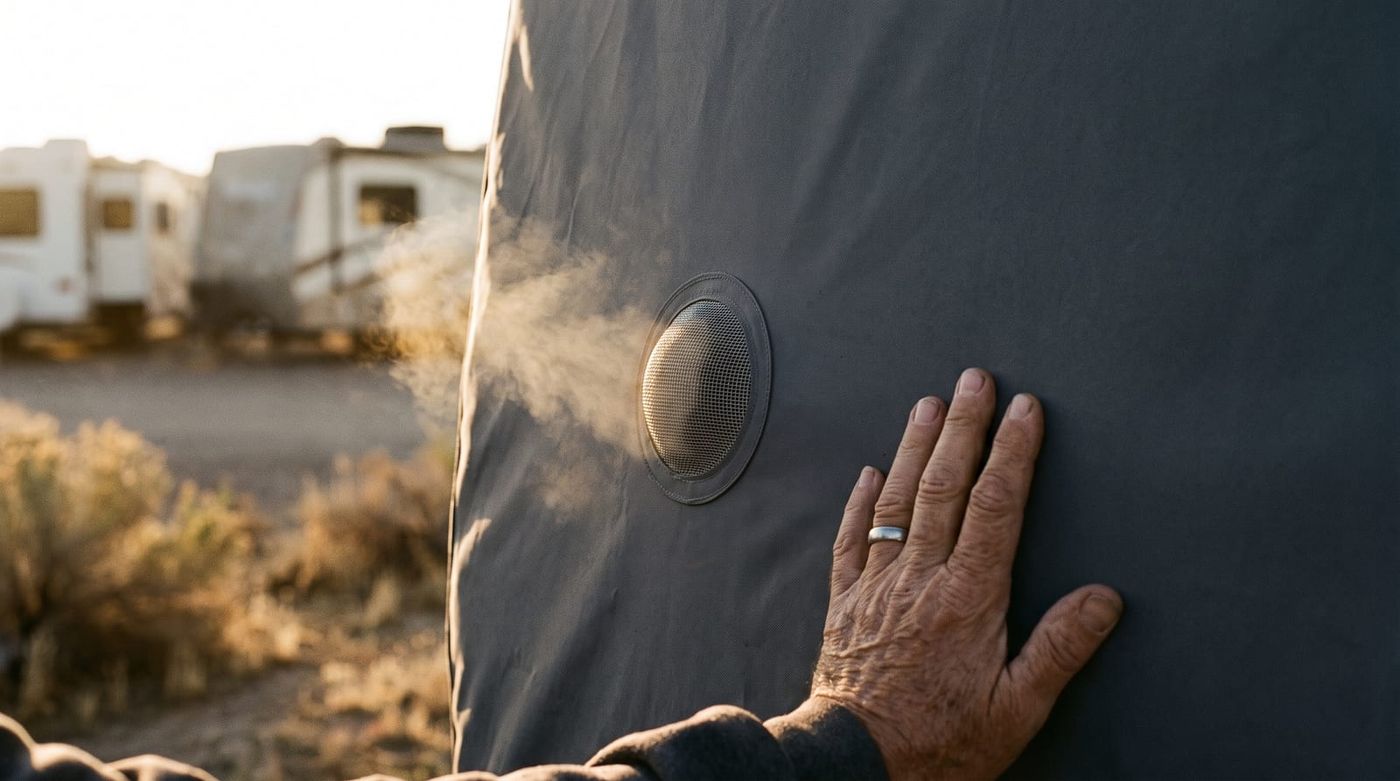
Height isn't measured to the roofline. It's measured to the tallest fixed point, which on most RVs is the roof AC unit, a vent cover, or a roof rack if you've got one installed. Stand back, sight across the roof, and measure straight down to the ground from whatever sticks up highest. Skip this step and assume roofline height, and the cover will bunch up or tear trying to stretch over the AC housing.
Width gets measured at the widest point of the rig. For most RVs that's the side mirrors, so fold them in first if they're adjustable. If they're fixed in place, measure with them extended since that's the real width you need the cover to clear. Slide-outs count too, but only if they're out. Nearly every cover sizing chart assumes slide-outs are retracted for storage, since that's how the RV sits most of the time it's covered. If you plan to leave a slide extended under the cover, check the product's compatibility notes first, because standard covers aren't cut for that extra width.
Here's the honest truth about these two numbers: they don't change your size bracket. Length does that. Height and width mainly affect how tight the fit feels and how well the cover sheds wind and water once it's on. Get length right and the cover will fit the bracket; get height and width right and it'll actually look like it belongs on your RV instead of billowing in the breeze.
Does the Measuring Process Change by RV Type?
Yes, and the differences aren't trivial.
Class A motorhomes are measured bus-style, front bumper to rear bumper, and you've got to account for a taller roof AC and often a raised antenna or satellite dome. These add inches you'd miss on a quick eyeball. Check Class A RV cover options for sizing built around that taller, boxier profile.
Class B camper vans measure a lot closer to standard van dimensions, since they're built on a van chassis without the dramatic roofline changes. Class B RV covers are cut with that tighter, more vehicle-like shape in mind.
Class C motorhomes add the over-cab sleeping area up front, which bumps up the height measurement right where the cab meets the coach. Miss that bump and the cover won't seat properly over the nose. Class C RV covers account for that extra profile.
Trailers each have their own quirks. Travel trailers and fifth wheels have different hitch geometries that affect where length technically starts, pop-ups fold down to a much lower height when closed, and teardrops are compact enough that a few inches matters more proportionally than it does on a 30-foot rig. Browse travel trailer covers, fifth wheel trailer covers, folding pop-up trailer covers, or teardrop trailer covers depending on what you're working with.
Truck campers are the odd one out: you measure the camper unit itself, cab-over front to rear, independent of the truck it's sitting in. The truck's length doesn't factor in at all. Truck camper covers are sized to the camper box, not the vehicle underneath it.
What Happens If You Measure Your RV Wrong?
Too small, and the cover simply won't stretch over the rig, or it'll stretch just enough to strain every seam and elastic hem until something tears. You'll spend more time fighting the cover on than it would've taken to re-measure.
Too large causes its own problems. Excess fabric flaps around in wind, and that flapping isn't harmless, it abrades the paint or gelcoat over time from constant friction. Loose fabric also pools water in low spots instead of shedding it, which is the opposite of what a cover is supposed to do.
Either mistake defeats the purpose. You bought a cover to block UV, rain, and road debris, and a bad fit lets all three in anyway, just with extra steps.
Measure again once a year, and definitely re-measure after adding anything permanent: a new ladder, a roof rack, solar panels. These changes seem minor at install time but they shift your numbers enough to bump you into a different size bracket.
Final Tips for Getting an Accurate RV Cover Fit
Measure twice. Pick a dry day. Retract every slide-out and awning before you pull the tape measure out, since an extended slide will throw off your width number completely.
If you're stuck between two size brackets, size up. A slightly larger cover is easier to install, easier to remove, and holds up better over years of use than one that's constantly under tension trying to stretch over the same spot.
Once you've got your measurements sorted, head to RV covers to browse by length range and RV type, and when the cover arrives, RV cover installation walks through getting it on correctly the first time so it actually does its job through the next storage season.
If you found this useful, stick around the blog for more straightforward guides on keeping your RV, trailer, or camper protected year round.
Frequently asked questions
How do you measure an RV for a cover?
Measure overall length from the front bumper to the rear bumper (including any hitch, ladder, or rear-mounted accessories), overall height from the ground to the tallest fixed point such as the roof AC unit, and width at the widest point with mirrors folded in. Match these three numbers against the cover manufacturer's size chart.
Do I need exact measurements or just a size range?
Most RV covers are sold by length range and vehicle type rather than exact custom dimensions, since the covers include elastic hems and straps built to flex across that range. Your job is to measure accurately enough to pick the right bracket, not to get an exact-to-the-inch custom fit.
What happens if I measure my RV wrong before buying a cover?
A cover that's too small won't stretch over the RV properly and can tear at the seams or elastic hems. A cover that's too large flaps in the wind, which abrades the paint or gelcoat and lets water pool in loose fabric. Both reduce the protection the cover is supposed to provide.
Does the measuring process change for trailers versus motorhomes?
Yes. Motorhomes (Class A, B, C) measure bumper to bumper including roof-mounted AC units or antennas. Trailers and fifth wheels include the tongue or hitch length in the total. Truck campers are measured independently of the truck, cab-over front to rear.