How Do You Tell If a Car Cover Fits Correctly? A Step-by-Step Check
Published

Why a Properly Fitted Car Cover Matters
A car cover that doesn't fit isn't really protecting anything. Too loose, and it flaps every time the wind picks up, grinding dust and grit into your clear coat until you've got a constellation of micro-scratches you didn't have last month. Too tight, and you're fighting the seams just to get it on, stressing the fabric at every stitch until something tears.
Fit problems are the number one reason people stop using a car cover altogether, or send one back within the first few weeks. They buy based on make and model, assume it'll work, and then spend ten frustrating minutes wrestling with a cover that bunches at the mirrors or won't reach the bumper. So how do you tell if a car cover fits correctly before that becomes your Saturday morning routine? Run through the checklist below. It takes less than five minutes once you know what you're looking for, and you can repeat it every time you install a new cover or swap vehicles.
Step 1: Compare the Cover's Size Label to Your Vehicle's Exact Specs
Start with the tag. Most covers list a length range, something like "fits vehicles 157 to 170 inches," printed on the packaging or sewn into the cover itself. That range matters more than the make and model sticker your retailer slapped on the box.
Here's why: universal and semi-custom covers aren't built around a single vehicle. They're built around a range of lengths, which means a sedan sitting right in the middle of that range gets a clean fit, while one sitting at the extreme edge gets a cover that's noticeably loose or tight. Two cars from the same "size class" can differ by several inches bumper to bumper.
If you've got any doubt, skip the guesswork and grab a tape measure. Measure your vehicle bumper to bumper, not hood to trunk, and compare that number against the exact range on the label. This single step resolves most fit complaints before you even unfold the cover. For a more precise match, the sizing guide for your specific vehicle walks through how to measure correctly and what the ranges actually mean.
Step 2: Check Alignment of Mirror Pockets, Antenna Holes, and Other Cutouts

Once the cover's on, look at the mirror pockets. They should sit directly over your side mirrors, snug, without pulling the whole cover off to one side to reach them. If you're tugging fabric diagonally across the windshield just to get a mirror pocket where it needs to be, that's not a minor adjustment. That's a sign the cover's proportions don't match your vehicle's.
Same logic applies to the antenna. If your cover has a grommet or patch for an antenna, it should line up with where the antenna actually sits, not require you to stretch the fabric three inches over to make contact. A patch that's constantly under tension will wear through faster than the rest of the cover. If yours doesn't line up and you need a fix, an antenna patch is a cheap way to correct that without replacing the whole cover.
Misaligned cutouts are one of the clearest tells that a cover is wrong for your car, even when the overall length looked fine on paper. The length can be close to right and the shape still wrong.
Step 3: Look for Excess Material Pooling or Bunching
Run your hand across the hood, roof, and trunk. A cover that fits should lie close to the body with just a bit of give, not a lot. What you shouldn't see is loose fabric pooling in big pockets near the mirrors, along the roofline, or bunched up around the rear window.
That slack isn't harmless. It collects rainwater, which just sits there until it either seeps through a seam or turns into a breeding ground for mildew. It also catches wind like a sail, and every time it does, that loose fabric rubs against the paint underneath it. Over a season of storage, that's enough friction to dull a finish.
If you're seeing consistent bunching across multiple areas, not just one awkward spot, the cover is probably built for a larger body style than yours. That's a sizing issue, not something you fix by cinching a strap tighter. A custom-fit car cover built to your vehicle's actual body lines solves this, since there's no universal range to split the difference across.
Step 4: Confirm the Hem Sits Close to the Ground Without Dragging
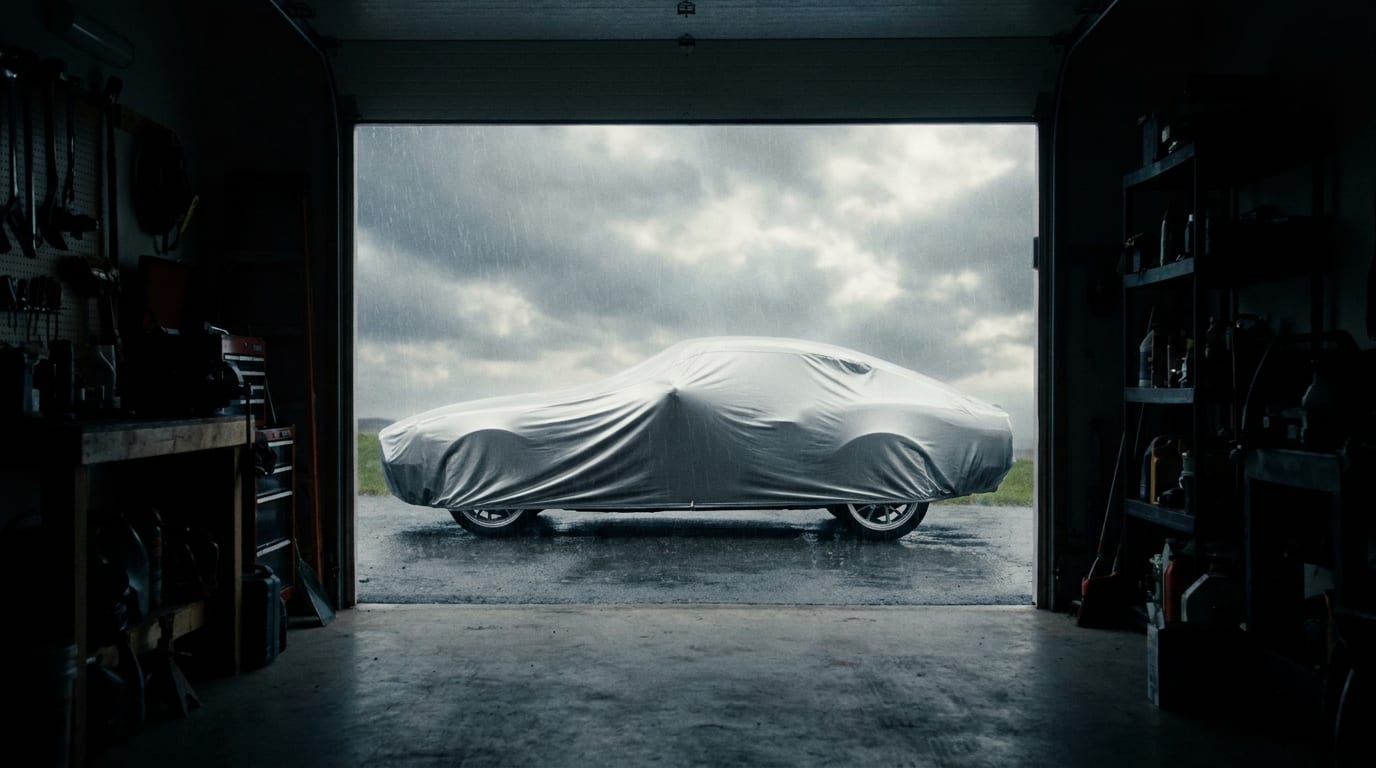
Walk around the vehicle and look at where the hem lands. The ideal spot is a few inches above the ground: low enough to fully cover the rocker panels and the lower body, high enough that it's not touching pavement.
A hem that drags is a slow-motion problem. It frays at the edges, picks up grit and small stones every time you walk past it, and that grit gets dragged across your lower paint and wheels like sandpaper. On a gravel driveway, it's worse. You'll see the wear show up as a dirty line a few inches up from the bottom edge within weeks.
The opposite problem gets less attention but causes just as much damage: a hem that rides up above the wheel wells, leaving your lower body panels and tires exposed to rain, UV, and road dust. Either direction means the cover isn't doing its job. If the fit is close but not quite right at the bottom, something as simple as fit modifications can correct it without needing a full replacement.
Step 5: Test the Fit in Wind: Straps, Grommets, and Movement
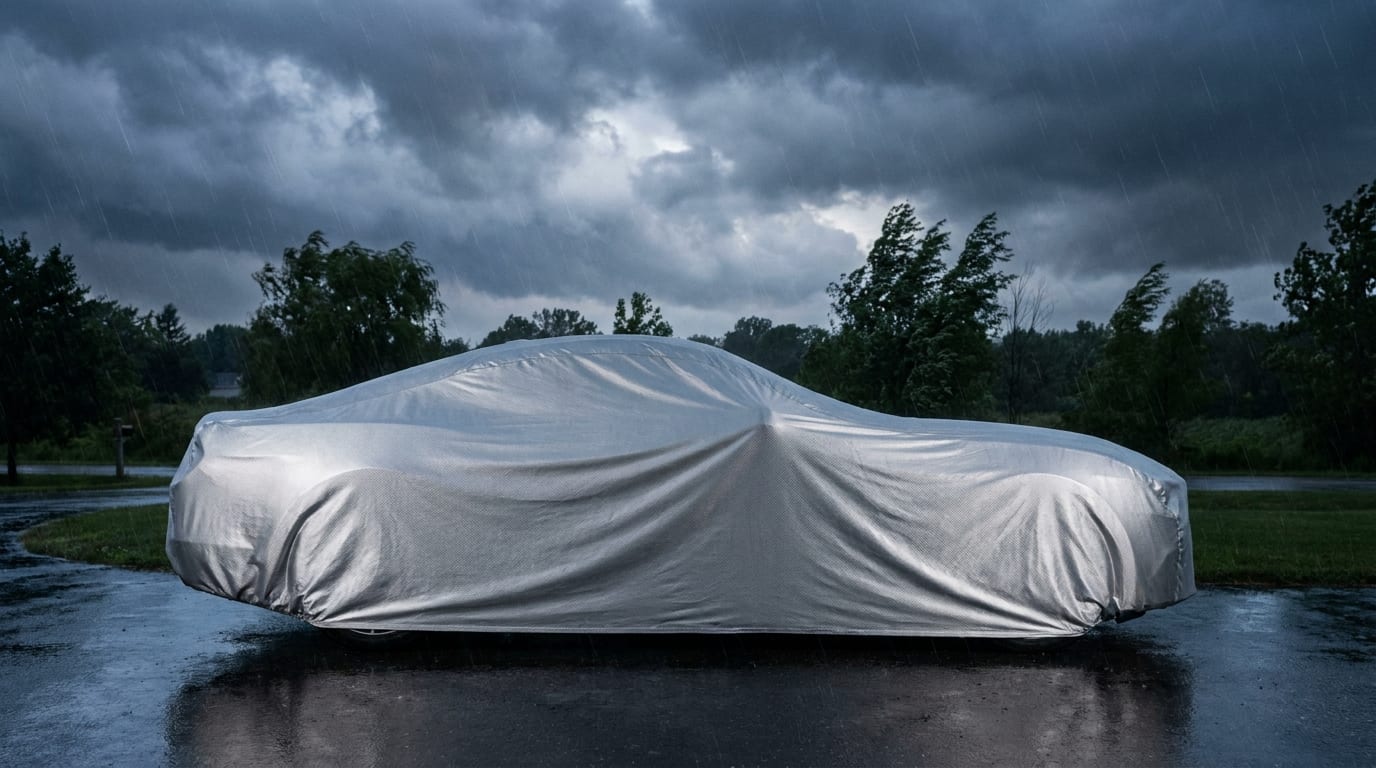
Check the hardware next. Most covers come with straps, a cable, or grommets meant to anchor the cover underneath the vehicle. Cinch them down and see what happens. If they pull snug with just a bit of give, good. If you're yanking hard and there's still slack left over, or the strap barely reaches the anchor point at all, the cover's dimensions and your vehicle's don't match up.
Then test it the way it'll actually be used: in the wind. If there's a breeze outside, watch how the cover reacts. A firm tug at the corners works too if conditions are still. A cover that's sized right stays put, anchored at the mirrors and bumpers, with the straps doing light work rather than fighting to hold the whole thing down. If the cover shifts, lifts at the edges, or balloons in the middle with normal gusts, that's your sign it's too big for the car underneath it. For a walkthrough on getting straps tensioned correctly the first time, the guide on installing wind straps for car covers covers the setup step by step, and the broader installation guide is worth a look if you're still getting the cover on and off cleanly.
Signs Your Cover Doesn't Fit (and What to Do Next)
If you've run through the steps above, a few red flags should jump out immediately:
- Gapping at the front or rear bumpers instead of a clean edge
- Mirror pockets that miss the mirrors entirely or sit twisted
- Fabric pooling or bunching across the hood, roof, or trunk
- A hem that drags on the ground or rides up above the wheel wells
- The cover shifting or lifting in light wind even with straps cinched
One or two of these, and you might just need a different size within the same universal fit line. A cover sitting at the small end of its range might fit better if you size up, and vice versa. But if you're hitting three or more of these consistently, a universal range probably isn't going to get you there. That's when it's worth looking at a semi-custom or custom-fit cover built to your vehicle's actual shape rather than a length bracket shared with a dozen other models.
Either way, the fix starts before checkout. Running your exact measurements against the retailer's size chart, or using a cover finder tool to match your VIN or vehicle details directly, catches most fit problems before they become a return. And if a cover is still underperforming after a proper install, it's worth checking what's covered under a lifetime warranty on car covers before assuming you're stuck with it.
Get the Fit Right From the Start
Five checks, five minutes: size label against real measurements, mirror and antenna alignment, no pooling fabric, a hem that sits where it should, and a cover that holds steady in wind. Run through it once after any new install, and again each season or whenever you swap vehicles. It's a small habit that saves you from the scratches, frayed hems, and flapping fabric that come from guessing at "how do you tell if a car cover fits correctly" instead of actually checking.
If your current cover keeps failing these checks no matter how you adjust it, that's not a you problem, it's a sizing problem. Take a few minutes to browse properly matched sizing options instead of forcing a universal fit to work, and if you want more guides like this one, stick around and explore what else is in the archive.