Most waterproof coatings on a car cover last 2 to 5 years before water repellency starts to noticeably fade, and that range depends heavily on fabric quality and how much sun and rain the cover actually sees. If you've been wondering how long a waterproof coating lasts on a car cover you own, or one you're about to buy, the honest answer is: it varies more than most product listings let on. A cover's overall fabric can hold up for 5 to 10 years or more, but the waterproof coating on top of it is a separate, faster-degrading layer. Think of it like the finish on a deck versus the wood underneath. The wood survives. The finish needs renewing long before that.
A cover that lives outside every day, exposed to sun and storms around the clock, will likely see its coating thin out in 1 to 2 years. One that's garage-kept most of the time and only used occasionally can push that closer to 5 years, sometimes longer with good care. The rest of this guide breaks down what speeds that process up, what slows it down, and how to tell when your cover's coating is on its way out.
What Determines How Long a Waterproof Coating Lasts
UV exposure is the biggest factor, full stop. Constant sun breaks down the durable water repellent (DWR) treatment on a cover's surface, causing it to crack or flake well before the fabric itself wears out. A cover parked under a carport sees a fraction of the UV damage that one sitting in an open lot does.
Climate matters almost as much. Covers in regions with frequent rain, snow, or high humidity go through repeated wet-dry cycles, and each cycle stresses the coating a little more. A cover in a dry climate that sees rain twice a month ages differently than one dealing with daily drizzle or coastal humidity.
Fabric type plays a role too. Coated polyester and polypropylene blends, multi-layer laminated fabrics, and vinyl all hold waterproofing differently, and some are built specifically for outdoor car covers that face the elements year-round. Usage pattern adds friction, literally. Taking a cover on and off daily creases and rubs the coated surface far more than leaving it in place for an extended stretch. And cleaning habits can undo a coating faster than weather ever will. Harsh detergents or a trip through the washing machine strip waterproof treatments in ways a gentle hand wash never would. Check our guide on how to clean a car cover if you're not sure your routine is safe for the coating.
Signs Your Car Cover's Waterproof Coating Is Wearing Out
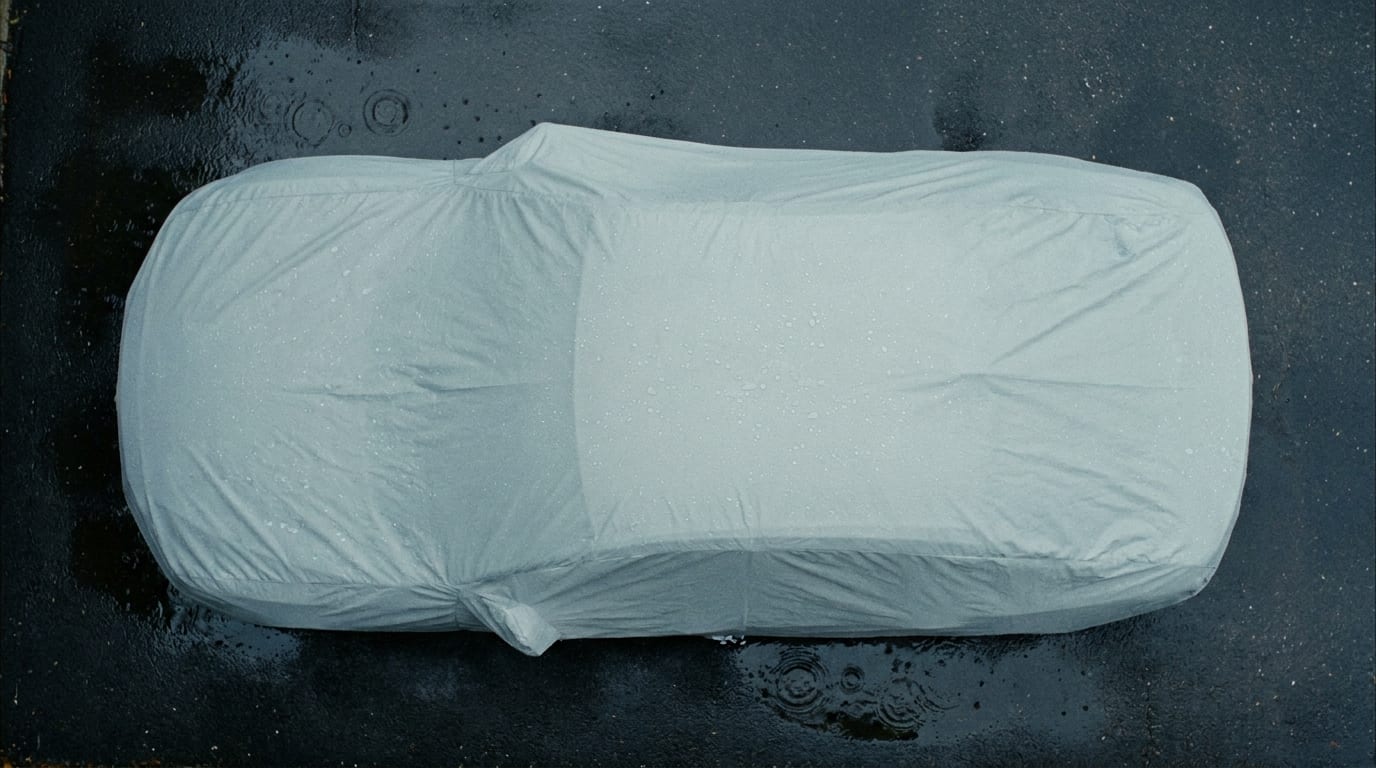
The clearest sign is simple: water stops beading up. Instead of rolling off, it soaks in or spreads flat across the surface. That's the coating telling you it's done its job for the last time.
A few other signs to watch for:
- The underside of the cover feels damp after rain, even though the outer surface looks fine
- A musty or mildew smell starts showing up, meaning moisture is getting trapped instead of shed
- The outer layer looks faded, feels stiff, or has started flaking or peeling where the coating has broken down
- Water spots or stains show up on your paint after a storm, which means water worked its way through
Any one of these on its own isn't a huge deal. Several at once means the coating has run its course.
Waterproof Coating Lifespan by Cover Type
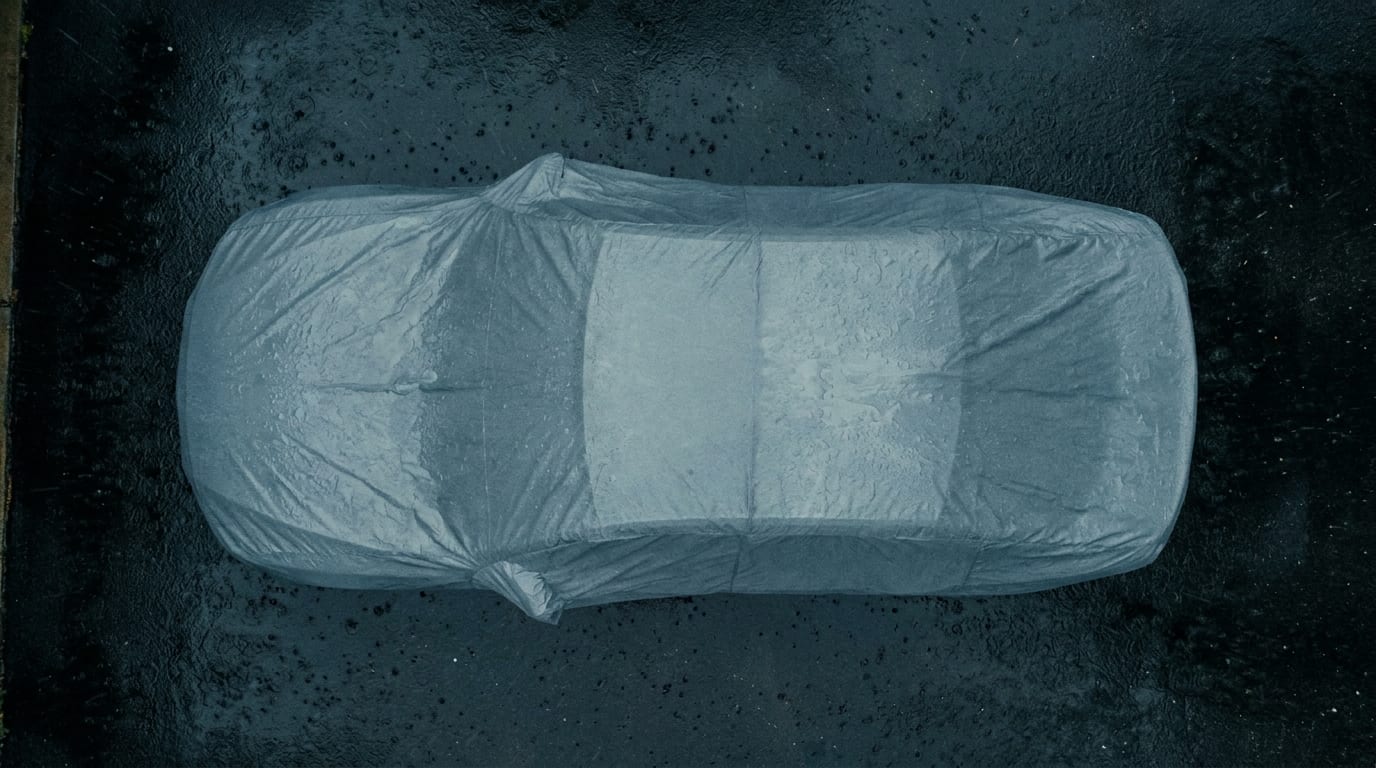
Not all coatings are created equal, and the cover's build quality has a direct line to how long it'll shed water. Here's roughly how the major types stack up:
| Cover Type | Typical Coating Lifespan | Notes |
|---|---|---|
| Spray-on DWR (budget/basic covers) | 6 to 12 months | Needs regular reapplication with daily outdoor use |
| Multi-layer laminated fabric | 2 to 4 years | Common in mid-tier and premium outdoor covers |
| Heavy-duty/premium weatherproof shell | 4 to 5 years | Built for year-round outdoor storage with proper care |
| Indoor/satin covers | Not applicable | Not designed for waterproofing at all |
That last row matters more than people think. If you're using an indoor cover outside "just for now," you're not dealing with a worn coating, you're dealing with a cover that was never waterproof to begin with. For anyone shopping based on this, it's worth looking directly at waterproof car covers built for the job rather than assuming any cover will do.
How to Extend the Life of Your Cover's Waterproof Coating
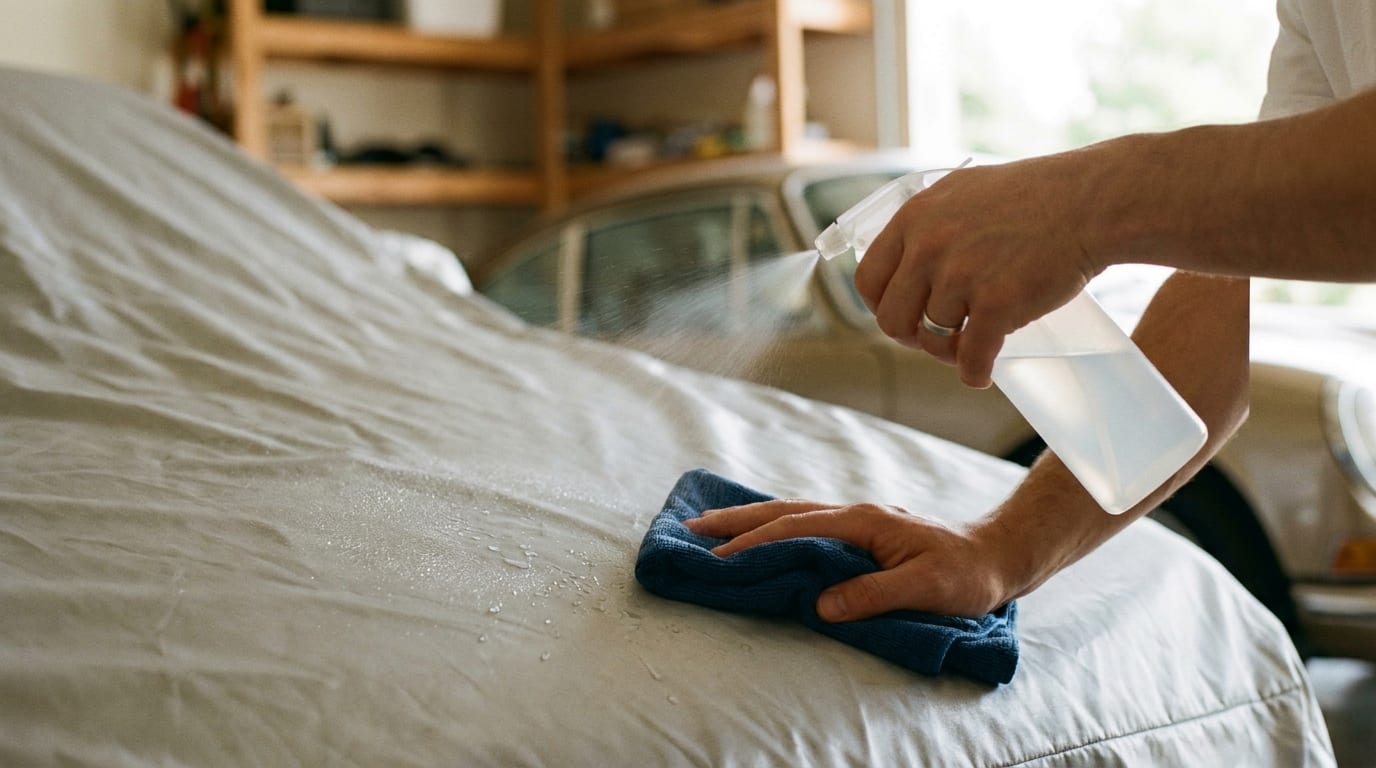
A few habits make a real difference in how long a waterproof coating lasts on a car cover, and none of them are complicated.
Hand wash with mild soap and cold water. Skip the washing machine and skip harsh detergents, both of which strip coatings faster than normal wear ever would. Let the cover air dry completely before folding or storing it. Packing away a damp cover is one of the fastest ways to invite mildew, and mildew eats away at the waterproof layer from the inside out.
Store it in a breathable bag when it's not on the car, not sealed plastic. Sealed plastic traps moisture against the fabric, which works against everything the coating is trying to do. If you notice water starting to soak in rather than bead up, apply a fabric-safe reproofing spray right then, not months later once the coating has fully failed. And when you're putting the cover on or pulling it off, lift it instead of dragging it across the hood or a rough driveway. That abrasion wears down the coated surface faster than almost anything else on this list.
For the full routine, our guide to using a car cover outdoors covers wind, UV, and rain protection together, and it's worth a read if you're storing a vehicle outside long-term. A secure fit also helps, since a cover that's flapping in the wind wears unevenly. Our piece on keeping a car cover from blowing away is a quick, practical add-on here.
When to Reapply Waterproofing vs. Replace the Cover
Here's where I'd draw the line. If the base fabric is still intact but water has started soaking in instead of beading off, that's a reproofing job, not a replacement. This usually shows up somewhere in year one to three of regular use, and a reproofing spray costs a few dollars and takes an afternoon.
Replace the cover once the fabric itself is cracking, tearing, or the coating has flaked off in large patches. At that point, no spray is bringing it back. Before you buy new, check the cover's warranty terms. Some premium covers include coverage for material defects, and it's worth confirming before spending money twice. CarCovers backs its products with a lifetime warranty on car covers, and general terms are spelled out on the warranty page if you want the specifics.
Cost is really the deciding factor most people land on anyway. A reproofing spray runs a few dollars. A new custom-fit cover is a real purchase. If the fabric's still sound, spend the few dollars first.
Keep Your Cover's Waterproofing Working Longer
So, to recap: 2 to 5 years is the realistic window for how long a waterproof coating lasts on a car cover, and your cleaning and storage habits are what push that number toward the high end instead of the low one. Hand wash it, dry it fully, store it loose, and reproof it before the water stops beading, not after.
If your current cover's coating has already given up, it might be time to browse waterproof car covers built for long-term outdoor exposure rather than patching up something past its prime. And if you want to get ahead of wear instead of reacting to it, our cleaning guide and outdoor-use guide are worth bookmarking for the full maintenance routine.