The Quick Answer: 3 to 5 Layers
Most good outdoor car covers use 3 to 5 layers. If your car lives inside a garage, you can get away with just 1 or 2.
That's the short version of how many layers does a good car cover need, and if you only read one paragraph, that's the one. But "layers" is a fuzzy word on most product pages, so here's what it actually means: an outer UV and water-resistant film, a middle woven or spunbond fabric that gives the cover its strength, and an inner soft layer that keeps the fabric from scuffing your paint. Stack those three functions and you've got a 3-layer cover. Split any of them into finer sub-layers and you end up at 4 or 5.
More layers isn't automatically better, though. A 5-layer cover on a car that sits in a heated garage all year is overkill, and you'll pay for weight and bulk you don't need. The right answer depends entirely on where your car sits and what it's exposed to. The rest of this guide breaks down what each layer does, how to match layer count to your actual parking situation, and what to check before you buy.
What Each Layer in a Car Cover Actually Does

Start with the outer layer. It's usually a UV-stabilized, water-resistant film or coating, and its job is to take the beating: sun, rain, light snow, road grime. This is the layer that fades first if a cover is cheap, and it's the one doing the most work on a car parked outside.
Under that sits the middle layer, or layers, made from woven polypropylene or spunbond fabric. This is where tear strength and structural durability come from, and it's also the main thing separating a 2-layer cover from a 4-layer one. More middle fabric means more resistance to wind flap, tree branches, and the occasional cat deciding your hood is a nap spot.
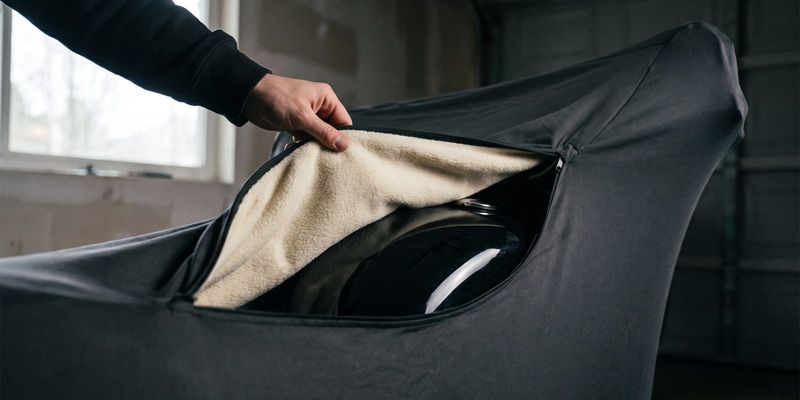
Then there's the inner layer, typically a soft napped fleece or microfiber that sits directly against the paint. Its job isn't weatherproofing, it's friction. It keeps the rougher outer fabrics from grinding tiny scratches into your clear coat every time the wind shifts, and it helps absorb minor condensation so moisture doesn't just sit on the paint overnight.
Here's the thing about 5-layer covers: they usually aren't adding a fourth function. They're splitting the UV layer and the waterproof layer into two separate layers instead of combining them into one, or doubling up the middle fabric for extra strength. It's refinement, not reinvention. Worth knowing before you pay extra for a number that sounds impressive on a label. For a deeper look at how these materials actually repel water, the waterproof fabrics guide breaks down the coating chemistry in more detail.
How Many Layers You Need Based on Where You Park
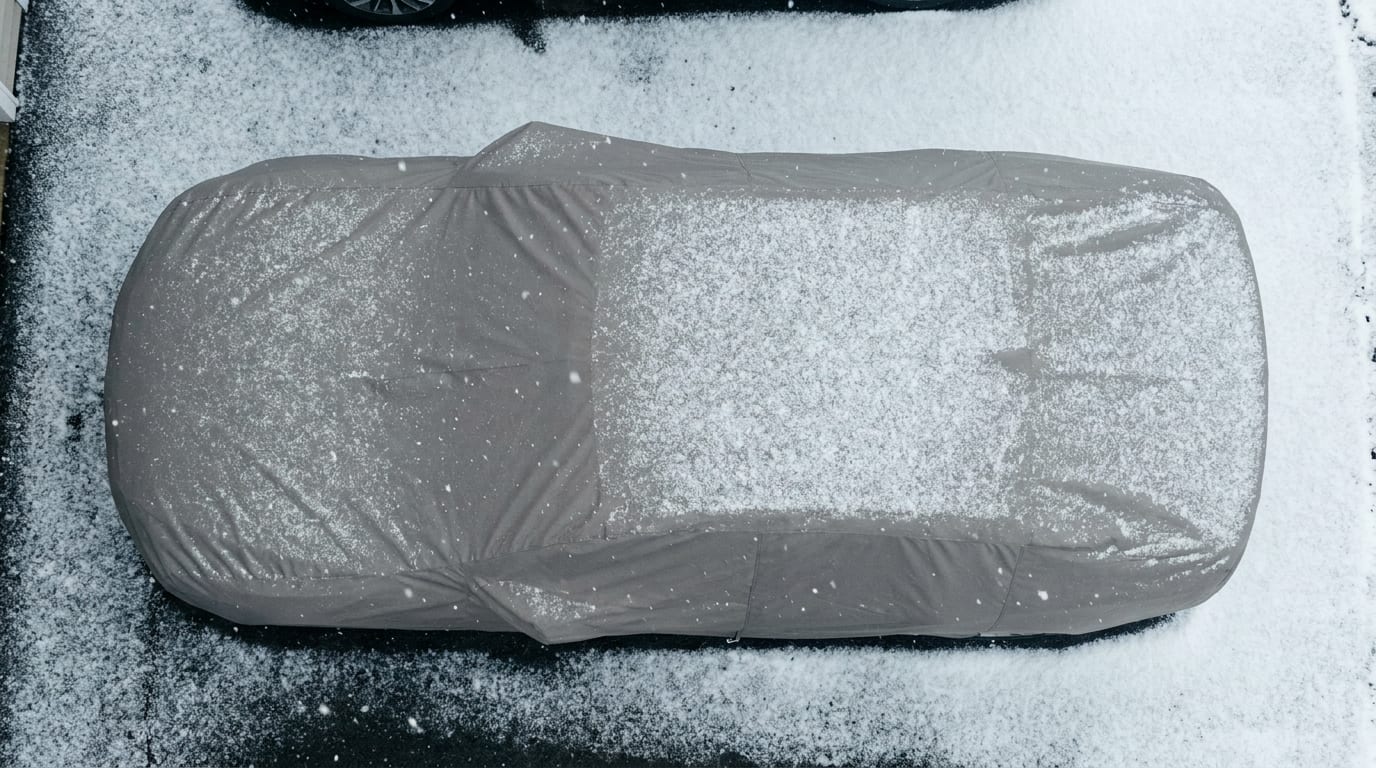
If your car lives outside full-time, sun, rain, or snow, you want 4 to 5 layers. That's non-negotiable UV exposure, and it's the scenario where cheap single-layer fabric degrades fastest. An outdoor car cover built with that layer count is doing three jobs at once: blocking UV, shedding water, and surviving wind abrasion over months, not weeks.
Covered outdoor parking changes the math. Under a carport, a tree, or an awning, UV and rain exposure both drop significantly, and 3 layers is usually plenty. You're still dealing with dust, bird droppings, and the occasional storm blowing in sideways, but you don't need the full weatherproofing stack.
Garage storage is a different problem entirely. Indoors, a cover's main job is dust and light scratch protection, not weatherproofing, so 1 to 2 layers is enough. Paying for a 5-layer UV-blocking cover on a car that never sees sunlight is just wasted money and extra bulk to wrestle with every time you pull the car out. If you're not sure which category your situation falls into, the indoor car cover guide and outdoor car cover guide both walk through the specifics so you can self-select instead of guessing.
Single-Layer vs Multi-Layer Covers: What You Give Up
Single-layer covers are cheap and light, and that's about where the advantages end. They offer almost no UV protection, minimal scratch resistance, and they tear faster in wind because there's no middle fabric reinforcing them. If you've ever seen a car cover shredded along the seams after one bad storm, it was probably a single layer.
Two-layer covers add some water resistance, but they can trap condensation underneath if the fabric isn't breathable. That's arguably worse than no cover at all in humid climates, since you end up sealing moisture against the paint instead of keeping it off.
Three or more layers is where you get real balance: breathable enough to let moisture vapor escape, dense enough to block liquid water from soaking through. That's the sweet spot for most outdoor use.
Hail is its own category. If you're dealing with severe weather and the risk of dents, not just rain and sun, layer count and padding thickness both matter more than usual. A standard 4-layer cover isn't built to absorb impact the way a dedicated hail car cover is, so don't assume "more layers" automatically means "hail-proof."
Layers vs Weight, Breathability, and Price Tradeoffs
More layers means more weight. That's simple physics, and it's worth factoring in if you're pulling the cover on and off daily. A 5-layer cover that takes two people to wrestle over a sedan isn't practical for someone who drives to work every morning.
Breathability is the trickier tradeoff. "Waterproof" and "water-resistant" get used almost interchangeably in marketing, but they're not the same thing. A truly waterproof layer blocks all moisture, including the vapor your car's own surface releases as temperatures swing, and if that layer isn't paired with a breathable structure, you trap condensation underneath instead of keeping the car dry. Water-resistant layering tends to breathe better, which is why most well-designed multi-layer covers use water-resistant outer coatings rather than a fully sealed waterproof shell.
Price scales with layer count almost every time. So the real question isn't "how many layers can I afford," it's "how much exposure does my car actually face." Someone parking under a carport in a mild climate is paying for protection they'll never use if they buy top-tier 5-layer gear.
Custom-fit multi-layer covers cost more upfront than universal single-layer ones, but they earn that cost back by reducing wind flap and water pooling, the two things that quietly wreck a cover's lifespan. A loose universal cover flapping in the wind will wear through its own layers faster than a snug one ever would. The custom-fit car cover guide covers how fit and layer count work together.
How to Check a Cover's Layer Count Before You Buy
Look for the actual number. A legitimate spec sheet or product description will say "4-ply" or "5-layer construction," not just hint at it.
Fabric weight is a useful secondary check, measured in GSM or ounces per square yard. Heavier fabric often correlates with more layers, though it's not a perfect 1-to-1 rule since material density varies by manufacturer.
Watch for vague terms like "heavy-duty" or "premium protection" with no layer number attached. That's marketing language doing the work a spec should be doing. If a listing doesn't break it down, ask before you buy, not after the cover shows up thinner than expected.
Layer count isn't the whole story either. A well-built multi-layer cover that flaps loose in the wind will wear out fast regardless of how many layers it has, which is why gust straps and tie-downs matter just as much. The guide to keeping a car cover from blowing away covers the hardware side of that equation.
Caring for a Multi-Layer Cover So It Lasts
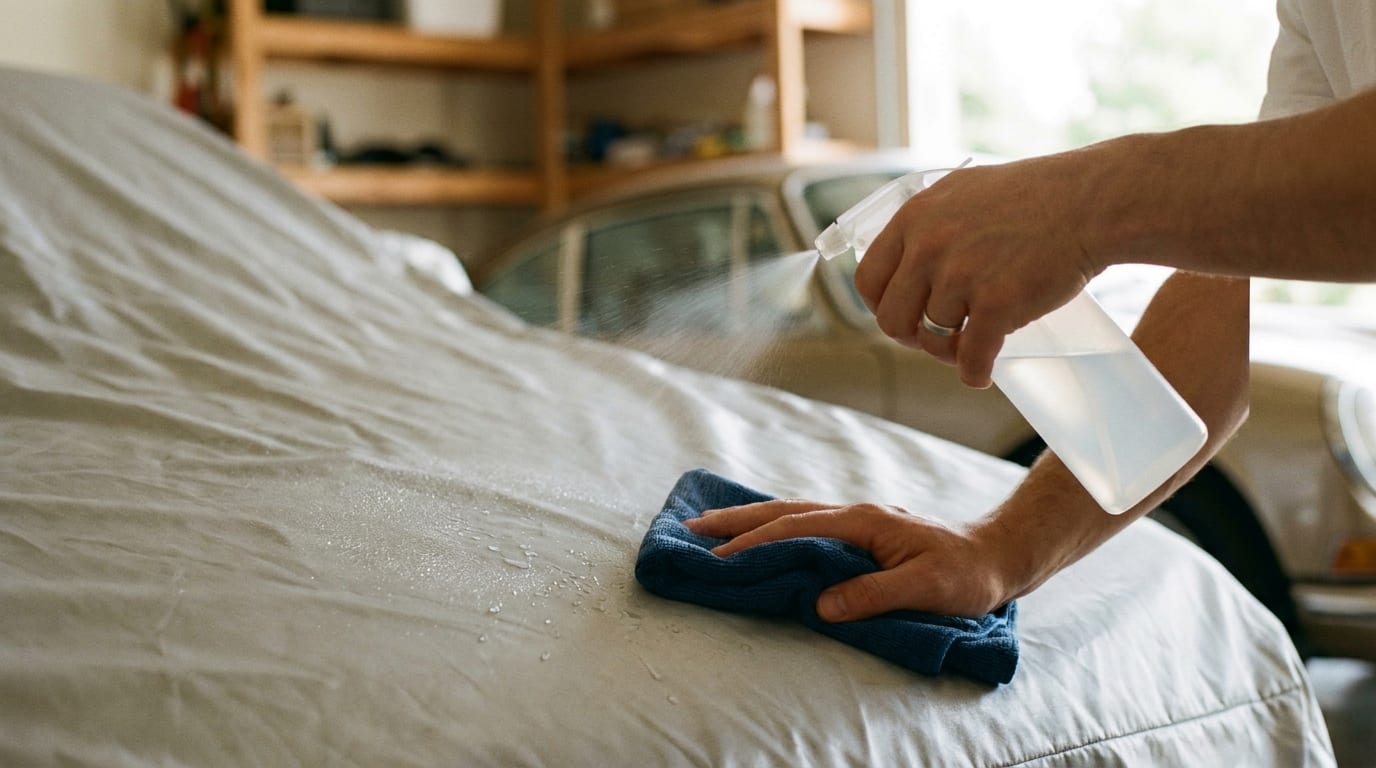
Multi-layer covers still need regular cleaning. Dirt and grime sitting on the outer UV layer accelerates breakdown, and a cover that's never washed will degrade faster than its layer count would suggest.
Skip the harsh detergents and skip the washing machine if the manufacturer doesn't explicitly allow it. Aggressive detergents can break down the waterproof coatings sitting between layers, which defeats the purpose of buying a multi-layer cover in the first place.
Let it dry fully before folding it away. A damp cover folded into a bag is a mildew problem waiting to happen, and once mildew gets between layers, it's hard to fully remove. The cover cleaning guide and the outdoor cover care guide both walk through the specific steps for washing, drying, and storing without wrecking the layers you paid for.
Choosing the Right Layer Count for Your Car
The decision tree is simple once you know your storage situation: full-time outdoor exposure in sun, rain, or snow calls for 4 to 5 layers, partial shelter like a carport or tree cover is fine with 3, and a garage only needs 1 to 2.
Match the layer count to how your car is actually stored, not to whatever number sounds most protective on the box. Buying 5-layer protection for a car that spends its life in a garage is money spent on weight you'll curse every time you install the cover.
If you're ready to compare actual products, CarCovers has waterproof and custom-fit options built around these exact layer counts, and a cover backed by a lifetime warranty is usually a decent signal that the manufacturer trusts its own multi-layer construction. Worth a look, and worth bookmarking this guide if you want to double check your pick before checkout.