


How Tight Should a Car Cover Be? The Right Fit, Explained
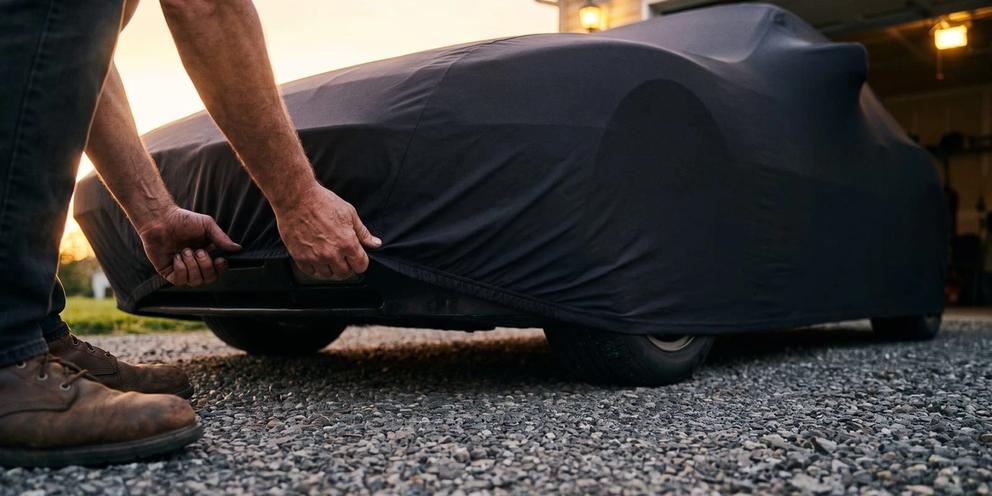
A car cover should fit snugly against the body lines, with just enough give at the seams and hem to move a little in the wind. Tight enough to resist lift, but never stretched taut across the hood, roof, or mirrors. Over-tightening strains the fabric and can even scratch paint over time. That's the short answer to how tight should a car cover be, and the rest of this comes down to fit, not force.
How Tight Should a Car Cover Be?
Here's the distinction that trips people up: "tight" doesn't mean pulling the fabric until it's drum-skin taut over the hood. It means secured. That's a job for the elastic hem, the tie-down straps, or a cable lock threaded through the grommets, not for your hands yanking the material into submission.
Think of it like a fitted sheet. You want it snug around the corners, not stretched so hard it's about to snap back. A car cover that's doing its job holds its shape against gusts without any part of the fabric under constant tension against the paint.
This standard holds whether you're using a custom-fit cover or a universal one. The difference is how easy it is to hit that mark. A custom-fit cover is cut to your vehicle's actual dimensions, so the snug fit is baked in. A universal cover asks more of you, and of its straps and elastic, to get there.
What Happens If a Car Cover Is Too Tight?
Overstretched fabric doesn't wear evenly. It thins out fastest at the friction points: side mirrors, the antenna base, the roofline, door handles. Anywhere the fabric has to bend around a protrusion, tension concentrates, and that's where you'll see the first signs of wear.
There's a paint problem too. A cover pulled taut can rub directly against the clear coat as the car settles on its suspension overnight, or as the fabric contracts in cold weather. That light, constant friction is how you end up with fine scratches or swirl marks, the kind you don't notice until you're washing the car in good light and wondering where they came from.
And the cover itself pays for it. Constant strain on elastic hems and seams shortens the lifespan of the cover, full stop. Seams are usually the first thing to go when a cover's been fighting tension it wasn't built for. You'll see tears at the stitch lines long before the fabric itself would've worn out on its own.
What Happens If a Car Cover Is Too Loose?
Go too loose and you've got a different problem, and honestly, a worse one in a lot of cases. A loose cover flaps. Wind gets underneath, the fabric snaps against the panels, and that repeated fabric-on-paint friction is one of the most common causes of surface scratching on a covered car. In mild weather, a car with no cover at all can come out cleaner than one wearing a loose, flapping one.
Gaps at the hem or around the wheel wells are their own headache. Rain finds its way in. So does dust, pollen, and, more often than owners expect, small animals looking for a dry place to nest. An outdoor car cover is supposed to keep that stuff out, and a loose fit defeats the purpose before the weather's even involved. Once debris and moisture get trapped underneath, you're looking at a cleaning job sooner than you'd like.
Worst case: without gust straps or a cable lock holding it down, a loose cover can blow off completely in high wind. Then it's not protecting anything, it's just tumbling across the parking lot.
How Do You Know If a Car Cover Fits Correctly?
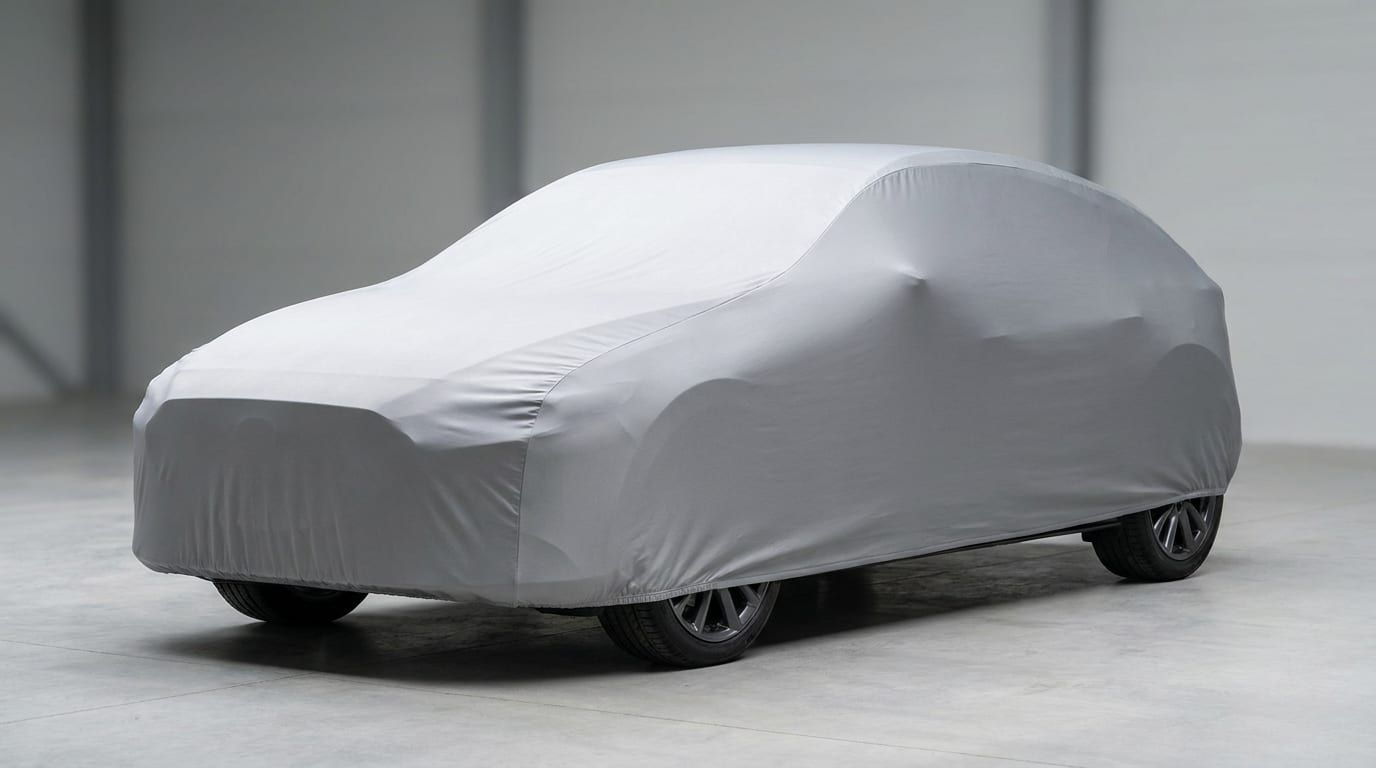
There's a quick physical check you can do in about thirty seconds. Tug gently at the hem. It should give an inch or two. If it pulls taut across the roof or hood the moment you touch it, that's too tight already.
Next, just watch it. Stand there for a few minutes if there's any wind at all. A correctly fitted cover moves slightly, maybe a soft ripple across the surface, but it won't balloon up or snap like a sail. If it's cracking in the breeze, air is getting underneath somewhere it shouldn't.
Check the hemline itself. It should reach down to the lower body line, the point where the panel curves under toward the wheels. Not so high that it's exposing the rocker panels, not so low that it's riding up over the bumper or bunching at the wheel wells.
If you've adjusted everything and the fit still seems off no matter what you do, the problem usually isn't tension. It's the cover itself. Measure your vehicle's length, height, and mirror placement against the sizing guide for your vehicle's car cover before you assume tightening the straps one more notch is going to fix it. A cover that's genuinely the wrong size won't sit right no matter how you pull it.
Should a Car Cover Have Elastic Hems or Straps?
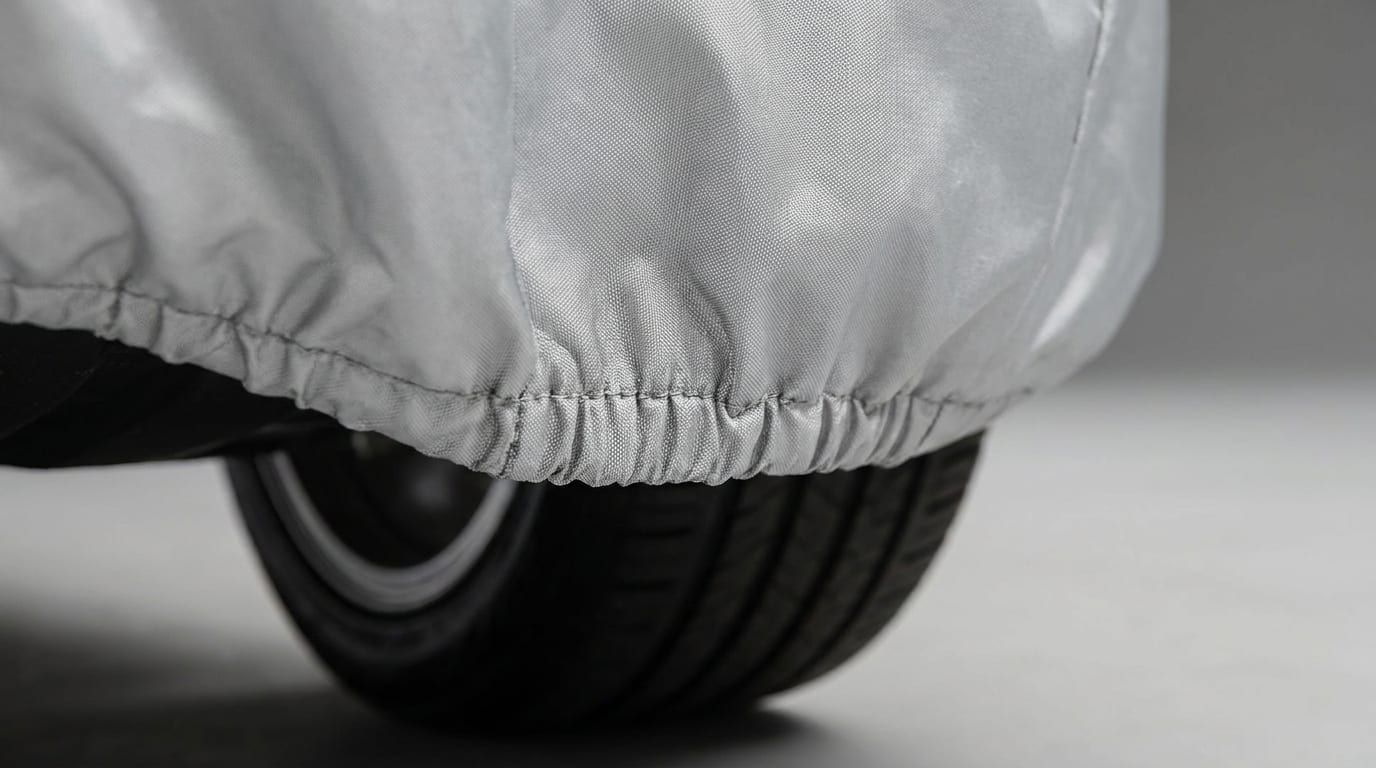
Elastic hems do something a fixed hem can't: they self-adjust as the fabric contracts and expands with temperature. Cold morning, hot afternoon, the elastic takes up the slack either way, so you're not out there retightening it by hand every time the weather shifts.
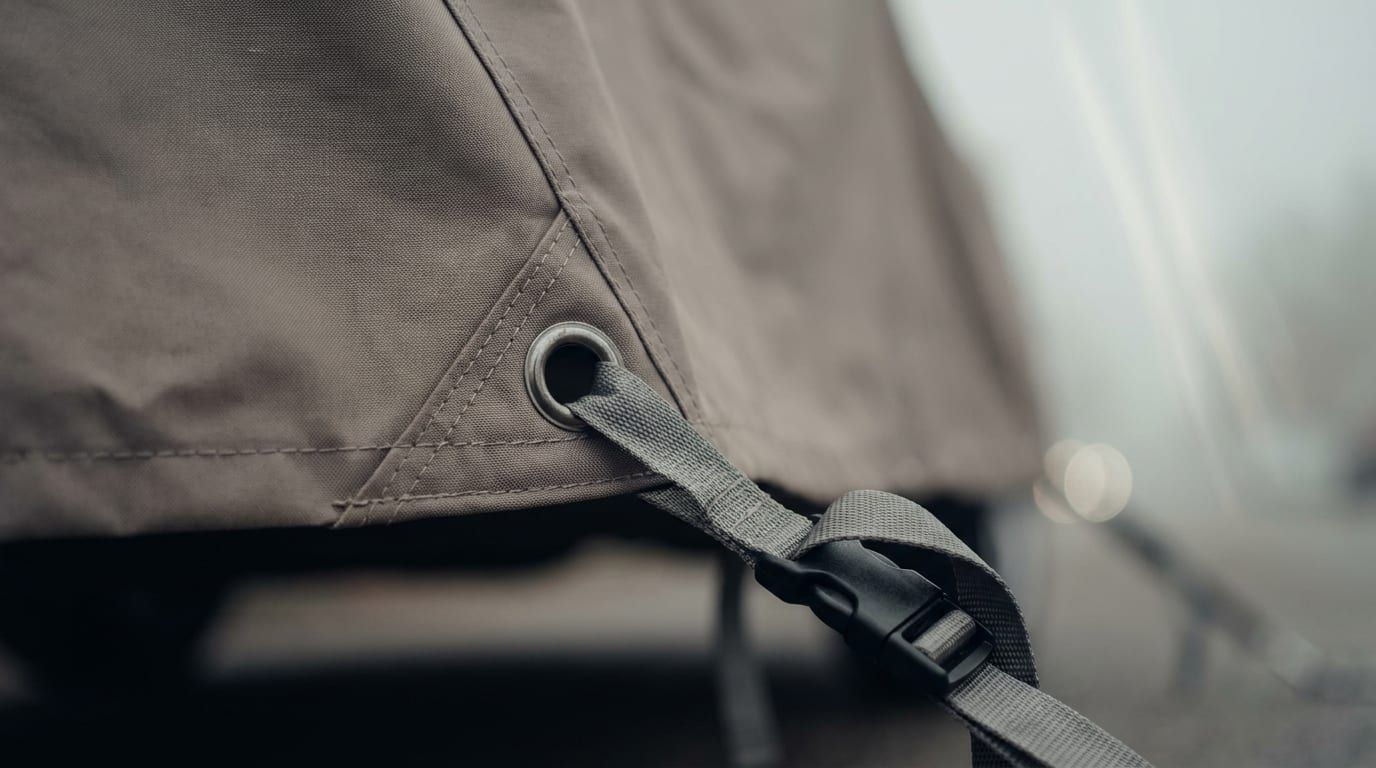
Grommets, tie-down straps, and cable-and-lock kits handle the wind resistance side of things. That's the point of them: so the fabric itself never has to be pulled tight just to stay in place. The straps take the load, the fabric just covers the car.
Material matters here too. How snug a cover feels day to day depends a lot on the weave. Lighter, stretch-woven fabrics work well with elastic hems. Heavier or non-stretch materials, the kind built for serious outdoor weather protection, need strap tension to stay secure since they won't flex the way elastic-friendly fabrics do. Worth knowing before you assume every cover behaves the same way once it's on. If you're comparing options, it's worth reading up on what makes one car cover material different from another before you buy.
How Do You Adjust a Car Cover for a Better Fit?
Work front to back. Drape the cover over the vehicle, get the mirror pockets and antenna patch lined up first, then move backward, smoothing out slack as you go. Trying to fit a cover back to front just pushes all the bunching toward the windshield, and you'll end up fighting it the whole way.
Save the elastic hem for last. Set your straps and cable lock first, then let the hem do its job. If you tighten the hem before the straps are set, you'll end up compensating with hem tension for wind resistance that should be coming from the straps instead, and that's exactly the kind of over-tightening that leads to strain at the seams.
One mistake I see constantly: pulling the hem so tight it actually lifts off the ground at the wheel wells. It looks secure, but it's not, it just opens a gap for wind to get underneath and start the flapping problem all over again. If you're setting a cover up for the first time, a proper installation walkthrough is worth ten minutes before you just wing it.
Live somewhere windy? Don't try to solve it by cranking down the base cover's tension. Add a gust strap kit underneath the body instead. It's built for exactly that problem, and it keeps the cover's own tension where it belongs.
Does Fit Tightness Depend on Custom-Fit vs. Universal Covers?
Custom-fit covers are cut to a specific make and model's actual dimensions. The intended tightness is built into the pattern itself, not something you have to engineer after the fact with straps and hope. That's really the appeal of a custom-fit car cover: the fit question is mostly answered before you even put it on.
Universal and semi-custom covers lean harder on elastic hems and adjustable straps because they're covering a range of vehicles with one pattern. That's not a knock on them, it's just the trade-off. More adjustment required, more room for getting the tension wrong.
It shows up most with add-ons. Spoilers, roof racks, oversized mirrors, anything that breaks from a "standard" body shape. Universal covers tend to gap or strain around those features, while custom sizing accounts for them from the start. If your vehicle has any of that, it's worth running it through a cover finder tool to see what actually matches before defaulting to a universal fit.
Get a Cover That Fits Right From the Start
The rule doesn't change no matter what vehicle you're covering: snug and secured, not stretched. Tension belongs in the straps and the elastic hem, not in the fabric itself. Get that right and most of the problems people associate with car covers, the scratches, the flapping, the torn seams, just don't happen.
If you've been guessing at fit and adjusting after the fact, it's worth taking a step back. Browse a few fitted options, subscribe for more guides like this one, or just keep this checklist handy next time you're covering up. A cover sized right from the start solves most of the tightness complaints owners run into with one-size-fits-most covers, before you ever have to think about straps at all.
Updated