


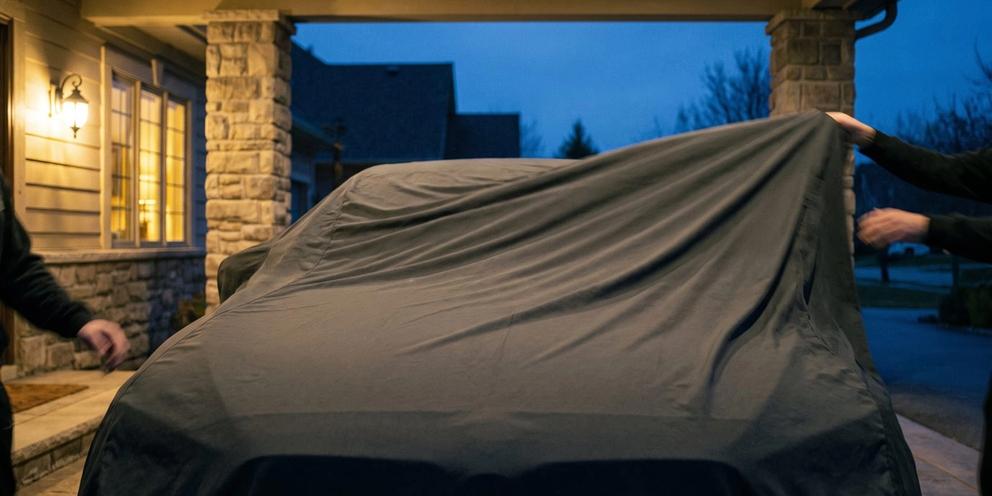
How to Stop a Car Cover From Scratching Paint
How Do You Stop a Car Cover From Scratching Paint?
Wash and dry your car before covering it, use a properly sized cover with a soft interior lining, and secure straps loosely enough that they don't rub against a panel. Then remove or reposition the cover every so often so trapped grit doesn't sit in one spot grinding against your clear coat. That's really the whole formula for how to stop a car cover from scratching paint.
Scratching almost never comes down to the idea of covering your car being bad. It comes down to trapped debris or a cover that doesn't fit right. Fix those two things and the risk drops to almost nothing.
Why Do Car Covers Scratch Paint in the First Place?
Here's the mechanism, plain and simple: dust, sand, and grit get trapped between the cover and the paint. The cover shifts, even slightly, and suddenly you've got sandpaper sitting on your hood. It doesn't take a storm to do this. A light breeze over a few days is enough if the grit's already there.
Wind is the second big culprit. A universal or ill-fitting cover has slack in it, and that slack means movement. Every time it flaps or slides, it drags whatever's underneath across the surface again. Repeat that for a week and you'll see fine swirl marks where none existed before.
Material matters too. Cheap, stiff, or non-breathable covers, tarps included, trap moisture and debris right against the paint instead of letting either escape. A breathable cover lets dust settle and air move through. A tarp just seals everything in like a greenhouse for grime.
And then there's neglect. Leave a cover on for weeks or months without ever pulling it off, and dust just keeps accumulating underneath, undisturbed, slowly working itself into the surface every time the wind picks up. Short-term covering with the wrong habits is bad. Long-term covering with the wrong habits is worse.
Does a Car Need to Be Washed Before Covering It?
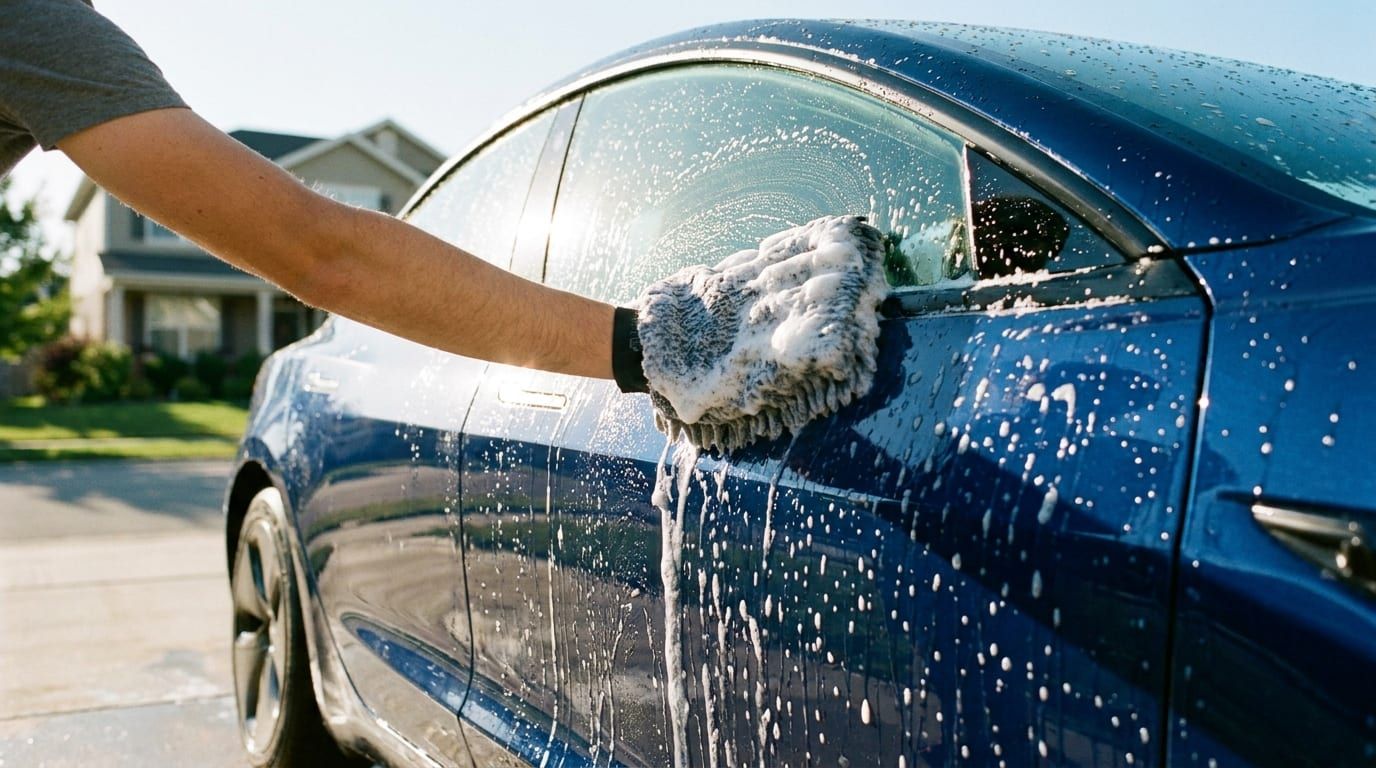
Yes. Skipping a wash or even a quick wipe-down before covering is the single most common cause of cover-related scratches. People assume the cover is doing all the protecting, so the state of the paint underneath doesn't matter. It matters more than almost anything else.
The routine doesn't need to be elaborate. Rinse or wipe off loose dirt, dry the surface completely (water spots plus a cover is its own problem), and check the wheel wells and side mirrors, since debris likes to collect in those spots and migrate under the fabric.
You don't need a full detail every time. A quick microfiber wipe-down before you throw the cover on is enough for daily covering, and it meaningfully cuts your scratch risk compared to just covering a dusty car straight off the street. For a deeper look at protecting your finish long term, car paint care covers the fundamentals, and general car care is worth a look if you want the bigger upkeep picture.
What Cover Material Is Least Likely to Scratch Paint?
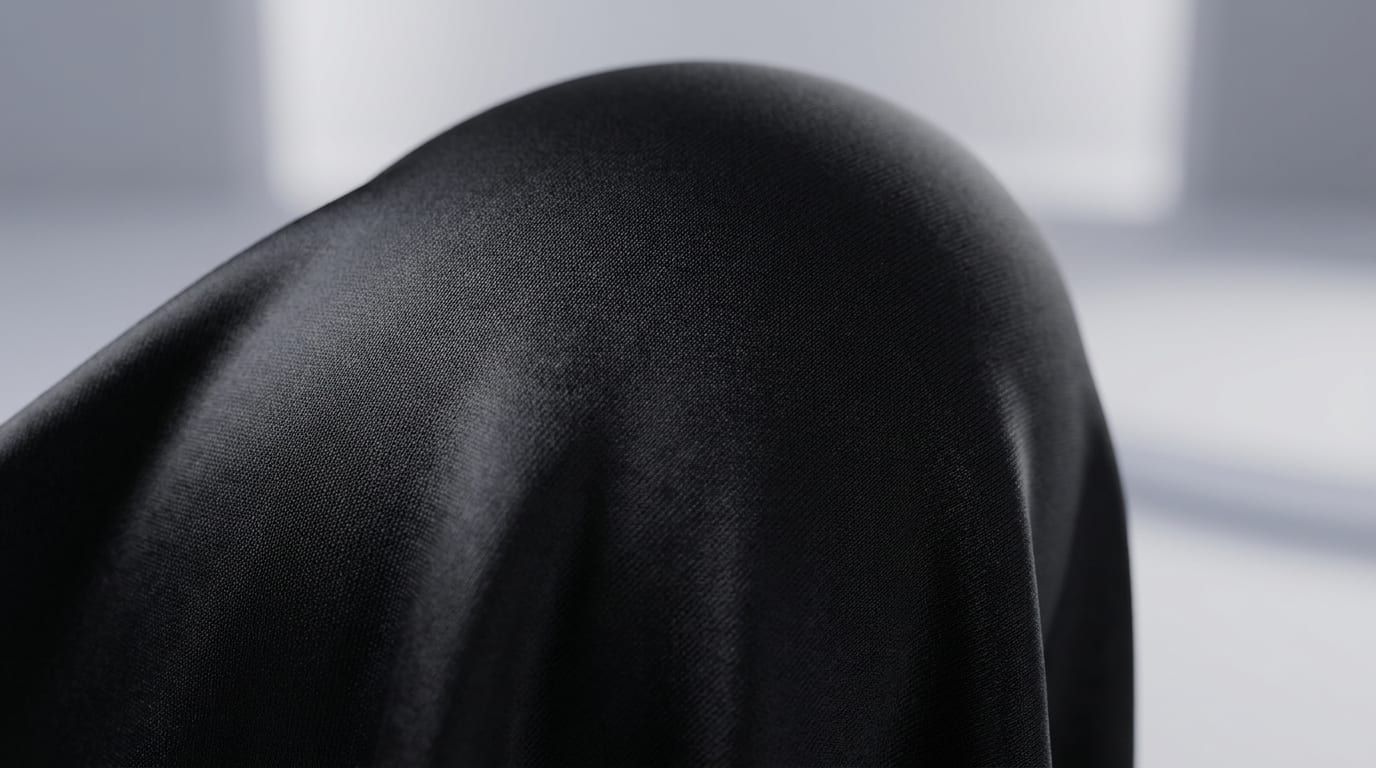
Soft, breathable, multi-layer covers with a fleece or satin-style inner lining are far gentler on clear coat than stiff vinyl or plastic. The lining acts as a buffer. Even if a little dust does get trapped, it's cushioned instead of ground directly into the paint.
Breathability does double duty here. It lets moisture and dust escape rather than sitting trapped against the surface, which is exactly the setup that turns fine grit into a scratching hazard over time.
This is where tarps fall apart as an option. They're stiff, non-woven, and have zero soft lining, so there's nothing between the material and your paint but friction. If you're weighing a tarp against an actual cover, our comparison of tarps versus car covers lays out why that trade-off usually isn't worth it. And if you want the full rundown of material types and how each one holds up, our breakdown of the best car cover materials is the place to start.
How Does a Properly Fitted Cover Prevent Scratching?
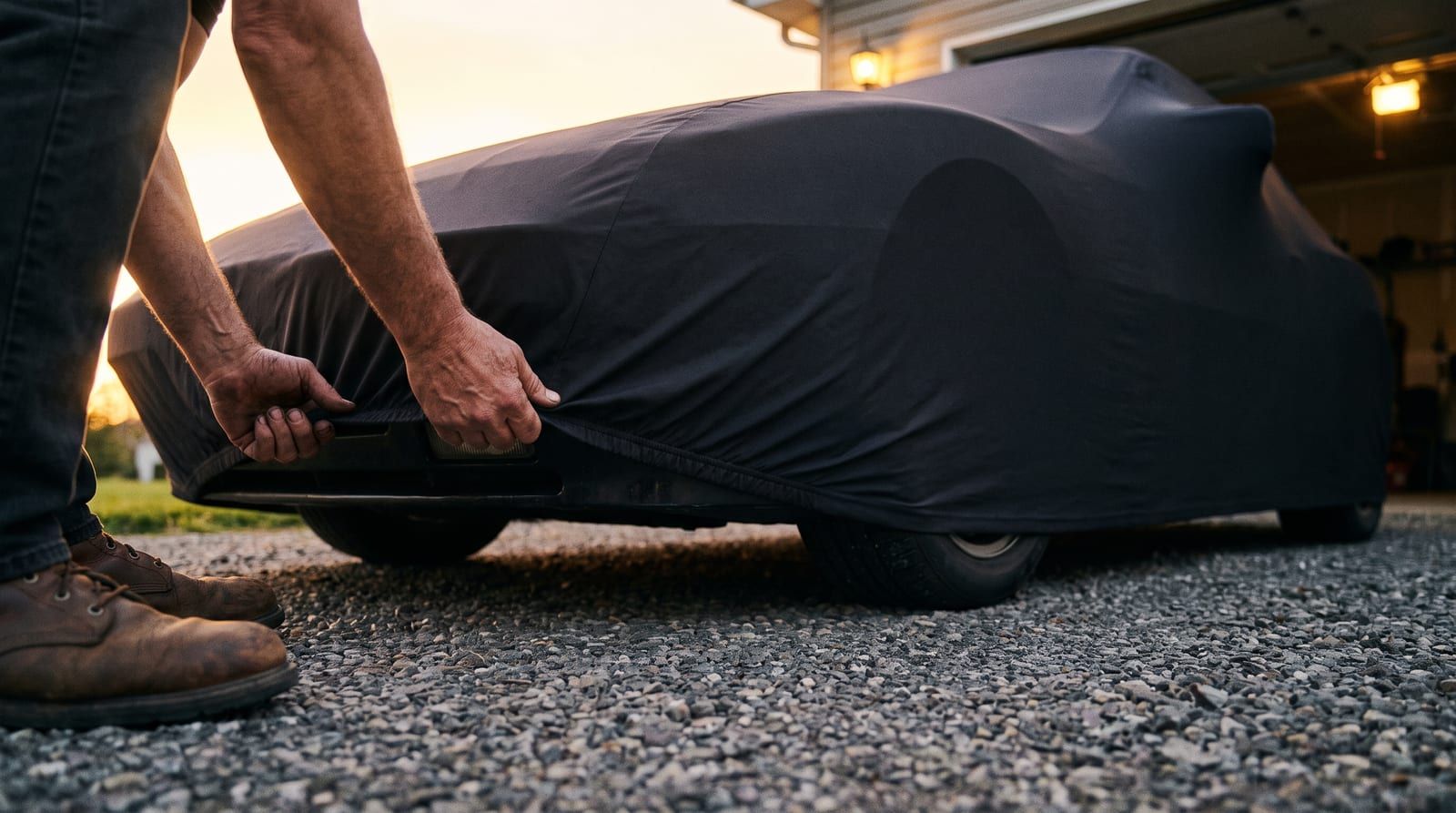
A loose, universal-fit cover has more room to move, and movement is what causes friction against the paint in the first place. Doesn't matter how soft the fabric is if there's three inches of slack flapping around every time a car drives by and stirs the air.
Custom and semi-custom fits change that. Elastic hems and defined anchor points hold the cover snug against the body, so there's nowhere for it to shift. A cover that's actually sized for your vehicle also avoids the excess-fabric problem, where loose material pools in one spot, usually around the mirrors or the trunk, and rubs against that same spot over and over.
If you're not sure whether your current cover actually fits, it's worth checking. Our guide to custom-fit car covers explains the difference between fit types, and our sizing guide will help you match a cover to your specific vehicle instead of guessing.
Can Straps or Accessories Cause Scratching?
Straps get overlooked, but they're a real source of scratches. Gust straps, cable locks, and grommets can rub paint if they're installed too tight or routed across a body panel instead of underneath the vehicle where they belong.
The fix is mostly about routing. Run straps under the car and through the wheel wells rather than across doors or the hood, where they'll drag with every gust. When you're installing a cable lock, check that it sits against trim or a bumper, not directly on a painted panel. Small detail, but it's the kind of thing that causes a visible mark after a few months if it's ignored.
If you want the actual setup steps instead of just the general idea, our guide to installing gust straps walks through correct routing, and our full cover installation guide covers the rest of the process from start to finish.
How Do You Maintain a Cover to Keep It Scratch-Free Long Term?
The cover itself picks up grit over time, even a good one. Every time you use it, it's collecting a little more dust, and eventually that dust is embedded enough in the fabric that it starts transferring to the paint instead of just resting on top of it. Washing the cover periodically clears that out before it becomes a problem.
Storage matters too. Fold the cover along its original creases and keep it in a clean storage bag between uses instead of wadding it up on a garage shelf where it picks up dirt from everything around it.
Once a season, check the interior lining for thinning or matted patches. A worn lining has lost the soft cushion that made it safe against paint in the first place, and at that point it's basically acting like a cheap material even if it started out as a good one.
For the cleaning process itself, our guide on how to clean a car cover walks through it step by step, and if you're storing your car outdoors regularly, our outdoor car cover guide covers the added upkeep that comes with sun, wind, and moisture exposure.
Choosing the Right Cover to Protect Your Paint
Clean the car before you cover it. Pick a cover that actually fits, with a soft lining inside. Route your straps correctly. Maintain the cover itself instead of treating it as a set-it-and-forget-it accessory. That's the whole system, and none of it is complicated once you've done it a couple times.
Most of the scratching problems people deal with trace back to getting the fit or the material wrong at the very start, before the cover ever touched the car. Solve that upfront and the rest is just habit.
If you're shopping for something that actually fits your vehicle instead of a generic one-size-fits-all option, it's worth browsing our car cover selection or using our cover finder tool to match one to your make and model. And if you found this useful, stick around the blog. We cover this kind of practical, avoid-the-common-mistakes ground pretty regularly.
FAQ
Does a car cover scratch paint if left on too long?
Yes, if dust builds up underneath and is never disturbed. The longer debris sits trapped against the paint, the more chances wind or movement has to grind it in.
Can a soft cover still scratch paint?
It can, if the car wasn't washed first or the cover doesn't fit properly. A soft lining reduces risk significantly but doesn't eliminate it if the basics are skipped.
How often should I wash my car cover?
It depends on use and environment, but check it every few weeks if you're covering daily, and clean it as soon as you notice visible grime or stiffness in the fabric.
Updated