I Have a Sports Car and Live in a Rainy Climate Like Seattle — What Car Cover Should I Buy?
Published

The Quick Answer
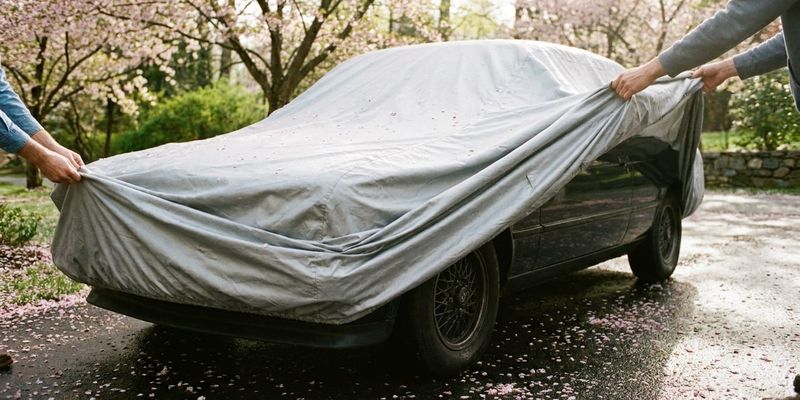
If you have a sports car and live in a rainy climate like Seattle, buy a custom-fit outdoor waterproof cover made from a breathable, multi-layer fabric. Skip anything labeled universal-fit or indoor-only, since neither is built for the job you actually need done. A cover that blocks rain but doesn't breathe will trap moisture against your paint, and that's a worse outcome than leaving the car uncovered entirely.
That breathability point matters more than people think. Water-resistant fabrics that don't release vapor turn your cover into a greenhouse, cooking condensation right onto the clear coat overnight. If you're driving the car daily, you'll also want a lightweight fabric with an elastic hem so it's fast to pull on and off in the rain without wrestling it. If the car is more of a weekend garage-queen that still lives outside, you can lean toward a heavier-duty shell since on/off speed matters less.
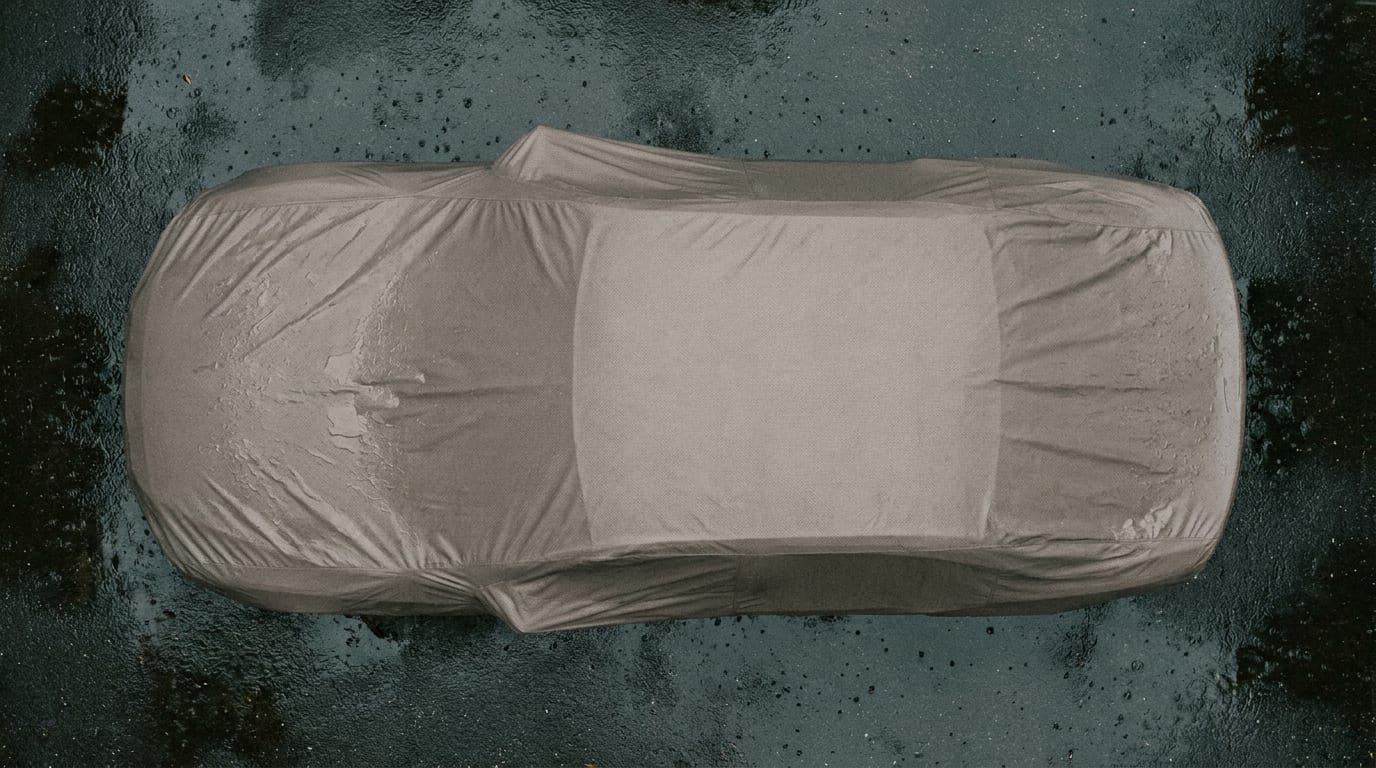
The table below lays out the tradeoffs across the four main cover types so you can see where each one actually earns its price tag.
Comparison: Cover Types for a Sports Car in a Wet Climate
| Feature | Outdoor Waterproof Custom-Fit | Universal-Fit Outdoor | Indoor/Satin | Basic Economy |
|---|---|---|---|---|
| Waterproofing | Fully sealed seams, water-resistant shell | Water-resistant only, seams often untreated | None, not designed for moisture | Light water resistance at best |
| Breathability | Multi-layer fabric releases trapped moisture | Moderate | High, but fabric isn't weatherproof | Low |
| Fit precision | Contoured to the exact body | Generic draping, can flap and chafe | Tailored but made for indoor use | Loose, generic |
| Best use case | Daily outdoor exposure in rain-heavy regions | Occasional outdoor use | Garage storage only | Short-term budget protection |
| Typical price | Higher | Mid | Mid | Lowest |
For the Seattle scenario specifically, the custom-fit outdoor waterproof cover is the only option on this list built for both the moisture and the body shape you're dealing with.
Why Seattle-Style Rain Changes What You Need
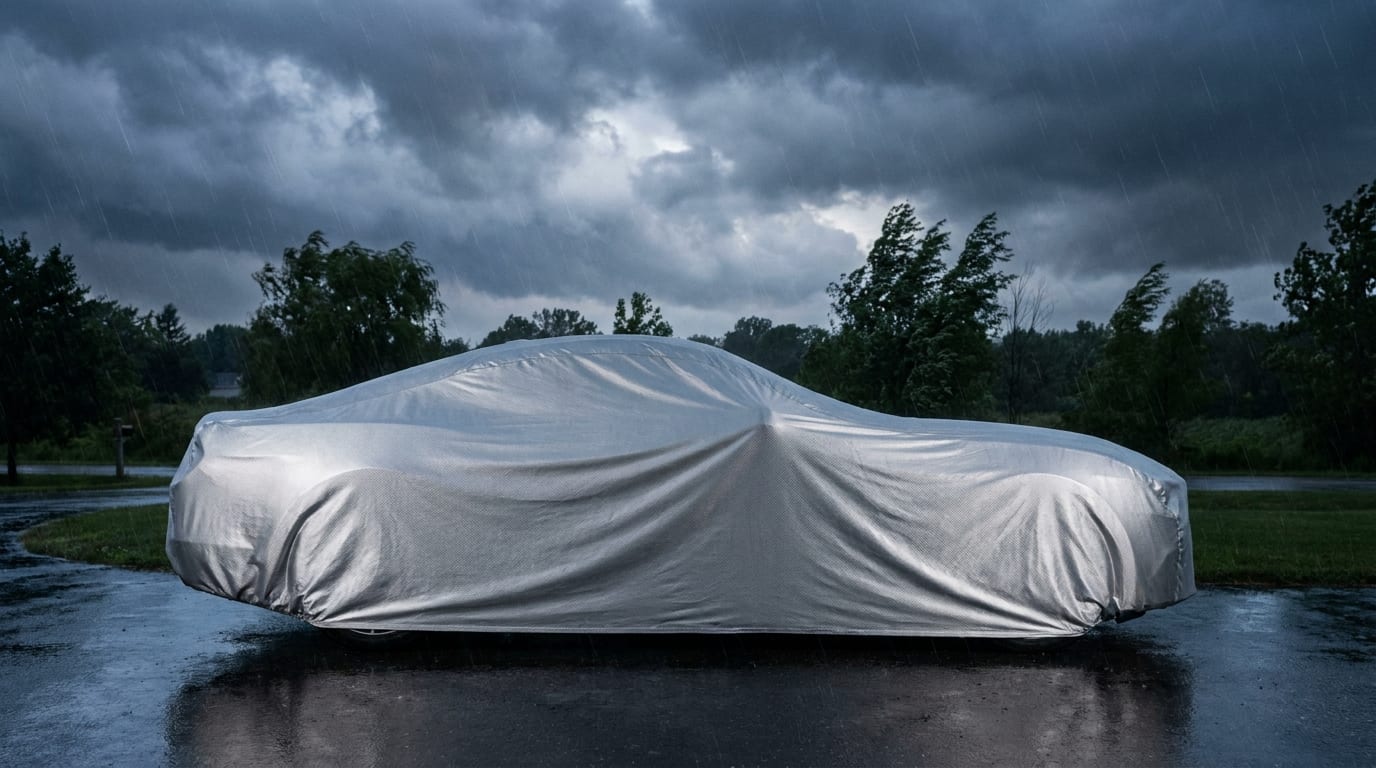
Seattle rain isn't dramatic. It's drizzle that shows up most days and just sits there, paired with humidity that doesn't let up between storms. That's actually tougher on a cover than an occasional downpour in a drier climate, because the moisture has way more dwell time against your paint. A fabric that can't breathe turns that dwell time into a mildew problem fast.
Sports cars complicate this further. Low front splitters, side skirts, wide fender flares: all of it is harder to cover well than a standard sedan. A cover that's even slightly off in fit will pool water in low spots or rub against trim every time the wind picks up, and wind-driven rain in the Pacific Northwest is routine, not rare.
One thing you can deprioritize here: UV resistance. It matters a lot in Phoenix or Las Vegas. In Seattle, the sun just isn't the threat. Waterproofing and breathability are doing almost all the work, so that's where your budget should go.
Wind security is the other piece people underestimate. A cover that isn't cinched down will work itself loose over weeks of gusty, rainy nights, flapping against the paint the whole time. If the car lives outside, straps and grommets aren't optional accessories, they're part of the job. For more on handling wind, rain, and UV together, the guide to using a car cover outdoors walks through all three.
Fabric and Fit Features Worth Paying For
Not all "waterproof" covers are built the same, and the differences show up fastest in a climate like this one.
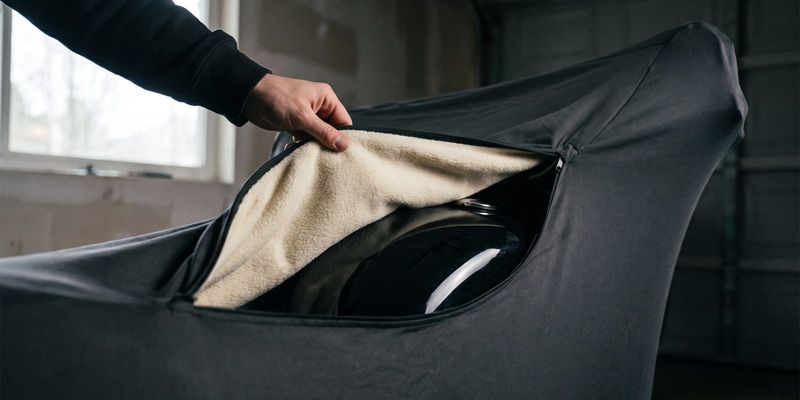
Look for a multi-layer woven fabric: water-resistant on the outside, soft and non-abrasive on the inside. The inner lining matters more than people assume if you're pulling the cover on and off daily, since a rough lining will dull your clear coat over months of friction.
Seams are the other detail worth checking before you buy. Taped or sealed seams at the roofline and around the hood and trunk are where most generic covers fail first, letting water seep through at exactly the spots you'd expect to be protected. An elastic hem or cinching straps help the cover hug a low sports car body instead of billowing around it in gusty rain, and reinforced grommets matter if you're parking outside or on the street overnight and want to run a cable lock through them.
One thing worth saying plainly: a tarp is not a substitute for a cover, not even a cheap one. Plastic sheeting doesn't breathe at all, so it traps condensation directly against your paint. You can genuinely do more damage with a tarp than with no cover at all. If you're unsure which fabric actually delivers on these points, this breakdown of car cover materials is worth a read before you buy anything.
Getting the Right Fit for a Sports Car
Custom-fit means the cover is built to your exact make, model, and year, down to the mirror pockets and body contours. Semi-custom and universal covers are built to a size range instead, which is fine for a boxy SUV but a problem for a sports car with a low roofline and tight curves. Gaps and loose fabric are where water gets in and where flapping starts.
Finding the right one isn't complicated. Pick by your vehicle's year, make, and model rather than eyeballing a generic small/medium/large size chart. CarCovers has a tool to find the right cover for your specific vehicle, and if you want to understand sizing logic first, the guide to car cover sizing explains how the measurements translate to fit.
Here's the part people get backwards: a loose cover isn't a safer, more forgiving choice. It's worse. A too-big cover moves with every gust, and that movement is what grinds dirt and moisture into the paint over time. Tight and contoured beats loose and "flexible" every time in a wet, windy climate.
Installing and Maintaining a Cover in a Wet Climate
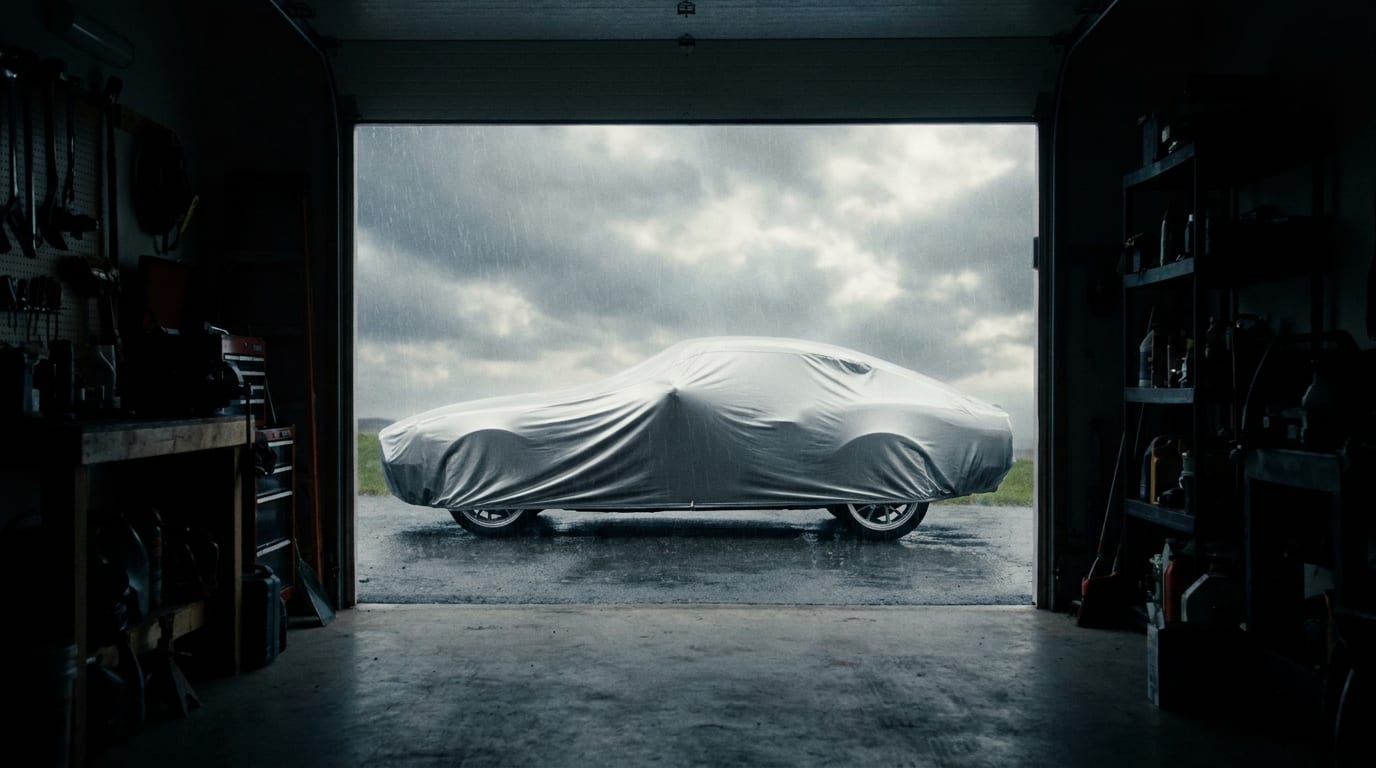
Don't cover a wet car. If you're pulling the cover on right after a drive through the rain, or over a car that hasn't fully dried, you're sealing moisture in before the cover's even done its job. Give it a few minutes to air out first.
Securing the cover matters just as much as the cover itself. A gust strap or wind strap setup keeps the fabric from working loose during the kind of sustained, wind-driven rain Seattle gets all winter. It's a five-minute install and it's the difference between a cover that stays put and one that's sliding off by March.
Maintenance doesn't need to be complicated. Clean the cover periodically to keep mildew from building up, and let it air-dry fully before you fold it away for storage. The cover cleaning guide covers the basics if you're not sure how often or what to use.
Know the signs a cover's done. If water stops beading on the surface and just soaks in, if you notice delamination or peeling layers, or if it's started smelling musty even after drying, it's time to replace it. Pushing a worn-out cover another season in this climate usually costs you more in paint damage than the replacement would.
Bottom Line and Next Step
So, to put it plainly: if you have a sports car and live somewhere like Seattle, get a custom-fit, breathable, waterproof outdoor cover. It's the only combination that handles constant drizzle, humidity, and a low-slung body without creating new problems.
Fit and breathability do more long-term work than a high waterproof rating by itself. A cover that seals out rain but suffocates your paint isn't protecting the car, it's just moving the damage somewhere less obvious.
If you haven't picked a cover yet, finding one built for your exact vehicle is the next step. And if you're investing in a higher-tier outdoor cover, it's worth checking the warranty terms before you buy. Stick around the blog if you want more guides like this one as you get your setup dialed in for the wet months ahead.