
I Have an SUV and Live in a Humid Climate Like Florida — What Car Cover Should I Buy?
Published
The Quick Answer: What to Buy
If you have an SUV and live in a humid climate like Florida, buy a custom-fit outdoor cover made from a breathable, multi-layer waterproof fabric, not a single-layer vinyl tarp and not a loose universal cover. That's the short version. Everything else in this guide is explaining why.
Here's the part most people miss: in Florida-type humidity, it's not the rain that wrecks a cover (or the paint underneath it). It's condensation. A non-breathable cover traps humid air against the body panels overnight, and that moisture has nowhere to go. It sits there, condenses, and eventually turns into mold and mildew, both on your SUV's paint and inside the cabin if any of that dampness works its way in. Three traits matter more than price here: breathability, waterproofing, and UV/heat resistance. Skip any one of them and you're trading one problem for another.
SUV sizing deserves its own callout too. A universal "fits most SUVs" cover is more likely to flap in coastal wind, pool water along the roofline, and wear thin at the stress points faster than a cover built for your specific make and model. Sedans can sometimes get away with a looser fit. SUVs, with their taller profiles and bigger surface area, really can't.
Comparison: Cover Types for Humid Climates
Not all "waterproof" covers behave the same way once humidity gets involved. Here's how the main categories stack up for someone asking exactly this: I have a SUV and live in a humid climate like Florida, what car cover should I buy?
| Cover Type | Breathability | Waterproofing | UV/Heat Resistance | Mold/Mildew Risk | Best Use Case |
|---|---|---|---|---|---|
| Single-layer vinyl/tarp | None | Yes | Low | High | Short-term, emergency use only |
| Universal-fit polyester | Moderate | Moderate | Moderate | Moderate | Mild, drier climates |
| Custom-fit breathable outdoor cover | High | Yes | High | Low | Daily outdoor use in Florida-type humidity |
| Indoor satin cover | None | No | N/A | Low (indoors only) | Garage-stored SUVs only |
The vinyl/tarp option looks like a good deal because it's cheap and it does keep rain off. But it seals in moisture just as well as it keeps it out, which in a humid state is the wrong trade. Universal polyester covers are a step up, but the loose fit undoes a lot of the benefit: water pools in the sagging spots over the roof and hood, and wind works the fabric loose at the edges.
A custom-fit car cover built from a breathable, waterproof outdoor material is the one that actually holds up. And if your SUV lives in a garage and never sees rain, an indoor satin cover is a different conversation entirely, worth knowing about but irrelevant if your vehicle sits outside.
Why Breathability Matters More Than Waterproofing Alone in Florida

Waterproof keeps water out. Breathable lets trapped moisture escape. You need both, but in a humid state, breathability is the one that actually prevents damage day to day.
Think of it like a raincoat with no vents. Sure, you stay dry on the outside. But you sweat underneath it, and after a few hours that sweat has nowhere to go. A car cover works the same way. Florida air is already loaded with moisture, and if your cover is a fully sealed, single-layer shell, that humid air gets trapped against the paint every night. By morning, you've got condensation sitting directly on the clear coat.
Owners in humid regions usually notice it in a few specific ways: water spotting on the hood and roof, a musty smell when they pull the cover off, sometimes actual mold specks on the cover's underside. None of that is rain damage. It's trapped humidity with nowhere to vent.
So when you're shopping, don't just look for "waterproof" on the label. Look for language like "breathable waterproof" or a multi-layer construction with a moisture-wicking inner layer. That combination is what actually solves the Florida problem, not just the rain problem. For the deeper mechanics of how outdoor covers handle wind, UV, and water together, the outdoor car cover usage guide walks through the full weatherproofing picture if you want to go further than the summary version here.
UV, Heat, and Salt Air: Florida's Extra Challenges
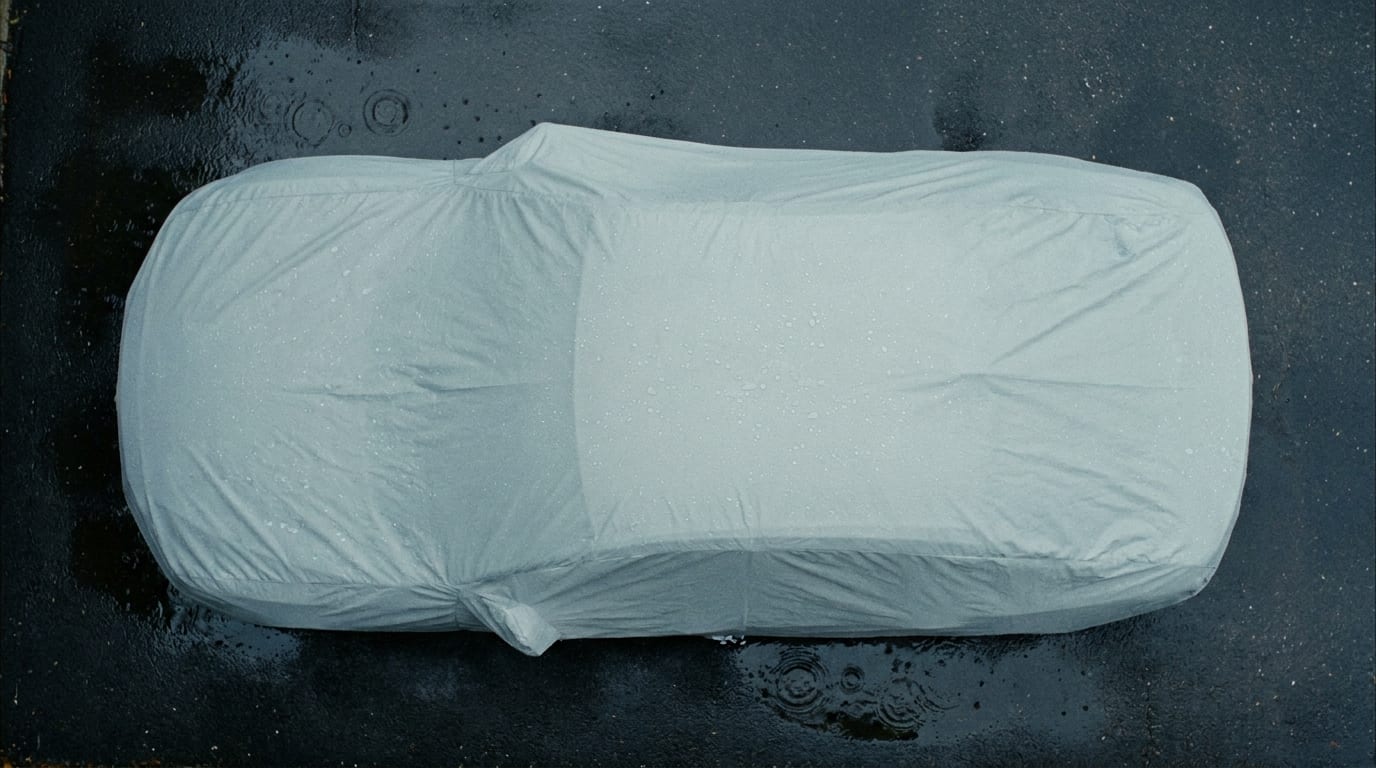
Humidity is only half of what Florida throws at an outdoor cover. The other half is sun, and for coastal owners, salt.
Florida's UV index runs higher than most of the country for most of the year. Without UV-stabilized fabric, that sun exposure fades paint over time and it cooks the cover itself, making the fabric brittle and prone to cracking or tearing well before it would in a milder climate. Look for a cover explicitly built with UV-resistant or UV-treated materials, and check that the seams are reinforced, since seams are usually the first thing to give out under repeated sun and heat cycling.
Color matters more than people expect, too. An SUV has a lot of roof and hood surface area to bake in direct sun, so a lighter-colored or reflective-treated cover keeps heat buildup down compared to a dark one that just absorbs it all day.
If you're near the coast, add salt air to the list. Salt residue works into fabric and hardware over time, and it can accelerate wear on grommets, buckles, and stitching, even though the cover's whole job is protecting your SUV from exactly that kind of exposure. Rinsing the cover itself periodically isn't optional in a coastal setup. It's part of making the cover last as long as it's supposed to.
Getting the Fit Right for an SUV
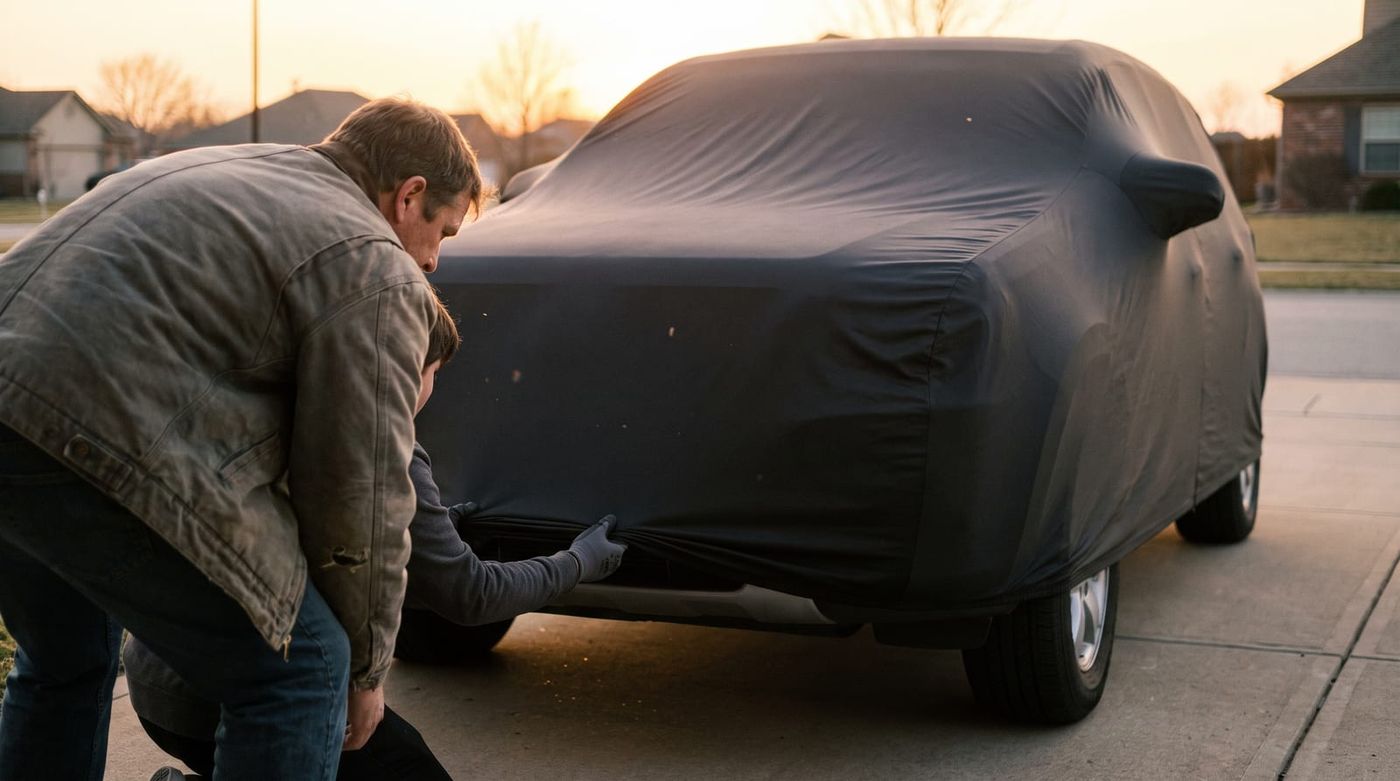
A great fabric in the wrong shape is still a bad cover. SUVs aren't sedans with a taller roof bolted on, they've got a genuinely different profile: more height, bigger mirrors, often a roof rack, sometimes a rear spoiler or a spare tire mounted on the back. A generic "SUV size" off a chart ignores all of that.
Before you buy, check these specifically:
- Roof height and overall profile, so the cover doesn't pull tight in one spot and sag in another
- Mirror pockets, so wind can't get up under the cover at the side mirrors and start working it loose
- Antenna patch needs, if your SUV has a mast antenna the cover has to accommodate
- Tie-down and grommet points, which matter a lot more in Florida's storm season than they do somewhere with calmer weather
Rather than guessing off a generic size chart, use a proper cover finder tool or check a sizing guide built for your vehicle so you're matching the cover to your actual year, make, and model.
Here's the thing worth repeating: fit isn't a secondary detail, it's load-bearing. A perfectly breathable, perfectly waterproof fabric still fails if it gapes at the mirrors or rides up at the bumper. Gaps let humid air in just as easily as loose stitching does, and once that happens you're back to the condensation problem no matter how good the material is. If you're specifically shopping for your vehicle type, SUV covers built around actual SUV dimensions are the starting point, not an afterthought.
Maintaining the Cover in a Humid Climate
Buying the right cover is half the job. Caring for it in Florida's climate is the other half, and it's where a lot of owners cut corners.
The single biggest habit: let the cover fully air-dry before you fold it up or store it. A damp cover folded into a trunk or a bag is basically a mold incubator, even if the fabric itself is rated to resist mildew. Give it time outside or in open air first.
Wash it periodically, too, following whatever the manufacturer specifies for that fabric. Coastal owners especially need to stay on top of this, since salt residue builds up on the cover itself and can degrade the material faster if it's left to sit. The cover care and cleaning guide covers the specifics on wash settings and what to avoid.
Check the seams and grommets each season, too. Florida's wind and storm cycles put more stress on hardware than a drier climate would, so a quick seasonal check (loose stitching, a grommet starting to pull) catches small problems before they become a reason to replace the whole cover early. Good maintenance is also what makes sure the cover's actual lifespan lines up with whatever warranty came with it.
Bottom Line and Next Step
So, to put it plainly: if you have an SUV and live in a humid climate like Florida, the cover you want is breathable, waterproof, UV-resistant, and custom-fit to your specific make and model. Not one or two of those. All four.
Before you buy, run through this checklist:
- Is it described as breathable, not just waterproof?
- Is the fabric UV-stabilized for high-sun climates?
- Is it sized for your exact SUV, not a generic "SUV-size" guess?
- Does it have secure tie-downs or grommets for wind and storm season?
- Can you commit to basic care (air-drying, periodic washing) to keep it performing?
If you check all five, you've got a cover that'll actually hold up instead of becoming a mold problem by month three. Skip the generic size chart and match the cover to your vehicle directly using a proper fit tool.
Browse the full range of outdoor options built for this kind of climate, or run your year, make, and model through the cover finder to see what actually fits. And if you want more on choosing the right material before you commit, it's worth a few extra minutes of reading before you buy.






