Is Ballistic Nylon Good for Car Covers? Here's the Straight Answer
Published

Is Ballistic Nylon Good for Car Covers?
Yes, ballistic nylon is good for car covers, specifically when you need something that can take a beating and keep working. The tight, high-denier weave resists tearing, abrasion, and punctures better than the lightweight fabrics you'll find on most entry-level covers. That's the short version.
The longer version comes with a caveat. Ballistic nylon isn't the right pick for every car owner or every situation. It shines in harsh outdoor storage, high-traffic driveways, and spots where a cover gets dragged over branches or scraped against a fence post week after week. If your car lives in a climate-controlled garage and never sees weather, it's probably overkill.
So is ballistic nylon good for car covers in your specific case? That depends on where you park and how rough your cover's life actually is. The rest of this article breaks down what the material is, where it earns its keep, where it falls short, and how it stacks up against the other fabrics you'll see on a cover product page.
What Exactly Is Ballistic Nylon?
Ballistic nylon didn't start as a car cover material at all. It was developed for military flak jackets, built to stop shrapnel and fragments from ballistic impacts. Hence the name. The military application is long gone for most uses, but the construction that made it work stuck around.
Here's what's actually happening in the weave: thick, high-denier nylon threads get woven in a basket pattern, which spreads impact force across a wider area of fabric instead of letting it concentrate on one point. That's the whole trick. A single sharp impact doesn't just rip through a few threads, it gets distributed, so the fabric absorbs the hit rather than failing at that one spot.
One thing worth clarifying: in car covers, ballistic nylon almost never shows up as a standalone fabric. It's typically the outer shell, paired with a waterproof coating or laminate, sometimes backed by a softer inner lining that protects your paint from the shell's rougher texture. So when you're comparing products, check the full layer stack, not just whether "ballistic nylon" appears in the description.
The Advantages of Ballistic Nylon Car Covers
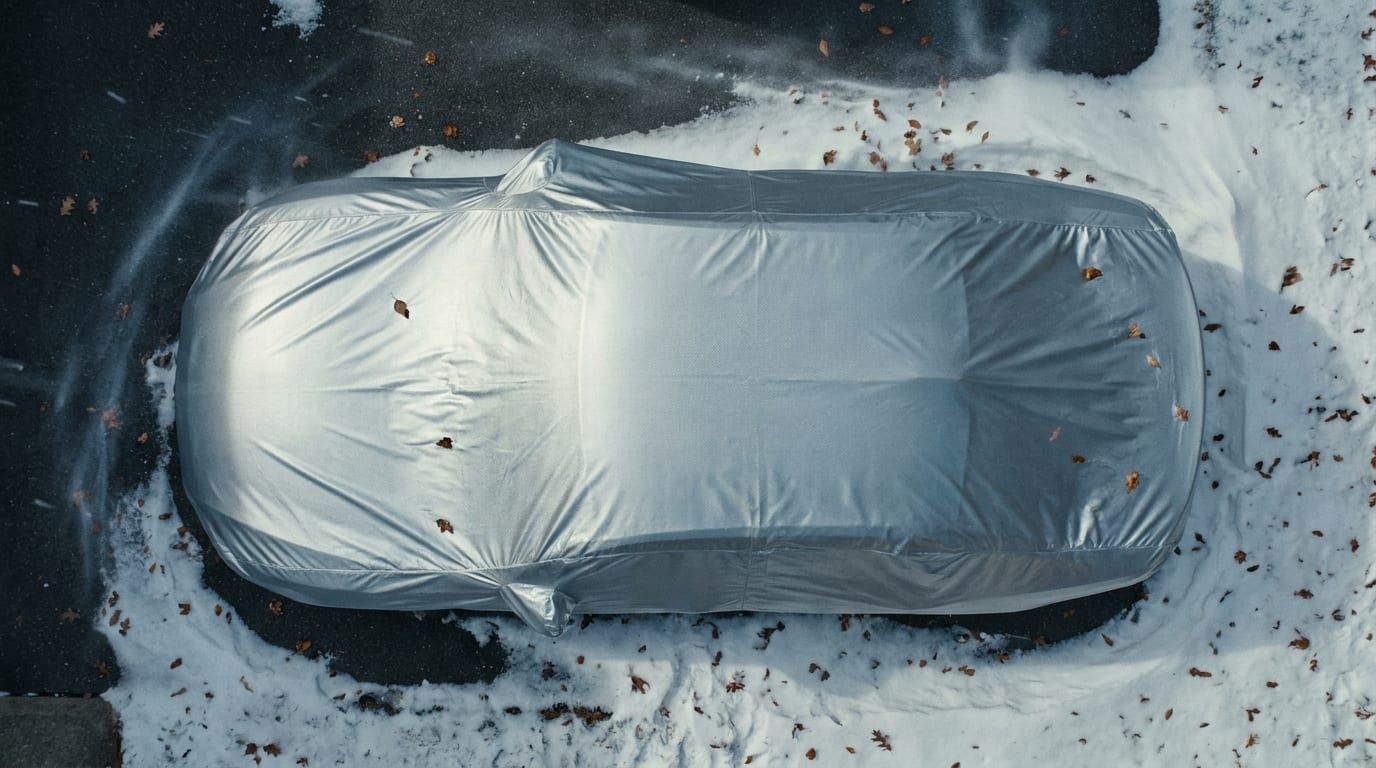
Abrasion resistance is the headline feature. If your car sits near low-hanging branches, a chain-link fence, or a tight carport where the cover brushes against something every time the wind kicks up, this is where ballistic nylon separates itself from thinner materials. It just doesn't wear through the way a basic polyester cover does after a season of that kind of contact.
Puncture and tear strength follows close behind. Hail, flying debris, a careless install where the cover snags on a mirror or antenna, these are the moments where cheaper fabrics develop small tears that turn into big ones. The dense weave resists that initial puncture in the first place.
Longevity is the practical payoff of the first two points. A denser weave simply holds up longer under daily abuse than a thin polyester or cotton-blend cover. If you're using the same cover every single day, on and off, that wear accumulates fast, and ballistic nylon is built to absorb it.
UV and weather tolerance round things out, though this one comes with a condition. The nylon itself isn't magic against sun exposure, it's the protective coating applied over it that does most of the work. Pair a quality coating with the weave and you get a cover that resists sun degradation noticeably better than untreated fabric left to bake all summer. For more on how different materials handle the elements, this guide to using a car cover outdoors covers waterproofing, wind, and UV exposure in more depth.
The Drawbacks to Know Before Buying
Weight is the first thing you'll notice, usually the moment you lift the cover out of the bag. Ballistic nylon covers are noticeably heavier than microfiber or flannel options. That extra heft makes installation and folding more of a chore, especially if you're covering and uncovering your car daily rather than leaving it parked for a season.
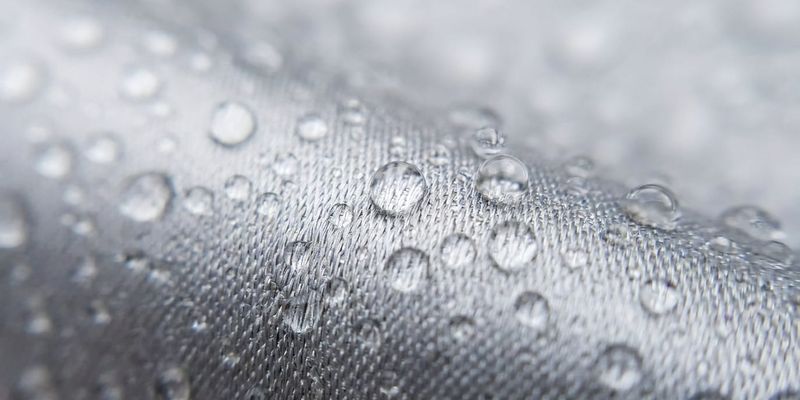
Breathability is the trade-off nobody talks about enough. A dense weave is great at keeping things out, but it can also trap moisture underneath if the cover isn't designed with proper venting. Condensation sitting against your paint overnight is its own problem, arguably worse than the scuff you were trying to avoid in the first place.
Cost tracks with density. More material, tighter weave, added coatings, it all adds up to a higher price point than you'll find on basic universal covers. That's not a flaw exactly, it's just the reality of paying for toughness.
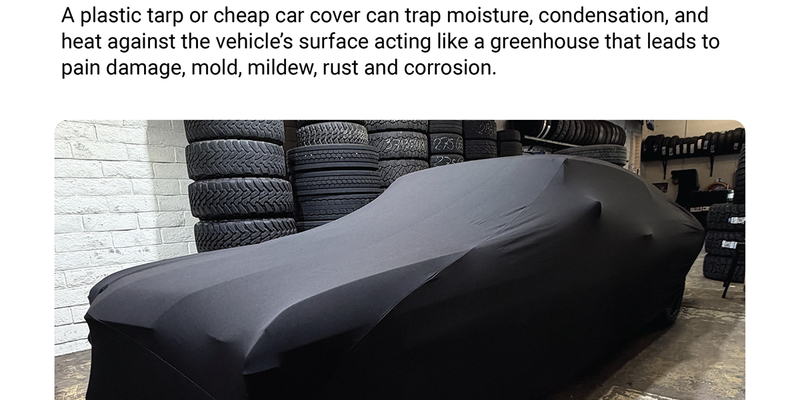
Then there's the indoor use case, where ballistic nylon honestly doesn't make much sense. Its rugged profile is overkill for a garage-stored show car. If you're protecting a vehicle that never sees outdoor conditions, a soft, scratch-free indoor car cover in satin or fleece does the job better, with none of the bulk.
Ballistic Nylon vs. Other Car Cover Materials
It helps to see ballistic nylon next to the other common fabrics, since "is ballistic nylon good for car covers" really depends on what you're comparing it to.
| Material | Strength | Best for |
|---|---|---|
| Ballistic nylon | High abrasion and puncture resistance | Rough outdoor storage, frequent handling |
| Polyester/polypropylene blend | Lighter, more breathable, less puncture-resistant | Mild climates, occasional outdoor use |
| Cotton/flannel | Soft, no real outdoor defense | Indoor storage only |
| PVC/vinyl | Fully waterproof, stiffer, cracks in cold | Short-term or budget outdoor coverage |
Polyester and polypropylene blends are the middle ground most people land on. They're lighter, easier to handle, and breathe better, but they won't survive the same repeated abrasion that ballistic nylon shrugs off.
Cotton and flannel covers are a different category entirely. Soft against the paint, good for indoor car covers, but they offer essentially no real defense against outdoor abrasion or impact. Don't put one on a car parked under a tree.
PVC and vinyl covers get fully waterproof, which sounds like a win, but they're stiffer and tend to crack in cold weather. They're also less tear-resistant than a woven ballistic nylon shell when something sharp actually makes contact.
The trade-off across all of this is consistent: ballistic nylon gives up some weight and breathability in exchange for toughness that the other materials can't match. If durability is your top priority, that's a fair trade. If it's not, you're paying for protection you don't need.
When Ballistic Nylon Makes the Most Sense
A few specific situations are where this material earns its price tag.
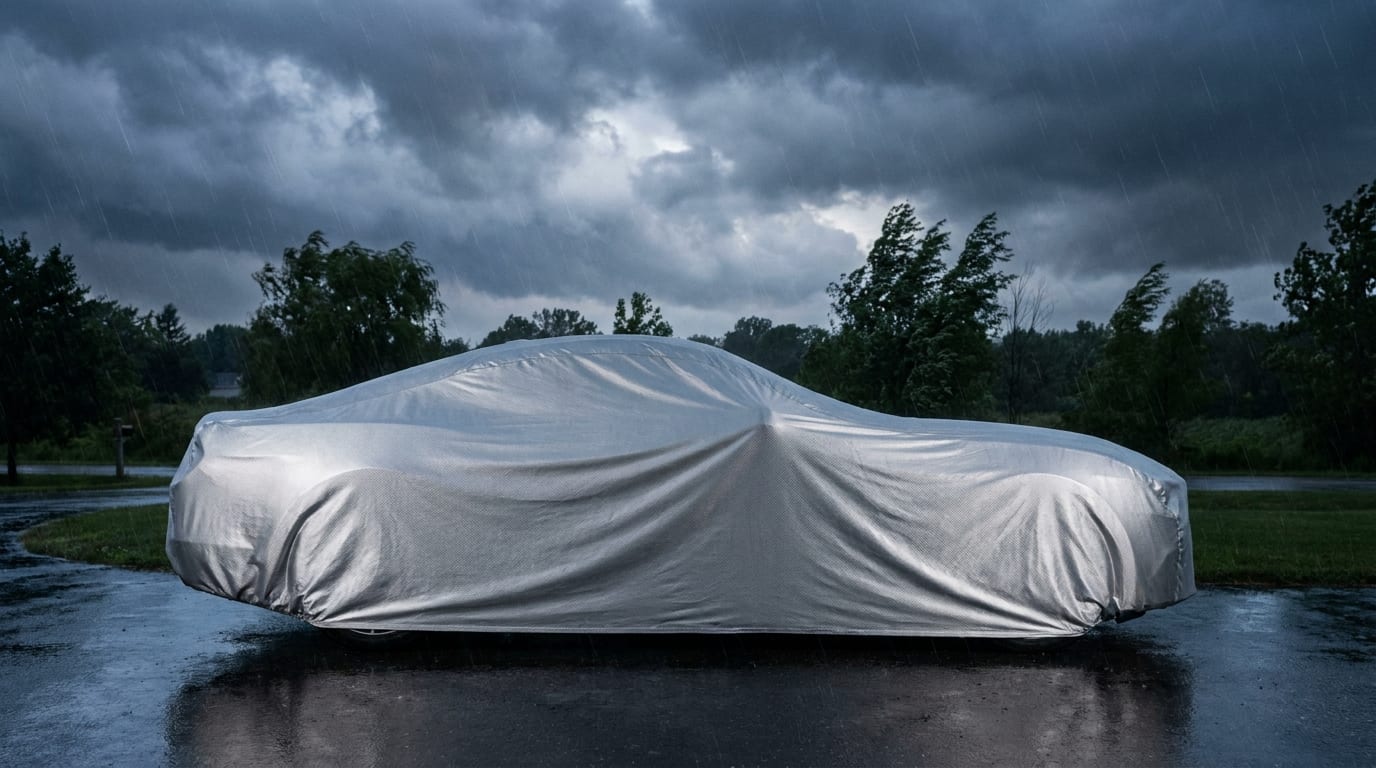
Vehicles stored outdoors year-round, especially anywhere with trees, loose debris, or rough surfaces nearby, are the clearest case. The same goes for trucks and work vehicles that get covered and uncovered constantly, since repeated handling is exactly the stress that wears thinner fabrics down first.
Regions with heavy wind, hail, or wild weather swings are another good fit. In those conditions, raw fabric durability matters more than saving a pound or two of weight. And if you're weighing outdoor exposure against indoor storage more broadly, the breakdown in this outdoor car cover guide is worth a look before you commit to a material. Matching the cover to your actual storage conditions, rather than buying whatever's cheapest or most popular, is what determines whether you're happy with it a year from now. Tools like this cover finder can help narrow down fit and material together instead of treating them as separate decisions.
Caring for a Ballistic Nylon Car Cover

Durable doesn't mean maintenance-free. Shake the cover out regularly and spot clean it when you see dirt building up. Grit left in the weave acts like sandpaper every time the fabric flexes, which slowly undoes the abrasion resistance you paid for.
Skip high-heat drying and harsh solvents. Both can break down the protective coating applied over the nylon shell, and once that coating's gone, you lose a chunk of the water and UV resistance that made the cover worth buying.
Check the seams and grommets every so often, too. Heavier fabric puts more stress on stitching than a lightweight cover does, and that's usually where a cover fails first, not in the body of the fabric itself. For a full walkthrough, this guide to cleaning a car cover covers the process step by step.
Choosing the Right Cover Material for Your Vehicle
Here's the honest takeaway: ballistic nylon is good for durability-first situations, not necessarily the best universal choice for every driveway. It's the right call when your storage conditions are rough and your cover takes daily abuse. It's the wrong call when your car sits indoors and never sees debris or weather.
Before you buy, think through where your vehicle actually lives, how often you're handling the cover, and what your local climate throws at it. Those three answers matter more than any single fabric's reputation.
If you want to go deeper on narrowing down the right material and fit for your specific vehicle, why a car cover is worth buying in the first place is a good next read, and it's worth subscribing or checking back for more guides like this one as you figure out what actually protects your car best.