


Is It Worth Buying a Custom-Fit Car Cover Instead of a Universal One?
Is a Custom-Fit Car Cover Worth It Over a Universal One?
Short answer: if your car lives outside or sits in storage for weeks at a time, yes, a custom-fit cover is worth the extra money. The tighter contour means less flapping in wind, fewer gaps for rain and dust to sneak through, and a cover that doesn't wear itself out rubbing against your paint. A universal cover still earns its keep for occasional use or short trips, so it's not a wasted purchase either, just a different tool for a different job.
The real question isn't which cover is "better" in the abstract. It's which one matches how you actually use it. Three things drive the decision: how often and how long the car stays covered, whether it's parked indoors or out, and how many years you want the cover itself to last before replacing it. Once you frame it that way, is it worth buying a custom-fit car cover instead of a universal one becomes a lot easier to answer for your specific situation, and that's what the rest of this article walks through.
What's the Difference Between a Custom-Fit and a Universal Car Cover?
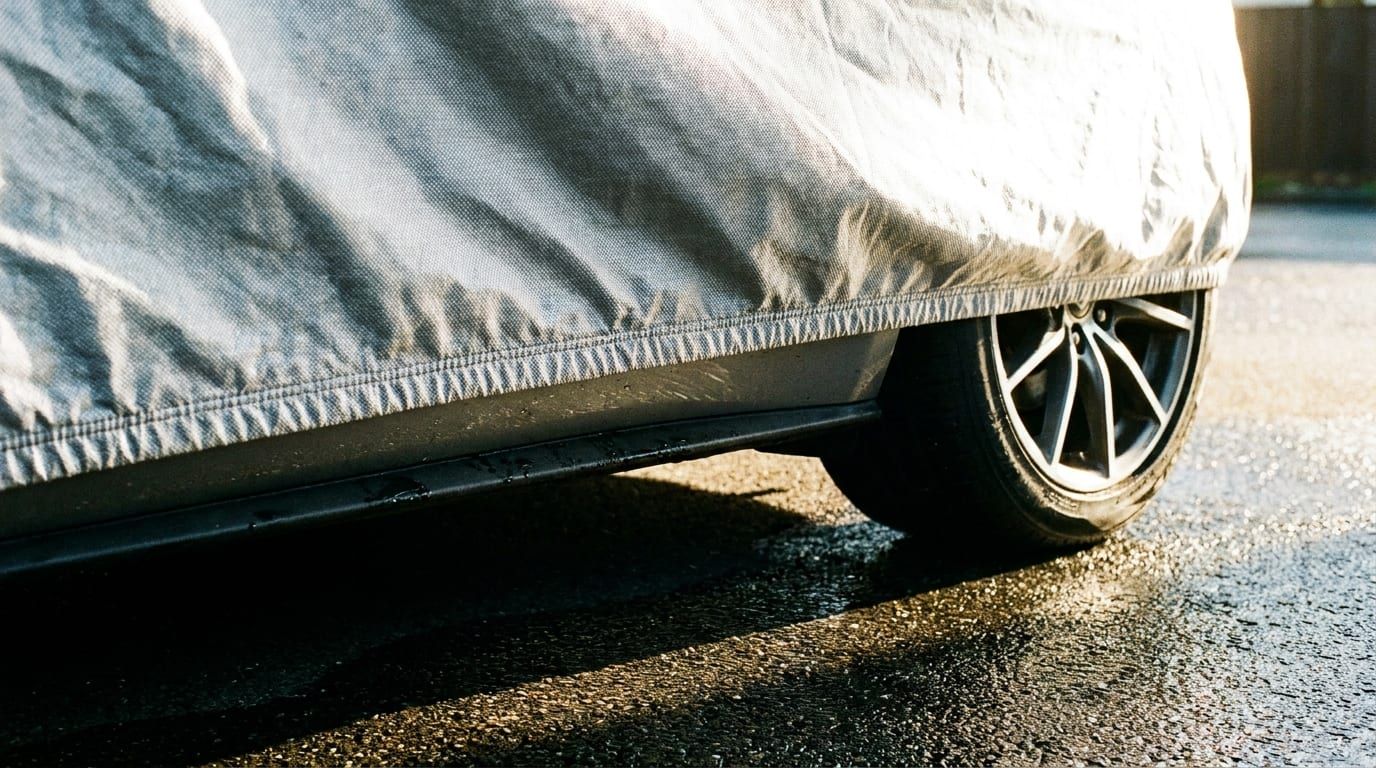
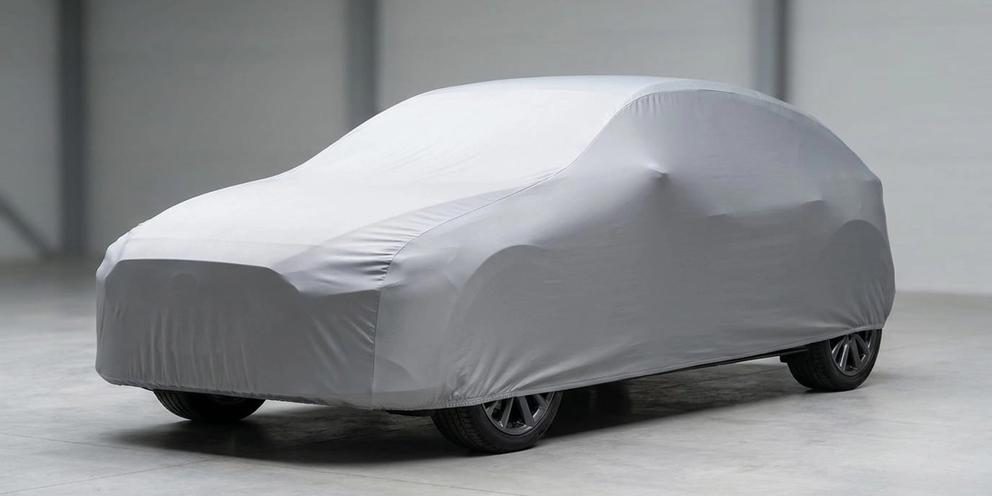
A custom-fit cover is patterned to a specific year, make, and model. It follows the actual shape of your car, mirrors, spoiler, roofline, and all, so there's almost no extra fabric hanging loose anywhere.
A universal cover works off a handful of size ranges based on overall vehicle length. That's efficient to manufacture and cheap to sell, but it means the same cover marketed for "mid-size sedans" has to stretch over dozens of different body shapes. Something has to give, and usually it's the fit around the hood, trunk, and mirrors.
That loose fabric isn't just a cosmetic issue. Excess material flaps in wind, and repeated flapping wears down the fabric faster than steady, even tension does. It also rubs against the clear coat over time, which is the opposite of what a cover is supposed to prevent. And any gap at the hem or around a mirror pocket becomes an entry point for water, dust, and blown debris. A cover can be technically "on" the car and still let weather in around the edges.
If you want to see how custom fit is actually measured and constructed, custom-fit car covers covers that in detail. And if you're leaning universal, getting the size right matters more than with a custom option, so check what size car cover fits your vehicle before you buy.
Custom-Fit vs. Universal Car Covers: Side-by-Side Comparison

Custom-Fit
- Fit accuracy: Exact panel match to the vehicle's contours
- Wind/flapping resistance: Minimal flapping, fabric sits close to the body
- Water/dust protection at seams: Sealed at contour points like mirrors and spoilers
- Paint-safe interior lining: Often includes soft-lined friction points at high-contact areas
- Typical cost range: Higher upfront cost
- Expected lifespan with daily outdoor use: Longer service life under sun and wind exposure
- Best storage scenario: Daily outdoor parking or long-term storage
- Installation time: Slightly longer to fit the first time, quick after that
Universal
- Fit accuracy: Approximate match within a size range
- Wind/flapping resistance: More flapping in wind due to loose fabric
- Water/dust protection at seams: Gaps common at hood, trunk lines, and mirrors
- Paint-safe interior lining: Generic lining, not shaped to friction points
- Typical cost range: Lower upfront cost
- Expected lifespan with daily outdoor use: Shorter service life if left outdoors constantly
- Best storage scenario: Occasional use, indoor storage, or short trips
- Installation time: Quick to throw on and off
One thing worth noting: "worth it" isn't a fixed answer here, it shifts toward custom-fit the more hours per week your car actually sits outside exposed.
When Is a Universal Cover Good Enough?
There are legitimate situations where a universal cover does the job fine. A garage-kept car that just needs occasional dust protection doesn't need a precision fit. Same with short-term travel, a quick storage stint over a work trip, or anyone buying on a tight budget who just wants basic coverage without a big spend. If you're only throwing the cover on a few times a month, the gaps in a universal fit rarely get a chance to cause problems.
Indoor use specifically takes a lot of the pressure off. Without wind, rain, or UV working against the loose spots, a baggy fit is mostly a non-issue. There's nothing pushing dust through the gaps or flapping the fabric against the paint. For that scenario, check out indoor car covers for guidance on what actually matters when the elements aren't a factor. And if you want to browse both fit types side by side, the car covers category page has the full range.
When Does a Custom-Fit Cover Pay for Itself?
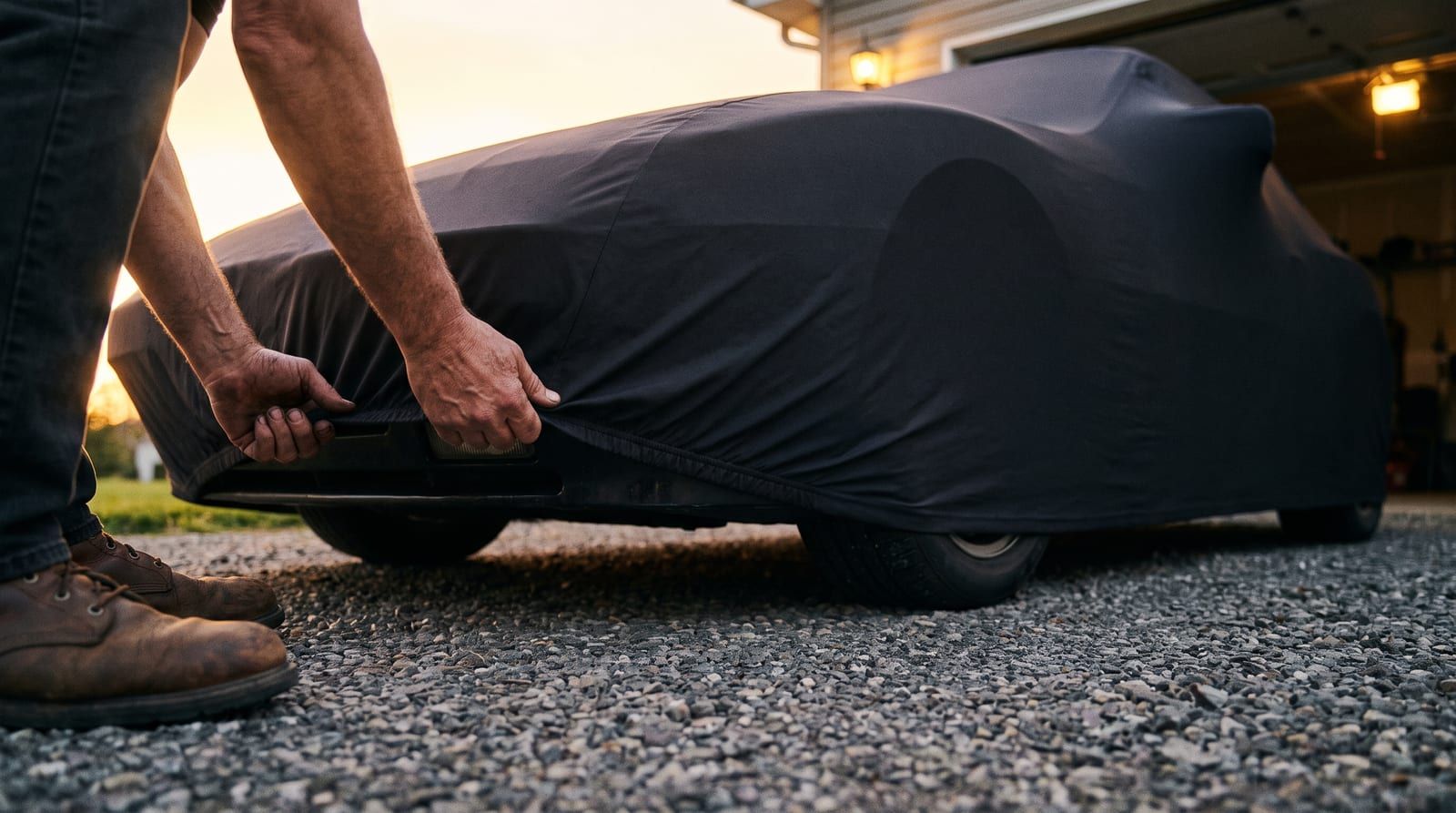
Outdoor parking is where custom-fit earns its price tag. Constant sun, rain, or snow exposure is exactly the condition that exploits a loose universal fit, gap by gap, season by season. Coastal regions with salt air and steady wind, hail-prone areas, and long-term storage situations, like a classic car under seasonal layup, all put real stress on a cover, and a tighter fit resists that stress a lot better.
Here's the cost logic that a lot of buyers miss upfront: a custom-fit cover that holds up for several outdoor seasons without needing replacement often ends up cheaper per year than buying two or three universal covers because the first ones wore out from flapping and gap exposure. Paying more once beats paying less, twice.
The value case gets stronger when you add the right materials on top of a good fit. Waterproofing, UV-resistant layers, and soft linings that prevent scratching all compound with a tight fit to actually protect the car, rather than just cover it. Worth checking out waterproof car covers and hail car covers if either of those risks apply to where you park. And fit is only half the equation, material choice matters just as much, which what's the best car cover material breaks down in more depth.
How Do I Decide Which One to Buy?
Keep it simple. Start with where the car is stored, indoor or outdoor. Then estimate how many months a year it'll actually be under a cover. Check your budget against that number. Then match the result to the comparison table above; if the car's outside more months than it's not, lean custom.
Before you rule out custom-fit purely on cost, confirm one exists for your exact vehicle; sometimes the "custom" option costs less than people assume once they've actually looked. A cover finder tool or the coverfinder will tell you in under a minute whether your year, make, and model has a dedicated pattern available. And if you want to compare specific products rather than categories, best car cover comparison and top-rated car covers are good places to look side by side.
Frequently Asked Questions
Do custom-fit car covers really fit better than universal ones?
Yes. They're patterned to the exact vehicle's dimensions instead of a general size range, so there's far less loose fabric left to flap around or let moisture in.
Are universal car covers a waste of money?
Not necessarily. They're a reasonable low-cost option for indoor storage or occasional outdoor use, situations where a loose fit doesn't have much to work against.
How much more do custom-fit covers typically cost?
Custom-fit covers usually cost more upfront than universal ones. But the tighter fit and added lining tend to extend the cover's usable life, especially if it's living outdoors.
Can I use a universal cover on any car?
Universal covers are sold in size ranges based on vehicle length, so they'll fit a broad category of vehicles reasonably well. They rarely match specific contours like mirrors or spoilers, though.
Bottom Line: Choosing the Right Cover for Your Vehicle
Custom-fit wins on protection and long-term value if your car spends real time outside. Universal wins on upfront cost and flexibility if the use is light or the car's already indoors most of the time. Neither one is the "wrong" choice, they're just built for different amounts of exposure.
If you're still weighing it out, take a look through the full vehicle covers buying guide hub or browse the car covers category to see what's actually available for your vehicle before deciding. And subscribe to the blog if you want more of these side-by-side breakdowns before you buy.
One more thing worth factoring into the cost math: a lifetime warranty on car covers changes the real cost of ownership on a custom-fit purchase, since it's not just a one-time price tag, it's what you're covered for over the years you actually keep the thing.
Updated