
The Best Car Cover for a Hatchback in a Rainy Climate Like Seattle
Published

The Quick Answer: What to Buy
If you're asking "what's the best car cover for a hatchback in a rainy climate like Seattle," here's the short version: get a custom-fit, fully waterproof outdoor cover, not a universal-fit or water-resistant one. Hatchbacks have a shorter rear overhang and a sloped liftgate, and that shape pools water fast if a cover doesn't seal tightly at the seams and hem. A loose fit on that rear section is basically an invitation for water to sit right where your hatch seals meet the body.
Two specs matter more than anything else on the label. First, the fabric needs to be 100% waterproof and rated for sustained rain, not the kind of "water-resistant" coating that's fine for a light drizzle and gives up after an hour. Second, you need a true custom-fit car cover built for your hatchback's actual rear profile, not a generic shape stretched to sort of work.
This isn't a pitch for one specific product. It's a framework. The table further down breaks out which cover tier actually matches which level of rain exposure, so you can figure out where your situation lands before you buy anything.
Why Seattle-Style Rain Is a Harder Test Than Average Weather
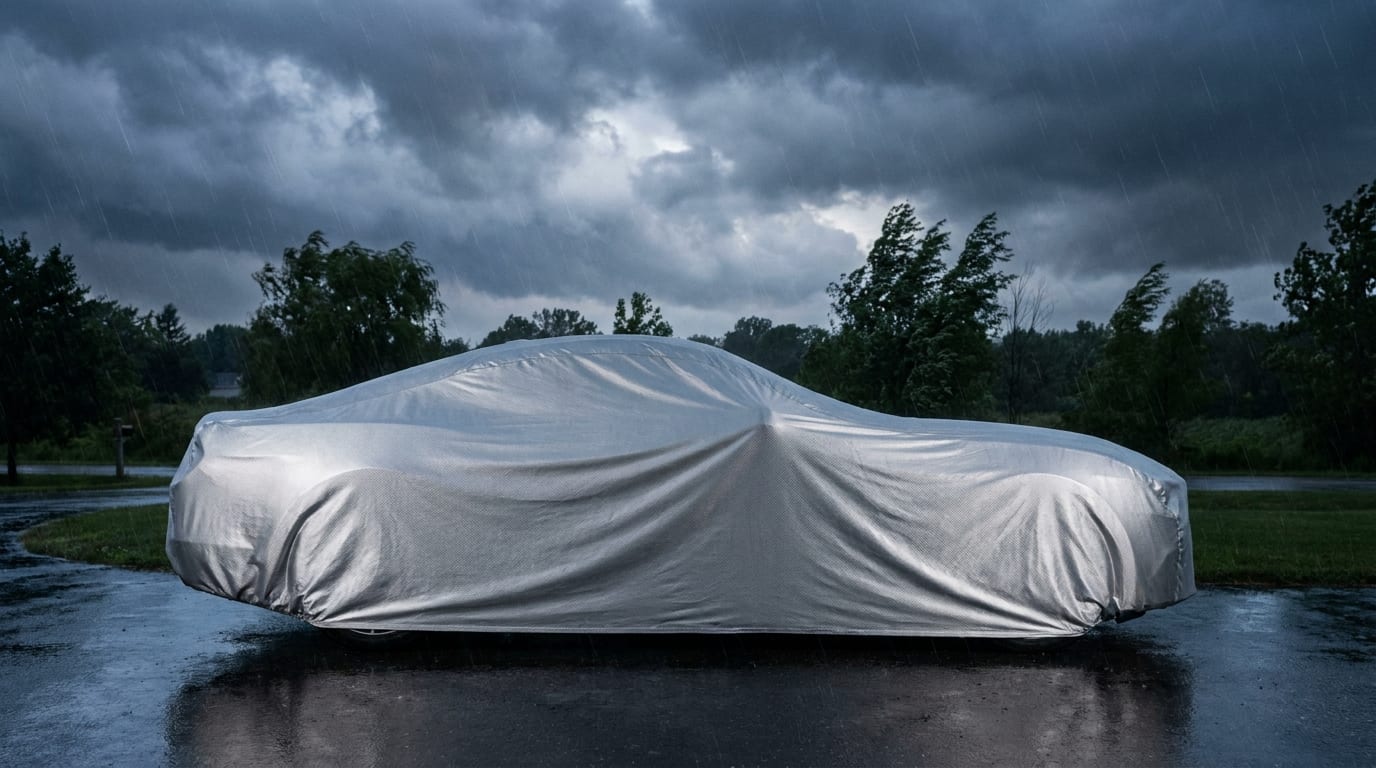
Most car cover marketing assumes occasional rain. An afternoon storm, then a few dry days to air everything out. Seattle doesn't work that way. The Pacific Northwest pattern is near-daily low-intensity rain, plus long overcast stretches where the air stays damp for days without a real dry window in between.
That matters because the failure mode isn't the downpour itself. It's the cover never fully drying between uses. Trapped moisture under a non-breathable or poorly-sealed cover builds mildew and musty interiors faster than any single hard rain would. A cover that's "good enough" for a Tuesday thunderstorm in a drier climate can still fail you in Seattle, simply because it never gets a chance to reset.
One thing people forget: UV is still in play, even under the clouds. Diffused UV punches through overcast skies and fades paint and fabric over time regardless of whether the sun ever actually shows up. So the cover you pick needs UV resistance and waterproofing, not one traded off against the other.
Comparison: Cover Types for a Rainy-Climate Hatchback
| Cover Type | Waterproof Rating | Breathability | Fit Type | Best For | Price Tier |
|---|---|---|---|---|---|
| Water-resistant universal | Light rain only | Moderate | Loose, generic | Mild or occasional exposure | Lowest |
| Waterproof universal | Sustained rain | Lower, can trap moisture | Loose, gaps at hatch/rear | Budget buyers in wetter climates | Mid |
| [Waterproof custom-fit outdoor cover](/vehicle-covers/waterproof-car-covers) | Full sustained-rain protection | Engineered to reduce trapped moisture | True hatchback-specific, seals rear hatch line | Daily outdoor parking in Seattle-type climates | Highest, lowest long-term risk |
The takeaway from that table is pretty simple: fabric rating gets you halfway there, but fit is what actually keeps water out of a hatchback. A waterproof fabric cut wrong for your rear glass and liftgate still leaks.
Why Fit Matters More on a Hatchback Than a Sedan
Sedans have a long, gently sloped trunk deck. Hatchbacks don't. The steep rear glass and short rear end mean a cover cut for a sedan's longer deck will bunch up, gap open, or pull taut in the wrong spot once you stretch it over a hatchback's rear. Any one of those creates a spot for water to work its way in and just sit there.
This comes up constantly for owners of specific models: Honda Civic hatchback, Toyota Corolla hatchback, VW Golf, Mazda3, Subaru Impreza. These are exactly the cars people search "best cover for" because the body style doesn't play nice with generic sizing. If you drive one of these, check fit by your exact year and trim, not just "hatchback" as a body style. Roofline height and mirror placement shift enough between model years to throw off the seal at the hem, even within the same nameplate.
If you're not sure your current cover (or the one you're eyeing) actually fits, run it through the sizing guide before you buy. It's a five-minute check that saves you from guessing. And if you're specifically shopping a Honda or VW hatchback, their brand pages are worth a look too: Honda covers and Volkswagen covers.
Waterproof vs. Water-Resistant: The Fabric Decision That Matters Most
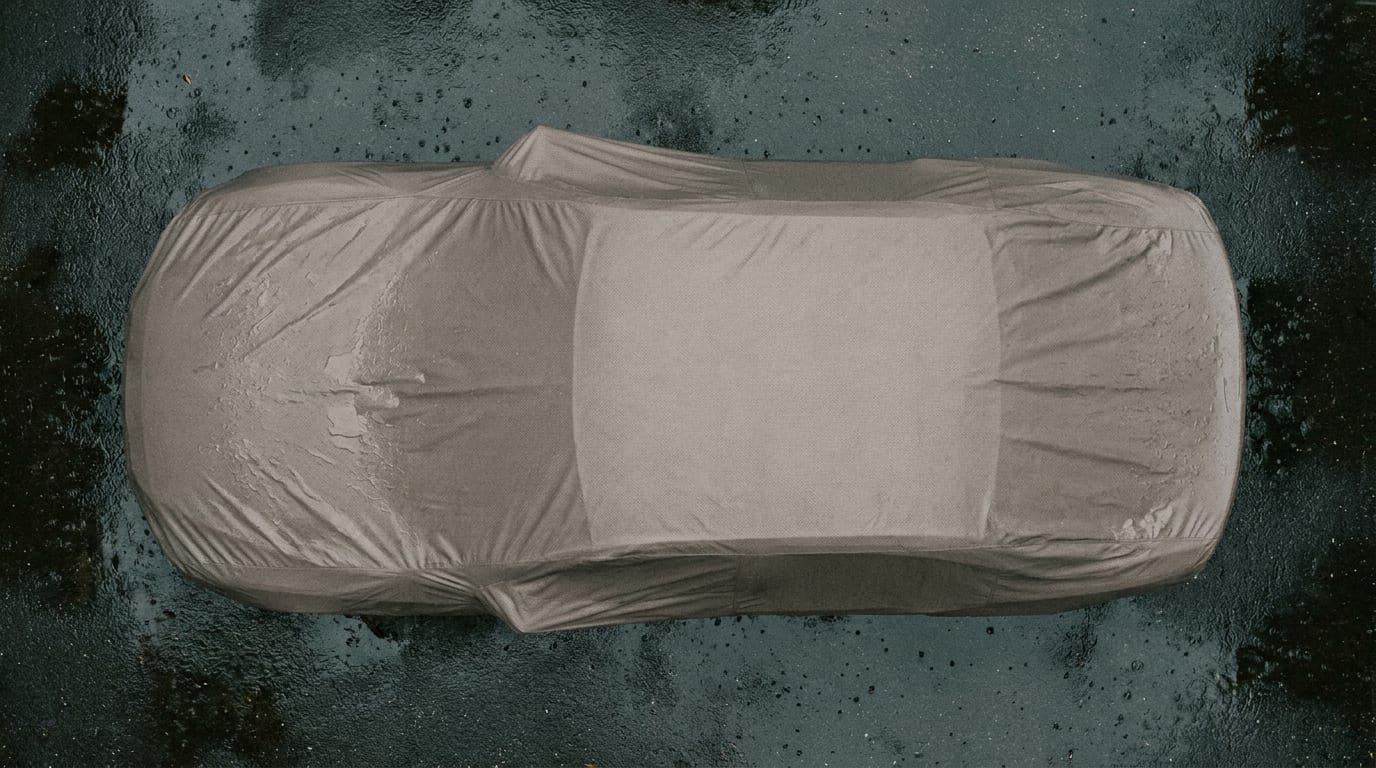
Here's the distinction that actually matters, stripped of marketing fluff. Water-resistant fabric sheds light moisture for a while, then saturates. Once it's saturated, it transfers dampness straight through to your paint. Waterproof fabric uses a sealed or laminated layer that blocks moisture from getting through at all, full stop.
But don't assume "fully sealed" automatically means "best." A cover with zero vapor-release layer traps condensation from ordinary temperature swings, morning cool to afternoon warmth and back. In a climate that's already cool and damp for most of the year, that trapped condensation is its own mildew problem, just a slower-moving one than rain intrusion. The fix isn't picking breathable over waterproof. It's finding a cover engineered to do both, which is exactly where the custom-fit outdoor tier earns its price tag.
If you want to go deeper on the actual fabric science before you buy, the waterproof fabrics guide and the material comparison are worth the read.
Keeping the Cover Effective All Rainy Season
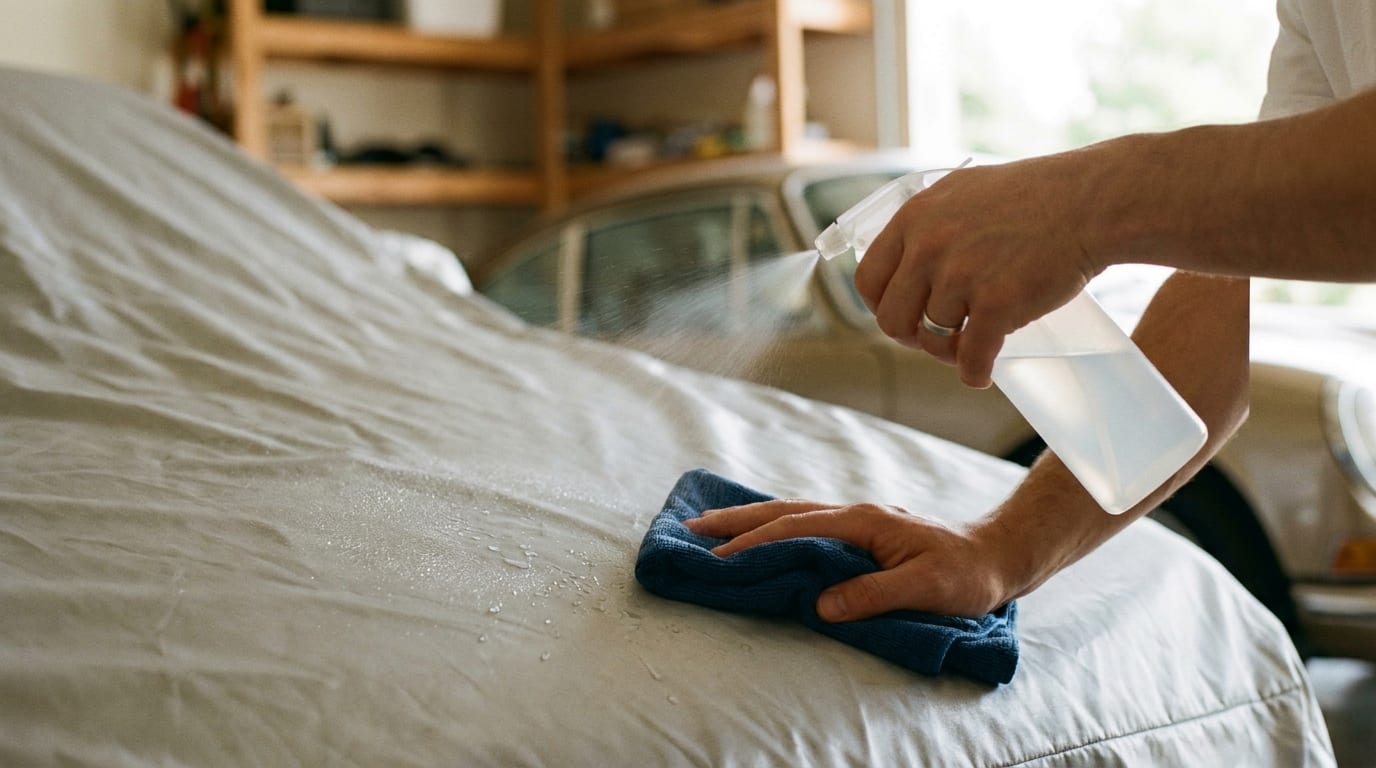
A waterproof custom-fit cover still needs some basic upkeep to actually hold up through a Seattle winter. Let it dry fully before you fold it or store it, even if that means draping it over a railing or a chair indoors overnight after you pull it off wet. Folding a damp cover into a storage bag is how mildew gets started in the first place.
Rinse it more often than you would in a drier climate. Grime plus trapped moisture is a faster path to fabric breakdown and mildew than grime alone, so don't wait for visible dirt before you hose it down. And every so often, flip the cover and check the underside for spotting. Mildew spots on the inside are an early warning that the fit or the fabric isn't sealing the way it should, not just a cosmetic issue to ignore.
For the full process, the step-by-step cleaning guide and the cover care guide walk through wash frequency and drying in more detail. If you want the fuller picture on wind, UV, and waterproofing specifics for outdoor storage, the outdoor cover usage guide covers that ground too.
Bottom Line and Next Step
So, what's the best car cover for a hatchback in a rainy climate like Seattle? Custom-fit, fully waterproof, UV-resistant, sized specifically to your hatchback's year and trim. Skip the generic universal fit. Skip anything labeled "water-resistant" if you're parking outside through a Pacific Northwest winter.
If you're not sure which fit matches your exact car, that's worth confirming before you spend money on the wrong one. A cover finder tool can tell you in a couple minutes whether a given cover actually matches your hatchback's rear profile, which is the whole ballgame here. Worth a look before you check out, not after.






