
The Quick Answer: Best Car Cover for a Sedan in Hail Country
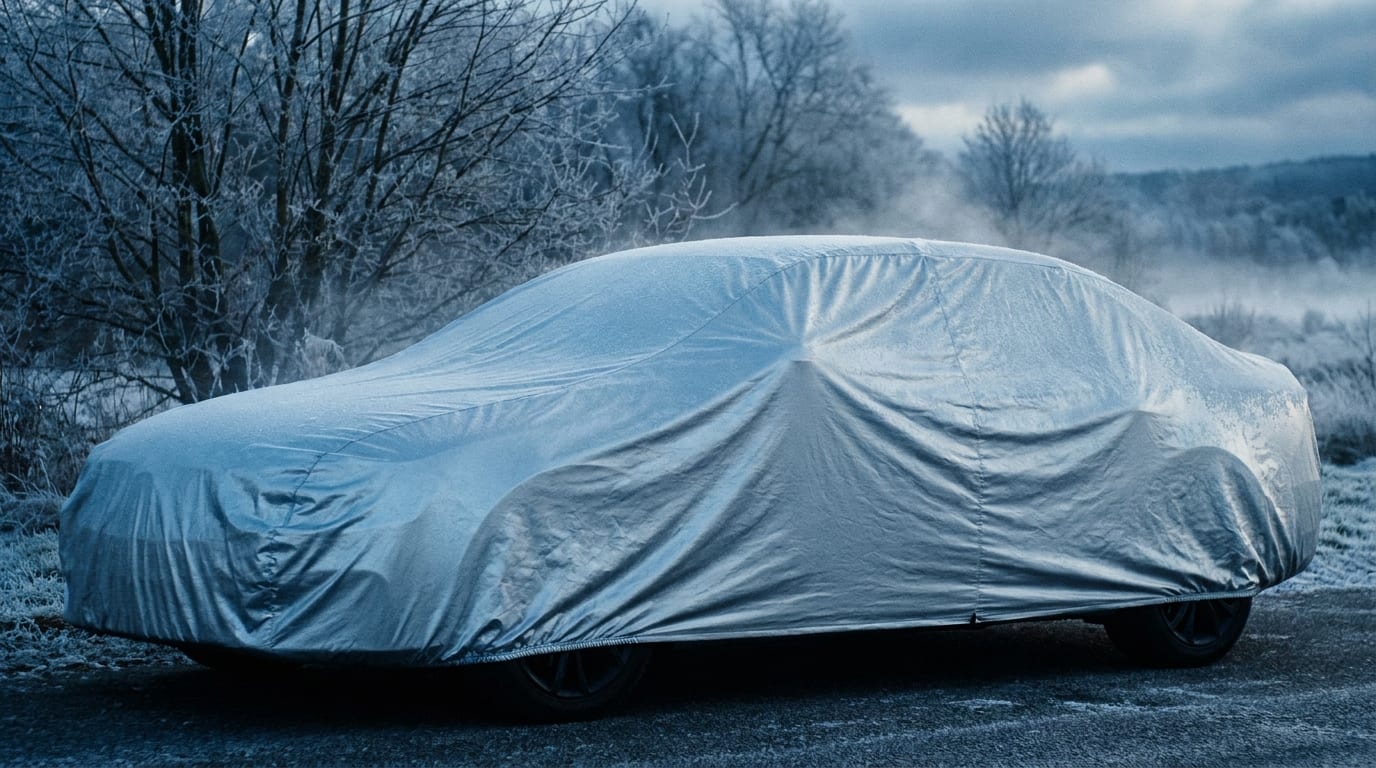
Can you recommend a good car cover for a sedan parked in an area with frequent hailstorms? Yes: go with a thick, padded or quilted multi-layer outdoor cover that's custom-fit to your sedan's exact dimensions. Padding absorbs the impact energy from falling ice, and a snug fit keeps the cover from shifting or whipping around mid-storm, which is exactly when a loose cover fails you.
Material matters, but fit matters just as much. A cover made from the right stuff but sized for "most mid-size sedans" can still bunch up, sag, or flap in high wind, leaving gaps where hail lands straight on the paint. The two have to work together.
Here's how the main cover types stack up for hail specifically:
| Cover Type | Layers/Padding | Hail Protection Level | Water Resistance | Best Use Case |
|---|---|---|---|---|
| Standard single-layer outdoor cover | None | Low | Moderate | Dust, light rain, UV |
| Waterproof multi-layer outdoor cover | 2 to 3 layers, no padding | Moderate | High | Rain, snow, general outdoor storage |
| Padded/quilted hail-specific cover | 3 to 5 layers with foam or batting | High | High | Frequent hail, hailstorm season |
| Indoor-only cover | 1 layer, soft fabric | None | None | Garage dust and scratch protection only |
If you want the deeper breakdown of what to look for before buying, the hail car cover guide covers buying criteria in more detail than we'll get into here.
What Actually Stops Hail Damage: Padding, Layers, and Density
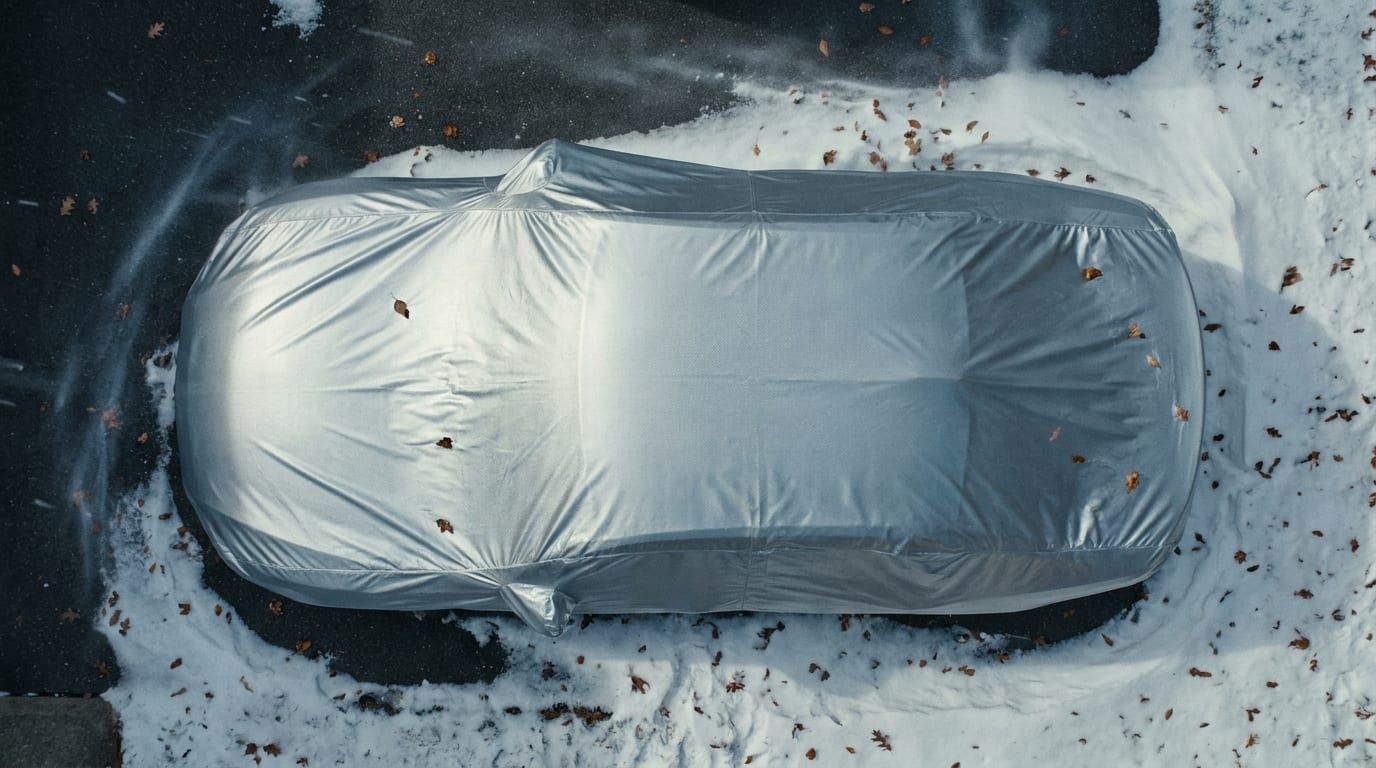
A single sheet of woven fabric does almost nothing against falling ice. It blocks water and dust fine, but hail needs something that absorbs energy on impact, not just something that covers the surface. That's the job of foam layers (often EPP foam) or quilted batting sandwiched between outer shell layers. The padding compresses on impact and spreads the force out instead of letting it transfer straight down into the sheet metal.
This is why layer count gets mentioned so often in cover specs. A 3-layer build with a padded middle layer handles pea- to dime-sized hail reasonably well. A 5-layer build with denser padding pushes that up toward quarter-sized hail before you start seeing dents show through. The difference isn't marketing fluff, it's just more material standing between the ice and your hood.
Be realistic about the ceiling here, though. No cover, no matter how padded, reliably stops golf-ball or baseball-sized hail. Nothing worn over the car will. If a severe storm is forecast with stones that size, the right move is getting the sedan under a roof, carport, or anything solid, not trusting a cover to absorb it.
One side benefit worth mentioning: that same dense padding helps against everyday stuff too. Falling branches, acorns, debris kicked up in wind, the kind of small drops that happen outside of storm season.
Why Fit Matters as Much as Material for a Sedan
A cover that's too big for your sedan is a liability in a storm, not just an inconvenience. Loose fabric catches wind, billows up, and snaps back down against the body. That flapping motion abrades the paint over time, and worse, it can lift a corner of the cover enough to expose a panel right as hail starts falling. You end up with a gap in coverage at the exact moment you needed it covered.
Before buying, measure the actual car: overall length bumper to bumper, where the mirrors sit so you can match cutouts, antenna placement if it's fixed, and the roofline curve. Sedans vary more than people expect between trims, especially around mirror housings and rooflines on sportier variants versus base models.
If you're not sure which trim or model year you've got, use a vehicle-specific fit tool rather than guessing. Getting it wrong means returning a cover or living with one that doesn't tension properly.
That tension matters more than it sounds. A custom-fit cover pulls taut over the curves of the hood, roof, and trunk, which closes the air gap between fabric and metal. Less gap means less room for hail to bounce and still make contact with the body before settling. A baggy universal cover leaves pockets of open air exactly where you don't want them.
How Often Hail Actually Threatens a Parked Sedan
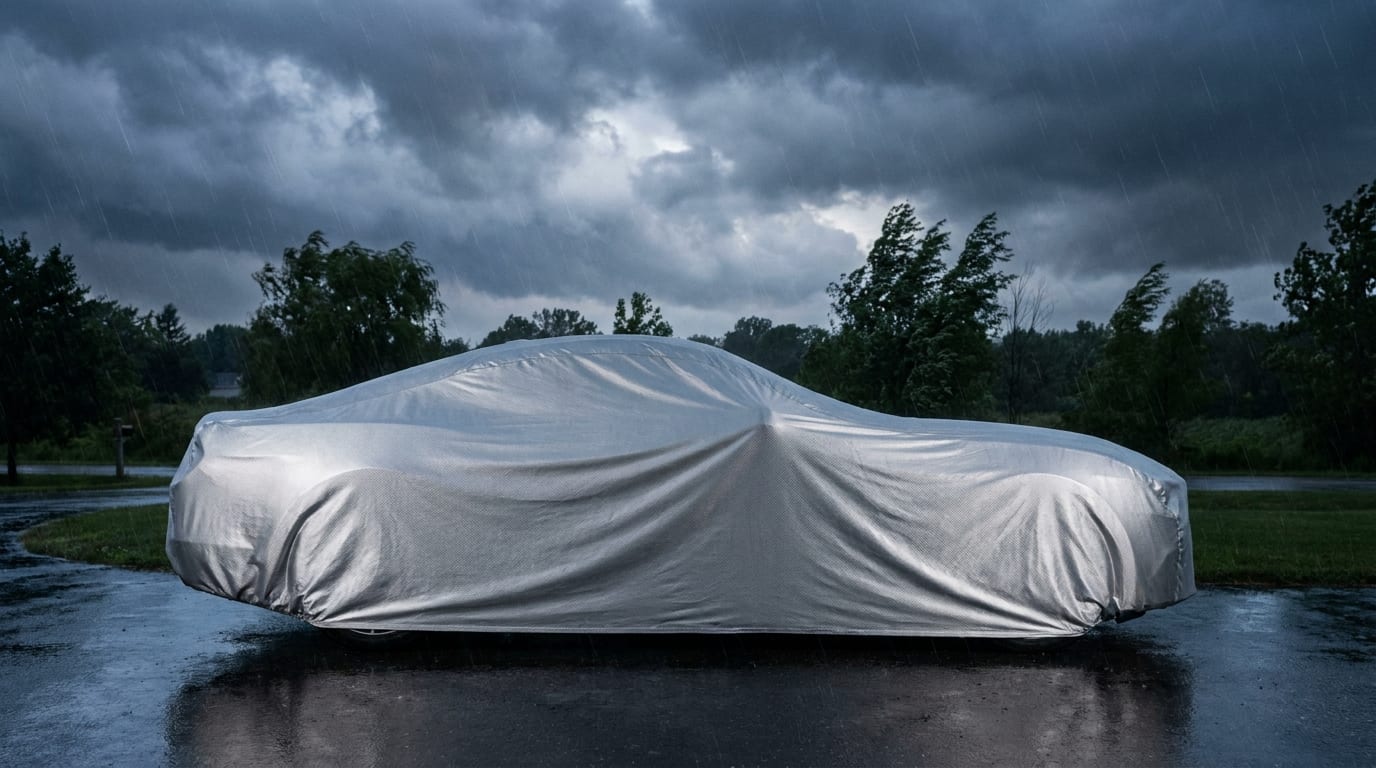
Hail risk isn't evenly spread across the country. The states nicknamed "Hail Alley," Texas, Oklahoma, Kansas, Nebraska, and Colorado, see hailstorms far more often and more severely than most coastal regions. If you're in one of those states, this isn't a hypothetical concern, it's a seasonal one.
For a sense of how damaging a bad hail year can get, the roundup of the worst hailstorms in US history is worth a read. Some of those events caused damage across thousands of vehicles in a single afternoon.
Compare that to the cost of a decent cover, and the math isn't close. A padded outdoor cover is a one-time expense. Paintless dent repair after an uncovered car takes a direct hit is priced per dent, and a bad storm can leave dozens of them across the hood, roof, and trunk. That gap is the whole reason to ask "can you recommend a good car cover for a sedan parked in an area with frequent hailstorms" in the first place, it's cheaper to prevent than to fix.
Even drivers outside the worst-hit zones are buying hail covers now. A moderate-risk area only needs one bad storm to leave a car looking like a golf ball, and that's enough to make people plan ahead.
Installation and Storage Tips That Reduce Hail Risk Further
The best padded cover in the world won't help if wind rips it half off before the storm even hits full force. Secure the edges with straps or a cable lock every time, not just when you remember. That tension keeps the cover anchored to the car instead of acting like a sail.
Check the forecast before you commit to the cover as your only protection. If a severe hail warning goes out, move the sedan into a garage or carport if you've got one available. Treat the cover as a backup layer for the storms you didn't see coming, not a replacement for actual shelter when you did.
For the setup itself, the gust strap installation guide walks through securing the straps properly, and the general cover installation guide covers the full process start to finish.
A properly tensioned cover also just lasts longer. One that's flapping loose wears against the clear coat every time the wind picks up, so getting the fit and strap tension right protects the cover's lifespan as much as it protects the car underneath.
Caring for a Hail Cover After the Storm
Walk around the car and check the cover right after a hailstorm passes, even if everything looks fine at a glance. Larger stones can nick or puncture padded fabric even when they don't make a dent in the paint underneath. Catching a small tear early means you fix it before it becomes a bigger hole that lets water in.
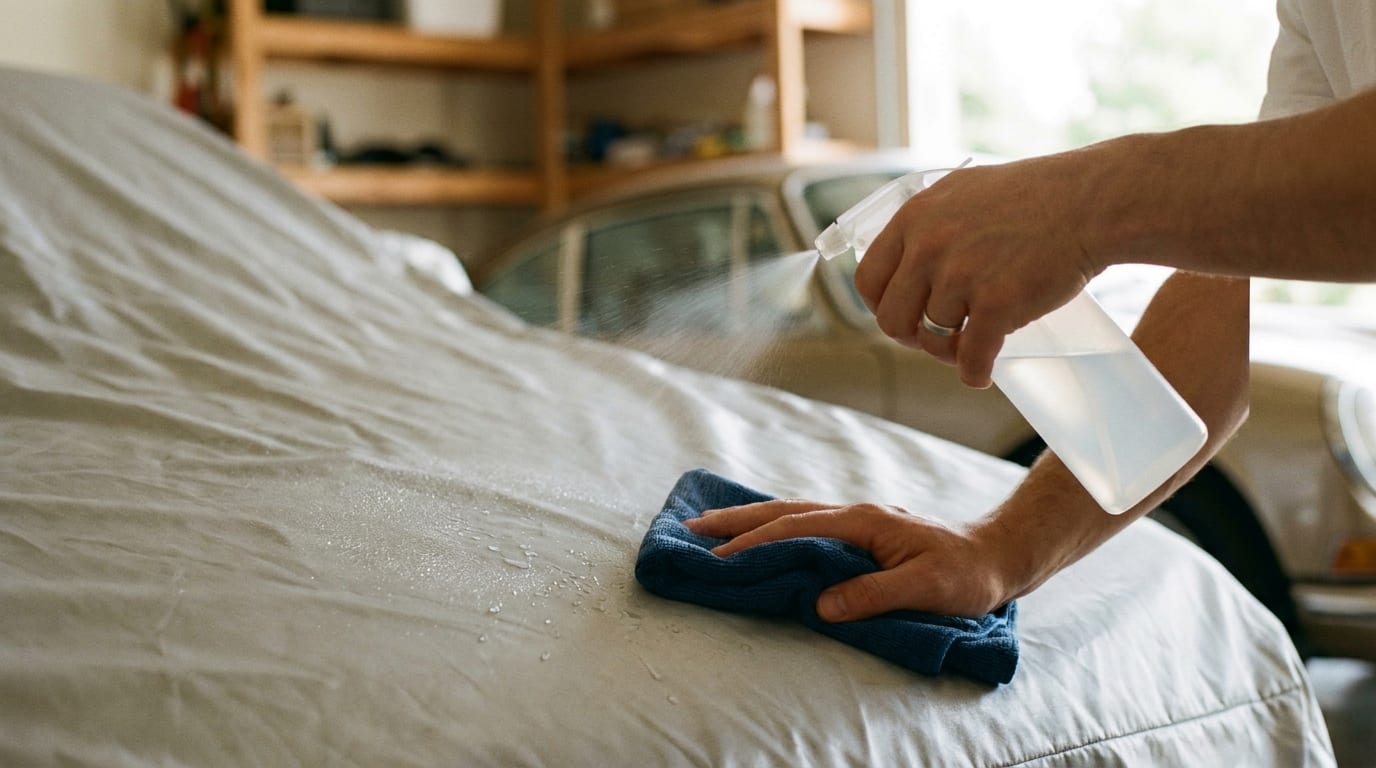
Clear off any debris, melted ice, or standing water, then let the cover dry fully before you fold it up or put it away. Folding a damp cover is how mildew gets started, and once that smell sets in, it's hard to get back out. The step-by-step cover cleaning guide covers the full process if you want specifics on products and technique.
If a storm was bad enough to actually damage the cover itself, check what your warranty covers before you assume you're buying a replacement out of pocket. Some coverage applies in situations like this, and it's worth a quick look before you write it off.
Bottom Line: Match the Cover to the Storm, Not Just the Car
A custom-fit, padded multi-layer outdoor cover is the right call for a sedan parked in a frequent-hail area. A thin universal cover or an indoor-only option just isn't built for the job, no matter how convenient either one seems at checkout.
If you're ready to look at options, browse what's available or run your sedan through a cover finder tool to match the exact fit your model needs. And if you want to go deeper on features before you buy, the hail cover guide is the natural next stop.






