What Car Cover Do You Recommend for a Car That Sits in a Driveway With No Shade?
Published
What Car Cover Do You Recommend for a Car That Sits in a Driveway With No Shade?
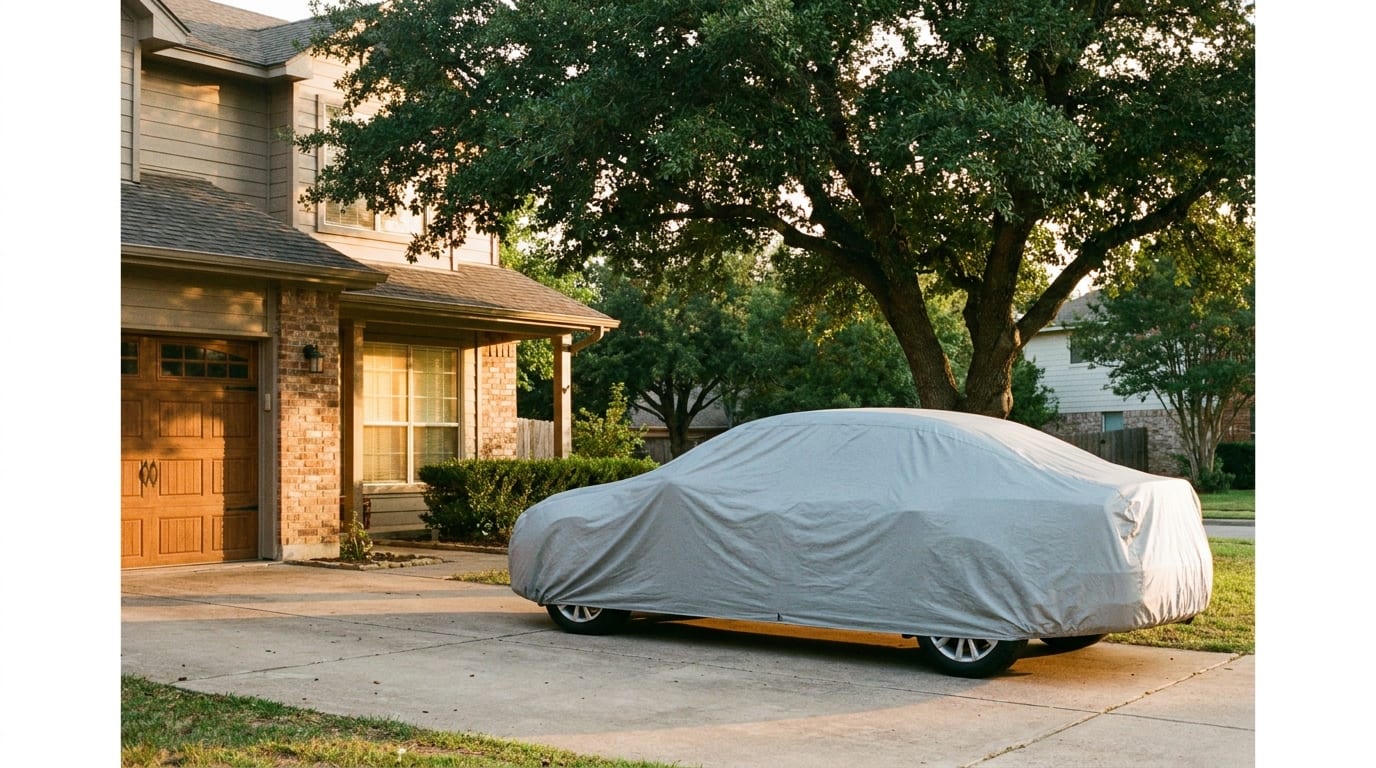
For a car parked daily in an unshaded driveway, go with a multi-layer outdoor-rated cover: UV-resistant outer fabric, a breathable inner layer that won't trap heat or moisture, fully taped or waterproof seams, and an elastic hem paired with a strap system that holds the cover down in wind. Skip anything single-layer or labeled for indoor use. Those covers either let sun through to your paint or seal moisture against it, and in full sun you get the worst of both.
Custom-fit construction matters more here than it does in a garage or under a carport. A loose universal cover has gaps at the mirrors, wheel wells, and hemline, and those gaps are where UV-heated air, blowing debris, and pooling water all get in. In shade, a sloppy fit is an inconvenience. In full sun, it's the difference between a cover that lasts three summers and one that cracks by August.
This answer holds whether you're covering a sedan, an SUV, or a full-size truck. A daily-driven vehicle parked in direct sun needs the same fabric and feature set no matter the body style, the only thing that changes is the size you order. So if someone asks what car cover do you recommend for a car that sits in a driveway with no shade, the honest answer isn't a brand name, it's this specific combination of fabric, breathability, and fit.
Why No-Shade Driveways Are the Toughest Test for a Car Cover
A driveway with zero shade is the hardest environment a cover will ever face, harder than a garage, harder than a tree-lined curb, harder than most covered carports. UV exposure is constant, and it doesn't just fade and crack your car's clear coat. It does the same thing to the cover itself. Cheap, untreated fabric goes brittle within a season of all-day sun, and once it's brittle it tears instead of flexing with wind and movement.
Then there's the temperature swing. A driveway in full sun can push surface temps well above the surrounding air during the day, then drop fast once the sun's gone. That swing creates condensation, and condensation trapped under a non-breathable cover is often worse than rain. Rain runs off. Trapped moisture against hot paint sits there all night, which is exactly the setup for water spots, mildew smell, and finish damage over time.
Wind is the third piece people forget. No trees, no fence line, no garage wall to break a gust means more abrasion and a higher chance of the cover shifting or blowing loose entirely. A cover that's merely draped on, without straps or a tight fit, just won't hold up under that kind of repeated movement. For more on how heat specifically affects a parked car, see tips for keeping a car cool in summer.
Key Features to Look for in a Sun-Exposed Outdoor Cover

The feature list for sun-exposed daily parking isn't long, but every item on it earns its place: a UV-treated outer shell, a water-resistant or waterproof coating, breathable multi-layer construction, reinforced seams, and a soft inner liner so wind-driven movement doesn't scratch the paint from the inside.
Here's why single-layer and indoor-only covers fail this test specifically. A single layer is a trade-off by design, it's usually either breathable or water-resistant, rarely both. An indoor cover is built to block dust and light scratches in a controlled space, not to survive a 95-degree afternoon followed by overnight dew. Put either one on a car that lives outside and you're asking it to do a job it was never built for.
When you're comparing products, check the fabric weight or denier rating, and look specifically for covers marketed as "outdoor," not "universal light-duty" or "indoor." Those labels aren't just marketing fluff, they reflect real differences in coating and layer count. For the feature-level breakdown, outdoor car covers and waterproof car covers cover what each construction type is actually built to handle. If you want a full materials comparison before you buy, which material car cover is best walks through the trade-offs in more depth.
Custom-Fit vs. Universal Covers: Why Fit Matters More in Direct Sun
A custom or semi-custom cover hugs your vehicle's body lines. That matters more than it sounds like it should. A tight fit means less flapping, less friction, less fabric-on-paint rubbing every time the wind picks up, and all of that friction is what wears a cover down faster than age alone.
A loose universal cover does the opposite. Extra slack means pockets of UV-heated air sitting underneath the fabric, and it means gaps at the hem where wind can get a grip and start lifting the whole thing. You end up with a cover that's technically "on" the car but not actually doing the job it's there for.
Here's a simple rule of thumb: the more hours a day your vehicle sits uncovered in full sun, the more a precise fit pays off over the cover's lifespan. A car that only gets covered overnight in a shaded spot can get away with a looser fit. A car baking in a driveway from 8am to 6pm every day cannot. If you're not sure what fit category your vehicle falls into, custom-fit car covers and sizing your vehicle correctly are worth reading before you order.
Securing the Cover Against Sun, Wind, and Daily Use

Even a well-fitted outdoor cover benefits from backup. If your driveway gets regular gusts, pair the cover with a gust or wind strap system so it stays put instead of working itself loose overnight. It's a small add-on that solves a problem a cover alone can't always handle.
If the driveway is street-visible, a cable lock is worth considering too. It won't stop everything, but it adds a real deterrent against someone tampering with or lifting the cover off a car parked in plain view.
One thing people underestimate: an unshaded driveway cover gets put on and taken off far more often than a garage cover ever does. If you're driving the car daily, you're probably wrestling with this cover every morning and evening. That's exactly why details like color-coded seams and elastic hems matter. They're not cosmetic, they're what makes daily installation fast instead of annoying. For the actual setup process, see installing a gust strap or wind strap system and how to install a cable lock.
Maintenance Tips to Extend Cover Life in Direct Sun
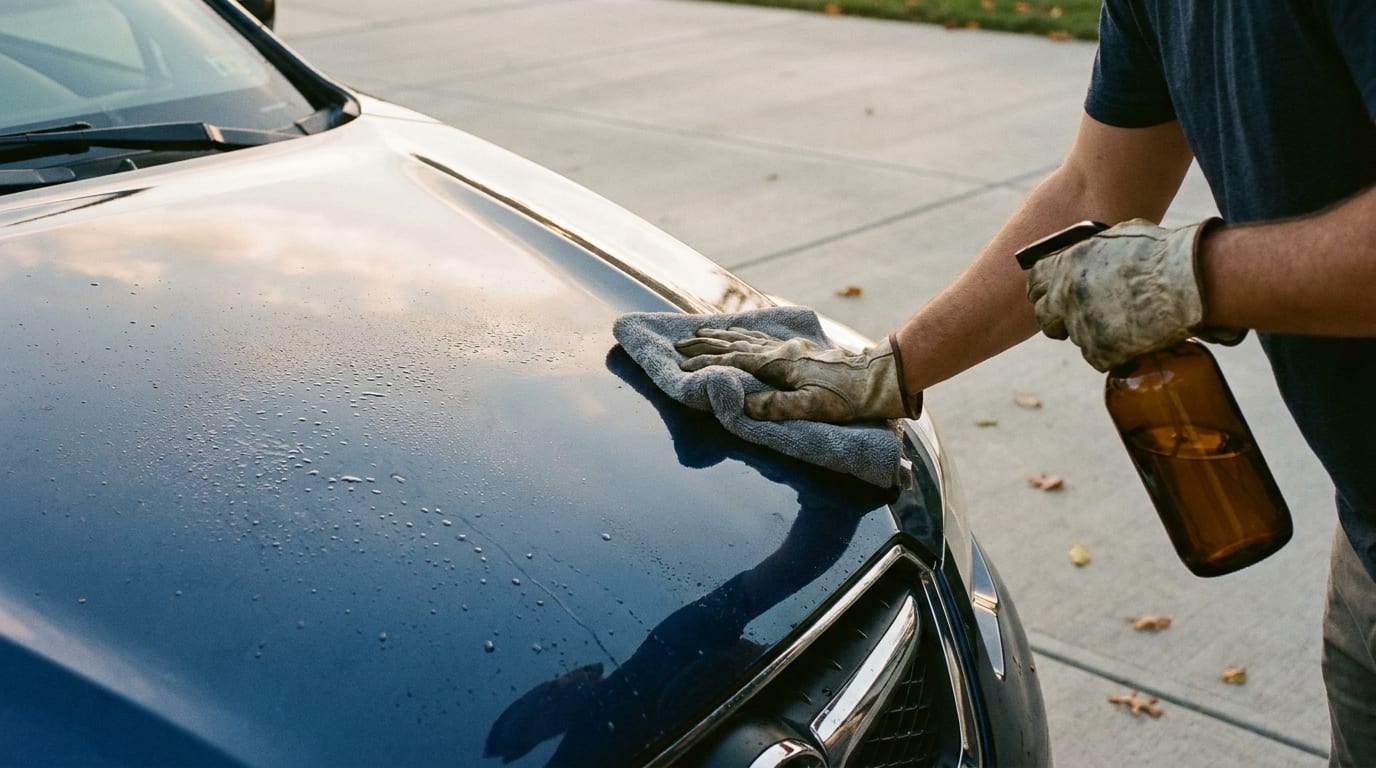
A cover that lives outdoors needs more upkeep than one that lives in a garage, plain and simple. Rinse it periodically to clear off grit, pollen, and dust, since all of that grinds against UV-treated fabric every time the cover moves in the wind, slowly wearing down the coating that's protecting your paint in the first place.
Don't fold and store it while it's still damp. This one's worth repeating because it's the mistake that kills covers fastest: trapped moisture plus heat is a direct line to mildew and fabric breakdown, often before the cover's even a year old.
Seasonal inspection matters too. Check seams and elastic hems a couple times a year, because full-sun exposure shortens the life of stitching and elastic noticeably faster than shaded storage does. Catching a frayed seam early is a five-minute fix. Catching it late means a cover that no longer does its job. For the full care routine, how to clean a car cover and this guide to using a car cover outdoors cover both cleaning and the sun/wind/waterproofing side together.
Bottom Line: Match the Cover to the Conditions
If you take one thing from this: a car parked daily in full sun needs a multi-layer, UV-resistant, breathable, waterproof cover that's built to your vehicle's actual shape, not a generic one, and it should be backed up with wind straps so it stays put. That combination is the real answer to what car cover do you recommend for a car that sits in a driveway with no shade, and it doesn't change much by vehicle type.
Guessing at a universal size, or grabbing whatever's cheapest, tends to cost more in the end. A cover that fails within a season means buying another one, and in the meantime your paint's been taking the UV and moisture hit the whole time. Getting the fit and fabric right up front is the cheaper path, not the more expensive one.
If you want to stop guessing, use the fit finder to pull up the exact cover built for your vehicle's year, make, and model. And if you're still weighing whether a cover is worth it at all, why buy a car cover lays out the case plainly. Either way, it's worth a few minutes before your car spends another season baking in the driveway.