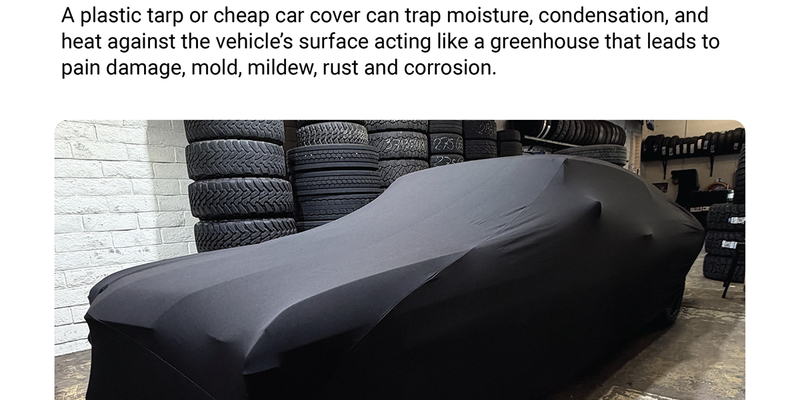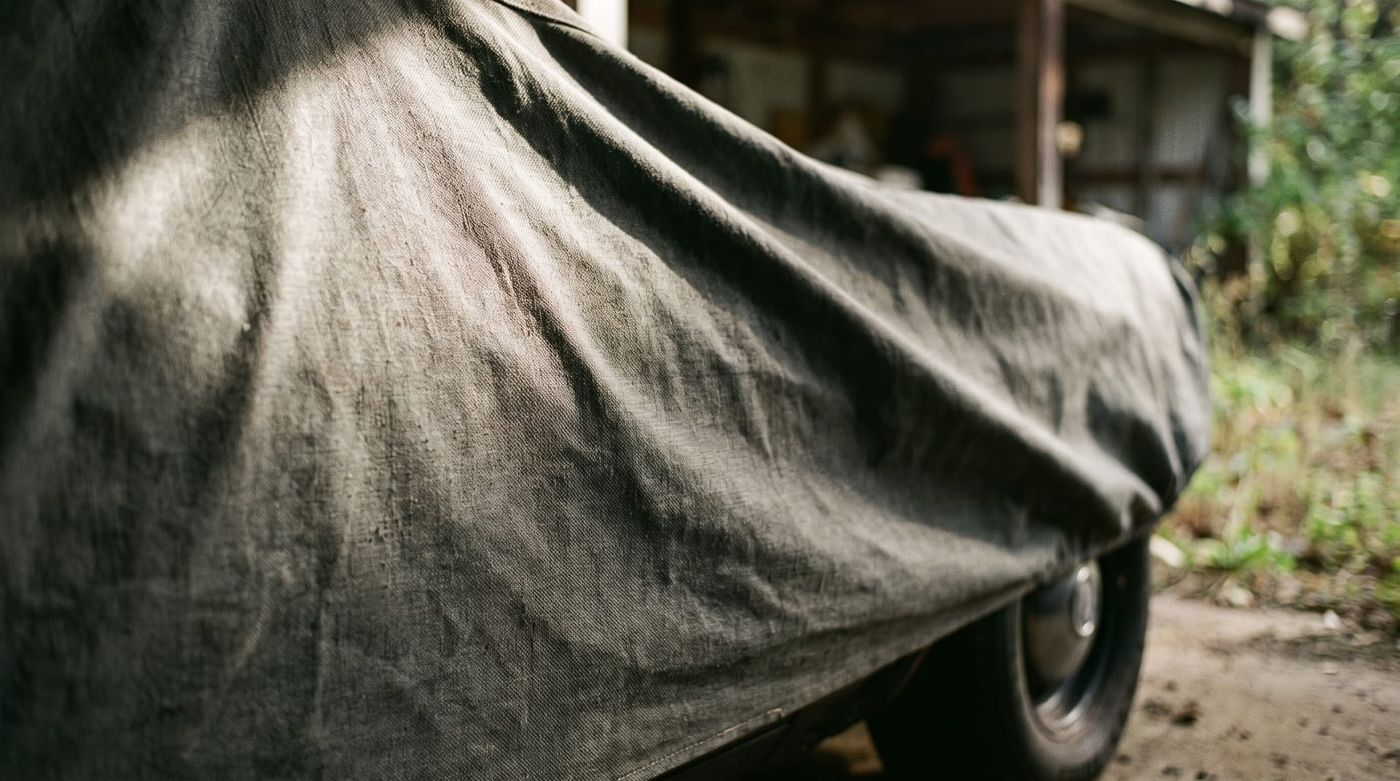
Ripstop fabric is used in car covers to stop small tears or punctures from spreading, thanks to a reinforced crosshatch weave built right into the base material. You've probably seen the pattern without knowing what it was: a faint grid of thicker threads running through the fabric of a tent, a jacket, or a cover draped over a car in a driveway. That grid is doing actual structural work.
It's worth clearing up a common misconception first. Ripstop isn't a fabric type on its own, it's a weaving technique applied to materials like polyester or nylon. Manufacturers weave thicker reinforcement threads into the base fabric at regular intervals, creating a grid that's stronger than the surrounding weave. So when someone asks what is ripstop fabric used for in car covers, the honest answer is that it's less about the raw material and more about how that material is constructed.
That construction is exactly why ripstop shows up as the outer layer on multi-layer car covers. It's the layer taking the brunt of wind, tree branches, debris, and the general wear of being pulled on and off a vehicle week after week.
How the Ripstop Weave Works

Picture a sheet of fabric with a faint box or diamond pattern pressed into it. That's not decorative. Those lines are thicker reinforcement yarns, interwoven at set intervals through a thinner base fabric, usually every quarter inch to half inch depending on the grade.
The mechanism is simple and it works. If a cut or puncture starts in one of the small squares, the surrounding reinforcement threads act like a stop sign. They keep the tear contained to that one square instead of letting it run. Compare that to a plain weave fabric, where a snag can turn into a foot-long rip with one good gust of wind or one branch catching the fabric wrong. Plain weaves have no built-in checkpoints. Ripstop does.
This isn't a new idea cooked up for car covers. Ripstop was developed for parachutes and military gear, where a small tear mid-flight or mid-mission couldn't be allowed to become a catastrophic failure. Outdoor gear makers adopted it for tents and backpacks. Eventually it made its way into automotive protective fabrics, which makes sense: a car cover faces a lot of the same enemies as a tent, just parked in your driveway instead of a campsite.
Why Car Cover Makers Use Ripstop Fabric
There's a practical reason this weave keeps showing up in cover construction, and it comes down to a handful of overlapping benefits.
Tear and abrasion resistance is the obvious one. A cover gets scraped against tree limbs, snagged on fences, folded and unfolded dozens of times a season. Ripstop handles that repeated stress better than a plain weave fabric would, because it's not relying on uniform thread strength across the whole surface.
Lightweight strength matters just as much. Ripstop adds durability without the bulk of thicker canvas-type material, so the cover stays easy to pull on, fold up, and stuff into a trunk or garage shelf. Nobody wants to wrestle with a stiff, heavy cover every time they park.
Longevity outdoors is where ripstop really earns its keep. Wind doesn't just blow past a parked car, it flaps the cover against the paint over and over, for hours, sometimes for days. That constant low-grade abrasion is what kills a plain fabric cover over a season or two. Ripstop shrugs off a lot of that wear.
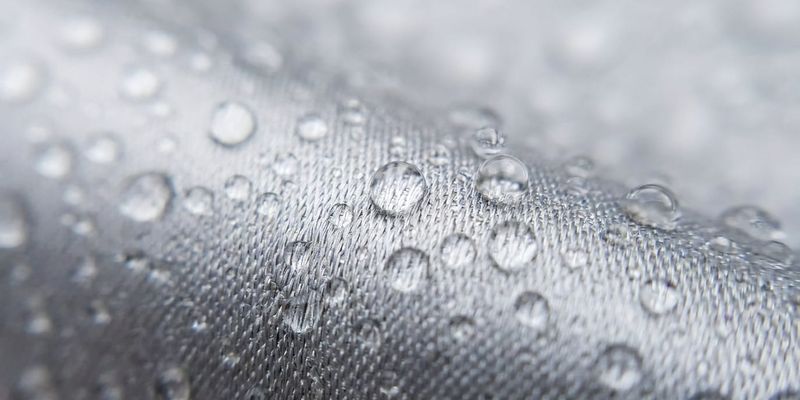
And one more thing that doesn't get talked about enough: ripstop base fabric is often laminated or treated for water resistance, so you're getting tear strength and weatherproofing in a single layer instead of two separate compromises. If you want the deeper mechanics of how that waterproofing actually works, it's worth a look at how waterproof fabrics are built for car covers.
Where Ripstop Shows Up in Car Cover Construction
Not every cover needs ripstop, and that's fine. It's most common in outdoor car covers and all-weather designs, where exposure to branches, wind, and road grit is constant. Indoor covers, especially softer satin or fleece-lined options, prioritize a gentle touch against the paint over raw tear strength, since they're not fighting the elements. If your car lives in a garage, you're probably better served by an indoor car cover than anything built around ripstop.
In multi-layer outdoor covers, ripstop typically does its job as the outer shell. Underneath it you'll usually find a soft inner layer to protect the paint, and sometimes a breathable mid-layer to manage moisture and keep condensation from getting trapped against the body panels. Each layer has one job. Ripstop's job is standing between your paint and whatever the outdoors throws at it.
So the real question isn't whether ripstop is "better." It's whether your storage situation calls for it. A car parked under trees in a windy region needs a different fabric strategy than one tucked into a closed garage every night.
Ripstop vs. Other Car Cover Materials

Set a ripstop cover next to a plain woven polyester one and the difference shows up fast once either one gets nicked. Plain weave polyester can run a small hole into a long rip with surprisingly little provocation, a stiff gust or a snag on a mirror is enough. Ripstop's grid keeps that same nick contained to one small square.
Canvas is the other common comparison, and it's a fair one. Heavy canvas offers more raw thickness, which can mean better resistance to a hard, blunt impact. But it's heavier, stiffer, and more of a chore to fold and store. Ripstop trades a bit of that raw bulk for something more practical day to day: it's lighter, easier to handle, and still resists the kind of tearing that actually ends up damaging most covers over time.
| Property | Ripstop | Plain Weave Polyester | Heavy Canvas |
|---|---|---|---|
| Tear containment | Stops small tears from spreading | Tears can run long | Resists tearing via sheer thickness |
| Weight | Light | Light | Heavy |
| Ease of folding/storage | Easy | Easy | Stiff, bulkier |
| Best suited for | Outdoor, multi-layer covers | Light-duty or indoor use | High-impact, less frequent handling |
Here's the thing though: no single fabric property wins on its own. The best cover for a tough climate usually blends ripstop with a waterproof or UV-resistant coating, rather than leaning on tear resistance alone and hoping that's enough. If you're shopping by climate first, the waterproof car cover guide is a better starting point than fabric specs alone.
Caring for a Ripstop Car Cover
Ripstop is tough, but it's not indestructible, and how you clean it matters more than most people assume. Stick to mild soap, a soft brush, and air drying. That protects the coatings bonded to the weave, which is usually what's actually doing the waterproofing, not the ripstop grid itself.
Skip the washing machine. Skip the dryer on high heat too. Both can break down reinforcement threads or crack protective coatings over repeated cycles, and that damage doesn't show up right away, it just slowly erodes performance until one day the cover isn't keeping water out anymore. For a full rundown on the dos and don'ts, the guide to cleaning a car cover covers it in more depth.
Storage matters too. Fold the cover loosely instead of cramming it into the tightest possible bundle. Tight, repeated compression along the same crease lines puts long-term stress right on the reinforcement grid, which is the opposite of what you want from a fabric designed to resist stress.
Choosing the Right Cover Material for Your Vehicle
So, what is ripstop fabric used for in car covers, bottom line? It's there to add tear resistance and durability, particularly for vehicles stored outdoors where wind, branches, and debris are a daily reality rather than an occasional annoyance.
Before you buy based on fabric alone, think about where your car actually sits. Driveway or garage? Trees overhead or open sky? Windy region or calm one? Those answers matter more than any spec sheet. For some vehicles, a well-built custom-fit cover in a ripstop outer layer is overkill. For others parked under oak trees in a windy state, it's the minimum.
If you want to dig deeper into matching fabric to conditions, the guide to using a car cover outdoors walks through wind, UV, and water exposure in more detail. And if you're still narrowing down which cover fits your vehicle and your climate, browse the full car cover lineup or use the cover finder tool to match one to your specific make and model. Worth bookmarking either way before your next storage season rolls around.