The Short Answer
If you're asking what type of car cover is best for daily use, here it is: a breathable, multi-layer woven fabric (spunbond polypropylene or a polyester/cotton blend) in a custom or semi-custom fit. Not vinyl. Not a flannel-only indoor cover. Not a fully sealed laminate that's built for months of sitting still.
Storage covers and daily covers solve different problems. A car in long-term storage goes on once and stays put, so the fabric just needs to block dust and moisture over time. A daily driver's cover goes on and off every single day, usually right after the engine's been running. It needs to breathe so it doesn't trap heat and moisture against the paint, fold and unfold without cracking at the seams, and hold up to UV exposure if the car sits outside during work hours.
Before you pick a material, answer two questions honestly. Where does the car actually sleep, covered driveway, open lot, or garage? And what's your climate doing most days, rain, intense sun, dust, tree sap? Those two answers steer the material choice more than anything else. The comparison below breaks down the main fabric types so you can match one to your actual situation instead of guessing.
Car Cover Material Comparison for Daily Drivers

Here's how the common fabric types stack up for a cover that comes off every morning and goes back on every night.
| Material | Breathability | Water Resistance | UV Protection | Best Parking Scenario | Daily Fold/Unfold Durability |
|---|---|---|---|---|---|
| Spunbond Polypropylene | High | Moderate (light rain) | Strong | Open driveway, carport | Excellent, built for repeat handling |
| Multi-layer Laminate/Non-woven | Moderate | High | Strong | Mixed sun and rain climates | Good, but heavier and bulkier to manage daily |
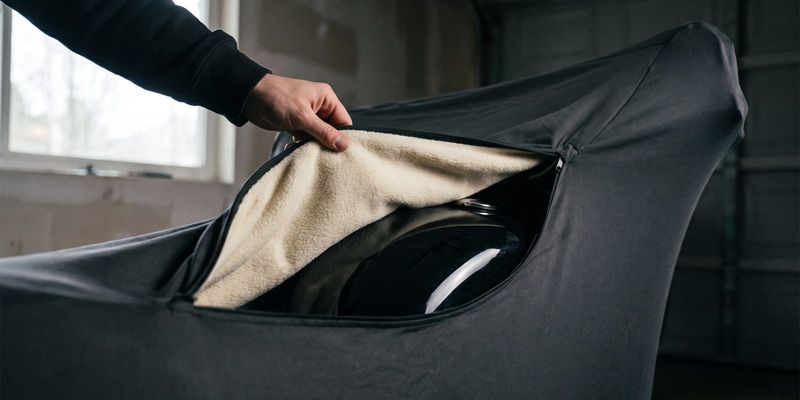
| Polyester/Cotton Flannel | High | Low | Low | Indoor garage only | Good indoors, poor outdoors |
| Vinyl/PVC | Very low | Very high | Moderate | Not recommended for daily outdoor use | Fair, but cracks over time with folding |
| Satin | High | Very low | Low | Indoor showroom use | Good indoors, not made for daily outdoor cycling |
Spunbond polypropylene comes out on top for most daily drivers parked outside. It's light enough to pull on and off in under a minute, it breathes, and it holds up to sun without turning brittle. Multi-layer laminate covers add more weatherproofing, which helps if your area gets both heavy sun and sudden rain, but that extra protection comes with extra bulk. You'll feel it every time you fold it.
Vinyl is the one to watch out for. It's fully waterproof, sure, but it doesn't breathe at all, and it's the most likely of the group to crack at the fold lines from daily use. Flannel and satin are great fabrics, just not for this job. They belong indoors, not on a car that's getting rained on and baked by the sun on a loop.
If you want the deeper technical rundown on coating types and how each one actually repels water, the waterproof fabrics explainer covers it, and the waterproof car covers guide is worth a look if your daily parking spot is fully exposed to storms.
Why Breathability Matters More for Daily Use Than Storage
Here's the part people miss. A car that's been driven is warm. The engine, the exhaust, the tires, all of it is radiating heat when you throw the cover on. Seal that heat under a non-breathable fabric and you've just created a condensation chamber that sits against your paint all night.
Storage covers don't deal with this nearly as much, because a stored car isn't cycling through heat and cooldown every day. It just sits. Airflow matters less when there's no fresh moisture being generated underneath.
For anyone covering the car right after a drive, woven or spunbond fabrics with a micro-porous structure are the better call over solid vinyl. The structure lets trapped heat and moisture escape instead of condensing. And breathable doesn't mean unprotected: a good woven cover still blocks dust, tree sap, and bird droppings, which, if you're being honest, are the three things that actually ruin most people's daily parking spot. Nobody's garage-stored car is getting hit by all three in one afternoon. The one parked under a tree on the street is.
Custom-Fit vs. Universal Covers for Everyday Use
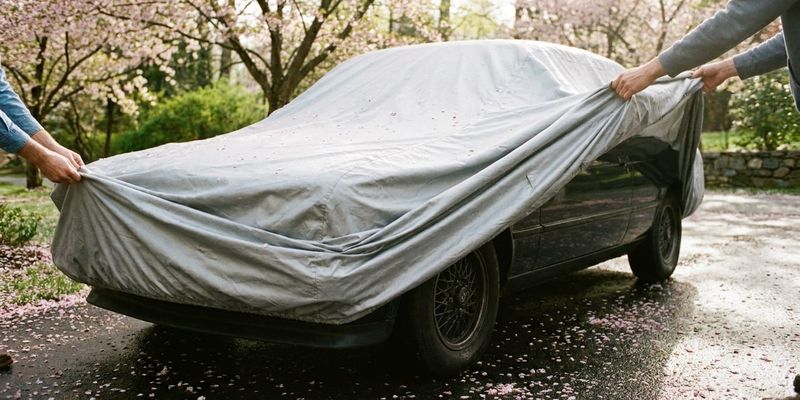
A loose universal cover is fine for a car that gets covered once a month. For daily use, it's a problem. Excess fabric flaps in the wind, and that flapping wears through the material at friction points, usually right over the mirrors and hood edge, faster than you'd think.
A snug, custom or semi-custom fit also just makes the daily routine faster. Less fabric to tuck, less adjusting, less time standing in your driveway at 7am fighting with a cover that's two sizes too big. That's the real argument for fit when it comes to what type of car cover is best for daily use: it's not just about protection, it's about not hating the process every single day.
The custom-fit car covers guide explains how CarCovers' fit options work, and the sizing guide will help you match a cover to your exact vehicle instead of eyeballing it. Small details matter here too: mirror pockets, an antenna patch, and elastic hems all cut down the hassle of putting the cover on and taking it off, which adds up fast when you're doing it 365 times a year.
Matching the Cover to Where the Car Sleeps
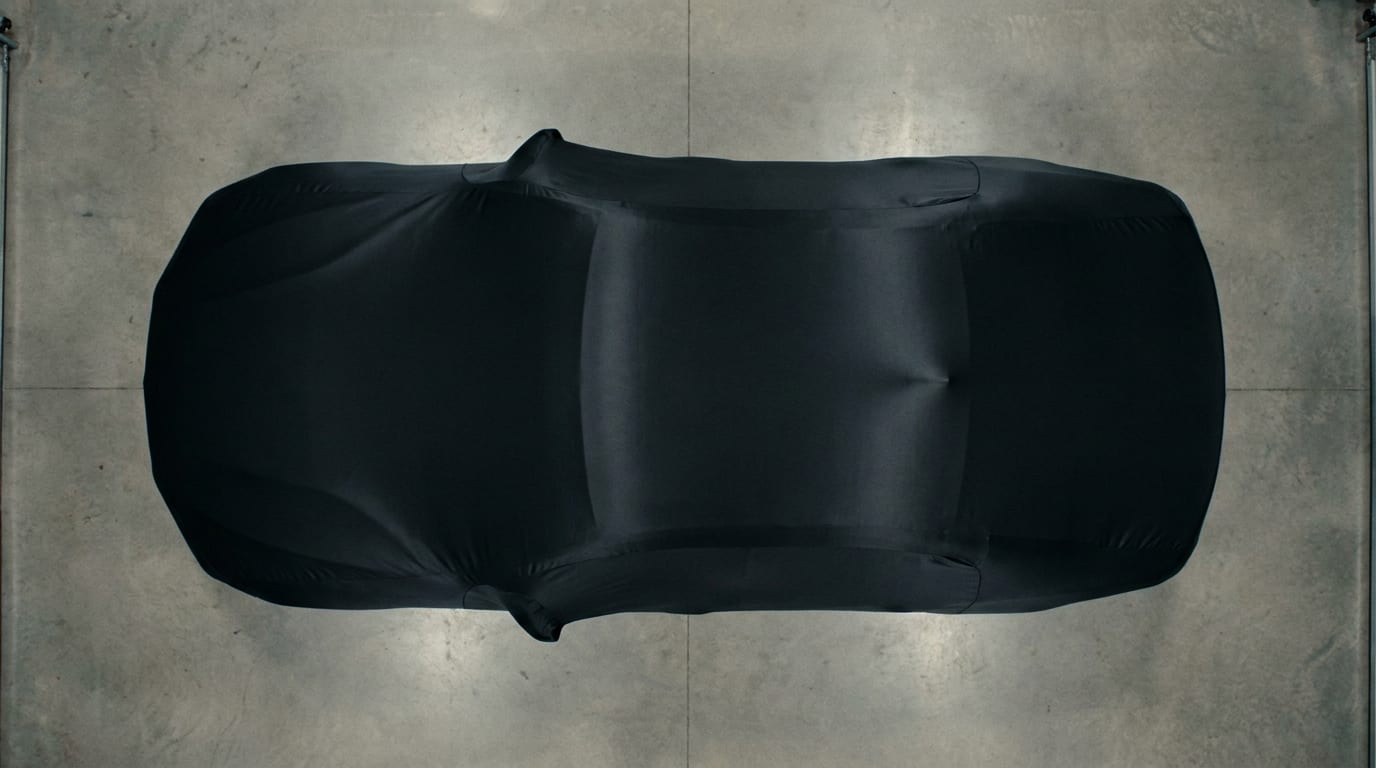
The material question gets a lot simpler once you know where the car actually parks.
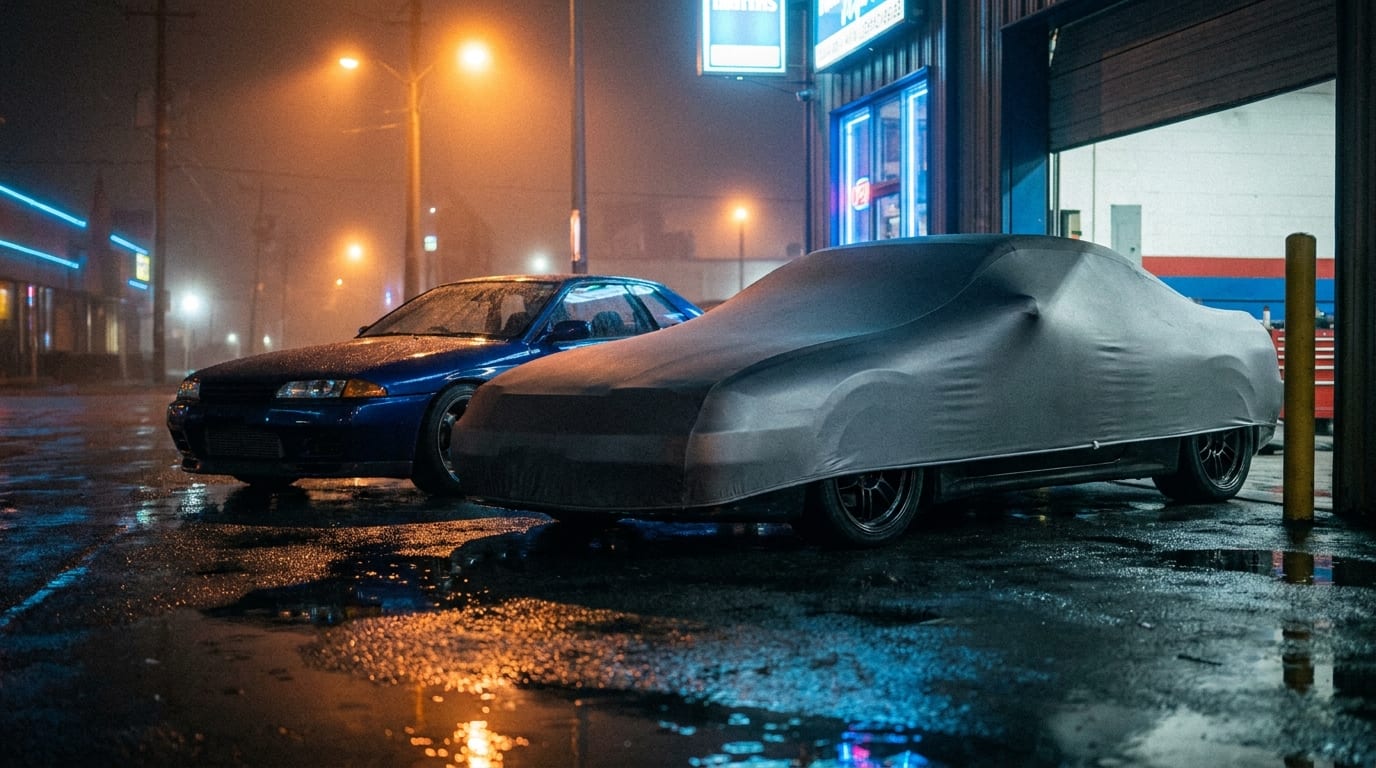
Fully exposed outdoor daily parking, no carport, no overhang, needs a multi-layer outdoor-rated fabric with real UV and water resistance. You're asking the cover to handle sun, rain, and dust every day with no break, so this isn't the place to cut corners on weatherproofing.
Carport or partially covered parking is a different story. You've already got a roof blocking most of the rain and direct sun, so a lighter breathable fabric is usually plenty. No need to pay for weatherproofing you're not using.
Indoor garage parking is the easiest case. A soft flannel or satin cover keeps dust off without any weatherproofing at all, since there's no weather to worry about in the first place.
If you're not sure which bucket you fall into, the outdoor car covers guide and indoor car covers guide both walk through the specifics for each scenario.
Daily-Use Habits That Affect Which Cover Lasts
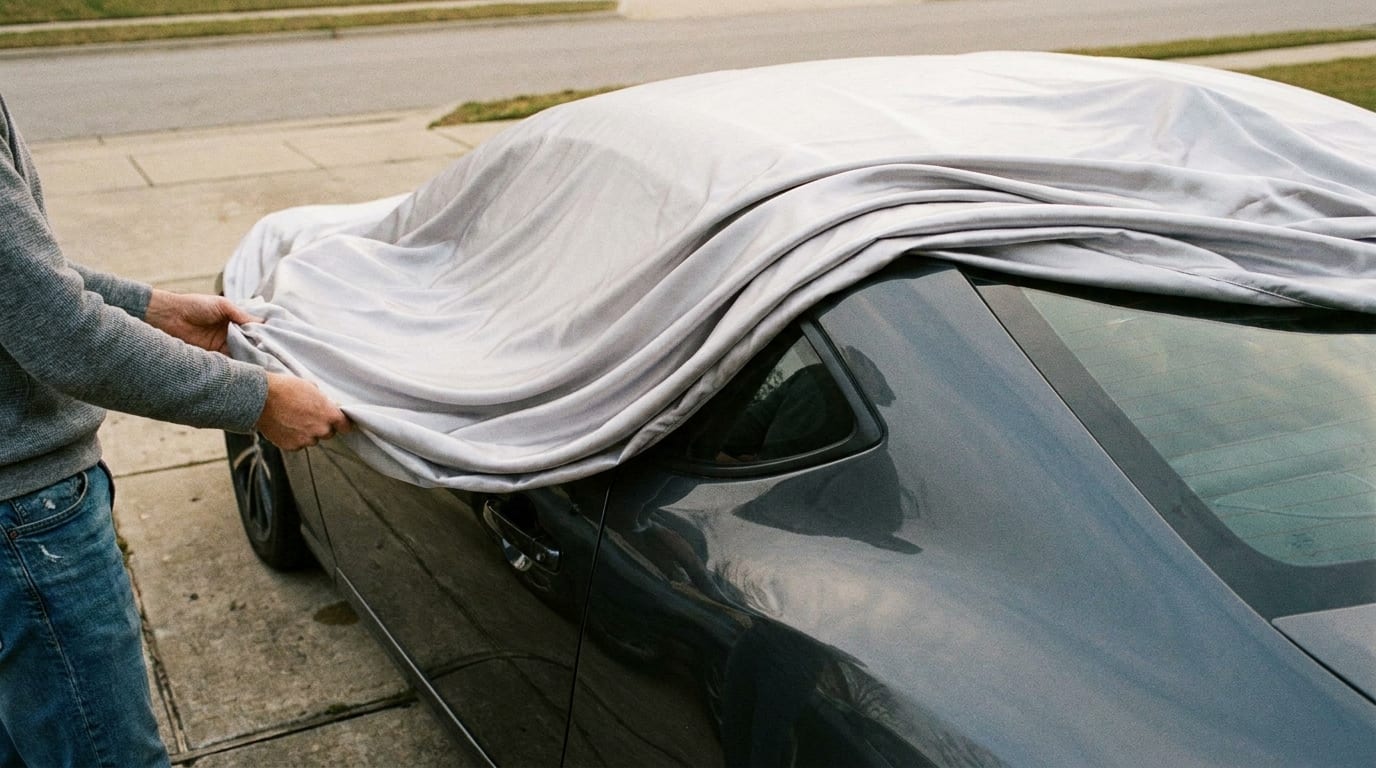
Material choice only gets you so far. A cover handled every day wears out first at the fold creases and around the grommets, no matter what it's made of. Reinforced stitching at those stress points is what separates a cover that lasts years from one that's shredding at the seams by month six.
A quick shake-out or wipe-down before you fold the cover makes a bigger difference than people expect. Dust and grit ground into the fabric act like sandpaper every time you fold it. The cover care and cleaning guide covers the basics if you want to build that into your routine.
Weight matters here too, and not just for protection. A heavy vinyl cover might sound tougher on paper, but if it's a two-handed wrestling match to remove every morning, you're going to start skipping it, and a cover that's not on the car isn't protecting anything. Lighter fabric isn't a compromise for daily use, it's the point.
One more thing worth knowing: CarCovers backs its covers with a lifetime warranty, which matters a lot more for a cover going through a daily wear cycle than one that gets used twice a winter. Daily use is hard on any cover. Having that backstop counts for something.
Find the Right Daily-Use Cover for Your Vehicle
So, what type of car cover is best for daily use? For most people, it's a breathable multi-layer fabric paired with a custom fit, adjusted up toward a tougher laminate if you're fully exposed outdoors, or down toward something lighter if you've got a carport or garage doing some of the work for you.
If you're not sure which fabric and fit combination matches your exact car, the CoverFinder tool will walk you through your year, make, and model and point you at the right option. And if you want to see the fabric tiers side by side before you commit to anything, browsing the car covers category is a good next step. No need to rush it, just match the cover to how and where you actually park.