What's the Best Car Cover for a Sedan in a Snowy Climate Like Minnesota?
Published
The Quick Answer: Best Car Cover for a Minnesota Sedan
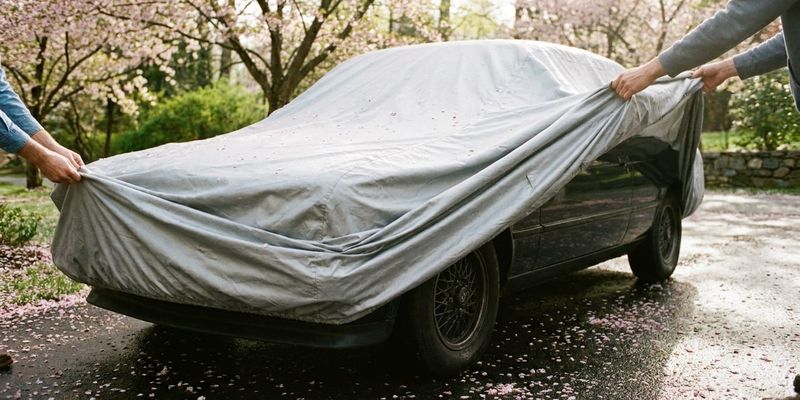
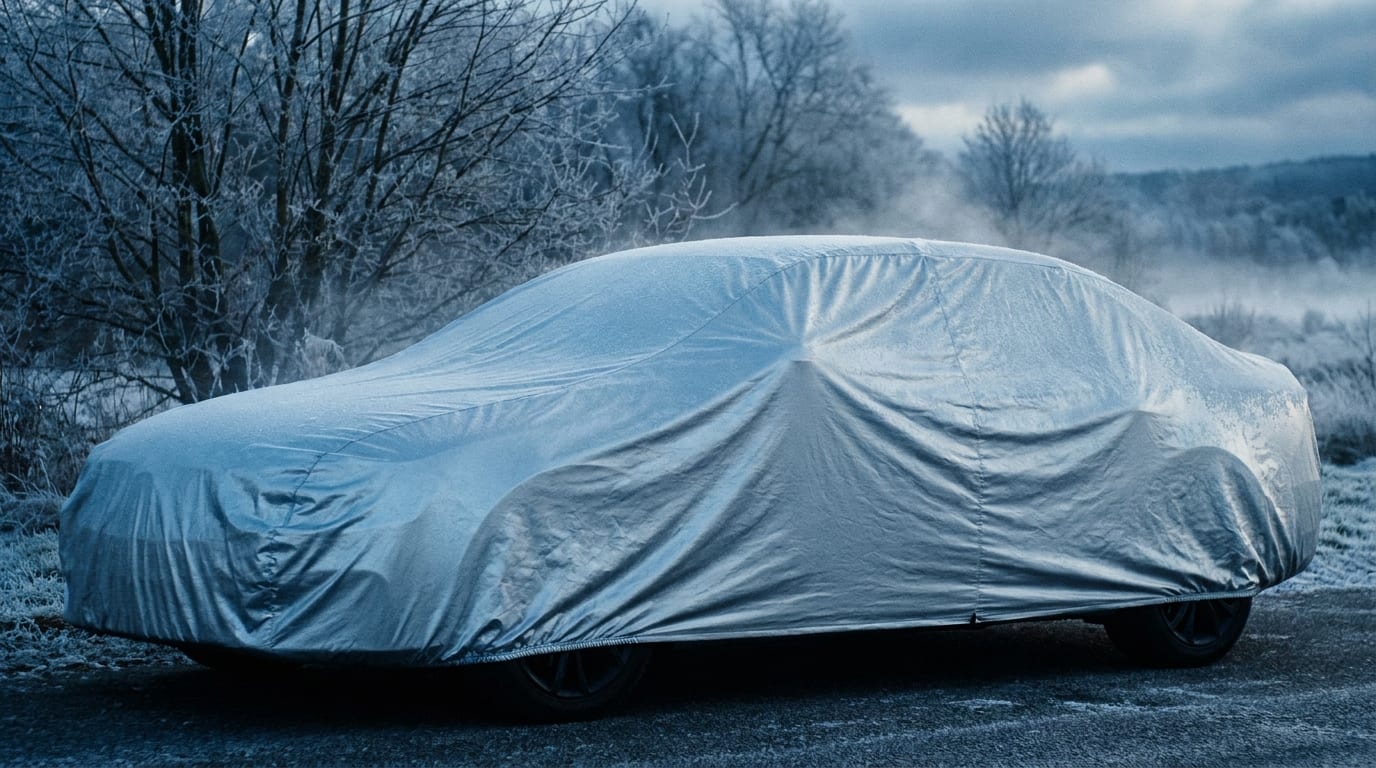
If you're asking what's the best car cover for a sedan in a snowy climate like Minnesota, here's the short version: go with a custom-fit, multi-layer waterproof outdoor cover with a soft fleece lining and a built-in strap or cable lock system. That combination is what actually handles heavy wet snow, ice buildup, road salt, and the wind that comes off open Minnesota roads. A thin universal cover won't cut it here, it traps moisture underneath, sags once snow piles on, and tears at the seams the first time the wind really picks up.
Below, we've broken down the three common tiers of car covers so you can match your budget and parking situation (driveway, no garage, long-term outdoor storage) to the right level of protection. After that, we'll walk through the specific features that matter for this climate, how fit changes the equation, and how to install and maintain a cover so it actually survives a Minnesota winter instead of just the first storm.
Comparing Car Cover Types for Snowy Climates
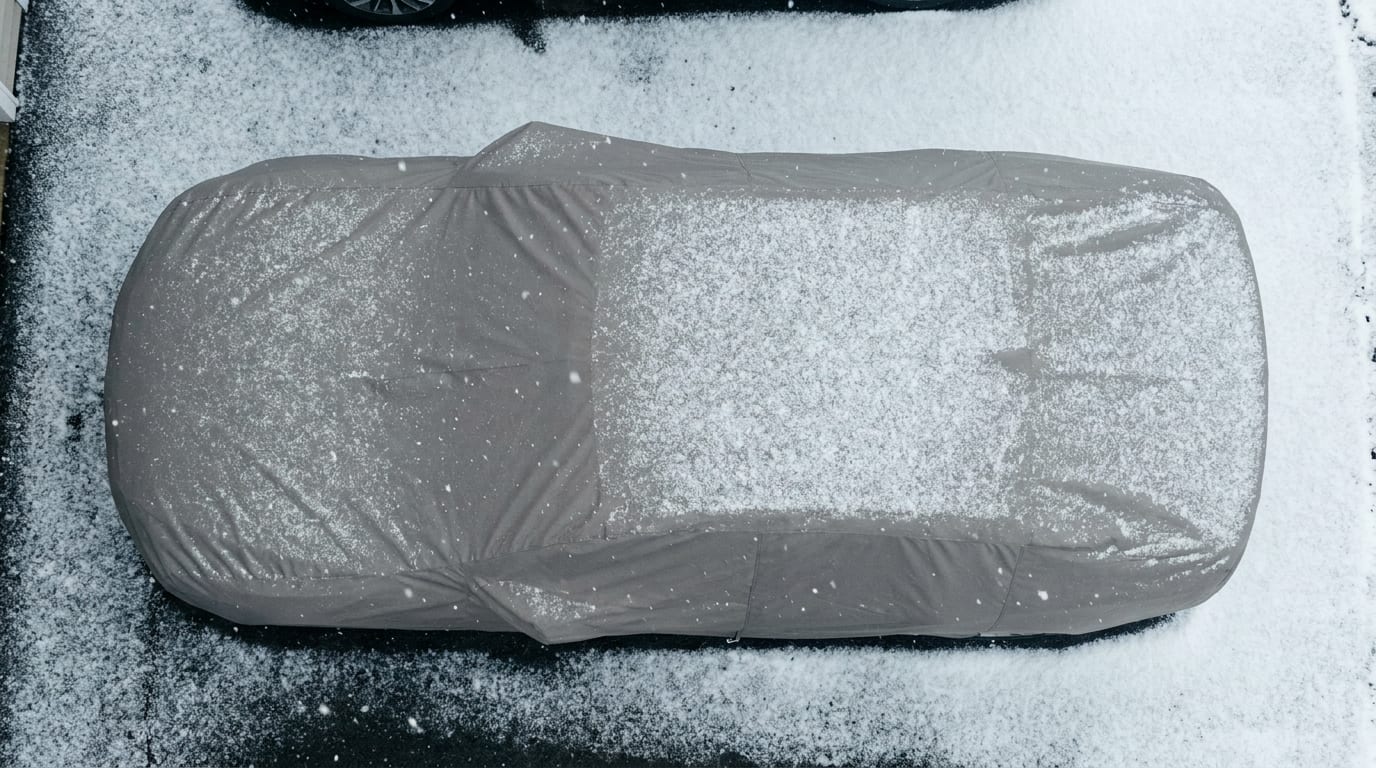
Not all covers are built for the same job. A cover that's fine for a mild, dry climate will struggle the moment Minnesota throws a foot of wet snow and 30 mph wind at it. Here's how the three main tiers stack up.
| Cover Type | Waterproof Rating | Snow/Ice Load Tolerance | Wind Resistance | Interior Lining | Best Fit Scenario |
|---|---|---|---|---|---|
| Basic/Outdoor | Light water resistance, not fully sealed | Low, sags under wet snow | Minimal, no strap system | Thin or none | Covered carport, occasional light precipitation |
| Waterproof All-Weather | Fully waterproof, breathable fabric | Moderate, handles light to average snowfall | Elastic hem, sometimes includes strap loops | Soft lining on main panel | Semi-sheltered parking, driveway with some wind break |
| Custom-Fit Premium | Fully waterproof, multi-layer construction | High, rated for heavy accumulation | Built-in gust strap or cable lock system | Full soft lining at contact points | No garage, long-term outdoor storage, open exposure |
For Minnesota specifically, don't fixate on waterproofing alone. Wind resistance and snow-load tolerance matter just as much, because wet, heavy snow combined with open-prairie wind is exactly the combination that tears a loose or underbuilt cover apart overnight. If your sedan sits outside all winter with no structure around it, the custom-fit car cover tier is the default pick. If you've got a carport, overhang, or a somewhat sheltered spot, a waterproof car cover in the all-weather tier is a reasonable, lower-cost alternative.
What Minnesota Winters Actually Do to an Uncovered Sedan
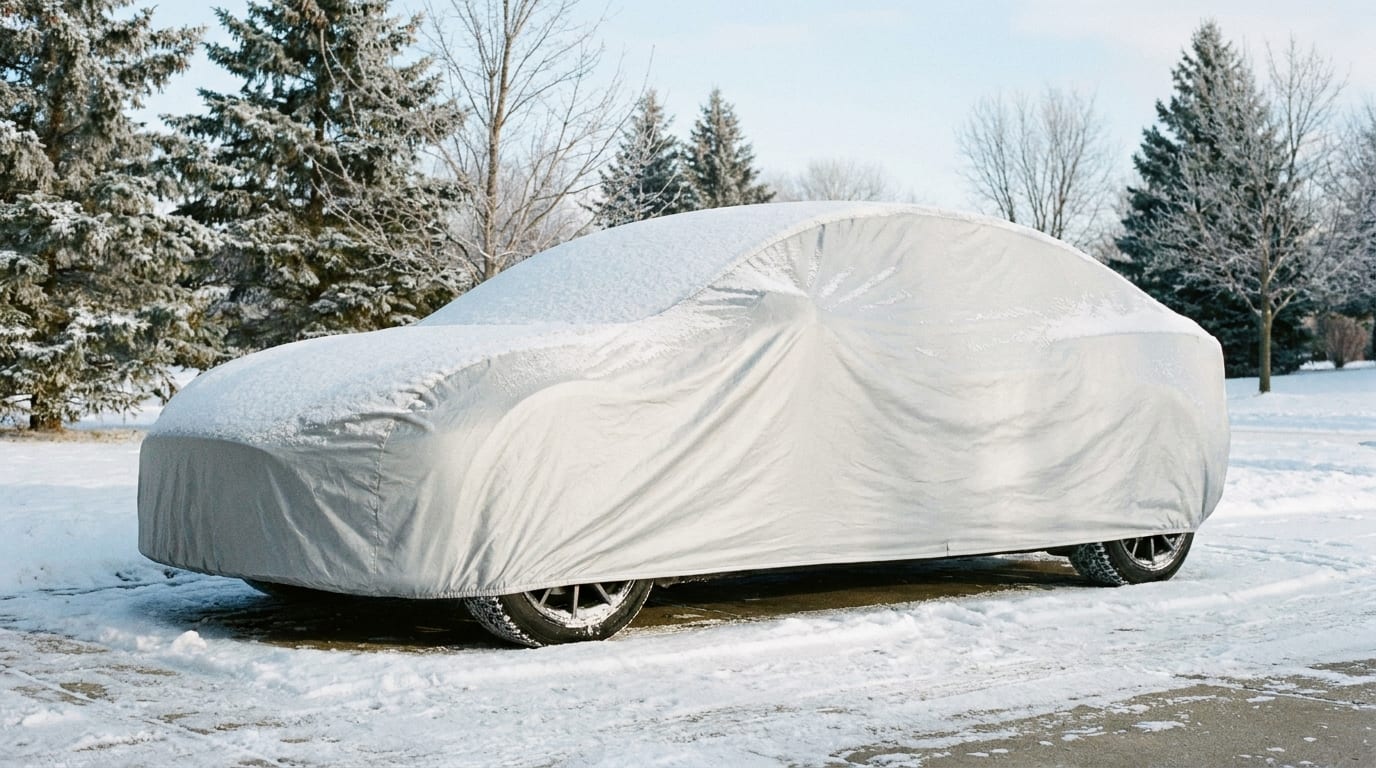
It's worth being specific about what you're actually protecting against, because "it's cold out" undersells it.
Snow accumulation on a sedan's roof and hood adds real weight, and it doesn't melt cleanly. It freezes, thaws a little during the day, then refreezes overnight. That freeze-thaw cycle bonds ice directly to paint and trim, which is a much bigger problem than snow sitting on top of a cover.
Then there's the scraping. Every time you chip ice straight off an uncovered windshield or hood, you're dragging a hard edge across the surface. Do that for a full winter and you'll see micro-scratches and clear coat wear that wasn't there in November.
Road salt and brine are the other half of the equation. Minnesota plows run constantly once the snow starts, and that brine spray coats everything nearby, including parked cars. Left to sit, it corrodes paint, trim, and wheel wells over time, slowly and quietly, which is worse because you don't notice until it's already done damage.
And wind-driven snow doesn't just fall, it drifts. It piles up against the side of the car and pools under wiper blades and mirrors where there's no barrier to stop it. An uncovered sedan takes all of this directly.
Key Features to Look For in a Snow-Ready Sedan Cover
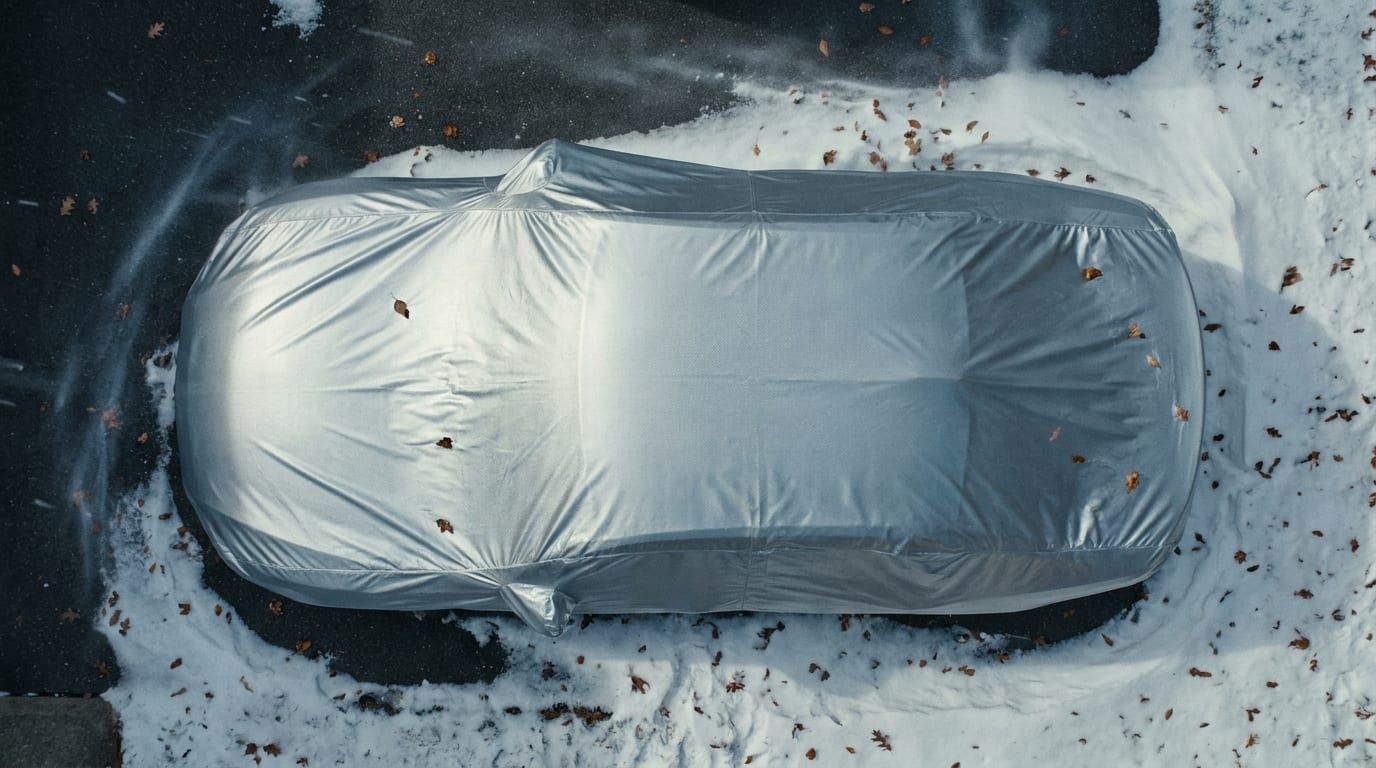
A handful of features separate a cover that survives winter from one that gets replaced in February.
- Multi-layer waterproof, breathable fabric. It needs to shed snow and moisture on the outside while still letting trapped condensation escape from underneath. A cover that seals too tight just traps moisture against your paint, which defeats the purpose.
- A rated snow-load capacity. Not every cover is built to hold weight. Check that it's actually rated for heavy overnight snowfall, not just marketed as "all-weather."
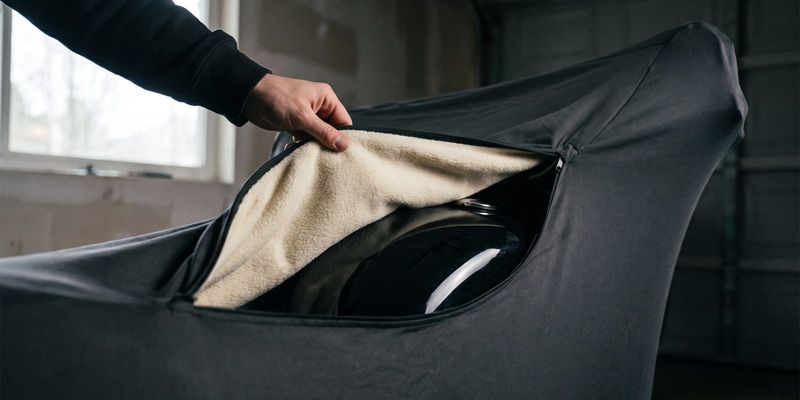
- Soft inner lining at contact points. The hood, roof, and windshield are where ice forms and where scratching happens. A soft lining there matters more than lining anywhere else on the cover.
- Elastic hem, grommets, and a cable lock or gust strap system. Wind off open Minnesota terrain will lift or shift a cover that isn't actually secured, not just draped on.
- True custom fit for your exact sedan model. Not "mid-size sedan," your specific make and model. Gaps are where snow and wind get in.
If you want a deeper breakdown of fabric types and what "waterproof" actually means on a spec sheet, our guide to waterproof fabrics and which material car cover is best covers that in more detail.
Custom-Fit vs. Universal Covers in Snow Country
Here's the thing about universal covers: they're built to loosely fit a size range, not your car. That slack is exactly what wind grabs onto. A loose cover flaps, and flapping in 25 mph wind for hours at a time wears through fabric at the friction points fast. Loose edges also give snow somewhere to drift underneath, which brings you right back to the ice-on-paint problem a cover is supposed to prevent.
A custom-fit cover follows your sedan's actual body lines, mirrors, antenna, spoiler if it has one, so there's no gap for snow or wind to exploit. Take two of the most common sedans on Minnesota roads: a Toyota Camry and a Honda Accord. They're similar in overall size, but their mirror placement, roofline, and trunk profile are different enough that a generic "sedan size" cover will sit loosely on one or both. A cover built to the exact model hugs the body instead of ballooning around it.
This matters for more than aesthetics. A properly fitted cover keeps the cable lock or gust strap system tensioned the way it's supposed to be. A strap on a cover that's too loose or too tight doesn't hold the same way, and in high wind, that difference is what determines whether the cover is still on your car in the morning. If you're not sure what size or fit you actually need, this sizing guide walks through how to check.
Installing and Maintaining Your Cover Through a Minnesota Winter
Getting the cover on right matters as much as buying the right one.
Before a storm hits, secure the gust strap and cable lock properly, not loosely looped and called good. A cover that's secured correctly won't work itself loose overnight even in sustained wind. If you've never installed one of these systems before, it's worth reading through how to install a gust strap and how to install a cable lock before the first real snowfall, not during it.
Don't let snow fully accumulate and compress against the fabric for days at a time. Brush off heavy buildup periodically. It's a two-minute job and it keeps weight off the material and the straps.
During thaws, rinse accumulated road salt and brine off the cover itself. It sits on the surface the same way it sits on your car, and over a winter it'll degrade the fabric if you never wash it off. Between heavy-use stretches, a proper cleaning keeps the waterproof coating doing its job instead of breaking down. Our guide on how to clean a car cover covers the right technique, and the broader guide to using a car cover outdoors is worth a read if this is your first winter relying on one.
Bottom Line: Protecting Your Sedan Through a Minnesota Winter
So, what's the best car cover for a sedan in a snowy climate like Minnesota? A custom-fit, waterproof, multi-layer cover with a soft interior lining and a wind or snow-rated strap or cable lock system. Everything else is a compromise on one of those fronts.
Fit and wind security aren't optional extras here, they matter just as much as waterproofing once you're dealing with wet, heavy snow and open wind. Skimp on either one and you'll be re-securing or replacing the cover by January.
If you're ready to find the right one, browse car covers by vehicle to see your sedan's exact custom-fit option, and look for one backed by a solid warranty so you're not second-guessing the purchase come March.