
What's the Best Car Cover for an SUV in a Coastal Area With Salty Air?
Published
The Quick Answer
The best car cover for an SUV in a coastal area with salty air is a custom-fit, waterproof-breathable cover with a UV-stabilized outer shell and corrosion-resistant grommets, buckles, and straps. Anything less, and salt spray finds its way under the fabric or starts eating at the hardware within a season. If you're asking what's the best car cover for an SUV in a coastal area with salty air, fit and hardware matter just as much as the fabric itself.
Generic, one-size-fits-many covers are the usual failure point. A loose universal cover leaves gaps at the wheel wells and mirrors where wind-driven salt mist gets pushed underneath, and the cheap metal hardware on a lot of budget covers starts rusting within weeks of coastal exposure. Once that happens, you've got a rusty buckle sitting against your paint, which defeats the entire purpose of covering the car.
Here's how the main cover types stack up for coastal SUV use:
| Cover Type | Salt/Moisture Protection | UV Resistance | Fit Precision | Hardware Durability | Best Use Case |
|---|---|---|---|---|---|
| Custom-fit waterproof/UV cover | Excellent | Excellent | Excellent | Excellent (corrosion-resistant) | Daily coastal/outdoor parking |
| Universal all-weather cover | Fair | Good | Poor | Fair | Short-term or budget backup |
| Basic single-layer cover | Poor | Poor | Poor | Poor | Dry-climate, occasional use only |
| Indoor-only cover | Not suitable outdoors | Not applicable | Good | Not applicable | Garage storage, dust only |
A custom-fit car cover built specifically around your SUV's body lines is the one option on that table that checks every box for a coastal environment.
Why Salty Coastal Air Is Uniquely Hard on an SUV's Finish
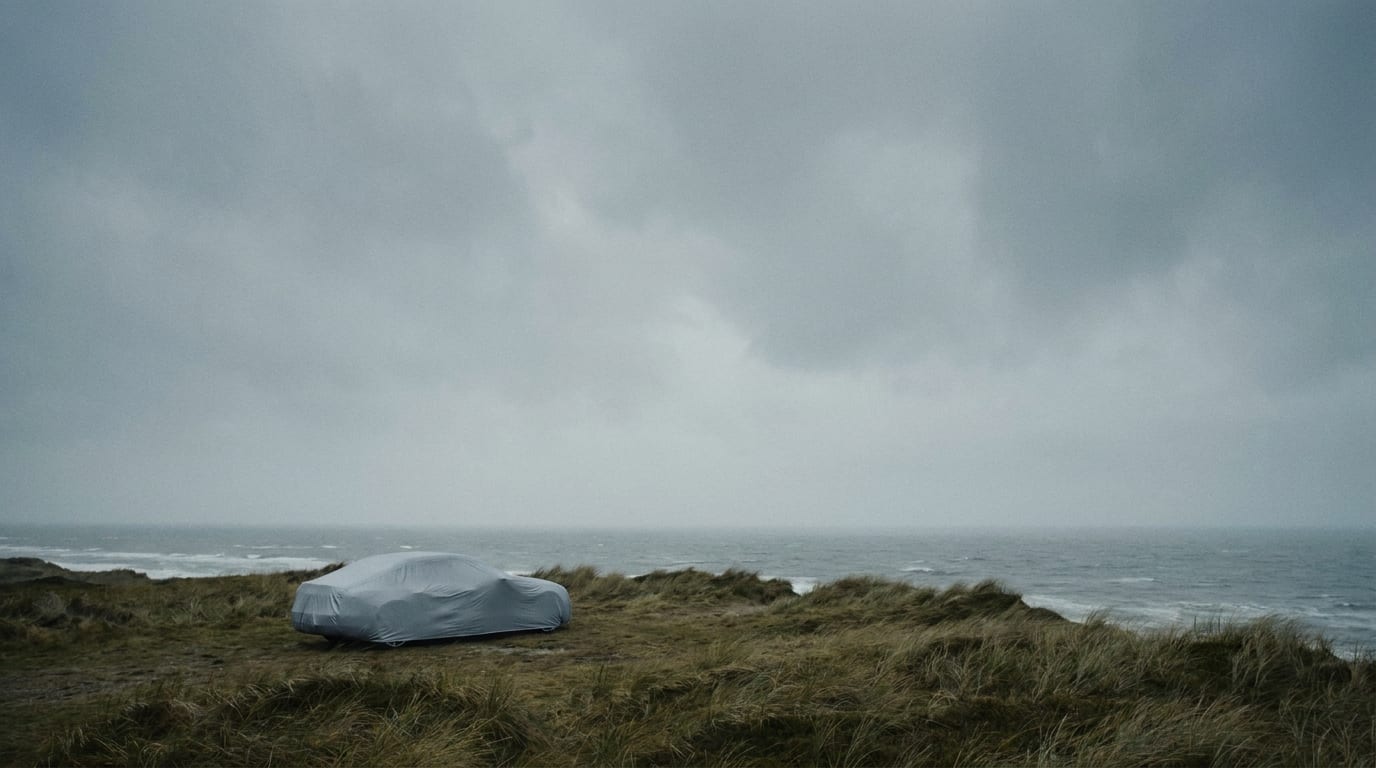
Salt in the air isn't just a nuisance, it's a slow chemical attack. Airborne salt particles settle on exposed metal trim, mirror housings, roof rails, and exhaust tips, and they speed up oxidation in a way inland climates just don't produce. A truck parked three miles from the beach ages differently than one parked three hundred miles inland, even with identical mileage and care.
Humidity makes it worse. Salt is hygroscopic, meaning it pulls moisture out of the air and holds it against whatever surface it's sitting on. Park your SUV under a cheap, non-breathable cover and you've basically built a tiny greenhouse for mold and mildew to grow in, right against your clear coat. That trapped moisture problem is exactly why breathability matters as much as waterproofing.
Sun is the other half of the equation. Coastal UV exposure tends to run hotter than you'd expect, because sunlight reflects off open water and sand and effectively doubles up on the car. Cheap cover fabric breaks down fast under that kind of exposure, going brittle and chalky within a year or two, and the SUV's paint underneath fades right along with it.
Then there's wind. Coastal gusts are more frequent and more sustained than what most inland drivers deal with. A cover that doesn't fit snugly will flap, and that flapping motion grinds whatever grit and salt crystals have settled on the surface straight into the clear coat. It's a slow-motion sanding job you don't notice until the swirl marks show up.
Must-Have Features for a Coastal SUV Cover

This is where most of the decision actually gets made. A few non-negotiables if you're parking anywhere near saltwater:
- Multi-layer waterproof-but-breathable fabric. You want rain and salt spray kept out, but trapped moisture still needs a way to escape. A fully sealed, plastic-feeling cover looks protective but traps condensation, which is worse than no cover at all in humid coastal air.
- UV-stabilized outer layer. This is the difference between a cover that lasts five years and one that's cracking after one summer of direct coastal sun.
- Soft, non-abrasive inner lining. Salt crystals and sand grit settle into cover fabric just like they settle on the car. A rough inner lining turns that grit into fine sandpaper every time the wind moves the cover.
- Reinforced grommets and a gust strap system. Coastal wind is a daily reality, not an occasional storm event. A cover that can't be properly anchored is going to shift, chafe, and eventually fly loose.
- Mirror pockets and antenna patch cutouts sized correctly. Gaps around these features are a direct entry point for salt-laden wind. An ill-fitting cutout defeats a lot of the protection the rest of the cover is providing.
For the full rundown on why waterproofing and breathability aren't the same thing, the guide to using a car cover outdoors covers it in more depth, and it's worth reading before you buy anything. If you just want to confirm what waterproof actually means in cover construction, the breakdown on waterproof car covers is a good starting point too.
Custom-Fit vs. Universal Covers for Coastal SUVs
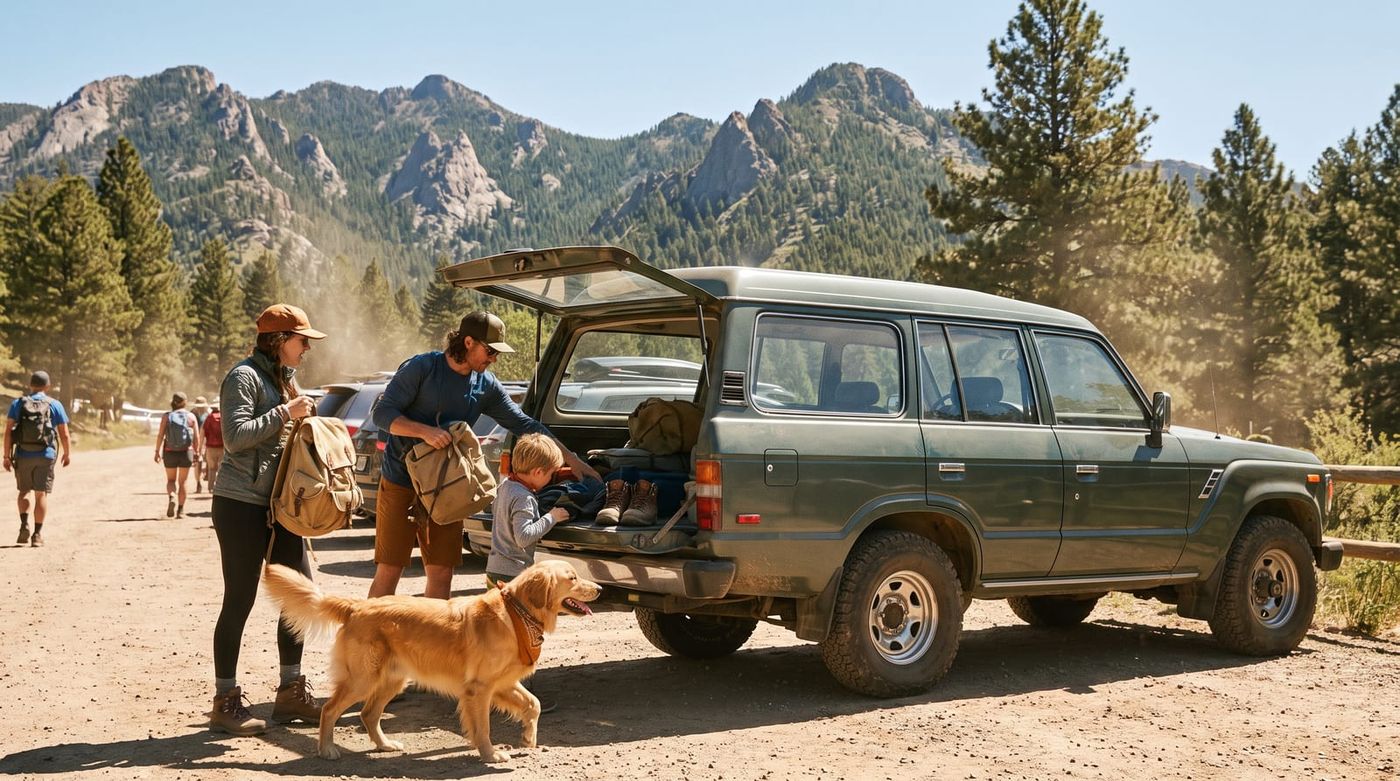
Fit is the feature that does the most work here, honestly more than fabric choice. A custom-fit cover follows your SUV's actual body lines, which closes off the gaps where wind-driven salt spray likes to sneak in. It also means less loose fabric to flap around in a gust, which directly cuts down on the grinding, paint-wearing motion that loose covers cause over time.
Universal covers are cheaper, and that's basically the entire argument for them. Their looser, generic shape leaves more surface area exposed to wind lift, and that matters a lot more on a coastal property than it does for a car parked in a dry inland garage three nights a week. A universal cover might be fine as a short-term stopgap, or for a vehicle that only sits outside occasionally. As a daily setup near the ocean, it's going to show wear faster and protect less while it does it.
My take: if you're within a few miles of saltwater, custom-fit isn't a luxury upgrade, it's the baseline. Universal covers make more sense as a backup you keep in the garage for the rare week your main cover is being cleaned or repaired, not as the primary line of defense.
This matters even more for SUVs with roof racks, running boards, or oversized mirrors, which describes a lot of the vehicles people actually drive at the coast. A Jeep with a roof rack and a Toyota 4Runner with running boards both have more surface detail for a generic cover to fight against. A custom-fit profile is built around those features instead of draping over them and leaving gaps. If you're not sure your current cover is actually sized right, it's worth double-checking against what size car cover fits your vehicle before you assume a universal fit is good enough.
Keeping a Coastal Cover in Good Shape Over Time
Even a good cover needs upkeep near the ocean. Salt doesn't just sit on your SUV, it builds up in the cover fabric too, and left alone it'll start degrading the material and corroding the hardware from the outside in. Rinsing the cover itself with fresh water every couple of weeks, more often after a windy or stormy stretch, keeps that buildup from becoming a long-term problem. The guide to cleaning a car cover walks through how to do this without damaging the waterproof coating.
Watch for the early warning signs. Fabric that's gone stiff or brittle, rust streaks bleeding out from the grommets, or a musty mildew smell when you pull the cover off are all signs it's starting to lose the fight against salt air. None of those show up overnight, but they do show up faster at the coast than anywhere else.
After any high-wind day or a storm, do a quick walk-around. Check that the straps are still tensioned and the cover hasn't shifted or started riding up at a corner. It takes two minutes and it catches small problems before they become a cover that's flapped loose overnight and scratched the paint. If you haven't set up a proper gust strap system yet, the guide to installing gust straps is worth the twenty minutes it takes.
Indoor storage helps, but it's not a substitute. Most coastal homeowners don't have garage space for every vehicle, and even an indoor cover doesn't solve the problem on the days the SUV has to sit outside. Think of indoor storage as a supplement for the nights you have the space, not the main plan.
Finding the Right Cover for Your SUV
The formula doesn't change much once you've seen what coastal conditions actually do to a vehicle: custom-fit, waterproof-breathable, UV-stabilized fabric, with hardware that won't rust out on you. That combination is what answers the question of what's the best car cover for an SUV in a coastal area with salty air, and skipping any one piece of it just means replacing the cover sooner than you'd like.
Before you buy, confirm the exact year, make, and model of your SUV rather than guessing at a size. The cover finder tool and the custom-fit car cover options are built around that kind of precision, not generic sizing bands. And since coastal conditions are genuinely harder on materials than most climates, a cover backed by a real warranty is worth the extra confidence.
If you're still narrowing things down, it's worth browsing the full range of SUV covers to see what fits your specific setup, and keep an eye on our articles for more care tips as the seasons change.






