

Park a Challenger in a shared lot for a summer and you'll see the damage math play out in real time: sun-baked clear coat on that long hood, pollen caked into the spoiler, a door ding from the car two spaces over. The Challenger's low stance and long body give it more exposed surface area than most sedans, and that means more to protect. If you're hunting for an affordable car cover for Dodge Challenger ownership that actually holds up, you're already ahead of most buyers who just grab whatever's cheapest on the shelf.
Here's the distinction worth making up front: affordable and cheapest aren't the same thing. A $15 generic cover from a big-box store might save you money today, but if it tears in six weeks or lets rain soak through and streak your paint, you're buying a replacement, maybe paying for a detail job, and starting over. Over two years, that "cheap" cover often costs more than a mid-tier option that was built to last.
This guide breaks down what genuinely affordable looks like at each price tier, what minimum quality bar you shouldn't go below no matter your budget, and why where your Challenger actually lives (garage, driveway, street) should drive your decision more than which brand name is on the box.
What 'Affordable' Should Still Include: A Minimum Quality Bar
Budget doesn't mean bare minimum. Even the cheapest cover you consider should have a UV-resistant outer layer, some degree of water resistance, an elastic hem or hem cord to keep it snug, and a soft inner lining. That last one matters especially on darker Challengers, where a rough-textured inner layer will leave swirl marks that show up under any direct light.
Single-layer polypropylene with no reinforced stitching at the mirror pockets or around the rear spoiler is a common way cheap covers cut costs, and it's usually the first thing to go. Those stress points take the most friction and wind load, and unreinforced seams there tend to rip within a single season.
Grommets, or a built-in cable and strap system, are another cheap-to-add feature that pays off disproportionately. The Challenger's rear wing on R/T and SRT trims gives wind more to grab, and a cover without a way to cinch down will flap itself loose, or worse, flap itself into scratches.
One more quality signal that costs you nothing to check: warranty length. A cover backed by a real warranty, even an entry-level one, tells you the manufacturer expects it to hold up. If there's no warranty mentioned anywhere, that's worth noticing. CarCovers backs its covers with a lifetime warranty, which is the kind of signal to look for regardless of where you end up buying.
Price Ranges for Dodge Challenger Covers: What You Get at Each Level
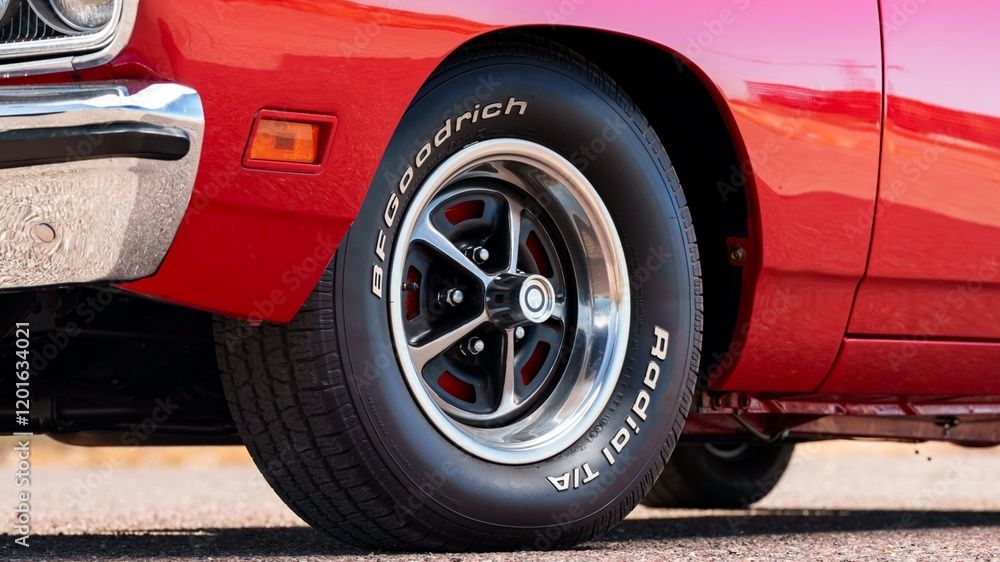
Pricing for an affordable car cover for Dodge Challenger shoppers tends to break into three rough bands.
Entry tier, roughly $30 to $60. Lightweight, indoor or dust-protection only. Fine if your Challenger lives in a garage and just needs a layer against dust and the occasional scratch from a stray tool. Minimal weatherproofing, so don't expect it to handle rain or real UV exposure.
Mid tier, roughly $60 to $120. This is the sweet spot for most Challengers parked outside day to day. You get actual outdoor-rated water resistance, UV blocking that holds up over a full summer, and noticeably better stitching and elastic hems. If your car sleeps in a driveway or a shared lot, this is where to start looking.
Upper-affordable tier, $120 to $200. Heavier multi-layer fabric, improved wind strap systems, and sometimes semi-custom sizing that accounts for the difference between the Challenger coupe and the convertible body style. Still budget-friendly compared to true custom covers, but built for harsher daily exposure.
Match the tier to how the car is actually stored, not to what feels like a safe middle choice. A Challenger that's garaged 90 percent of the time doesn't need the same spec as one parked under a tree dropping sap, or near the coast dealing with salt air. Spend where the exposure actually is. You can browse the full range of outdoor car covers to see how outdoor-rated options differ from the indoor-only end of the spectrum.
Custom-Fit vs. Universal: Does Challenger's Body Style Change the Math?
The Challenger's long wheelbase and wide stance make it a tough fit for generic "large sedan" universal covers. Those tend to leave gaps at the front and rear bumpers, which is exactly where wind gets underneath and starts the flapping that leads to swirl marks.
A properly sized cover, whether fully custom or semi-custom, keeps the fabric tight against the body instead of billowing in a parking lot breeze. Flapping fabric is one of the single biggest causes of surface wear on affordable covers, more than UV exposure in a lot of cases, because it's constant micro-abrasion every time the wind picks up.
Rule of thumb: if your budget allows even $20 to $30 more for a Challenger-specific or semi-custom fit over a generic universal cover, take it. The reduced wear usually pays that difference back within a season. Before you buy anything, check sizing against your exact trim and year using a resource like what size car cover fits your vehicle, or look at custom-fit car covers built specifically around body styles like the Challenger's.
Where Rock-Bottom Covers Cut Corners (And Why It Costs You More Later)

Rock-bottom covers almost always cut corners in the same few places. Non-breathable plastic sheeting is the big one: it traps condensation underneath, and that moisture sits against your paint overnight, which is how mold and mildew spots show up on a car that's supposedly being protected.
Then there's what you might call the tarp trap. A blue poly tarp or a shrink-wrap style cover is not the same product category as a fitted car cover, even though it looks like cheap protection at a glance. Rigid material with no soft lining will scratch paint on contact, especially in wind, and it's not designed to flex with the body panels the way a real cover is. If you're tempted by a tarp as a stopgap, it's worth reading why a tarp isn't a substitute for a car cover before you commit.
Thin seams are the other predictable failure point. Mirror pockets and the area around the rear spoiler take the most stress, and that's where cheap stitching gives out first, usually within a few months of regular use.
Do the cost math on this honestly. Replace a $15 cover three times in a year (which is a realistic failure rate for the bottom-shelf stuff) and you've spent $45, plus your time, plus whatever paint damage happened in between. One $70 mid-tier cover that lasts multiple seasons is the cheaper option, even though it has the higher price tag on day one.
Picking the Right Material Without Overpaying
Three materials dominate the affordable end of the market. Polypropylene is the lightest and cheapest, but also the least durable, especially outdoors. Polyester blends strike a better balance of cost and weather resistance, which is why they show up in most mid-tier covers. Multi-layer laminates cost more but hold up best in harsh climates, with better water resistance and more structure against wind.
If your Challenger only ever sees indoor storage, you don't need to pay for UV and rain protection you'll never use. A lighter, cheaper material is the right call there, not a downgrade.
Climate matters more than sticker price in humid or coastal regions. A cheap, non-breathable cover traps moisture against the paint, and that's worse than no cover at all in a lot of cases. Prioritize breathability over the absolute lowest price if you're dealing with regular humidity or salt air. For a fuller breakdown of how these materials actually perform side by side, this material comparison is worth a read before you check out.
Make a Budget Cover Last Longer With Basic Care
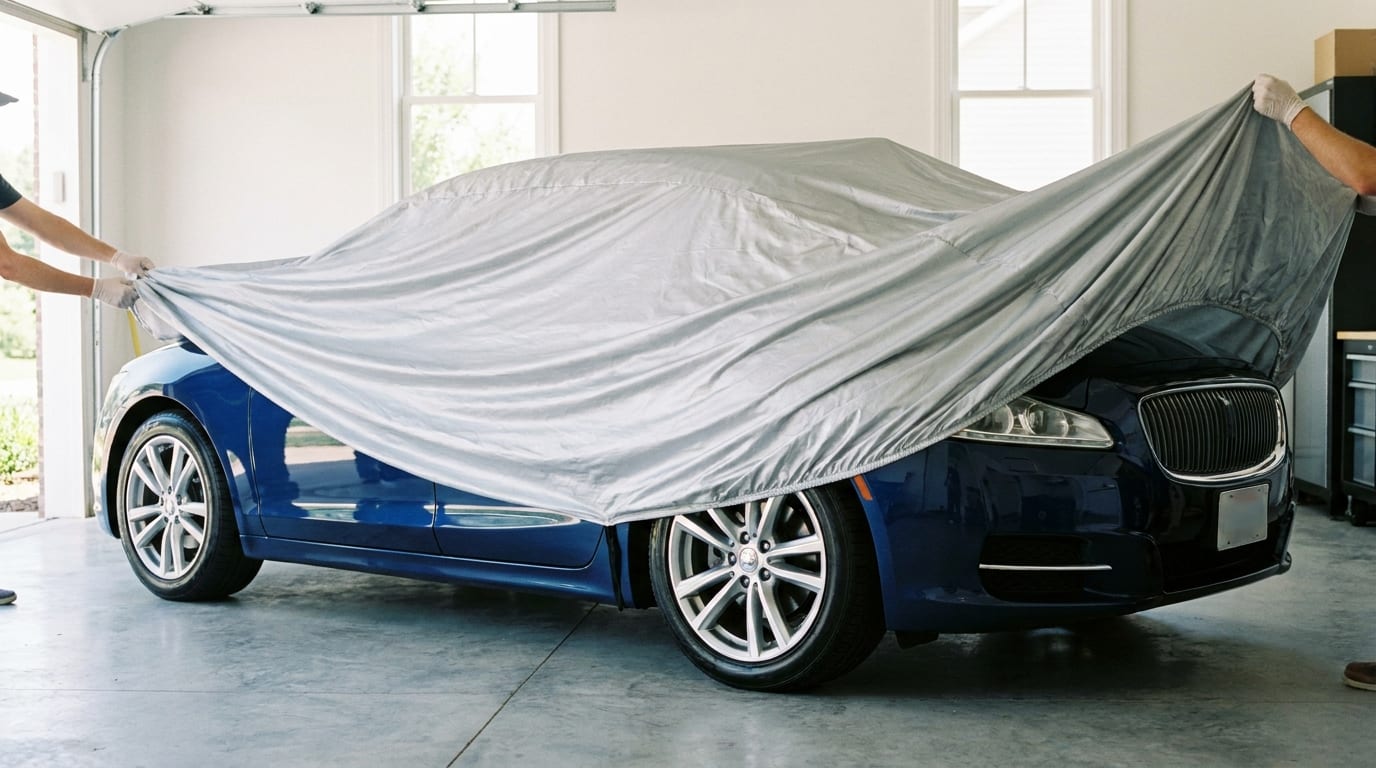
Most of a budget cover's lifespan comes down to how it's treated, not what it cost. A $60 cover cared for properly will outlast a $100 cover that gets balled up wet in the trunk.
Shake off leaves, pollen, and loose debris before folding the cover away, and let it dry fully first. Folding a damp cover is the fastest route to mildew, and once mildew sets in, it's hard to fully get rid of.
Hand-wash with a mild soap rather than tossing it in the washing machine. Machine washing is rough on the water-resistant coatings that cheaper fabrics rely on, and you'll strip that protection faster than the fabric itself wears out. For the full process, how to clean a car cover covers it step by step.
And store it properly, in a storage bag, not crumpled into a corner of the trunk. Crumpling causes the fabric fatigue that ends most affordable covers' lives well before their time.
Finding the Right Affordable Cover for Your Challenger
The framework here is simple. Match the price tier to where and how your Challenger actually lives, don't go below the minimum quality bar no matter how good a deal looks, and treat sizing as seriously as material. A well-fitted mid-tier cover will outperform an ill-fitting expensive one almost every time.
Check the return and warranty policy before you buy, too. A bad fit or an early defect shouldn't be money you're just out. Looking for that kind of no-hassle policy is part of shopping smart, not overcautious.
If you want to see how these factors line up against actual options, browse covers built for Dodge models or start from car covers more broadly to compare what's out there. And if you're the type who likes to see what other owners rate highest before buying, the top-rated car covers page is a good next stop, with options backed by a no-hassle guarantee if it doesn't work out.
The goal was never the lowest sticker price today. It's the lowest total cost over the time you actually own the car.






