Affordable Car Cover for Subaru WRX: A Budget Buyer's Guide (Without Sacrificing Protection)
Published

Why WRX Owners Are Looking for a Budget-Friendly Cover
If you daily-drive a WRX, odds are it doesn't live in a climate-controlled garage. It sits on the street, in a shared driveway, or under a carport that only half does its job. You're not trying to show it at a meet, you just don't want bird droppings etching the clear coat or tree sap turning into a weekend project. So you go looking for an affordable car cover for your Subaru WRX, and that's a reasonable thing to want.
Here's the distinction that matters before you buy anything: affordable and cheap aren't the same word. A $20 tarp-style cover from a big box store can end up costing you a lot more than its price tag suggests, in the form of swirl marks from a rough inner lining, water pooling where it shouldn't, or a hem that lets wind rip the whole thing off mid-storm. A properly built cover in the $90 to $120 range usually protects better and lasts longer, which is the actual math you want to be doing.
This guide walks through what drives cover pricing, where the minimum quality bar sits, and how to shop smart without overspending on features you don't need.
What Actually Drives the Price of a Car Cover
Price differences between car covers aren't random. A few specific factors account for almost all of it.
Fit type is the big one. Universal and semi-custom covers are cut to fit a size range of vehicles loosely, so they're cheaper to produce and cheaper to buy. True custom-fit covers are patterned to a specific body, including the WRX's hood scoop and spoiler, and that precision costs more.
Material layering matters just as much. A single layer of thin polypropylene is the cheapest fabric you can buy a cover in, and it shows. Multi-layer woven fabrics with UV-resistant and water-resistant coatings cost more to manufacture, but they're doing actual work instead of just sitting there.
Hardware adds cost too, sometimes fairly. Grommets for cable locks, antenna patches, mirror pockets: these aren't gimmicks, they're solving real problems like theft and wind lift. A cover with none of this hardware will be cheaper, but you're trading away function for it.
Brand backing is worth factoring in. A cover with a real warranty or a no-hassle return policy tends to sit a bit higher in price than the no-name version, but that's often the price of not getting stuck with a dud.
And then there's indoor versus outdoor rating. Indoor dust covers are the cheapest tier on the market, full stop. They're built to keep dust off a car in a garage, not to survive rain, UV exposure, or wind. If your WRX lives outside, an indoor cover isn't a budget option, it's the wrong product.
The Minimum Quality Bar: What Not to Skimp On
Budget shopping doesn't mean buying whatever's cheapest. It means knowing exactly which specs you won't compromise on, then shopping within that floor.
Water resistance is the first one. Not a vague "waterproof" claim with nothing behind it, but a fabric that actually beads water and sheds it rather than soaking through on the first real rain. If a listing doesn't say anything concrete about how it handles water, assume it doesn't handle water well.
UV resistance matters just as much, maybe more if your WRX sits outside daily. Unprotected sun exposure fades and eventually cracks clear coat, especially on the hood and roof where the sun hits hardest and longest. A cover without UV-rated fabric is really just a dust cover with better marketing.
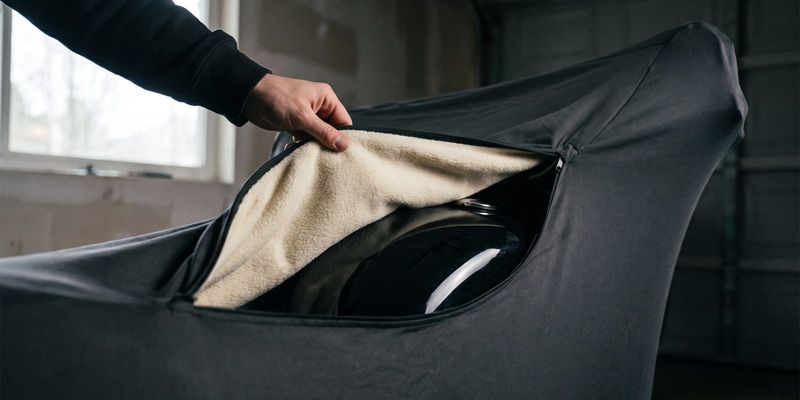
Then there's the inner lining. Contact points where the cover meets paint (the hood, the roof, around the spoiler) need a soft lining or fleece layer. Skip this and you're looking at micro-scratching building up over months of daily use, the kind of damage that doesn't show up until you're polishing it out later.
Reinforced seams and a snug elastic hem round out the list. Wind works at a cover's weak points all night long, and a loose hem is an invitation for it to work the whole cover loose by morning.
One practical signal worth checking: covers backed by a lifetime warranty tend to be built with the expectation that they'll actually need to last, not just priced low to move volume. That's a decent proxy for quality when you're comparing options you haven't seen in person.
Custom-Fit vs. Universal: Which Saves More Money Long-Term
This is where a lot of budget shoppers make the wrong call, not because they're being careless, but because upfront price is the easiest number to compare.
Universal covers are cheaper to buy. No argument there. But a universal cover draped over a WRX tends to fit loosely around the hood scoop and rear spoiler, two spots where excess fabric catches wind and flaps. That flapping isn't cosmetic, it's friction against paint every time the wind picks up, and it accelerates wear on the cover itself.
A custom-fit car cover costs more at checkout. But it sits snug against the WRX's actual body lines, so there's less fabric working loose and less abrasion over time. Run the math over two or three years and the custom-fit option is often the one that actually saved you money, because you're not replacing a worn-out universal cover every single season.
Before buying either type, it's worth confirming sizing rather than guessing off a generic chart. The guide to sizing a car cover correctly walks through how to measure, and checking the Subaru-specific fit options will get you closer to a cover built for your WRX's actual dimensions instead of a rough approximation.
Material Matters: Getting the Most Protection Per Dollar

Fabric is where most of the price-to-protection tradeoff lives, and it's worth understanding before you compare a $60 cover to a $110 one.
Basic polypropylene is the entry-level fabric. It's light, it's cheap, and it offers some protection from dust and light rain, but it tends to be thin enough that UV exposure and repeated folding wear it down fast. Polyester blends sit a step up, usually with better durability and water resistance baked in. Multi-layer laminate fabrics are the top tier: several layers bonded together, each doing a specific job (outer shell for water and UV, inner layer for softness against paint).
The jump in price between these tiers is real, but so is the jump in how long the cover actually survives outdoor use. For a deeper look at what waterproof claims on cover listings actually mean in practice, the breakdown of waterproof fabric types is worth a read before you buy. And if you're trying to compare material options side by side, this comparison of car cover materials lays out the tradeoffs more directly.
One thing budget shoppers often overlook: breathability matters as much as water resistance. A cover that blocks water perfectly but doesn't breathe traps moisture underneath it, against the paint, which defeats the purpose. The best affordable options balance both instead of maximizing one at the expense of the other.
Where an Outdoor-Parked WRX Needs Extra Protection
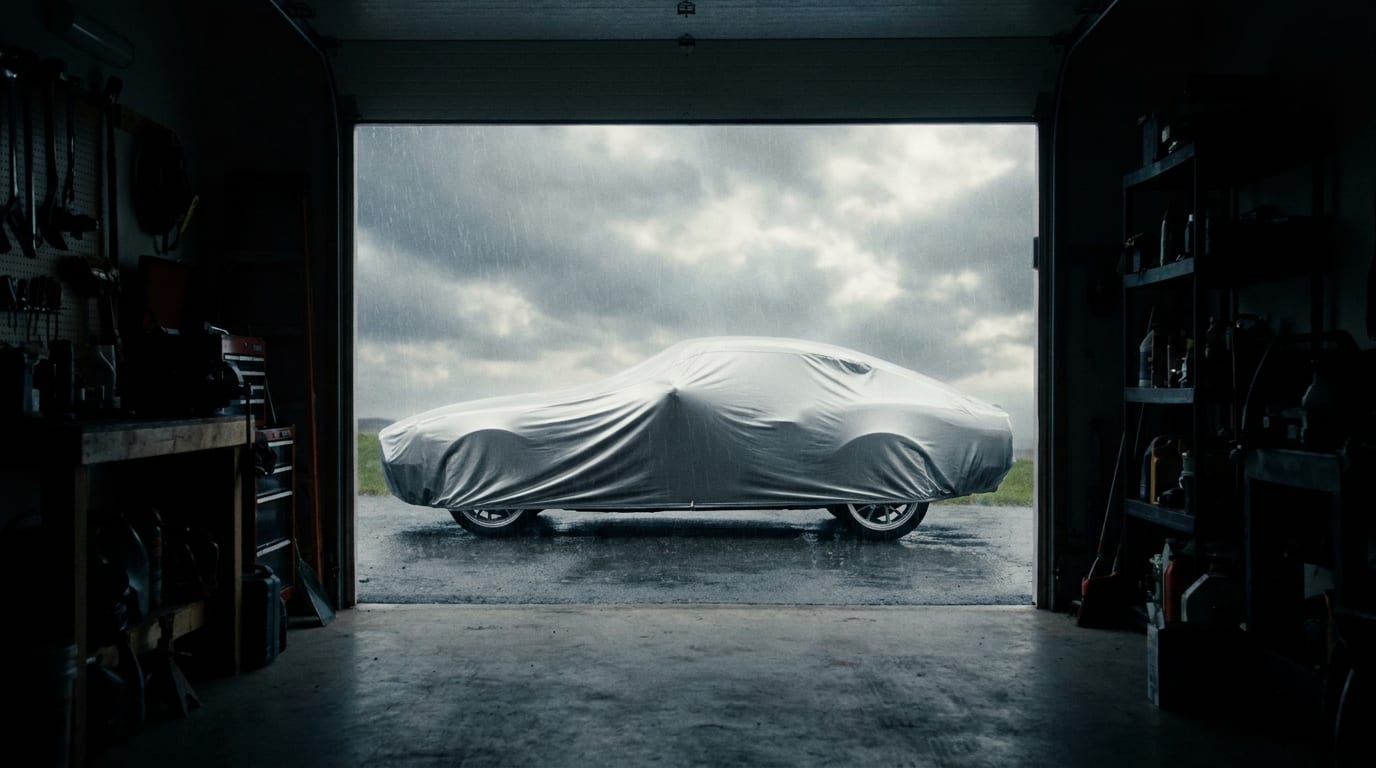
If your WRX spends its nights outside, the gap between an indoor dust cover and an outdoor-rated one is the single biggest decision in this whole buying process. It's a small price jump for a much bigger functional difference.
Outdoor covers are built to handle sun, rain, and wind in combination, not one at a time. The full spec rundown on outdoor car covers covers exactly what to look for here, including fabric weight and seam construction that indoor covers simply don't need.
Worth budgeting a little extra for accessories too. Gust straps and cable locks add a small cost but solve two of the most common complaints people have with budget covers: wind damage and theft. A cover that fits perfectly but has no way to cinch down in a storm is still going to end up in your neighbor's yard. The guide to installing gust straps is a quick add-on upgrade if you're in a windier climate, and it's cheap insurance against losing the cover entirely.
Keeping an Affordable Cover Lasting Longer
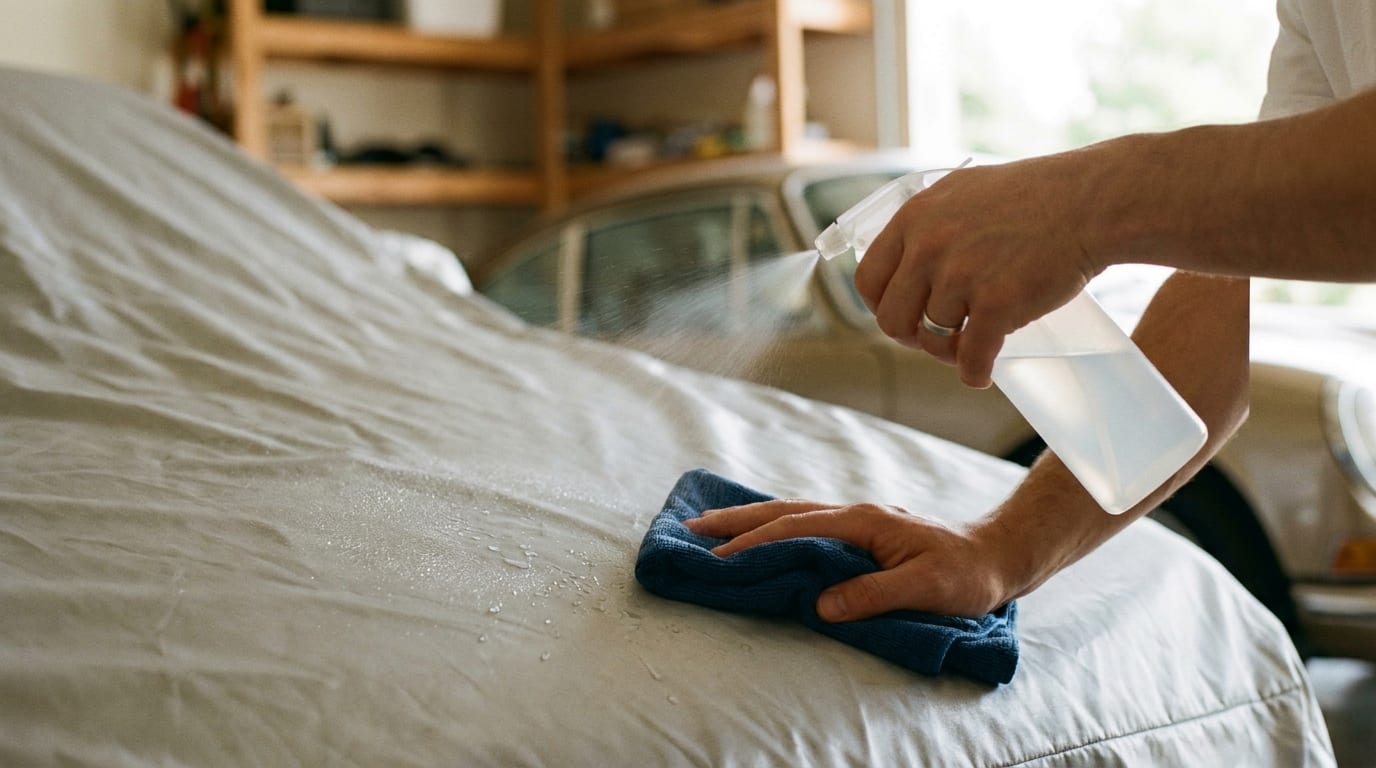
Even a solidly built budget cover won't last if it's not cared for. This is the part people skip, and it's also the part that costs nothing.
Mildew and fabric breakdown are usually a storage problem, not a materials problem. A cover that gets balled up wet and thrown in the trunk is going to degrade fast, no matter how good the fabric is. The steps for properly cleaning a car cover cover how to avoid that, and they're worth following even if cleaning feels like an extra chore.
Simple habit: fold it properly and store it somewhere dry between uses. Takes an extra thirty seconds, extends the life of the cover by a lot more than that.
Bottom Line: Buying Smart, Not Just Cheap
The minimum spec checklist is short: UV resistance, water resistance, a soft inner lining, reinforced seams, and a fit that actually matches your WRX's body lines. Hit all five and you've got a genuinely affordable car cover for your Subaru WRX, not just a cheap one that'll need replacing by next spring.
If you're not sure which option matches your exact model year, tools like Find Car Cover or the cover finder tool take the guesswork out of it. And if you want to see what's currently available within that quality bar, the car covers category page is worth a browse.
If you're still on the fence about committing to a first purchase, it's worth knowing most reputable sellers back their covers with some kind of no-hassle guarantee, so a wrong call isn't the end of the world. Worth checking before you buy, not after.