

The Short Answer: Best Car Cover for a Convertible in Florida's Humidity
Can you recommend a good car cover for a convertible parked in a humid climate like Florida? Yes: get a breathable, water-resistant multi-layer outdoor cover sized specifically to your convertible's soft-top profile. Not a fully sealed, plastic-style "waterproof" cover. Those trap moisture against vinyl or canvas, and trapped moisture is exactly what turns into mold and mildew under Florida's heat.
Here's the part people get backwards. A cover marketed as completely waterproof sounds like the safer bet, but in a humid state it often does more harm than good. It keeps rain out, sure, but it also seals in condensation and body heat from the sun-warmed car underneath. On a hardtop, that's just annoying. On a convertible top, it's a greenhouse for mildew spores.
For this exact situation, three specs matter more than anything else: breathable multi-layer woven fabric, UV-resistant treatment, and a soft, non-abrasive inner liner that won't scratch vinyl or canvas every time the wind shifts the cover around. If you're shopping, start in the outdoor car cover category and filter for your exact make and model rather than grabbing a generic one-size-fits-all option.
Quick Comparison: Top Cover Options for Humid, Coastal Climates
Not every outdoor cover is built the same, and for a convertible sitting outside in Florida, the differences actually matter. Here's how the main categories stack up.
| Cover Type | Breathability | Rain/Humidity Protection | UV Protection | Best Fit for Convertible Tops | Relative Price Tier |
|---|---|---|---|---|---|
| Economy/lightweight outdoor cover | Moderate | Decent for short-term exposure | Basic | Okay for occasional use, not daily storage | Low |
| Mid-weight breathable outdoor cover (recommended) | High | Water-resistant, handles daily afternoon storms | Strong UV-treated finish | Soft liner, good tension fit | Mid |
| Premium heavy-duty multi-layer outdoor cover | High | Maximum weather resistance plus storm/wind security | Maximum | Excellent, built for daily full-sun coastal parking | High |
| Indoor-only cover | High (irrelevant here) | None | None | Wrong choice entirely for outdoor storage | Low |
The mid-weight breathable outdoor cover is the sweet spot for most Florida convertible owners. It handles the near-daily rain without sealing in condensation, and it doesn't cost what the heavy-duty option does. If your car sits in direct coastal sun every single day with no garage access at all, the premium tier earns its price with extra wind and storm security. But skip the indoor cover entirely if your car lives outside, no matter how humid or dry your region is. It has zero UV or rain resistance built in, and it will fail fast in Florida conditions.
Why Humidity Is Uniquely Hard on Convertible Tops
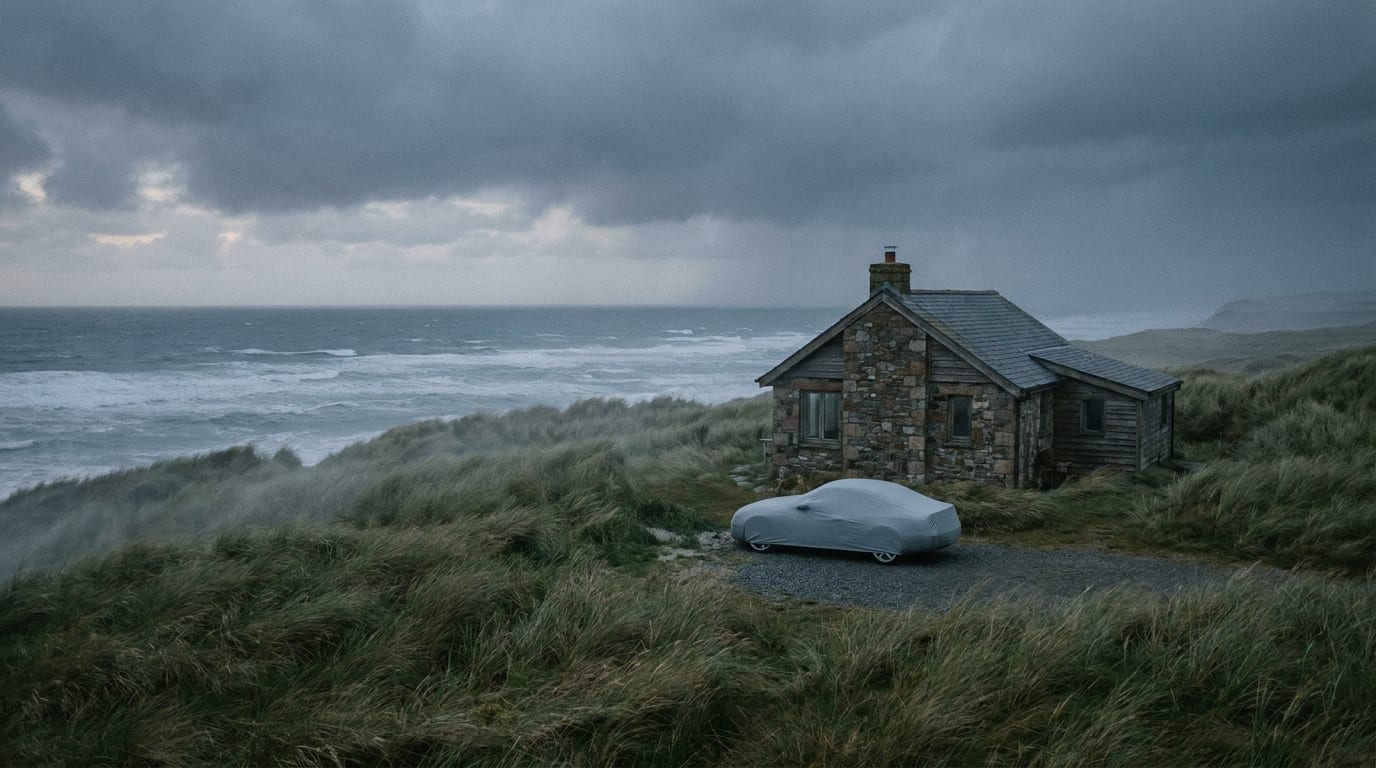
A hardtop's painted metal shrugs off moisture pretty well. A convertible's vinyl or canvas top doesn't get that luxury. Trapped moisture sits in the weave of the fabric or pools in the seams, and mold takes hold there faster than it ever would on steel.
Florida doesn't make this easy. Near-daily afternoon thunderstorms roll through, then the sun comes back out and the heat climbs right behind the humidity. Under a non-breathable cover, that's a wet-then-steam cycle repeating day after day, basically cooking the moisture into the fabric instead of letting it evaporate.
If you're anywhere near the coast, add salt air into the mix. Salt corrodes more than paint and chrome. It works on the top's seams and hardware, and it works just as hard on your cover's grommets and fasteners. A cheap metal grommet rusts, swells, and eventually tears the fabric around it.
Then there's the sun itself. Florida's UV exposure runs high basically year-round, not just in summer, and that breaks down convertible top material and lower-quality cover fabric at a faster clip than you'd see in a milder climate. If you want the deeper material breakdown on this, the piece on waterproof fabrics gets into how different weaves and coatings hold up over time.
Key Features to Look For in a Florida-Ready Cover
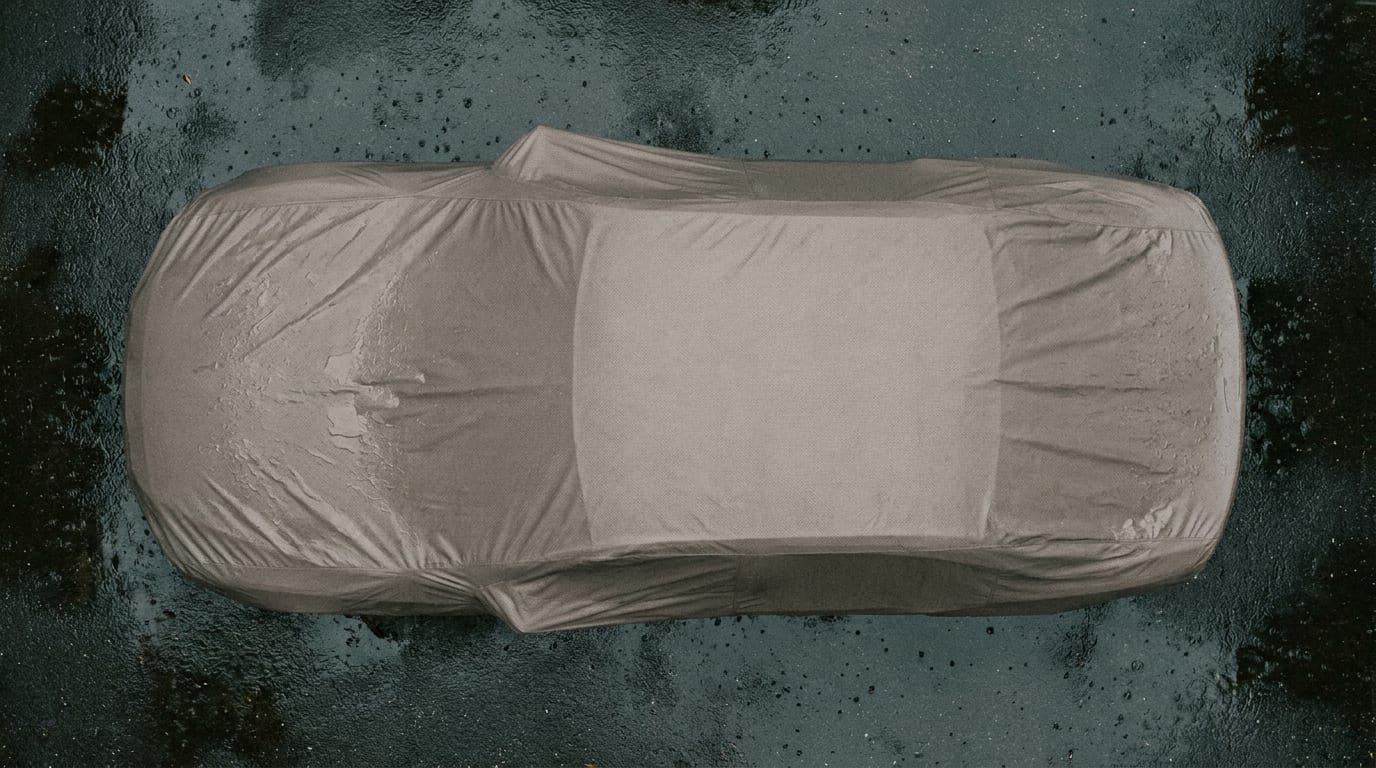
Start with the fabric construction. A good breathable cover uses a woven outer shell paired with a softer inner layer, built specifically to let moisture vapor escape instead of condensing against the paint or the top. That's the whole trick, really: not blocking water, but managing it.
This is where the water-resistant versus waterproof distinction actually matters. A fully waterproof coating seals the surface completely, which sounds great until you realize it also seals in whatever moisture gets trapped underneath from humidity or temperature swings. Water-resistant, breathable fabric sheds rain while still letting trapped vapor work its way out. In a climate like Arizona, waterproof might be fine. In Florida, it's the wrong tool. Our guide on waterproof car covers breaks down where each type actually makes sense.
UV treatment matters just as much. Look for a UV-blocking finish, and if you have a choice, lean toward a lighter cover color. Darker covers absorb more heat, and that heat builds up under the cover right on top of your convertible's roof.
Last, don't ignore the hardware. Reinforced grommets, elastic hems, and real tie-down points keep a cover anchored when a coastal wind gust kicks up out of nowhere, which in Florida is basically a daily possibility from spring through fall. A cover that flaps loose in the wind rubs against the top it's supposed to protect, so this isn't a minor detail.
Getting the Fit Right on a Convertible
A convertible's roofline is nothing like a sedan's or an SUV's. It's lower, it's curved differently, and a universal "fits most cars" cover almost always leaves loose fabric somewhere. That loose fabric pools water in low spots or rubs against the top every time the wind picks up, which over months of Florida storms wears a visible mark into vinyl.
The fix is sizing it properly before you buy. Use a vehicle size and fit tool to match the cover to your exact make and model rather than guessing off a generic small/medium/large chart.
Custom-fit covers are the more reliable call here, specifically because convertibles punish a loose fit more than other body styles do. A snug, custom-fit cover cuts down on flapping and abrasion, which in a humid, windy climate is the difference between a cover that protects your top and one that slowly damages it.
Care Habits That Prevent Mold and Mildew in Humid Climates
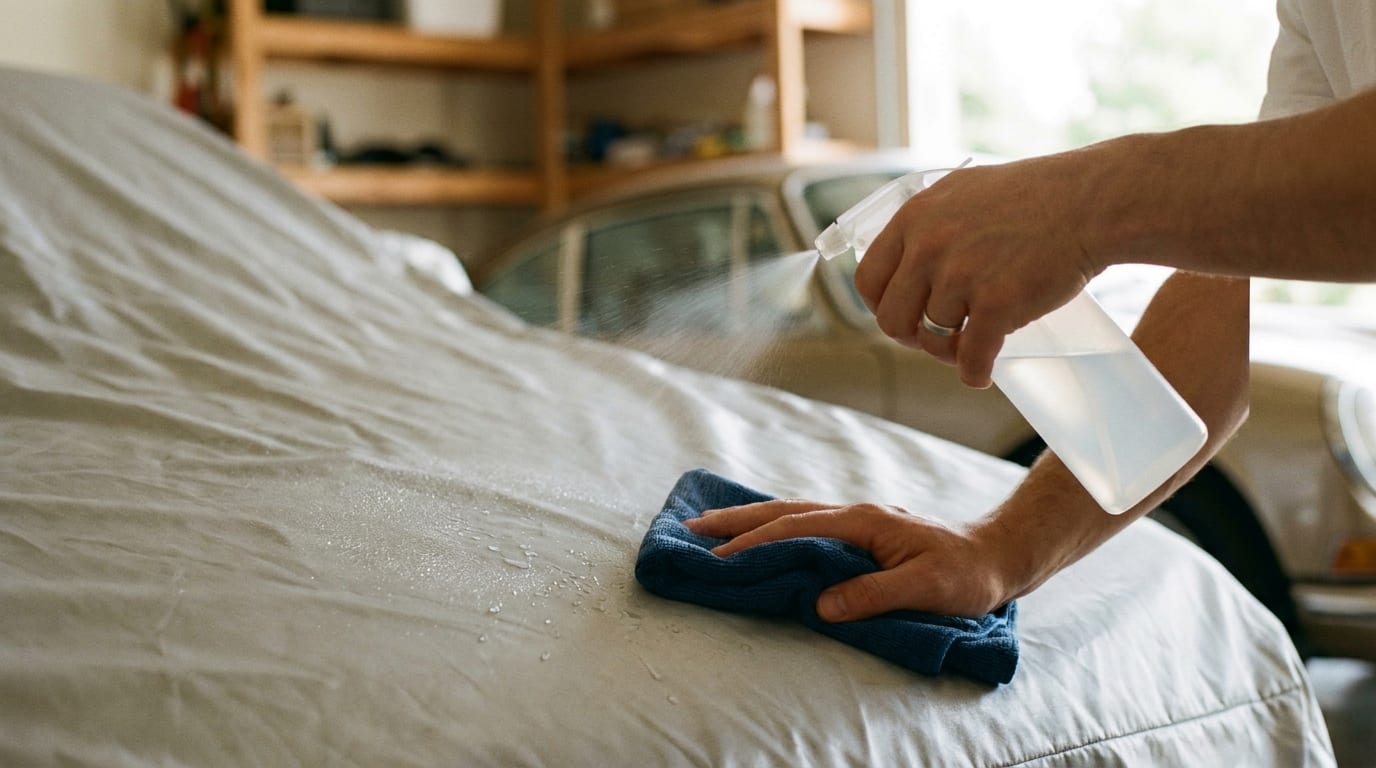
Even the right cover needs some basic upkeep in a climate like this. If your convertible lives outside full-time, pull the cover off periodically, daily if you can manage it, so both the top and the underside of the cover get a chance to fully air out. Letting moisture sit trapped for days in a row is how mildew gets a foothold even under a good cover.
The cover itself needs attention too. Rinse off salt residue and pollen buildup regularly, and let it fully air-dry before you fold it up and put it away. A damp cover folded into a bag is basically a mildew incubator. For the full process, the step-by-step cover cleaning guide walks through it in more detail, and our general cover care guide covers the maintenance side.
If you're the type who wants to understand the materials before buying, it's worth reading up on which material car cover is best for your specific situation, since fabric weave and treatment type directly affect how resistant a cover is to mildew over years of use, not just months.
One more thing worth doing before you check out: actually read what the warranty covers. UV fading, stitching failures, these are the things that show up first in a climate like Florida, and it's worth knowing upfront whether a cover's warranty actually addresses them.
Final Recommendation and Next Steps
So, can you recommend a good car cover for a convertible parked in a humid climate like Florida? The answer stays the same: a breathable, water-resistant, UV-treated outdoor cover with a soft inner liner, custom-fit to your specific convertible model. Skip the fully sealed "waterproof" options, skip universal sizing, and skip indoor-only covers entirely if the car lives outside.
Browse the full car cover lineup to find your vehicle and compare options by fit and material. And if Florida's heat is as much a concern for you as the humidity, our piece on keeping a car cool through summer heat is a natural next read.
If you're not sure which size or style fits your convertible, it's worth running it through a cover finder before you commit to anything. No pressure, just a faster way to land on the right fit for your climate and your car.






