

The Quick Answer: What to Buy
If you have a sedan and live in a rainy climate like Seattle, buy a 100% waterproof, custom-fit outdoor car cover with taped or sealed seams and a soft inner lining. Skip anything labeled "water-resistant" or "indoor use only," those won't hold up to weeks of steady Pacific Northwest drizzle. Get the fit right and the waterproofing right, and everything else about cover shopping gets a lot simpler.
Custom-fit matters more here than it would in, say, Phoenix. A loose universal cover might be fine where it barely rains, but in a wet climate those extra folds and gaps become entry points. Water pools in the slack fabric, finds a seam, and wicks through. A custom-fit car cover hugs the body of your sedan closely enough that there's nowhere for water to sit.
One thing people miss: waterproof doesn't mean sealed in plastic. A good cover still needs to breathe, because rain doesn't fall once and stop, it cycles, and condensation can build up underneath a cover that blocks water perfectly but traps moisture against the paint. That's the balance you're shopping for.
Why Rainy Climates Like Seattle Demand More From a Car Cover
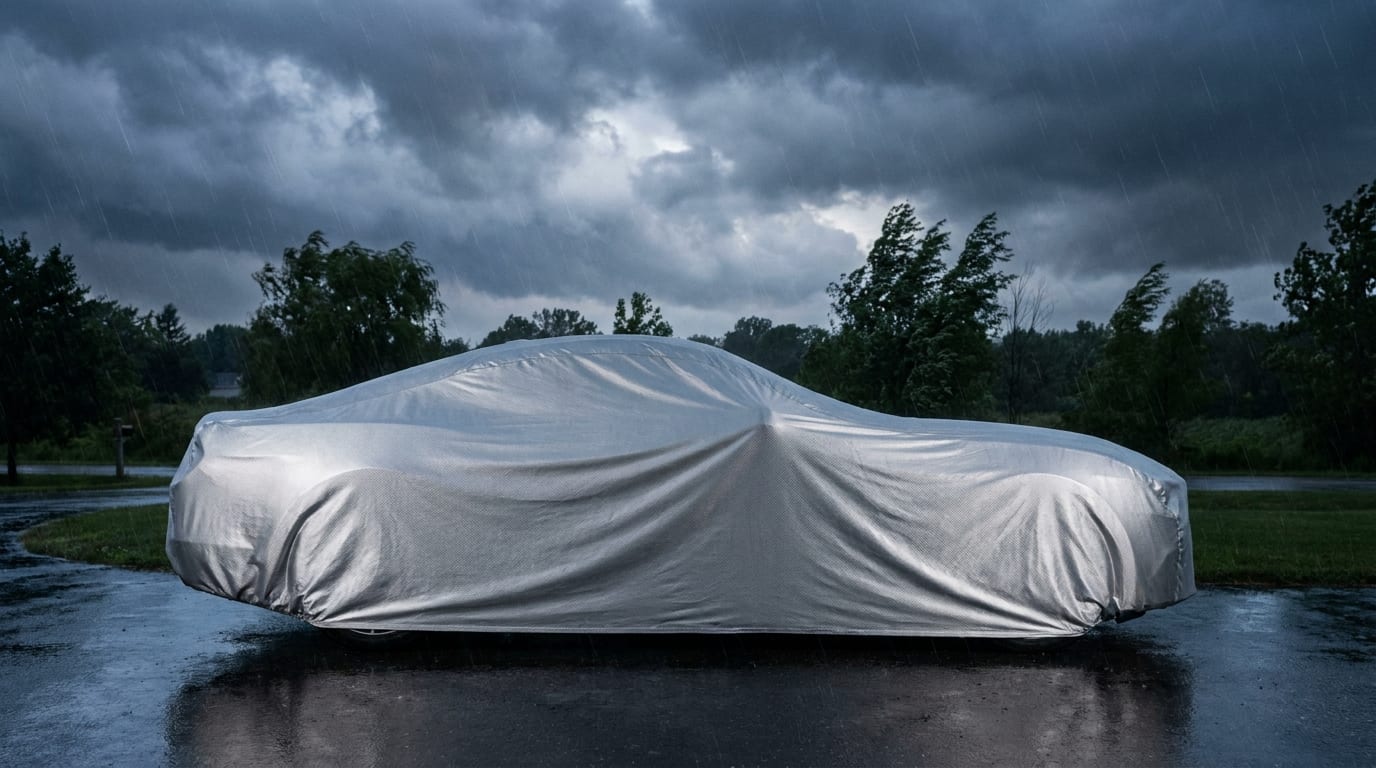
Seattle doesn't really give you a dry season so much as a less-wet season. That changes what a cover has to deal with. Near-constant moisture means fabric rarely gets a real chance to fully dry out between rain events, which is exactly the kind of environment mildew and mold love. Add in minimal sun exposure most months, and whatever dampness gets trapped under a cover just sits there.
Then there's the stuff that comes with the trees. Moss and algae build up fast on any surface that stays damp and shaded, and plenty of Seattle driveways and street parking spots sit under tree cover. Sap and bird droppings add to the pile. None of that is unique to rainy climates exactly, but the combination of rain, coastal humidity, and tree canopy is what makes the Pacific Northwest a tougher test than most regions.
Compare that to somewhere dry. In Phoenix or Denver, a basic water-resistant cover handles the occasional downpour just fine, because the sun comes out an hour later and dries everything off. That same cover in Seattle would stay damp for days, and damp fabric against your paint for days at a time is how you end up with water spots, mildew smell, and finish damage. This is really the core of the question "I have a sedan and live in a rainy climate like Seattle, what car cover should I buy": you need something built for sustained exposure, not occasional contact.
Waterproof vs. Water-Resistant vs. Indoor Covers: Quick Comparison
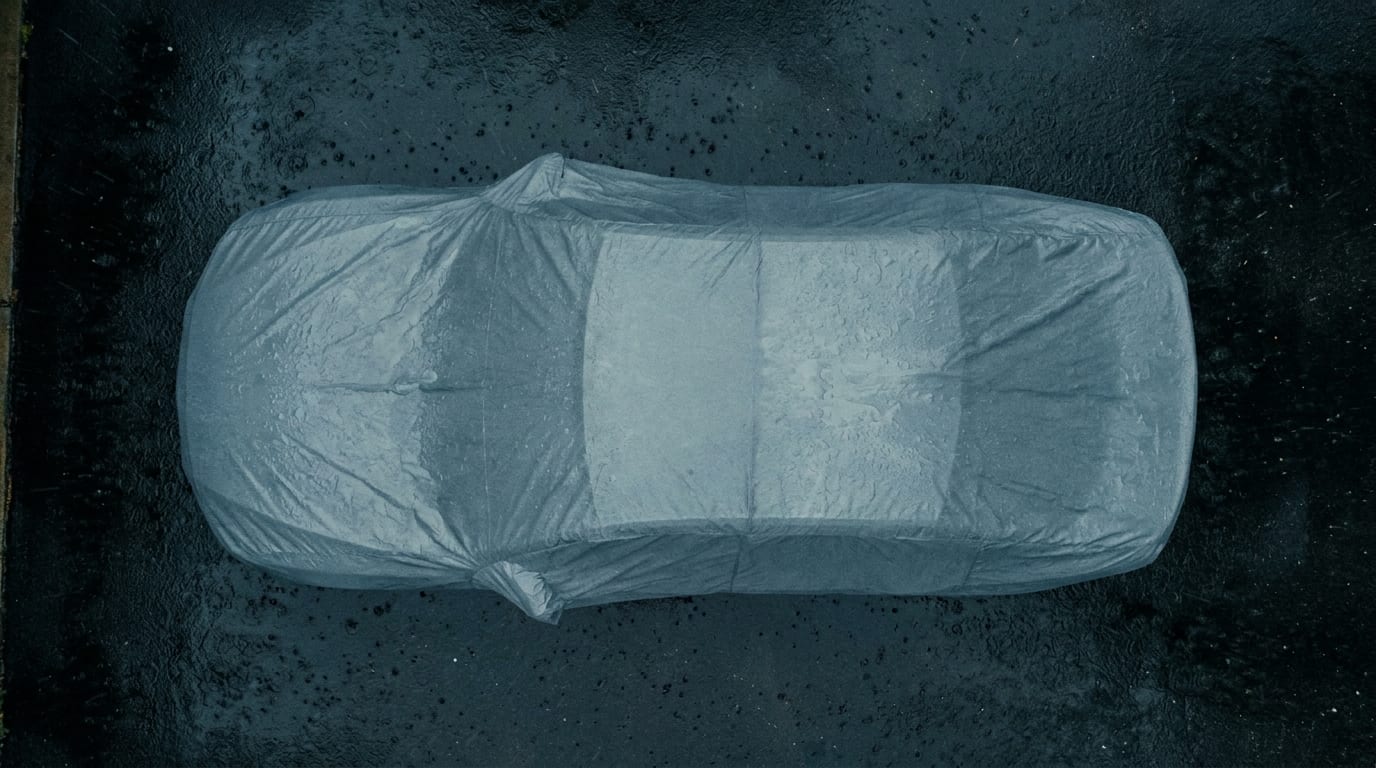
Not all covers labeled for "outdoor use" are doing the same job. Here's how the three main categories stack up for a Seattle-area sedan owner.
| Cover Type | Best For | Rain Protection | Breathability | Typical Use Case |
|---|---|---|---|---|
| Waterproof outdoor cover | Daily outdoor parking in rain | Full protection | Good, with quality fabric | Seattle driveway or street parking |
| Water-resistant outdoor cover | Mild or occasional rain | Moderate protection | Higher breathability | Drier regions or covered carports |
| Indoor cover | Garage storage only | No real rain protection | Very breathable | Dust and scratch protection, not weather |
The takeaway here is pretty blunt: if your sedan sleeps outside in Seattle, rule out indoor-only covers and water-resistant-only covers entirely. They're built for different problems. An outdoor car cover rated for genuine waterproof performance is the only category that actually matches what the climate throws at it.
Key Features to Check Before You Buy
Once you've settled on "waterproof outdoor cover," the differences between individual products come down to a handful of construction details. These are the ones worth actually checking before you buy, not just skimming past.
Seam construction. Standard stitched seams leave tiny needle holes, and over months of rain, water finds them. Taped or heat-sealed seams close that gap, literally.
Fabric layers. The better covers use laminated, multi-layer fabric that blocks water from the outside while still letting vapor escape from the inside. This is the breathability piece again, and it's worth reading up on if the spec sheet feels vague; our guide to waterproof fabrics breaks down what those layers are actually doing.
Elastic hem and strap/grommet system. Wind-driven rain is a real thing in Pacific Northwest storms, and a cover that isn't cinched down tight will flap, work itself loose, and let water in at the edges. Look for a secure hem plus tie-down points.
UV and mildew-resistant treatment. Seattle's cloudy, sure, but UV still gets through, and it breaks down fabric over time even without direct sun. Combine that with constant dampness and you've got two slow degraders working on your cover at once. A treated fabric resists both.
Reinforced mirror and antenna coverage. If your sedan has mirrors or an antenna sticking out into the weather, make sure the cover accounts for them specifically rather than just draping over the general shape of the car.
Getting the Fit Right for Your Sedan
Fit isn't a nice-to-have in this climate, it's the difference between a cover that works and one that just slowly lets water in. A tight, custom fit means fewer gaps for water to sneak through and a lot less flapping in wind, which matters because flapping wears through fabric at the stress points over time.
Custom-fit covers are sized to your exact make, model, and year. Universal covers go by generic small/medium/large sizing meant to stretch across a whole category of vehicles, which inevitably means extra slack somewhere. For a sedan sitting outside through a Seattle winter, that slack is where trouble starts. If you're unsure what you actually need, our guide to car cover sizing walks through how to measure and choose correctly.
Worth a specific note if your sedan has low ground clearance or a rear spoiler: pay extra attention to coverage length and how the cover handles the back end. A cover that's slightly short in the rear, or doesn't account for a spoiler, creates exactly the kind of gap we've been talking about avoiding.
Installing and Maintaining Your Cover in a Wet Climate
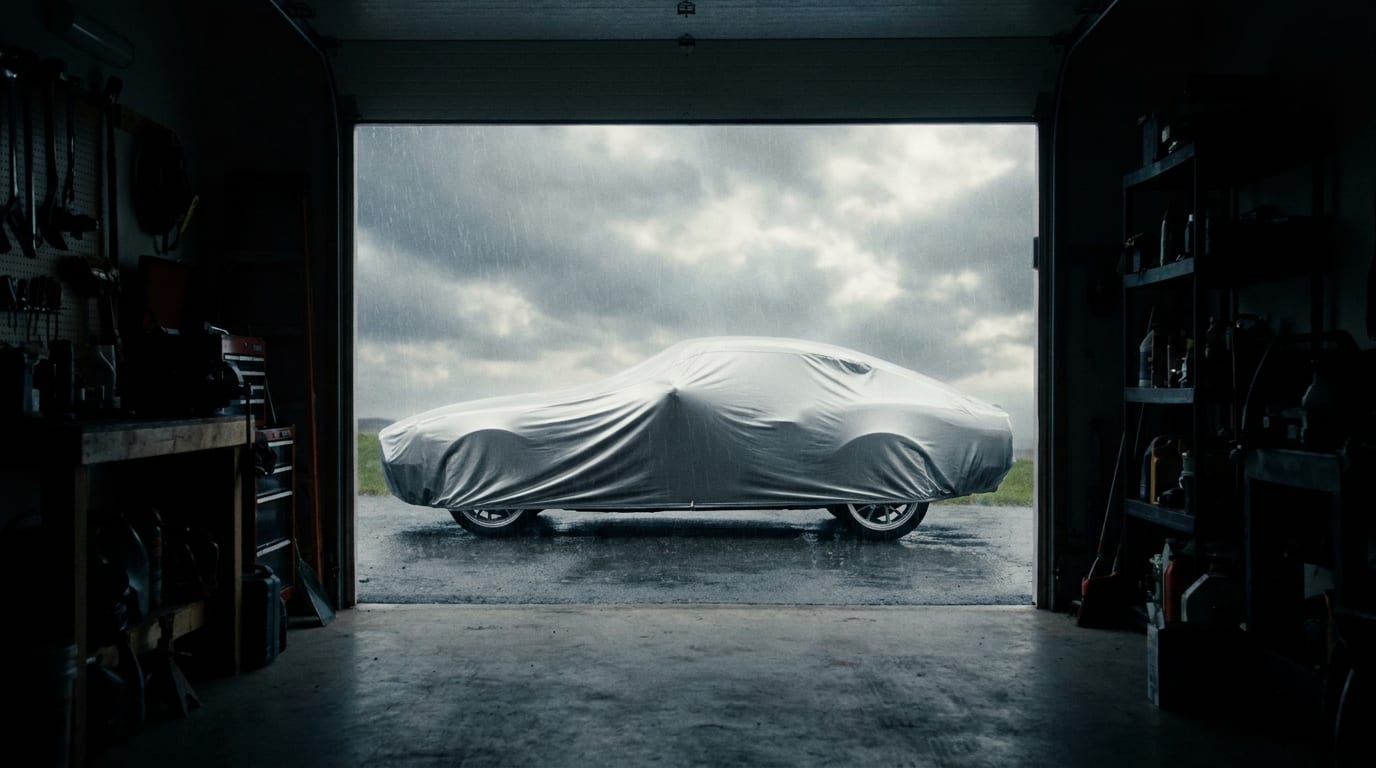
Here's a habit that makes a real difference: let the car dry as much as possible before putting the cover on. Covering a wet car traps that moisture underneath, and now your waterproof cover is sealing dampness in rather than keeping it out. Takes five extra minutes, saves you a mildew problem later.
Beyond that, a simple routine goes a long way. Pull the cover off periodically to let both the car and the cover air out. Rinse off accumulated dirt, moss, or tree sap before it has a chance to sit and stain. Check your straps and grommets for wear every so often, since those are the parts doing the work of keeping the cover secured against wind. Our step-by-step installation guide and cover cleaning guide both cover the specifics if you want more detail than a quick checklist.
One more thing people overlook: store the cover itself properly when it's not on the car. A damp cover balled up in a trunk or garage corner can grow mildew on its own, and then you're transferring that mildew back onto your car the next time you use it.
Next Step: Find Your Exact Fit
So, to put it plainly one more time: if you have a sedan and live in a rainy climate like Seattle, the car cover to buy is a waterproof, custom-fit outdoor cover with sealed seams, a breathable multi-layer fabric, and a strap system built to handle wind-driven rain. That's the whole answer. Everything else is fine-tuning.
The fastest way to get there is to use a cover finder tool and match your sedan's exact make, model, and year to the right option, rather than guessing at a generic size. And if you're investing in a higher-tier waterproof cover, it's worth knowing CarCovers backs its covers with a lifetime warranty, so you're not just hoping the fabric holds up through a few wet Seattle winters.
If you found this useful, stick around and browse a few more guides before you buy, fit and fabric questions tend to come in clusters once you start digging in.






