


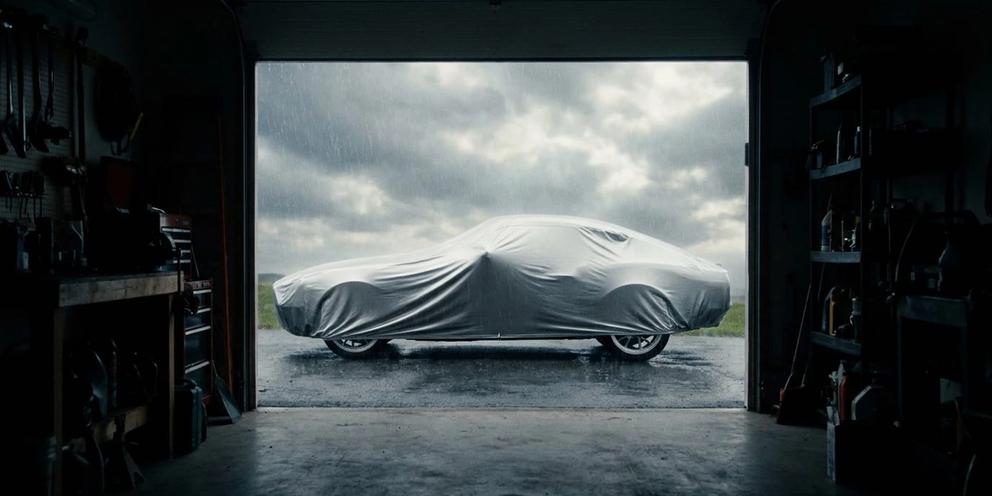
Best Car Cover for Convertibles: Comparison Guide & Buyer Checklist
A folded soft top isn't a small detail to design around. It's the whole reason a standard car cover doesn't cut it on a convertible. Between the fabric or vinyl top itself, the bulge it creates behind the seats, and the lower stance most convertibles sit at, you need a cover built for that shape, not one that just happens to fit close enough. This guide walks through what actually separates the best car cover for convertibles from a generic one, plus a checklist to run through before you buy.
Why Convertibles Need a Different Kind of Car Cover
A hardtop sheds water and blocks UV the same way the rest of the car's sheet metal does. A soft top doesn't. Fabric and vinyl tops absorb moisture and sun exposure differently than painted steel, and if the cover you put over it has the wrong lining, you can end up trapping condensation right against the material you're trying to protect. That's worse than no cover at all in some cases.
Then there's the shape problem. Most convertibles have a folded-top bulge sitting behind the rear seats, even with the top up. A cover cut for a standard sedan or coupe silhouette doesn't account for that hump, so it either stretches tight and rubs, or leaves a gap where wind and water get in.
Roadsters add another wrinkle: low ride height and a long hood mean more surface area for wind to catch, and straps or hems that sit loose are going to move around a lot more than they would on a taller sedan. And plenty of convertible trims come with factory spoilers, upright antennas, or extended mirrors that a plain cover just won't accommodate without a pocket or patch built in.
So no, there isn't one single "best" cover that fits every convertible on the road. Fit depends on your exact model, your climate, and where the car sleeps at night. What follows is a comparison of cover types and a checklist to help you land on the right one for your car specifically.
Convertible Car Cover Comparison: Indoor vs. Outdoor vs. Custom-Fit
Here's how the main cover categories stack up when you're shopping for a convertible specifically, not just any car.
Indoor Covers
- Best climate/use case: Garage-kept convertibles that need dust and scratch protection, not weatherproofing
- Waterproofing level: None, not designed for it
- Fit type: Usually semi-custom or custom
- Typical material: Soft, breathable fabric (like a fleece or lightweight knit)
- Storage recommendation: Ideal for daily garage storage between drives
Outdoor All-Weather Covers
- Best climate/use case: Convertibles parked outside daily, especially in rain, snow, or intense sun
- Waterproofing level: High, typically multi-layer with a waterproof or highly water-resistant outer shell
- Fit type: Ranges from universal to custom
- Typical material: Multi-layer woven fabric with a UV-resistant coating
- Storage recommendation: Best for anyone without covered parking
Custom-Fit Covers
- Best climate/use case: Convertible owners who want the tightest possible fit around the folded-top contour
- Waterproofing level: Varies by material tier, but generally strong when paired with an outdoor-grade fabric
- Fit type: Cut to the exact make, model, and year
- Typical material: Depends on the line, often a multi-layer fabric matched to the model's shape
- Storage recommendation: Works for both indoor and outdoor storage, since the fit itself is the main benefit
Universal/Semi-Custom Covers
- Best climate/use case: Budget-conscious buyers with mild weather and low wind exposure
- Waterproofing level: Varies widely, often weaker than dedicated outdoor covers
- Fit type: Loose, generic sizing
- Typical material: Basic woven or vinyl blends
- Storage recommendation: Lower cost, but higher risk of flapping against a soft top in wind
If you park outside often, live somewhere windy, or just care about keeping the soft top itself in good shape long-term, a custom-fit car cover is usually worth the extra cost over a universal one. The tighter the fit, the less the cover moves, and the less it moves, the less it rubs against a top that's more delicate than painted metal.
Buyer's Checklist: What to Check Before You Buy
Before you add a cover to your cart, run through this list. Skipping any one of these is how people end up with a cover that fits everything except their actual car.
- Confirm size and fit for your exact make, model, and year. Generic sizing like "sedan" or "sports car" doesn't account for the folded-top bulge. Use a size and fit lookup tool to check before buying, not after.
- Check waterproof vs. water-resistant. These aren't the same thing, and if your convertible lives outside, the difference matters. Look specifically at waterproof car cover options rather than assuming "resistant" is close enough.
- Look for a soft-top-safe interior lining. A rough or abrasive lining will scuff a fabric or vinyl top over time, especially at the fold line where the cover flexes most.
- Check for built-in tie-downs or grommets. A low-profile body catches wind differently than a tall SUV, and an elastic hem alone often isn't enough. Some owners add a gust strap for extra hold in exposed parking.
- Confirm mirror pockets and antenna patch compatibility. If your convertible has factory mirrors or a fixed antenna, make sure the cover has a pocket or an antenna patch option instead of forcing the antenna to poke through fabric.
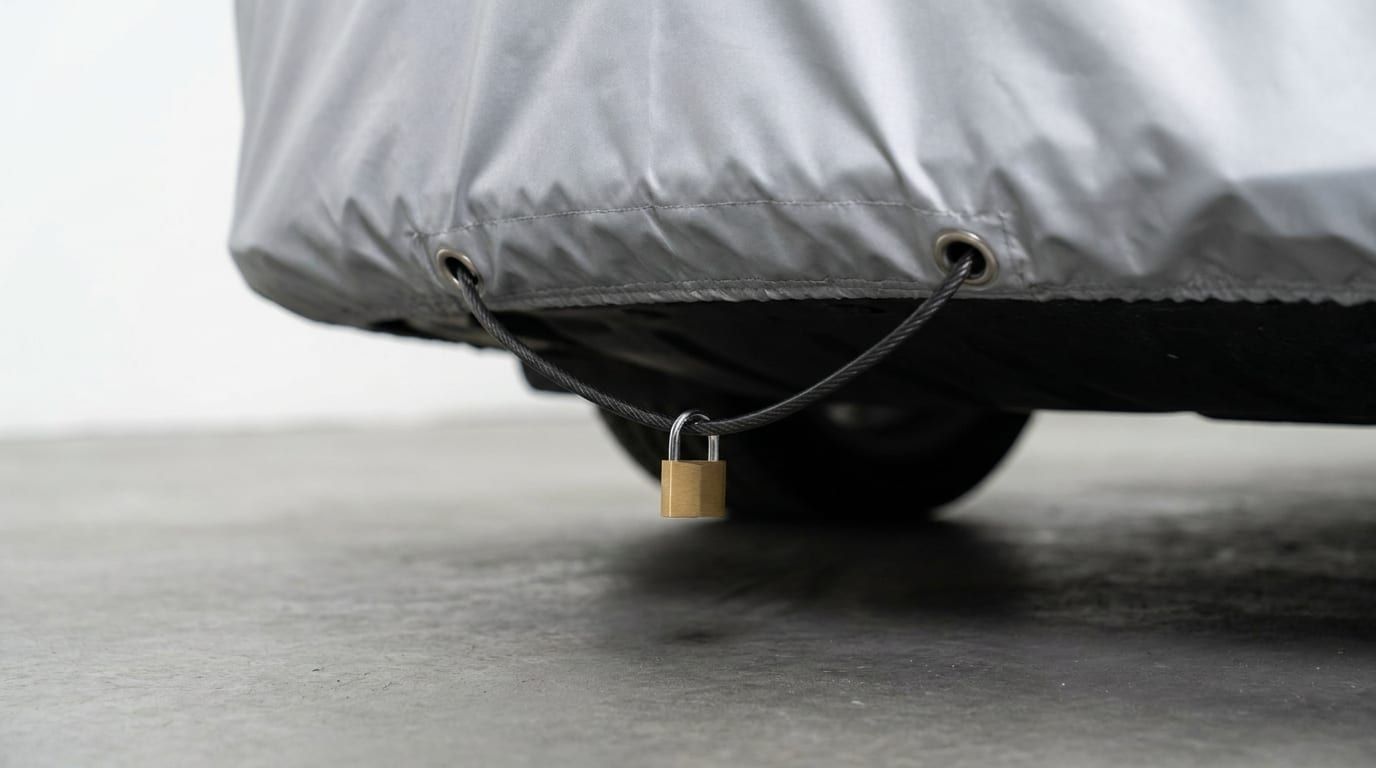
- Check cable lock compatibility. If the car sits in a driveway or public lot, a cover you can lock down is worth the extra step.
- Read the warranty terms. Convertible covers get put on and taken off more often than covers left on a garaged sedan, since a lot of convertible owners cover the car specifically when the top's down. More handling means more wear, so check the warranty before you buy, not after something rips.
Material Matters: Comparing Cover Fabrics for Convertible Tops
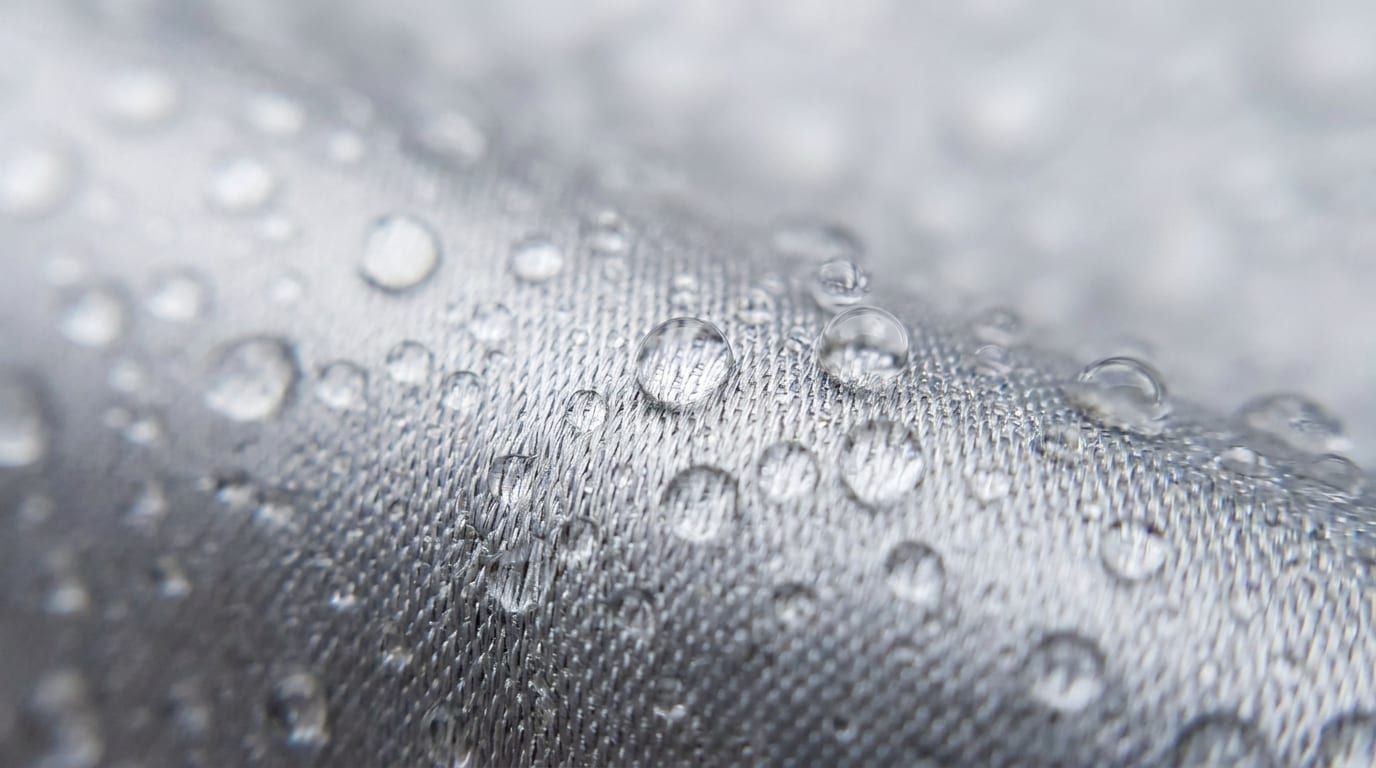
Not all cover fabric behaves the same way against a soft top, and this is where a lot of buyers get tripped up.
A breathable, multi-layer woven fabric lets moisture escape instead of trapping it. That matters most on convertibles, since a fabric top can hold condensation right at the surface if the cover above it doesn't breathe. Single-layer vinyl covers, by contrast, tend to seal moisture in rather than let it out. Fine for a quick dust cover indoors, less fine for anything left on overnight in humid air.
UV resistance matters more here too. Convertible owners spend more time with the top down, which means more of the car's paint and interior trim sees direct sun when it's uncovered. A cover with a UV-resistant coating gives the body panels a break the rest of the time, which adds up over years of ownership.
If you want the full rundown on fabric weights and types, the car cover material guide breaks it down in more depth than we can here.
One more thing worth checking: seam construction. Reinforced, double-stitched seams hold up better at the spots where the cover has to bend around the folded top, which is exactly where cheaper covers tend to fray first.
Common Mistakes: Why a Tarp or Loose Universal Cover Falls Short
A tarp is not a car cover. It has no soft lining, so it scrapes against clear coat every time the wind moves it, and it traps moisture against a soft top instead of letting it breathe. If you're tempted to grab one as a cheap stopgap, read the tarp vs. car cover comparison first. It's a bad trade for the ten or twenty dollars you'd save.
A loose universal cover has a similar problem, just less obvious. On a boxier vehicle, a loose fit mostly just looks sloppy. On a low, curved convertible body, that same slack turns into flapping in any real wind, and flapping means abrasion. Over months, that's enough to dull clear coat or wear thin spots into the top fabric.
Ill-fitting covers also fail at the one job they're supposed to do: shedding water. Instead of running off the sides like it should, water pools right in the dip created by the folded top. Left there, it just sits and seeps.
FAQ: Car Covers for Convertibles
Do convertibles need a special car cover?
Yes. The folded top's shape and the soft top material both call for a cover cut and lined differently than a standard sedan cover.
Can I use a regular car cover on a convertible?
You can, but a universal cover often fits loosely enough to leave gaps or rub against the top. A semi-custom or custom-fit cover is the safer choice if you actually want to protect the top itself.
How do I stop my convertible cover from blowing off in wind?
Look for a cover with built-in tie-down straps or grommets, or add a compatible gust strap. Don't rely on an elastic hem alone, especially on a low-profile car.
Should a convertible cover be stored indoors or outdoors?
Depends on where the car actually parks day to day. Indoor covers prioritize a soft, breathable feel over waterproofing. Outdoor covers prioritize waterproofing and UV resistance, since they're doing more work.
How much should a good convertible car cover cost?
It varies by fit type and material tier. Universal indoor covers sit at the lower end, while custom-fit and multi-layer outdoor covers cost more, mainly because of the tighter cut and heavier-duty fabric.
Find the Right Fit for Your Convertible
The path here isn't complicated: figure out your climate and where the car parks most nights, match that to a cover type, then confirm the fit is actually built for your exact model before you check out. Skipping that last step is the single most common reason people end up with a cover that doesn't do its job.
If you're not sure where your convertible falls, run it through a cover finder tool to confirm the dimensions before buying anything. And if you're comparing options across brands and price points, the best car cover comparison is a decent starting point too. Owners of specific models, Miata drivers included, can also check the Mazda cover page for options built around that exact shape.
Once you've got the right cover, a little care goes a long way: cleaning it properly and installing it the right way both help it hold up against a convertible's tighter contours for years instead of one season. If you're still narrowing things down, it's worth browsing a few fit options side by side before committing, and subscribing to future guides here isn't a bad way to keep learning what actually works for your car.
Updated