Best Cover for a Class B Camper Van: Fit, Venting & UV Protection Guide
Published
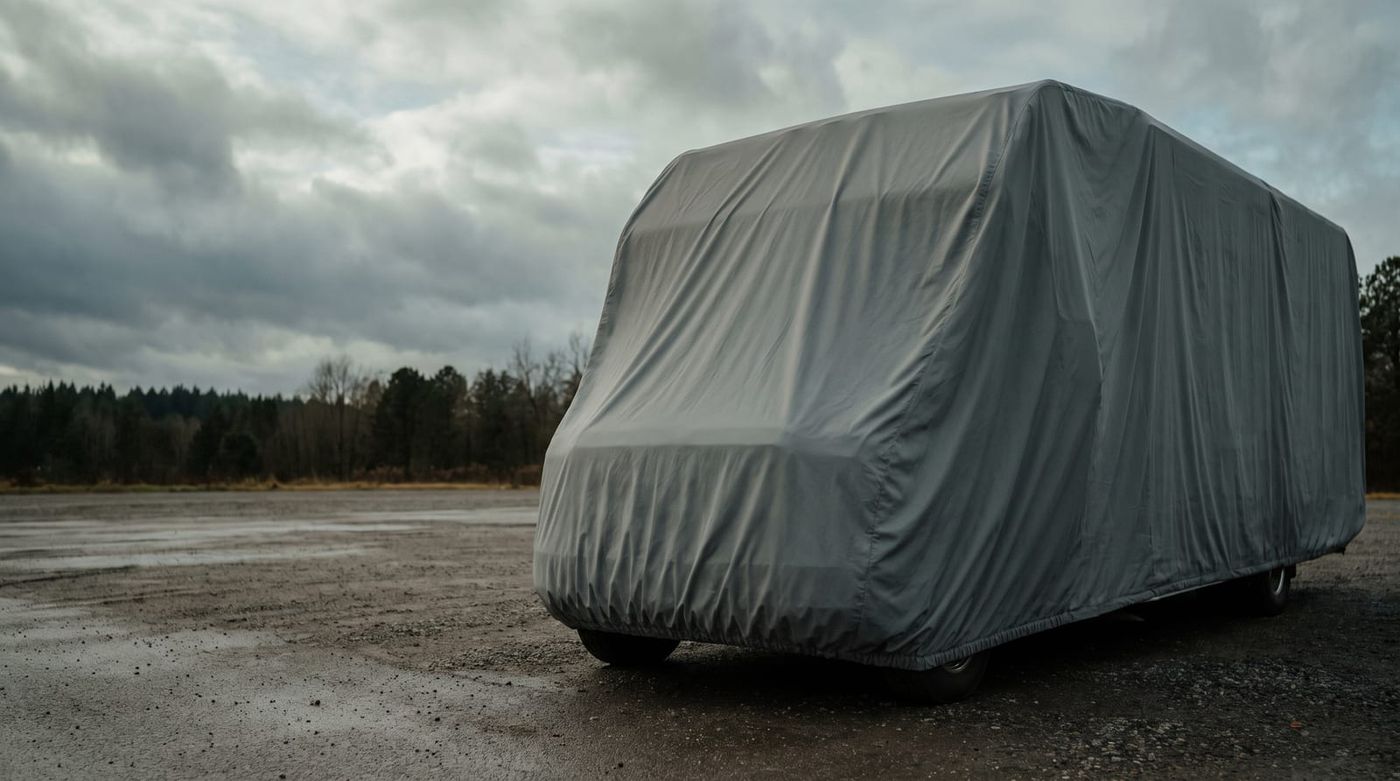
Class B camper vans sit in an awkward spot. They're built like vans, but they live like RVs, and most cover options on the market don't know what to do with that. Buy a cover made for a Sprinter cargo van and it won't account for the air conditioner on the roof. Buy a cover made for a Class A motorhome and you'll end up with twelve feet of extra fabric pooling around your bumpers. Finding the best cover for a Class B camper van means understanding what makes this class different in the first place, and shopping accordingly instead of grabbing whatever's labeled "universal."
Why Class B Camper Vans Need a Different Kind of Cover
Class B motorhomes are built on van chassis, usually a Mercedes-Benz Sprinter, Ford Transit, or Ram ProMaster, often with a raised roof or a high-top conversion bolted on after the fact. That roofline alone knocks them out of range for a standard car cover. It also doesn't match the dimensions of a full-size RV cover built for a 30-foot Class A.
There's a practical wrinkle too. A lot of Class B owners aren't storing the van for six months straight. They're daily-driving it, or taking it out most weekends, which means the cover needs to come off fast on a Friday morning and go back on just as easily Sunday night. That's a different job than a cover meant to sit untouched in a storage lot all winter.
Then there's the roof itself. AC units, vent fans, solar panels, ladders, sometimes a full rack system. A generic cover drapes over all of that like a tablecloth and calls it done, which usually means pooling water, rubbing seams, or a cover that just won't sit right no matter how you tug it. This guide walks through the three things that actually matter when you're picking a cover for this specific class: getting the fit right, managing airflow so moisture doesn't build up underneath, and choosing UV and weather protection suited to how and where you park.
Getting the Fit Right for Your Van's Chassis and Roof Height
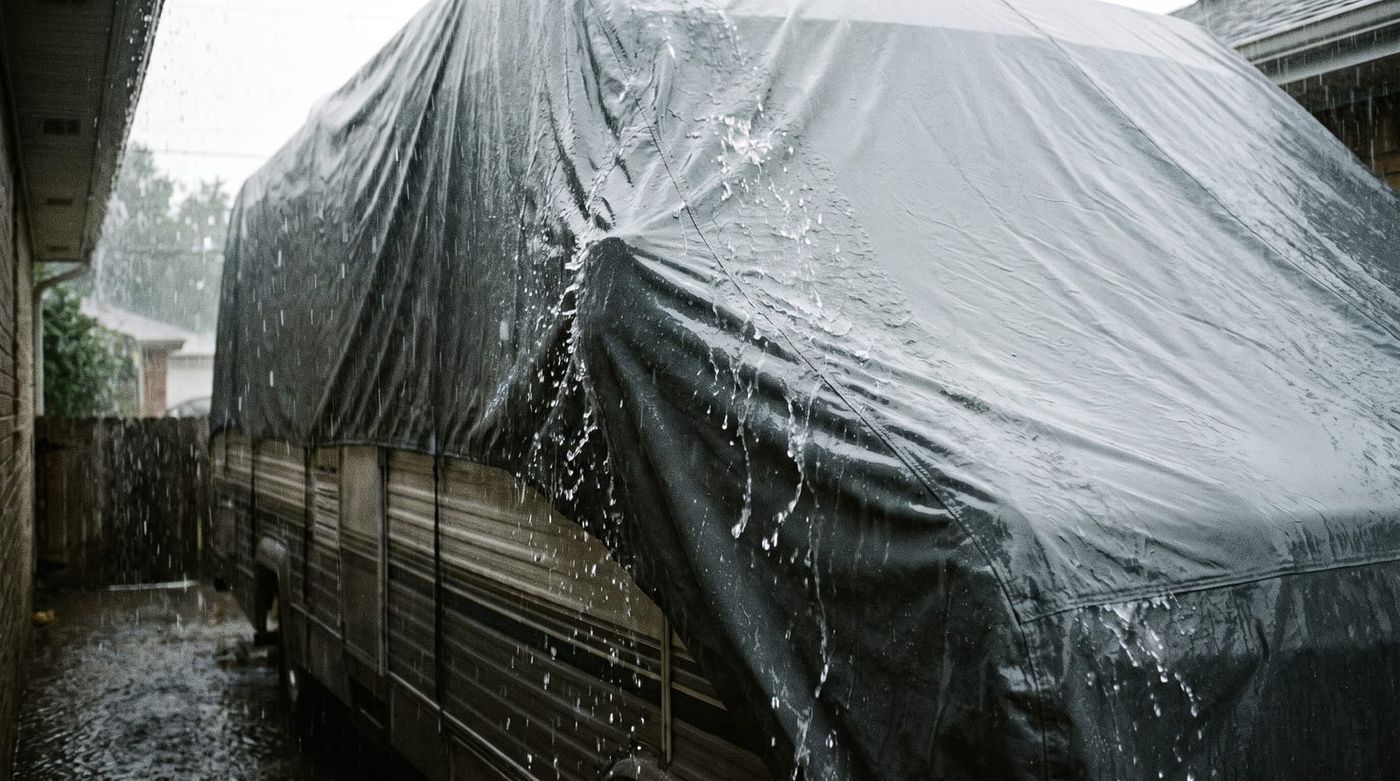
Start with a tape measure, not a guess. You need overall length, width, and roof height, and that last number has to include whatever got added during the conversion. A stock Transit roofline and a high-top Transit roofline are not the same vehicle as far as a cover is concerned.
This is also why matching the cover to your base van brand and model beats grabbing something labeled "universal RV cover." A cover cut for a Mercedes-Benz Sprinter is going to follow that van's specific cab-to-cargo contour. A Ford Transit or Ram ProMaster has its own body lines, its own mirror placement, its own rear door geometry. Universal covers average all of that out, which means they fit none of it particularly well.
Look closely at the details that only matter once a van's been converted into a camper. Mirror pockets need to actually land where your mirrors are. The contour where the cab meets the raised cargo box should hug that transition instead of leaving a gap that whips in the wind. Rear doors and any ladder mounted on the back need cutouts or enough give that you're not forcing fabric around hardware every time you install it.
Semi-custom covers, sized by class and length, tend to be the sweet spot for most Class B owners: closer to a true fit than a one-size-fits-all RV cover, without the cost of a fully custom pattern. If you're not sure where your van lands, a cover finder tool that takes your make, model, and roof height is a faster way to narrow things down than scrolling spec sheets. And if you want a general primer on getting the numbers right before you buy, this guide to sizing a cover correctly is worth a read first.
Venting: Why Airflow Matters More on a Class B
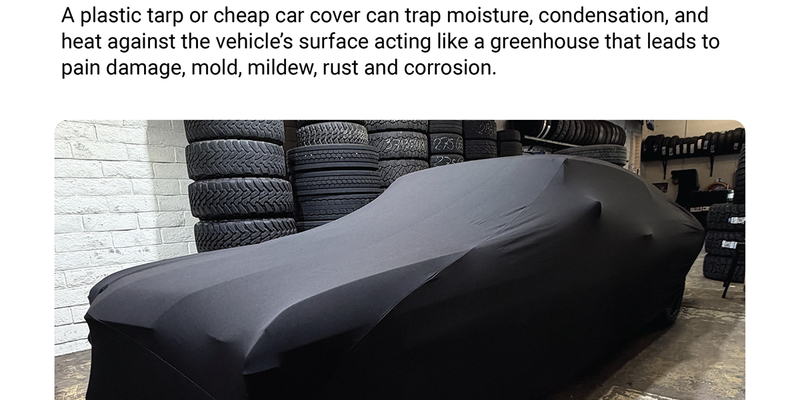
Here's the thing most people miss: a Class B's cabin is small and tight, which sounds like an advantage until you realize how fast moisture builds up in a sealed space that size. Throw a non-breathable cover over it and you've basically built a greenhouse. Condensation forms overnight, has nowhere to go, and starts working on mildew and musty seals before you've even noticed.
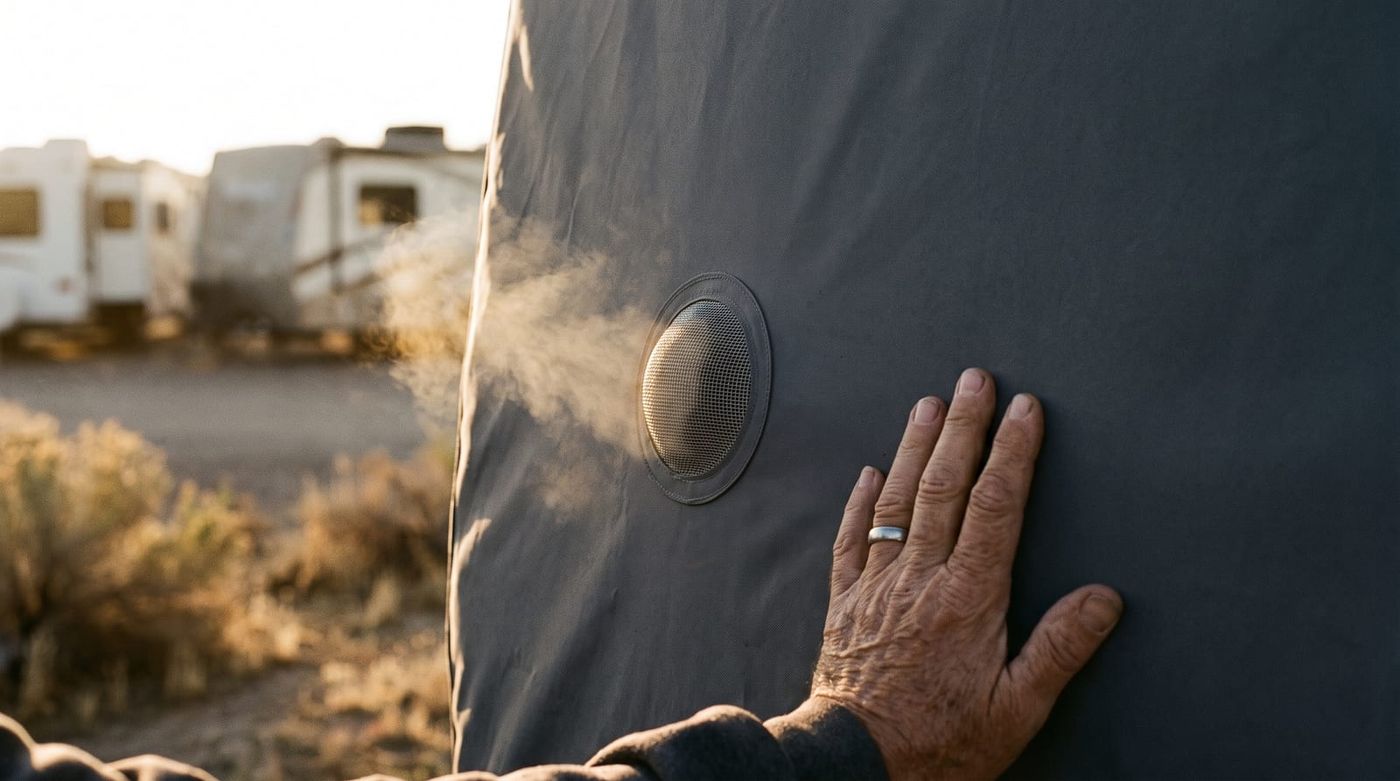
Roof vents, fridge vents, and AC shrouds all need somewhere for that moisture to escape. A cover that just seals flush over the top traps air against every one of those components. The better designs build in vent flaps or cutouts positioned for where this equipment actually sits, instead of treating the roof as one flat surface.
There's a real trade-off to understand here. Breathable, multi-layer fabrics let air move, which cuts down on condensation but usually trades off a bit of raw waterproofing. Single-layer waterproof-only covers block rain well but seal in moisture just as well, which is exactly the problem you're trying to avoid. For a deeper look at how these fabric layers actually perform, this breakdown of waterproof fabric construction covers the differences in plain terms.
Don't buy on overall dimensions alone. Check where a cover's vents actually land against your specific roof equipment layout. A vent positioned for a standard high-top won't do you any good if your AC unit sits six inches to the left of where the manufacturer assumed it would be.
UV and Weather Protection for Compact RV Bodies
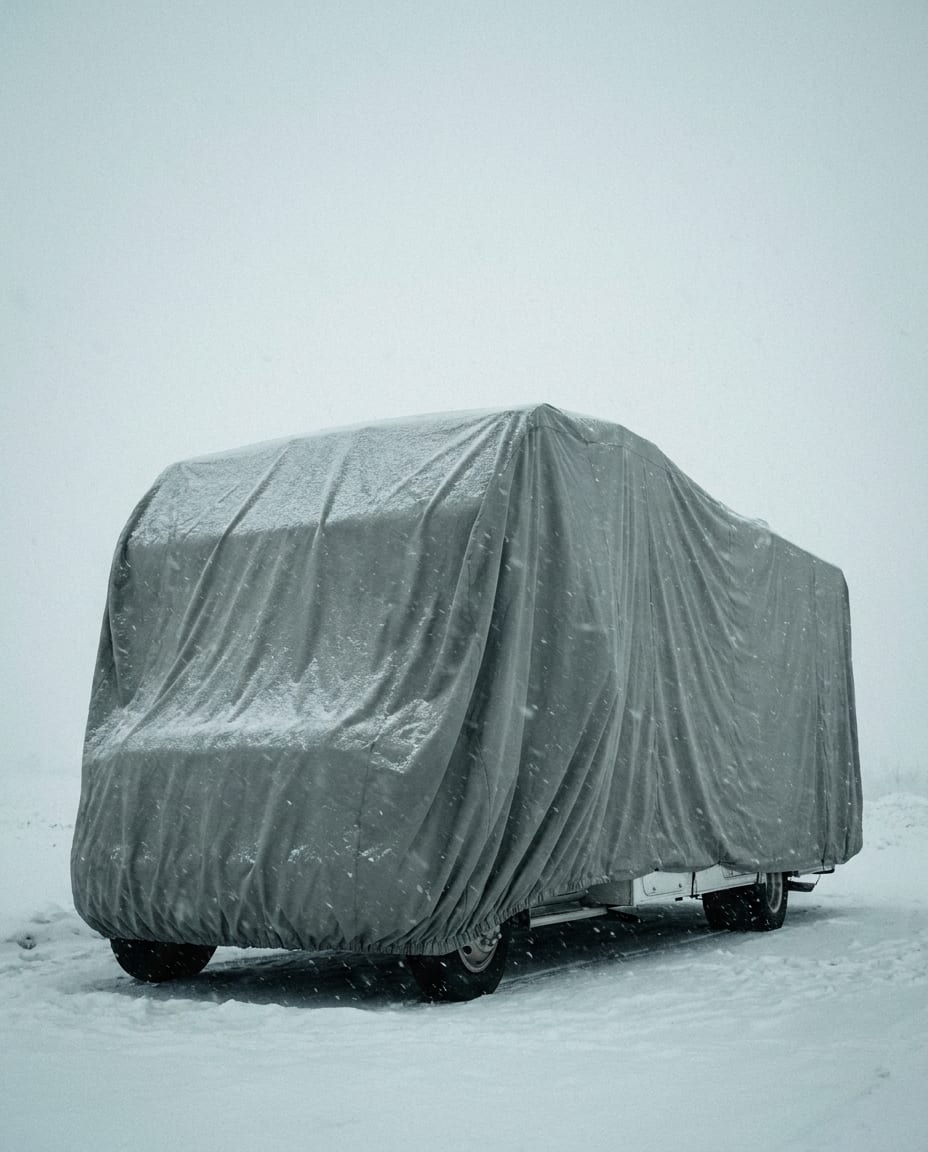
Class B exteriors are usually painted van panels, not the gelcoat fiberglass you'd find on a bigger motorhome. Painted panels fade. Roof seams crack under repeated sun exposure faster than you'd expect on a smaller surface area, mostly because there's less material to absorb the stress of expansion and contraction.
If your van sits outside most of the year, you want a UV-rated, multi-layer fabric built for sustained exposure, not just occasional coverage. A van that only gets covered for a weekend here and there can get away with a lighter-duty fabric. One that lives in a driveway twelve months a year needs something built for the long haul. This outdoor car cover guide walks through what full-time outdoor exposure actually does to a cover and a vehicle finish over time.
UV protection and waterproofing are two separate jobs, and it's worth treating them that way when you're comparing covers. A cover can block sun just fine and still leak at the seams if it isn't separately rated for water resistance. Check both specs on their own rather than assuming one implies the other. If rain and snow are the bigger concern where you live, start with a cover that's explicitly built and rated waterproof, then confirm the UV rating separately.
Adventure-style Class B builds add one more wrinkle: solar panels and roof racks. Make sure whatever cover you're looking at actually clears that hardware instead of stretching tight over it, which is how you end up with pressure points that wear through fabric months before they should.
Matching Cover Material to How You Use Your Van
How you actually use the van should drive the material choice more than anything else on the spec sheet. A daily-driver camper van benefits from a lighter, breathable fabric you can throw on and pull off in under five minutes. A van that goes into seasonal storage for the winter is a different story: you want the heaviest multi-layer protection you can get, since it's sitting there unattended for months at a time.
Where the van lives matters too. A van that's garaged part of the year doesn't need the same heavy-duty armor as one that's parked outdoors full-time, facing sun, rain, and temperature swings with nothing else between it and the weather.
If your van sits in a driveway or on the street, pay attention to the hardware, not just the fabric. Straps, grommets, and cable-lock points matter more here than they would for a vehicle tucked away in a garage, since a cover that isn't secured well on a taller, boxier body catches more wind and is more likely to work loose overnight.
Installing and Maintaining Your Class B Cover
Fitting a cover over a high-top roof without scraping paint takes a little technique. Start at the roofline, not the bumpers. Get the cover settled over the highest point first, then work it down toward the front and rear, smoothing it along the body as you go. Trying to drag a cover up from the bottom usually means dragging fabric across paint the whole way, which is exactly what you're trying to avoid.
Secure straps under the chassis rather than just clipping at the mirrors. A taller, boxier body catches more wind than a sedan or sedan-shaped RV, and mirror-only anchoring just isn't enough to keep a cover in place through a gusty night. For a full walkthrough, this RV cover installation guide covers the process step by step.
Clean it on a regular cadence, not just when it looks dirty. Debris builds up around vents and seams fast, and once it does, it traps moisture right against the roof instead of letting it evaporate off. A quick rinse and wipe-down every few weeks beats a deep clean twice a year. If you need the specifics, this guide to cleaning a car cover covers the right products and technique so you're not degrading the fabric while you clean it.
Finding the Right Cover for Your Class B Van
It really comes down to three decisions: get the fit right for your base van and roof height, make sure the venting lines up with your actual roof equipment, and pick a UV and waterproof rating that matches how and where you store the van. Skip any one of those and you end up with a cover that technically fits but doesn't actually do its job.
Guessing at universal sizing is how most people end up disappointed. If you want to stop guessing, explore the options built specifically for this class of RV and compare what's available for your van's exact configuration. And if you're the kind of owner who likes to get this stuff right the first time, it's worth bookmarking a resource like this one for when it's time to replace the cover down the road.