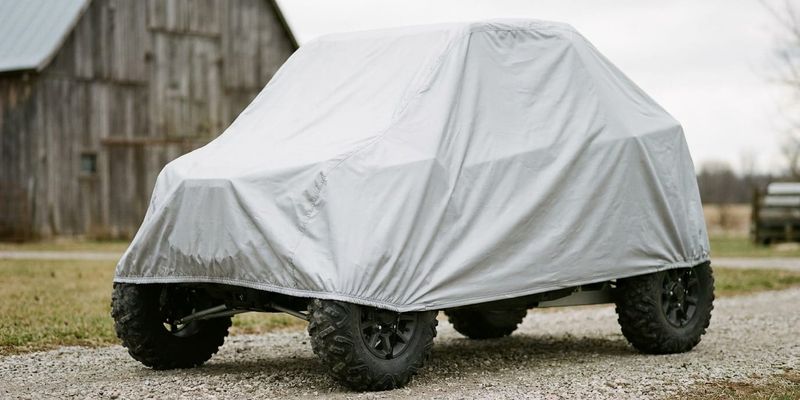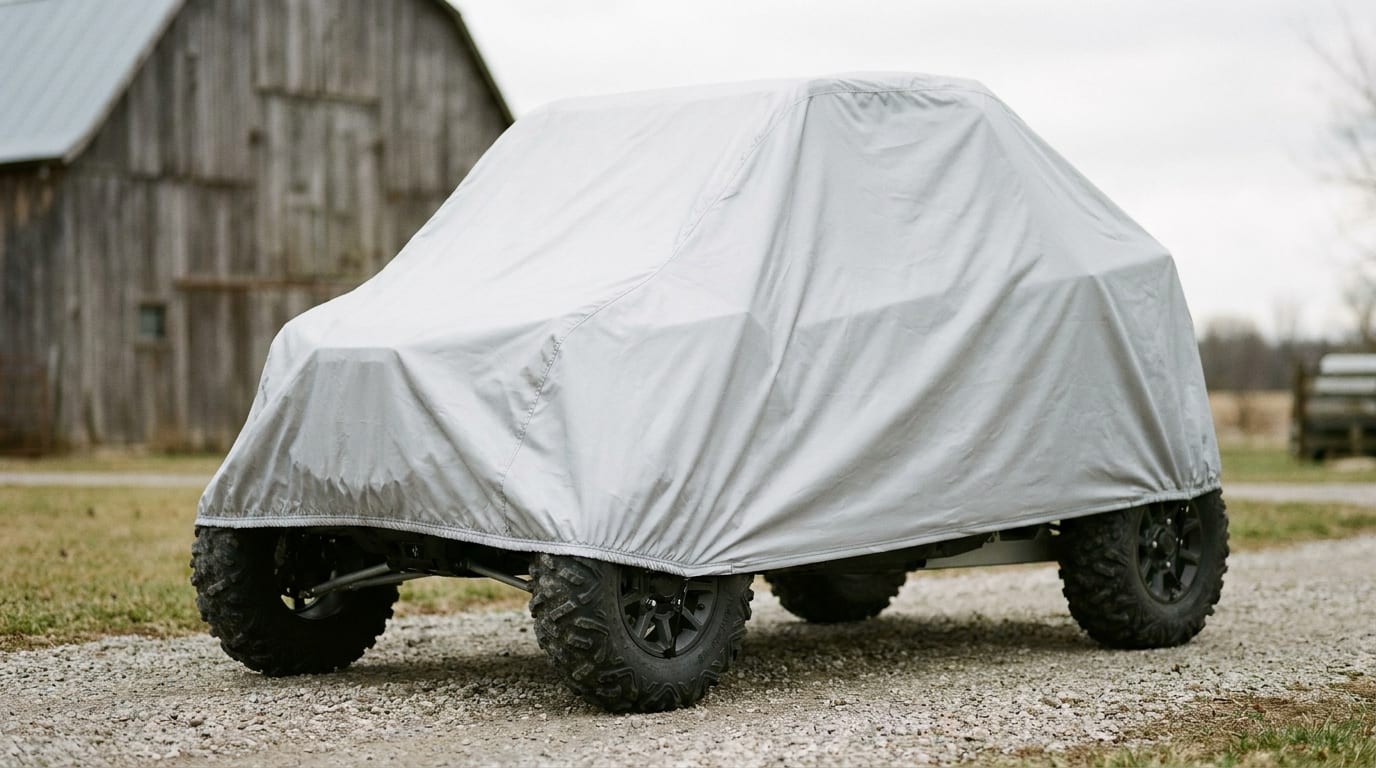
A tarp from the hardware store will keep rain off for exactly one storm. After that, you're dealing with pooled water on the roof, a flapping edge that's already started sanding down your clearcoat, and a cover that's slid half off the brush guard. Side-by-sides don't forgive a bad cover the way a sedan does. The best cover for a side-by-side has to deal with a roll cage, an open cab, mounted accessories, and wind exposure that a car parked in a driveway never sees. This guide walks through the three things that actually matter: fit, waterproofing, and a strap system that holds.
Why a Generic Tarp Doesn't Cut It for a SxS
A tarp or universal cover is built for a flat-ish shape with no real contouring. Drape one over a UTV and you get a roof that isn't a roof, just a loose span of fabric with nowhere for water to go. It pools there, sags, and eventually finds a seam or a wear spot to leak through. Wind gets under the slack material and the whole thing flaps, and that flapping is what wears a hole through paint and plastic over a season or two. It's not a one-time risk. It's a slow grind every windy night it sits uncovered properly.
Here's the bigger issue: a side-by-side's open frame, exposed seats, and bolted-on accessories (winch up front, light bar on the cage, brush guard on the bumper) create way more snag points than a car body ever has. A sedan is basically one smooth shell. A UTV is a skeleton with hardware hanging off it. Every one of those points is a spot where a loose cover catches, rubs, or rips.
So this comes down to three things, in order: getting the fit right, picking fabric that's actually waterproof (not just water-resistant), and using a strap system that won't give up in a crosswind. Get all three right and a cover does its job for years. Skip one and the other two don't matter much.
Getting the Fit Right: Cab Height, Roll Cage, and Add-Ons
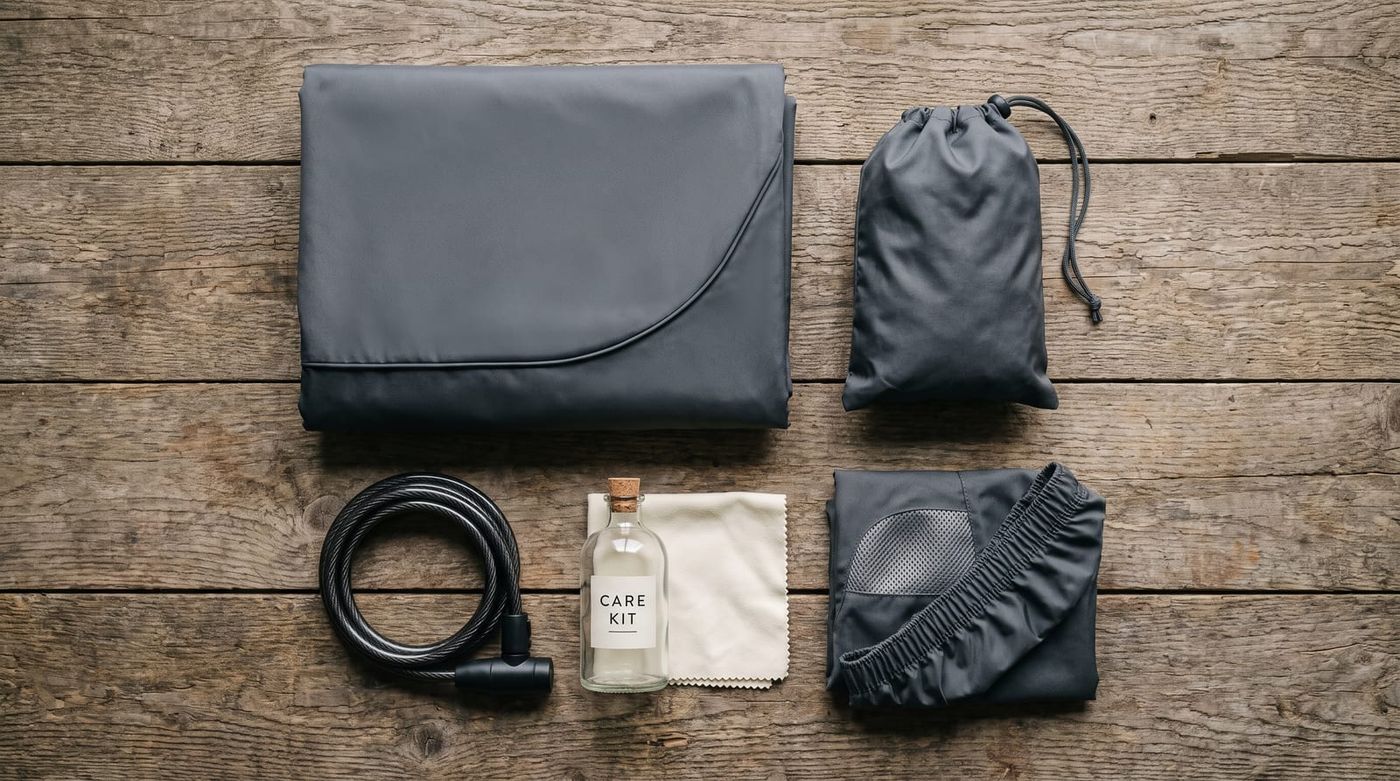
Fit is where most cover purchases go wrong. A cover needs to clear the roll cage without stretching tight across it. Fabric pulled taut over a sharp edge wears through fast, usually right at the corners where the cage bends. You want a cover that tapers over the cab with a little give, not one stretched like a drum skin.
Measure before you buy. A model-specific or properly size-matched cover beats a one-size-fits-all option every time, and the size difference between a 2-seat and a 4-seat or crew model is significant, often more than a foot of added length. Buying based on "it's a UTV" instead of your actual dimensions is how people end up with a cover that doesn't reach the rear bumper or bunches up at the back seats. Check what size car cover fits your vehicle before you commit to a size, the same sizing logic applies to UTVs even though the page is framed around cars.
Add-ons matter just as much. A winch mounted up front, a light bar across the cage, a brush guard, or oversized mirrors can all push your rig outside a "standard" size bracket. If you've added any of that hardware, factor in extra allowance before you buy, not after the cover arrives too tight to zip or snap closed. Mirrors, antennas, and exposed seat belt buckles are the usual tear points when a cover isn't cut with enough room around them. If you're shopping by brand, Polaris, Can-Am, Honda, and Kawasaki models all vary enough in cab dimensions that a brand-specific Polaris, Can-Am, Honda, or Kawasaki cover is worth checking before defaulting to generic sizing.
Waterproofing and Weather Needs Specific to UTVs
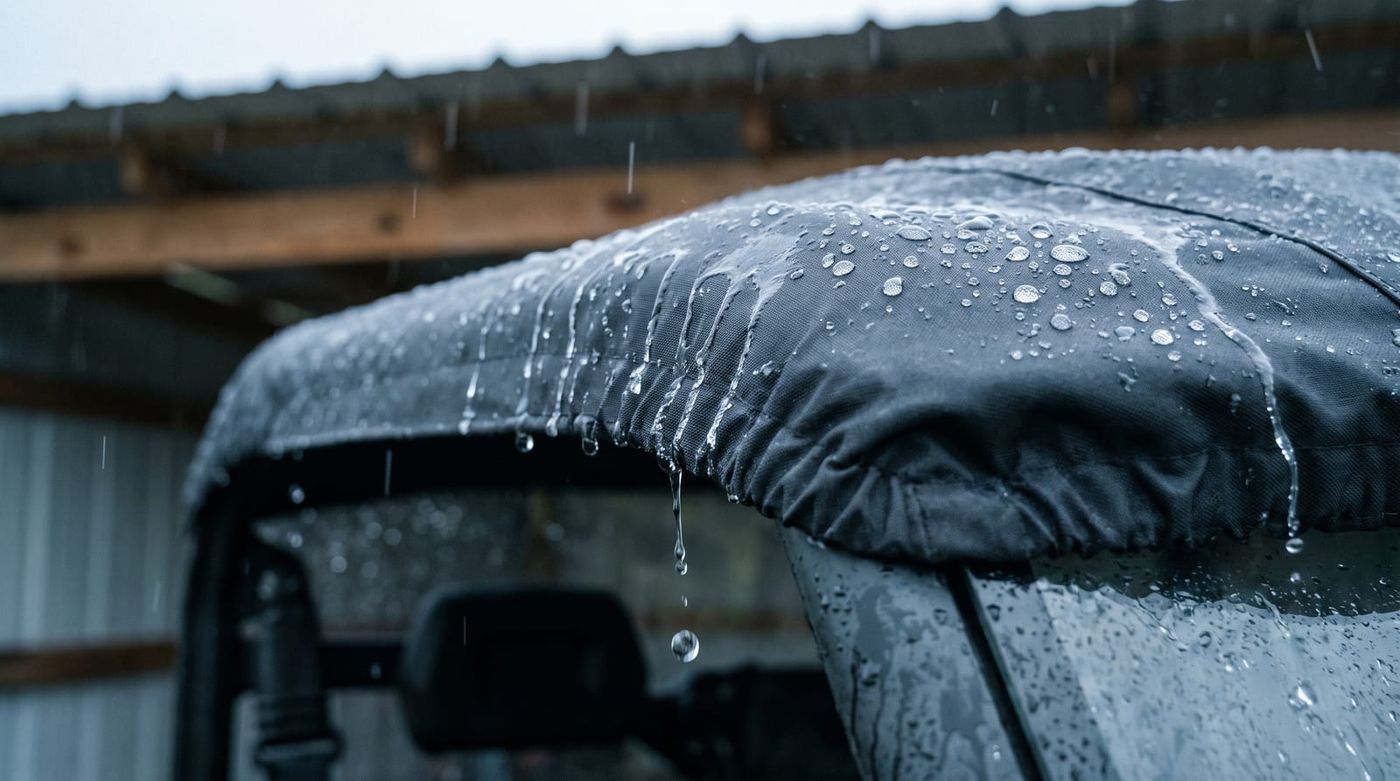
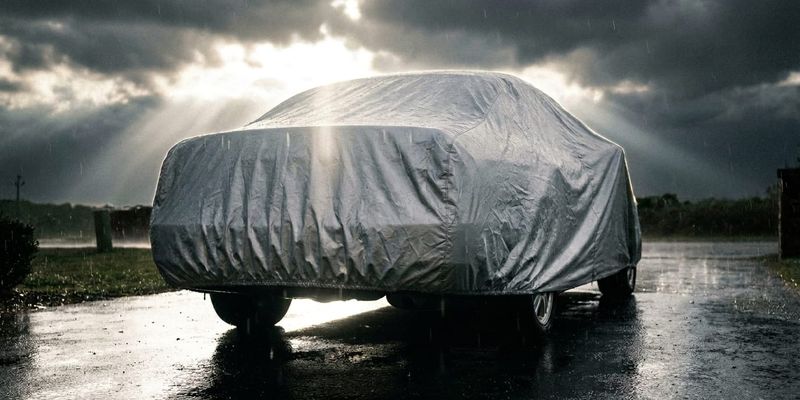
Most side-by-sides live outside. Open carport, driveway, trailer, back of a barn with no doors, whatever. That means waterproof fabric isn't a nice-to-have here the way it might be for a garage-kept car. It's the baseline. Water-resistant fabric sheds a light drizzle and then soaks through in a real storm. Waterproof fabric is built for the storm.
But waterproofing alone isn't the whole story. Breathability matters just as much. A fully sealed, non-breathable cover thrown over a hot engine bay and an open cab traps moisture underneath it. That moisture has nowhere to go, so it condenses, and condensation sitting on vinyl seats and metal brackets is exactly how mildew gets started. The waterproof car cover guide covers this tradeoff in more depth, but the short version for a UTV is: you need fabric that keeps rain out and lets trapped air escape.
UV resistance is the other piece people underrate. UTVs don't have painted body panels protecting the interior the way a car does. Vinyl seats, plastic dash trim, and exposed brackets sit right out in direct sun for hours, and they fade and crack faster than a painted hood ever would.
There's a real tradeoff in fabric weight depending on climate. Heavier all-weather fabric holds up better against snow load and constant sun exposure, but it's bulkier and less breathable in humid climates. A lighter, more breathable layer works better where humidity and mixed rain are the bigger threat, but it won't stand up to a harsh winter the same way. Pick based on where the machine actually sits, not based on which fabric sounds toughest on paper.
Strap and Tie-Down Systems That Actually Hold in Wind
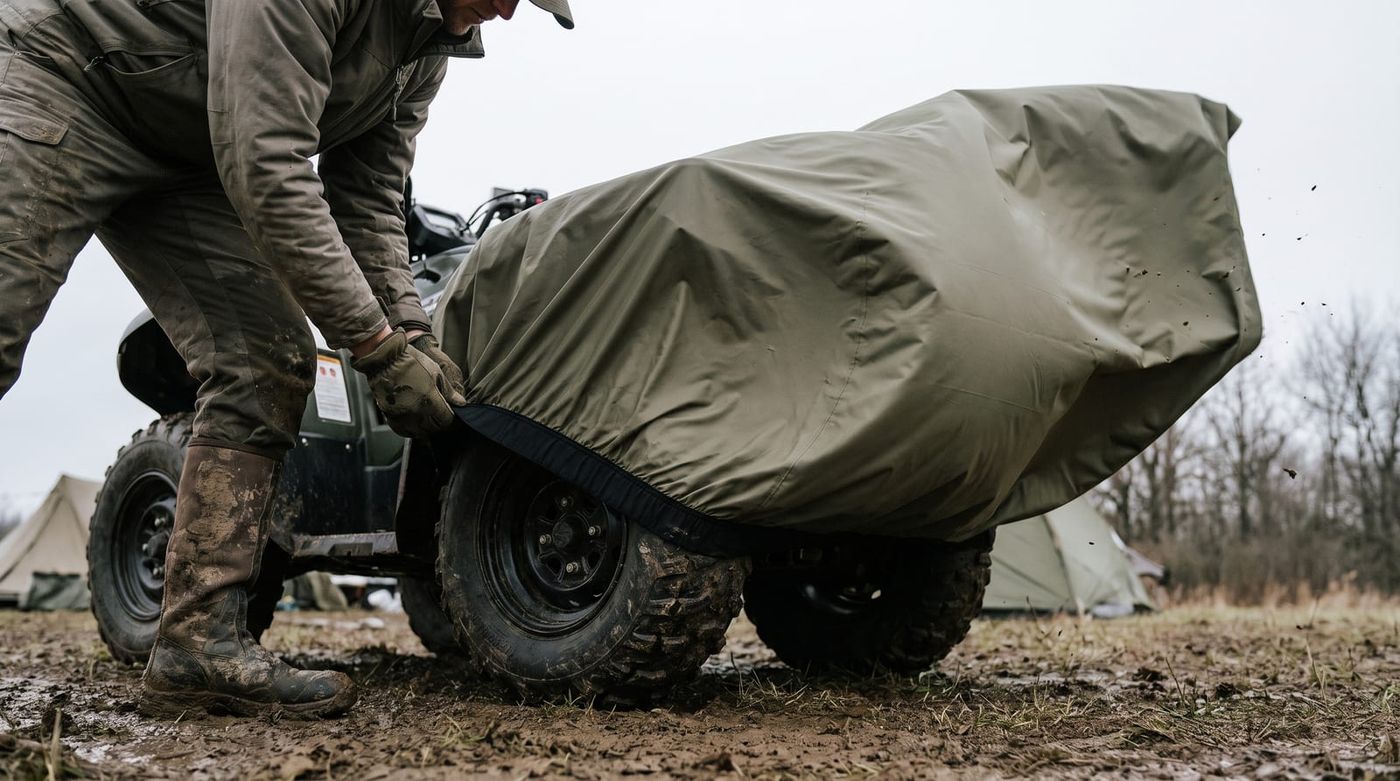
A side-by-side sits higher off the ground than a car and it's got no sheet metal to block crosswind. That exposure means a cover without a real strap system works itself loose within a few windy nights, and once one corner lifts, the rest follows fast.
Look for elastic hems at the wheel wells as the first layer of hold, then a separate buckle or grommet strap system that runs underneath the frame as the second. That underside strap is what actually keeps the cover anchored when wind gets under the edges, the elastic hem alone isn't enough on its own. For anyone storing a UTV in an open lot, at a trailhead, or anywhere wind regularly picks up, a dedicated gust strap or wind strap add-on is worth the extra few dollars. It's a small add that solves a problem full-time.
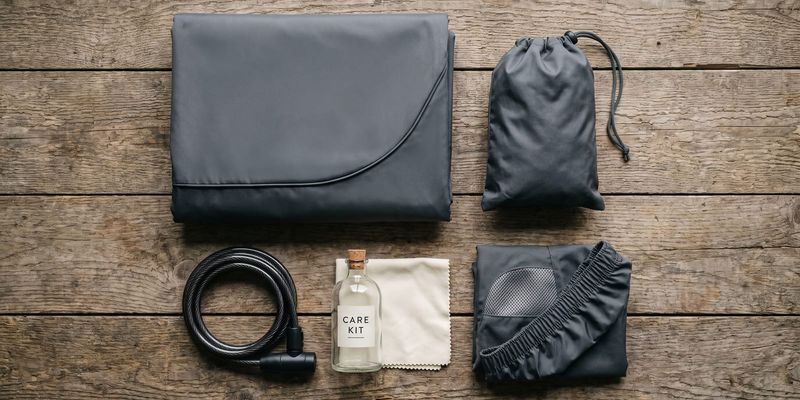
Theft deterrence is worth thinking about too, since UTVs often sit at trailheads, campsites, or open driveways instead of locked garages. A cover with cable lock loops built into the hem at least slows someone down, which is more than a plain cover does.
Indoor vs. Outdoor Storage: Does It Change What You Need?
Yes, and it changes what you should spend money on. If your SxS lives in a garage or shed, you don't need heavy waterproofing. An indoor cover focused on dust and light scratch protection is enough, and it'll be lighter and easier to throw on and off.
If it's parked outside or on a trailer most of the time, flip that priority. Waterproofing, UV resistance, and a real strap system matter more than soft fabric or low weight. An outdoor cover built for that exposure is the right call, even if it costs more and feels heavier in your hands.
One outdoor-specific problem worth flagging: snow and ice buildup on the flat roof area of a UTV. Without a taut, well-fitted cover, snow sits there, melts, refreezes, and eventually works its way into seams. A properly fitted cover pulled tight with a working strap system sheds that load instead of holding it.
Quick Checklist Before You Buy
- Confirm exact cab dimensions and seat count (2-seat vs. 4-seat) against the cover's listed size spec
- Check whether the cover accounts for installed accessories like winches, light bars, or brush guards
- Verify the fabric is labeled both waterproof and breathable, not just "weather-resistant"
- Confirm it includes a strap, cinch, or grommet system suited to how exposed your storage spot is
- Decide indoor vs. outdoor use case first, then compare fabric weights against that
Protect the Investment Year-Round
Fit, waterproofing, and straps aren't three separate decisions, they work as one system. A perfectly fitted cover in the wrong fabric still mildews. Great waterproof fabric with no strap system still blows loose. Skimp on one and the other two end up doing damage control they weren't built for.
If you're still comparing options, it's worth browsing UTV and ATV covers sized and strapped for side-by-side models, and checking the fit and waterproofing guides linked above before you settle on one. And if a cover's build quality is something you want backed up long-term, it's worth asking whether it comes with a lifetime warranty before you buy, not after something tears. Stick around the blog for more buying guides like this one if you're still narrowing things down.