Best Cover for an ATV: Fit, Waterproofing, and Strap Specs That Actually Matter
Published
Why a Generic Tarp Won't Protect Your ATV
A blue poly tarp from the hardware store will keep rain off for a weekend. It will not survive a season on an ATV. The problem isn't the material, it's the shape. Tarps are flat. ATVs are not. They've got racks, winches, roll bars, light bars, sometimes a plow mount up front, and a tarp just drapes over all of it, pooling water in the low spots and rubbing against every sharp edge every time the wind moves it. That rubbing wears through fabric fast, and the pooled water finds its way to seats and electrical connections anyway.
ATVs also live rougher lives than cars when it comes to storage. A car usually sits in a driveway or garage. An ATV gets left at a trailhead, thrown in the bed of a truck, or parked at the edge of a field for a week between rides. More exposure per square foot of surface means the cover has to work harder. So the best cover for a ATV isn't really about finding the toughest fabric on the shelf, it's about getting three things right at once: fit, waterproofing, and a strap system that holds up outdoors. Get those wrong and you end up with one of two common complaints: the cover blows off in the first windstorm, or it traps moisture against the plastic and you find mildew under there a month later. Both are avoidable if you shop with the right criteria instead of grabbing whatever's cheapest.
Getting the Fit Right for Your ATV
There are two paths here: universal covers and semi-custom, model-specific ones. Universal makes sense if you've got more than one ATV and don't want three different covers, or if you're covering a rental fleet, or you plan to sell the machine soon and don't want to buy a cover twice. For everyone else, storing one machine on a regular basis, semi-custom is the better call. It's cut to match your specific model instead of just "large ATV."
What actually matters for fit: overall length, handlebar width, and clearance for anything you've bolted on. Racks, winches, light bars, plow mounts. These add inches in places a generic size chart doesn't account for, and if the cover doesn't clear them, you'll be forcing fabric over hard edges every time you put it on. That's how holes start.
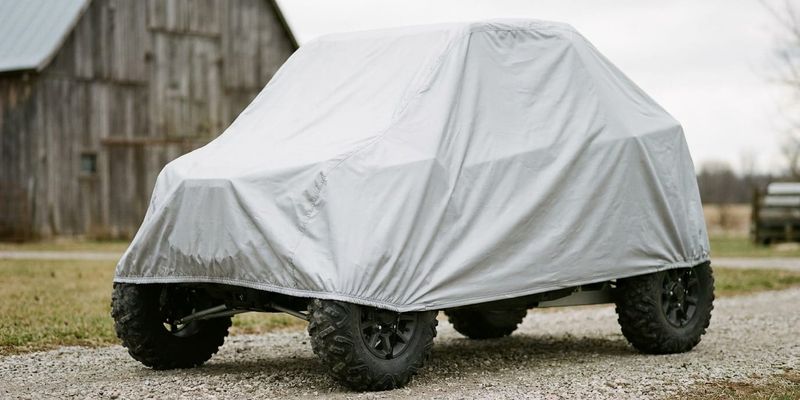
Here's the counterintuitive part: a cover that's too big is worse than one that's a little snug. People assume oversized means safer, more coverage, more margin for error. In practice, extra fabric is loose fabric, and loose fabric flaps in wind, chafes against paint and plastic, and sags into pockets that collect rain instead of shedding it. A cover sized close to the actual vehicle sheds water and wind better than a roomy one. If you're not sure what dimensions to look for, run your numbers against a sizing guide for matching a cover to your vehicle before you buy, rather than guessing based on "ATV" as a category.
Model-specific cuts also account for things universal covers just ignore, like the seat hump and the raised wheel wells. Those contours are where a flat universal cover gapes open and lets wind or rain underneath.
Waterproofing: What Actually Keeps Water Out
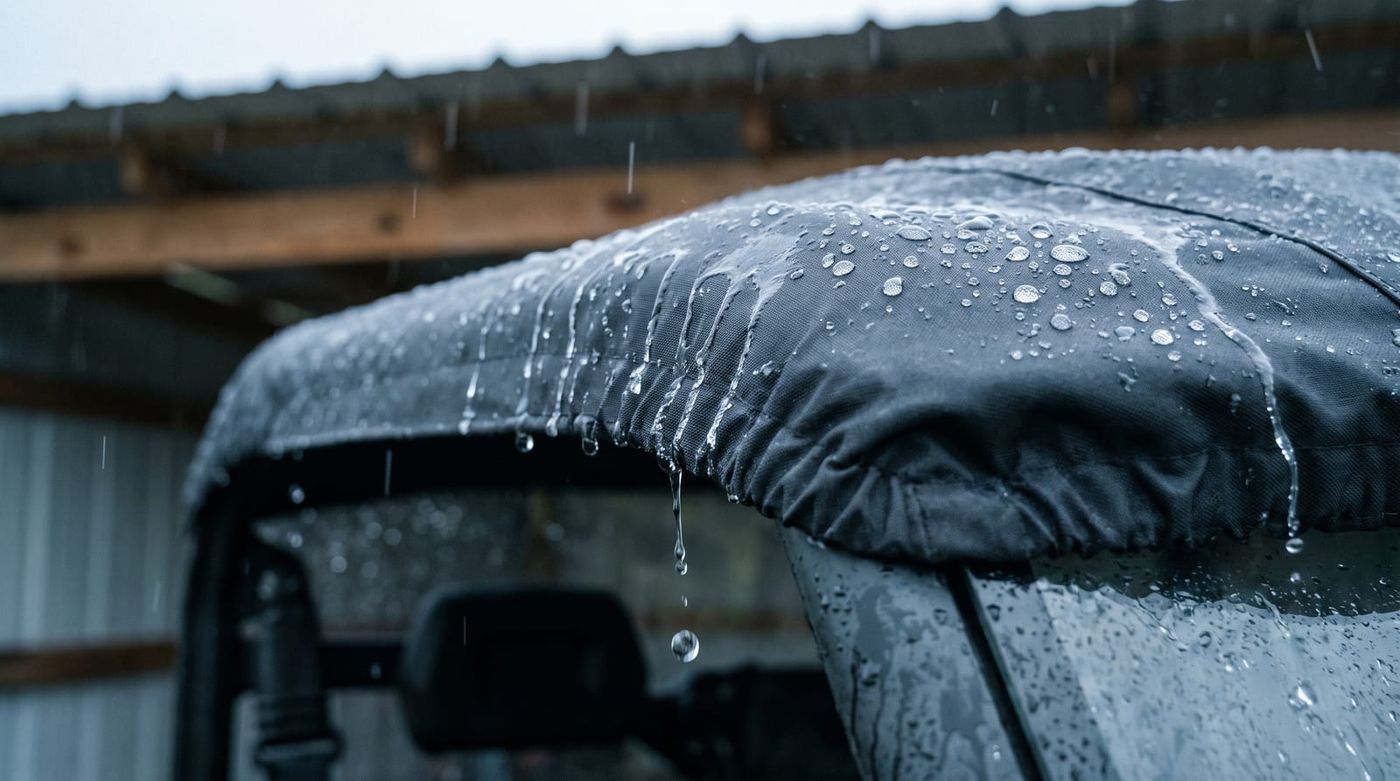
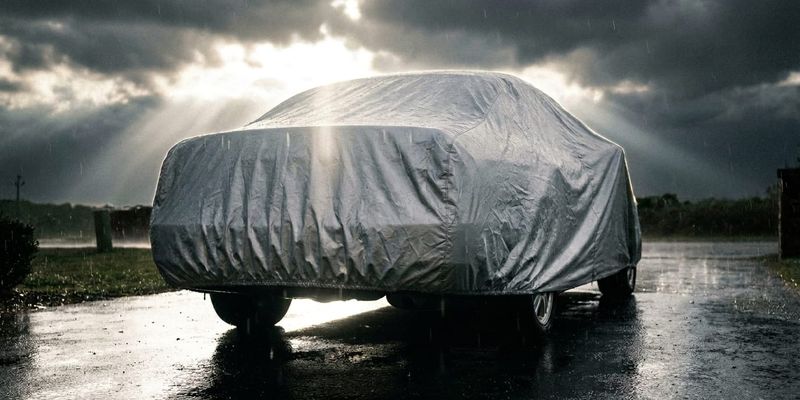
"Water-resistant" and "waterproof" get used interchangeably in marketing copy, and they shouldn't be. Water-resistant usually means a treated cotton or polyester blend that'll shrug off light rain for a while, but it wets through eventually, especially under sustained exposure. Waterproof means a coated or laminated fabric that actually blocks water from passing through, which is what you want if your ATV sits outside for days or weeks at a stretch rather than overnight.
Seams are where most covers actually fail, regardless of what the main fabric claims. A single-stitched seam is just a row of needle holes, and needle holes let water through no matter how good the fabric is. Taped seams or double-stitched construction close that gap. If a product page doesn't mention seam type at all, that's usually because it's the cheap kind.
There's a trade-off worth knowing about: a cover that's fully waterproof and doesn't breathe will trap condensation underneath it. Engine heat and ambient humidity have nowhere to go, so moisture builds up against the seat and plastic panels, and that's exactly the mildew situation a cover is supposed to prevent. The best cover for a ATV balances waterproof protection with some venting or breathable layering, not just a thick impermeable shell.
Worth thinking about too: ATVs parked on dirt or gravel pick up moisture and debris from underneath in a way pavement-parked vehicles don't, so belly and underside coverage matters more here than it would for a car in a paved driveway. For a deeper look at how UV, wind, and water all interact when a vehicle lives outdoors full time, the guide to outdoor cover factors covers it in more detail than we can here.
Straps, Buckles, and Wind Security
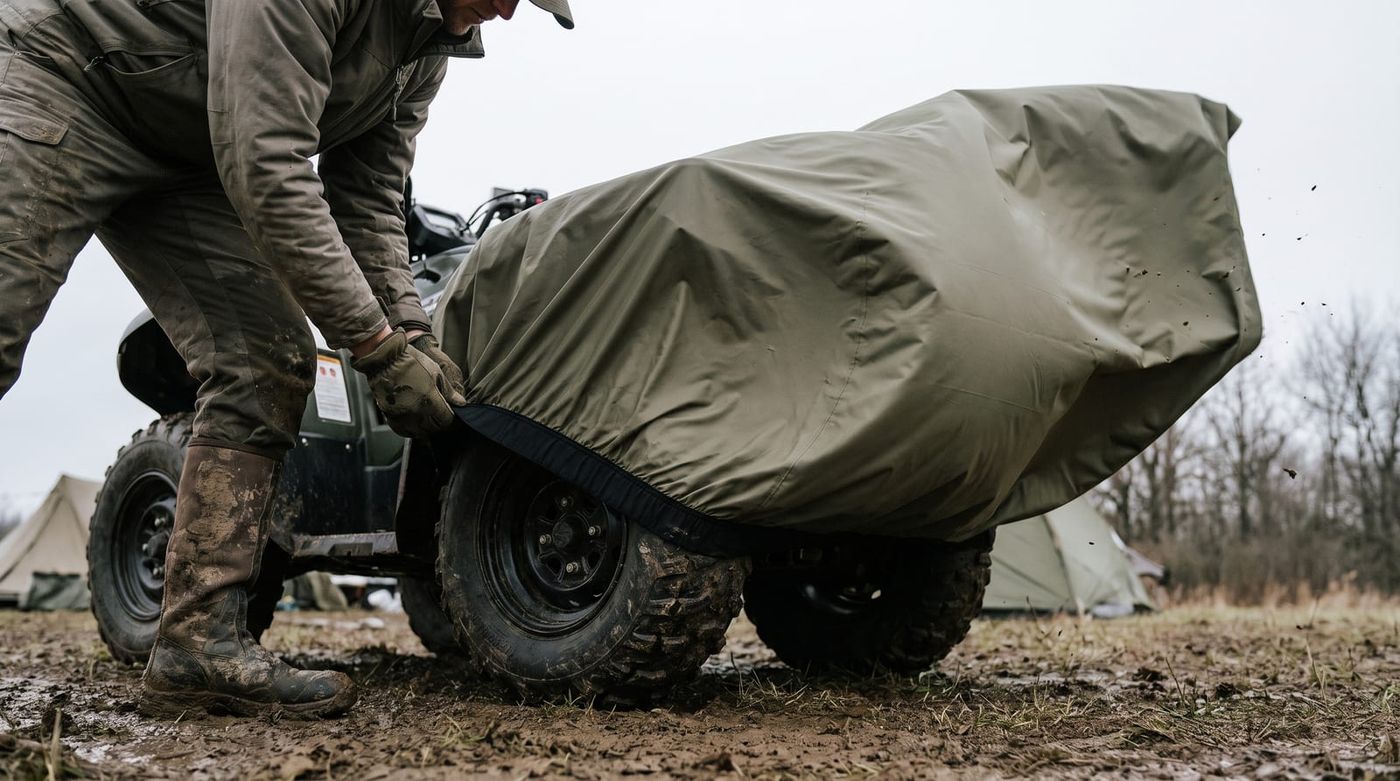
ATVs catch wind more easily than cars do. Lower weight relative to surface area means a gust that a car cover shrugs off can get under an ATV cover and start lifting it like a sail. So wind security isn't an optional upgrade here, it's a baseline requirement.
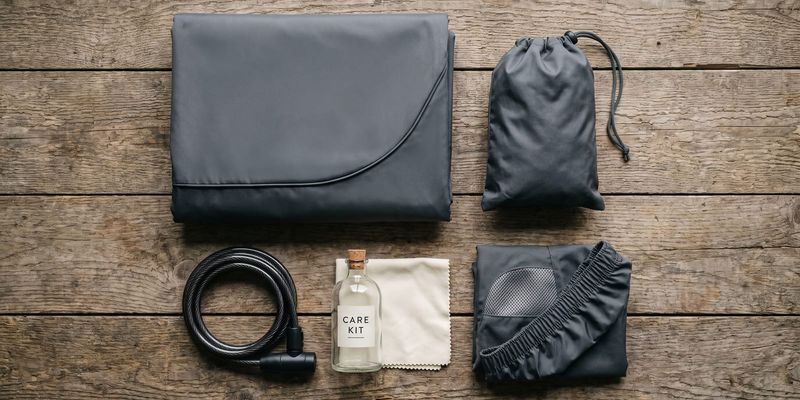
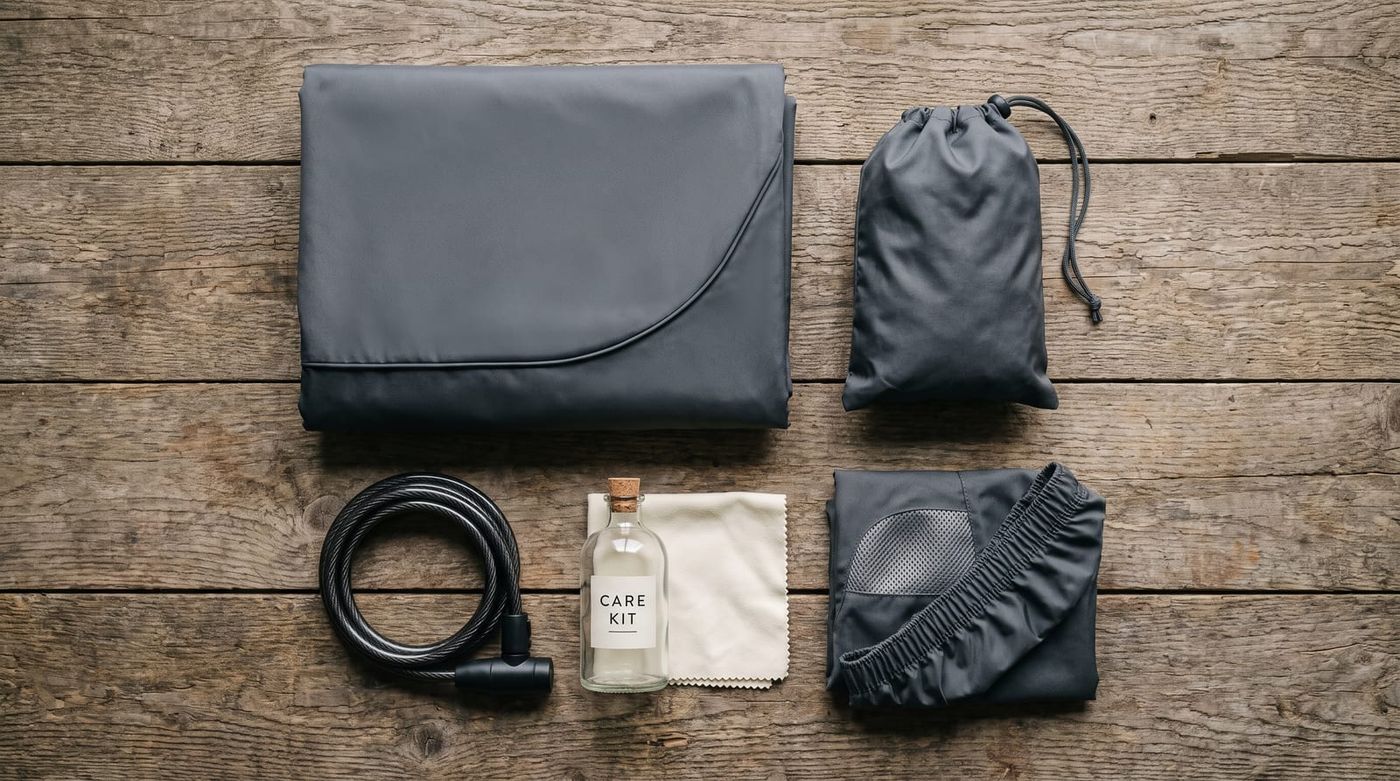
A decent system has a few layers working together. Elastic hems handle the base fit, cinching the bottom edge in against the frame. Under-chassis straps or buckles go further, running underneath and clipping back to the cover so wind can't just peel it upward from one side. Grommets matter too, since they're what let you run a cable lock or padlock through if the ATV's parked somewhere you don't fully trust.
One thing worth checking before you buy: does the cover have cinch straps at both the front and rear, or just a single elastic hem around the whole perimeter? A hem-only design is fine for a garage. It's not enough if you're trailering the ATV or hauling it in a truck bed at highway speed, where wind pressure is constant instead of gusty. Front and rear cinch points keep the cover from ballooning at speed.
If you're anchoring a cover during an actual storm, or securing it for transport, route straps so they don't sit directly against painted or plastic surfaces where they can rub through finish on a long drive. A little daylight between strap and panel, achieved by threading through a rack or frame member instead of cinching flat against bodywork, avoids that. For a walkthrough of what a proper wind strap setup actually involves before you commit to buying one, see the guide to installing wind straps.
Matching Material to Your Storage Conditions
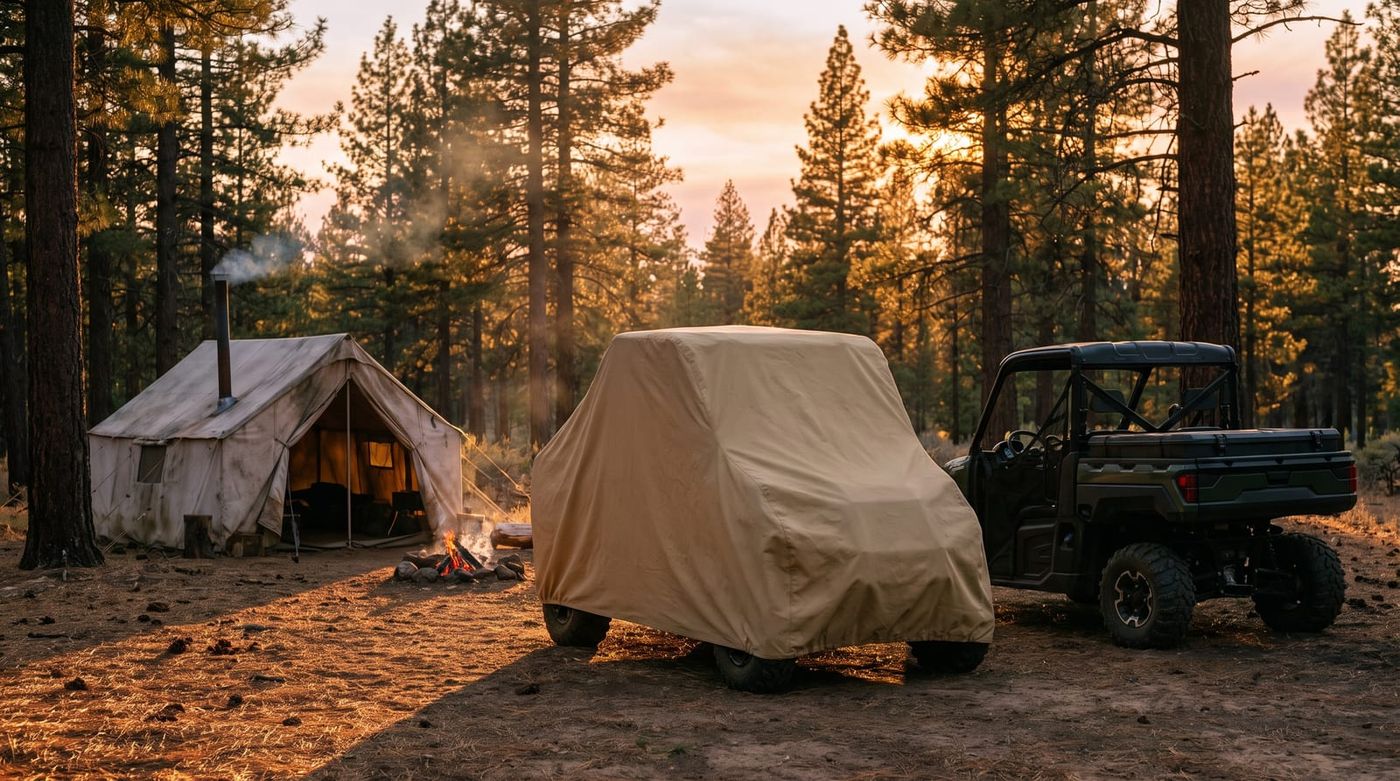
Indoor-rated covers are built light, mostly to keep dust and scratches off a machine that's already sheltered. They're not designed to fight UV or standing water, and they shouldn't have to. Outdoor-rated covers are the heavier, more purpose-built option: thicker fabric, UV stabilization, water resistance baked into the coating rather than just the finish. If your ATV lives outside more than it lives in a garage, outdoor-rated is the only category worth shopping in. You can compare the difference between indoor and outdoor cover specs alongside the indoor-specific option if you're not sure which camp your storage situation falls into.
UV matters more on an ATV than people expect. Plastic body panels and decals fade and get brittle under constant sun exposure, and a cover without UV-stabilized fabric does very little to slow that down, it just degrades at the same rate the plastic underneath does. If your machine sits outside most of the year, UV resistance should be a line item you actually check, not an assumption.
Seasons change what you need from a cover, too. Winter storage means snow load, and a cover that sags under wet snow instead of shedding it is going to stretch and eventually tear at the seams. Summer storage shifts priorities toward UV and heat resistance instead, since that's the bigger threat when there's no snow to worry about.
One maintenance note that gets skipped: dirt, pollen, and tree sap left sitting on a cover for months can start breaking down the waterproof coating underneath them. A cover cleaning guide is worth a quick read if you want the coating to last as long as the fabric does.
Finding the Right Cover for Your ATV Brand and Model
"ATV cover" as a category hides a lot of variation. A Polaris Sportsman and a Honda Rancher are both ATVs, but they're not remotely the same footprint, and their accessory layouts (rack position, winch mount, exhaust routing) differ enough that a cover cut for one may not sit right on the other.
Rather than guessing at a universal size and hoping it works, it's worth checking a brand-specific page first. Polaris ATV covers, Yamaha ATV covers, Honda ATV covers, and Can-Am ATV covers are a faster way to narrow down what actually fits your machine instead of cross-referencing generic length charts. If you've got a specific model in mind, options exist down to that level too, like covers built for the Polaris Sportsman 570 6x6 Big Boss EPS or the Yamaha Wolverine RMAX2 1000.
Before you check out, confirm any add-ons against the cover's stated clearance specs. Plow mounts, oversized racks, and aftermarket light bars are the usual culprits that turn a good-fitting cover into one that won't zip or cinch properly. It's a five-minute check that saves a return shipment.
ATV Cover Buying Checklist and Next Steps
Three things actually matter here, everything else is secondary: the cover has to fit your specific model, the fabric has to be genuinely waterproof rather than just water-resistant, and the strap system has to be built for wind and transport, not just a loose elastic hem.
Before you buy, run through this:
- Measure the ATV's length and handlebar width yourself, don't rely on the model name alone
- Confirm clearance for any racks, winches, plow mounts, or light bars you've added
- Check whether seams are taped or double-stitched, not single-stitched
- Count the strap and buckle points: hem elastic alone isn't enough if you trailer or truck-bed the machine
Get those four right and you'll avoid the two complaints that show up in nearly every bad cover review: it blew off, or it trapped water underneath. If you want to see how these criteria play out across actual products, browse the ATV and UTV cover category and compare a few against the checklist above before deciding. And if you're the type who likes to have this stuff sorted before the next storm rolls in rather than after, it's worth subscribing or bookmarking our other vehicle storage guides for when the next question comes up.