Best Cover for a Touring Motorcycle: Fit, Straps, and Lock Picks
Published
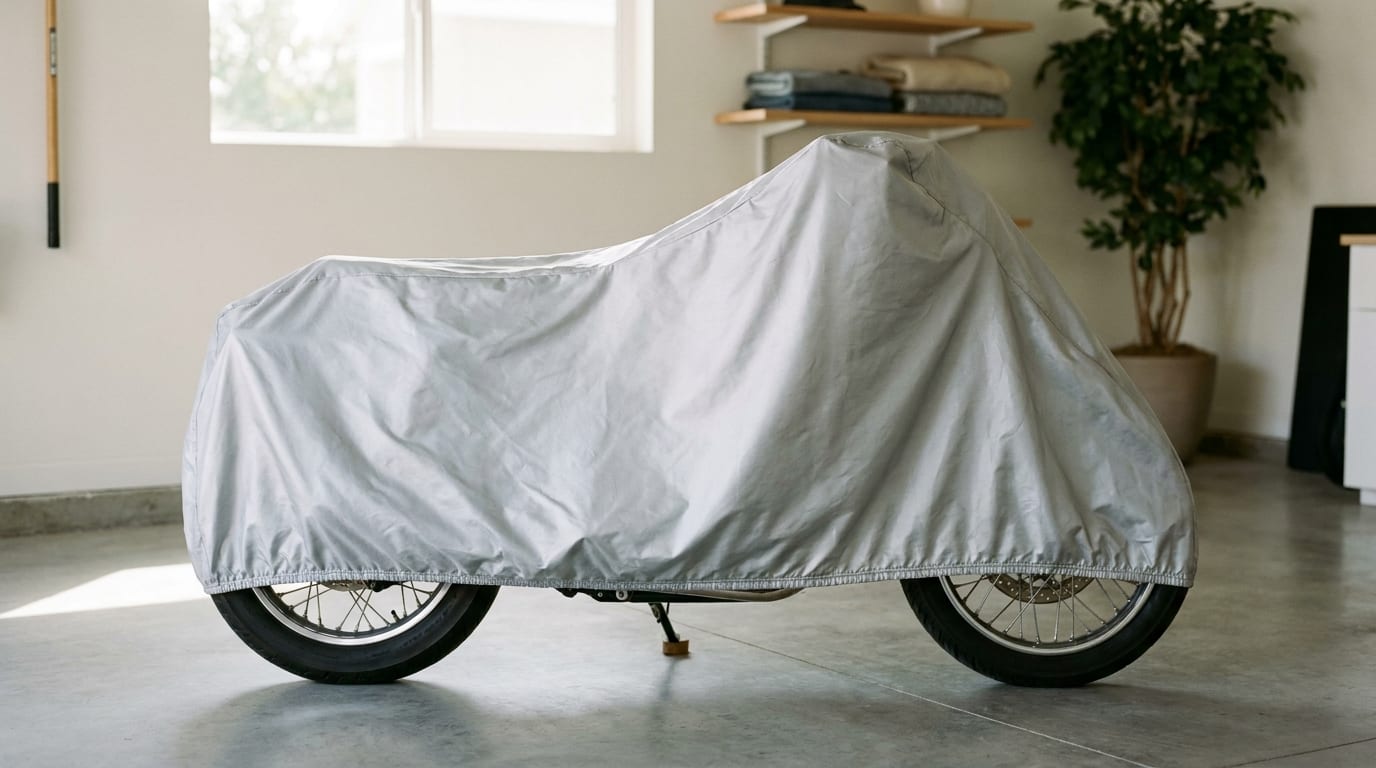
Touring motorcycles don't fit the mold most covers are built for. Between the fairing, the windshield, saddlebags, and often a top box, a Harley-Davidson Electra Glide or Honda Gold Wing takes up more real estate than a standard cruiser or sportbike, and a cover sized for those smaller bikes just won't cut it. Finding the best cover for a touring motorcycle means thinking past "will it fit over the seat" and into fairing clearance, strap placement, and how you'll actually use the thing between stops. This guide walks through fit, material, straps, and locks in the order that actually matters when you're buying one.
Why Touring Bikes Need a Cover Built for Their Size
A Gold Wing, a Yamaha Venture, a BMW K1600GT: these bikes are longer, taller, and wider than a standard cruiser because of everything bolted on for long-distance comfort. Fairings wrap around the front end. Windshields rise well above where a generic cover's front panel expects to stop. Saddlebags push the width out several inches on each side. A cover built for a typical mid-size bike will pull tight across the fairing and mirrors, stress the seams at the stitch lines, and leave the saddlebags sitting exposed to rain.
Touring bikes also get covered and uncovered constantly in ways a commuter bike doesn't. Riders pull over at rest stops, park overnight at campgrounds, share garage space at a buddy's place halfway through a cross-country run. That's a different use case than a bike that gets covered once in the garage and left alone for a season. A cover that's awkward to wrestle on and off gets skipped, which defeats the purpose. It's worth checking the fit against your actual bike's dimensions, including anything you've added after the fact, since a heavier, longer touring bike (see how much a Harley-Davidson actually weighs for a sense of scale) often needs the cover equivalent of a bigger jacket, not just a longer one. We'll go in order here: fit first, then material, then the strap and lock setup that keeps everything in place once it's on. For a broader look at options by type, the motorcycle covers lineup is a reasonable starting point.
What Makes a Cover the Right Fit for a Touring Motorcycle
Skip the generic "fits large motorcycles" listings. Touring and full-dress models vary enough in fairing width and windshield height that a cover sized for "large" could still leave gaps or drag on the ground, depending on which large bike you actually ride.
Look for contoured panels, or at least extra room built in around the front fairing, the mirrors, and the saddlebags. Without that shaping, the fabric bridges across those high points and flaps in the wind instead of sitting flush. Flapping fabric against paint for a few hundred miles of wind exposure at a rest stop isn't doing your clear coat any favors.
Length matters just as much as width. If your bike has a rear trunk or top box, confirm the total length actually covers it, because this is where off-the-shelf covers most often come up short. A cover that stops a few inches shy of the trunk looks fine folded on the shelf and then leaves a visible gap the first time you use it.
Before you buy anything, measure your own bike: ground to the top of the windshield, mirror to mirror, and total length with the bags mounted. Compare those numbers against the brand's actual sizing chart rather than guessing from the model name. If you want a walkthrough on taking those measurements correctly, the guide on figuring out what size cover fits your vehicle covers the same principles that apply here.
Material and Weatherproofing for Long-Haul Bikes
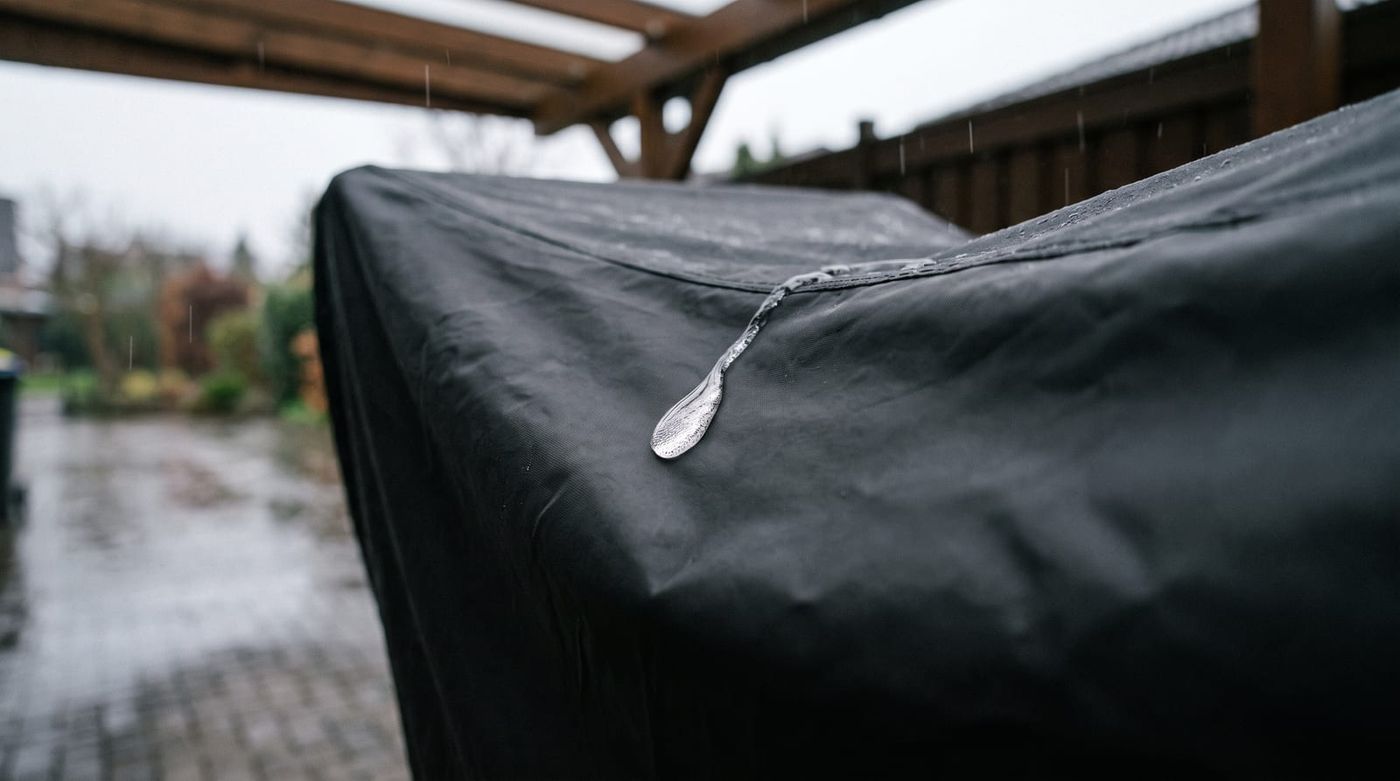
Touring riders don't park in one climate. One trip might mean desert sun, mountain rain, and a gravel shoulder in the same week, so the cover needs to handle more than dust in a closed garage.
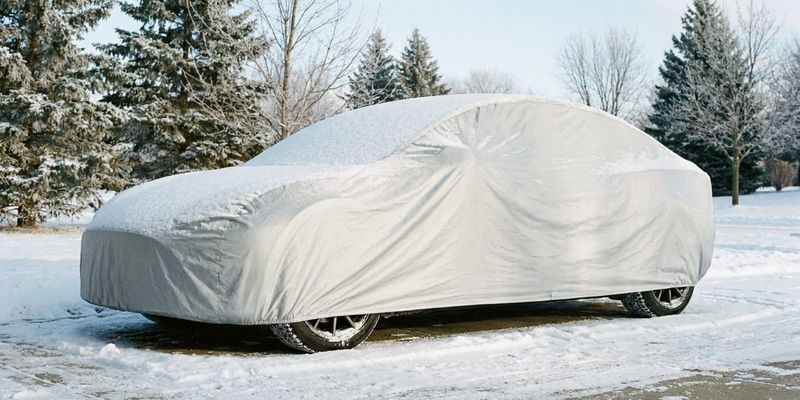
A breathable, water-resistant outer layer does two jobs at once: it keeps rain off, and it lets trapped heat and moisture escape so condensation doesn't pool against chrome and painted tanks after a hot riding day. Seal a hot engine under a non-breathable tarp and you'll find water droplets under there anyway, just from the bike cooling down. For covers that need to handle actual weather exposure rather than light dust protection, it's worth looking specifically at waterproof cover options built for that job.
UV resistance matters more here than on a garage-kept bike. Touring bikes get parked outdoors at scenic overlooks, motel lots, and campground pads during multi-day trips, often in direct sun for hours at a stretch. Cheap fabric fades and gets brittle under that kind of exposure faster than most riders expect.
Inside, a soft lining protects the windshield, mirrors, and paint from scuffing. This matters more on a touring cover than a show-bike cover, since you're putting it on and taking it off constantly instead of draping it once and leaving it for months. Rough inner fabric that's fine for occasional use will start leaving faint scratch marks on a windshield after enough on and off cycles.
Strap Systems: Keeping the Cover On at Highway Rest Stops and in Storage
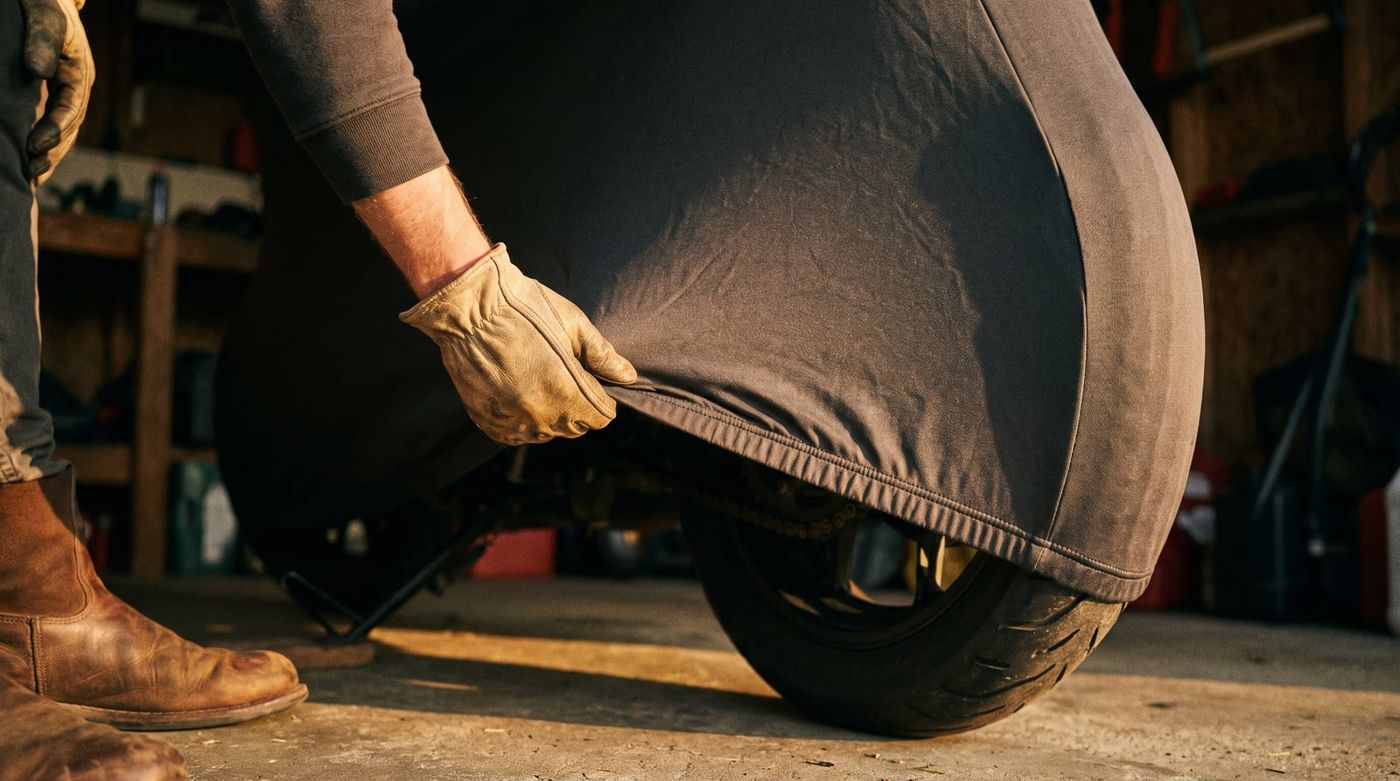
A built-in wind strap, one that cinches under the frame or belly of the bike, isn't optional for a touring cover. Tall fairings and windshields catch wind like a sail, and without a strap holding the cover down at the midpoint, gusts will lift the front edge and work it loose. This is the single feature that separates a cover that survives a windy rest stop from one that ends up tangled around your rear wheel.
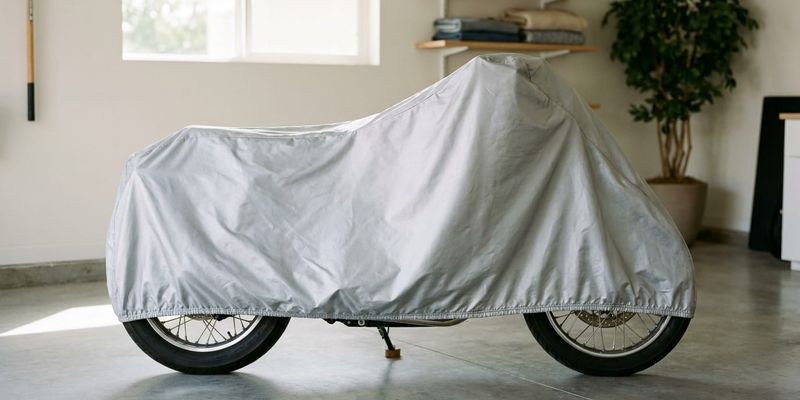
Check the bottom hem too. An elastic edge or drawcord around the wheel openings seals the cover down low and keeps it from ballooning in a crosswind. Without that seal, air gets up underneath the whole cover and turns it into a parachute.
For bikes with saddlebags and a top box, make sure there's enough slack built into the pattern plus a secondary strap or buckle point near the rear. That rear section is heavy and sticks out wide, and a cover with only one strap up front tends to leave the back half loose and flapping. Proper tensioning matters too. If you've never set one up before, the wind strap installation guide walks through getting the tension right so the fabric isn't rubbing against paint for hundreds of miles on the trip home.
Lock Recommendations for Securing a Covered Touring Bike
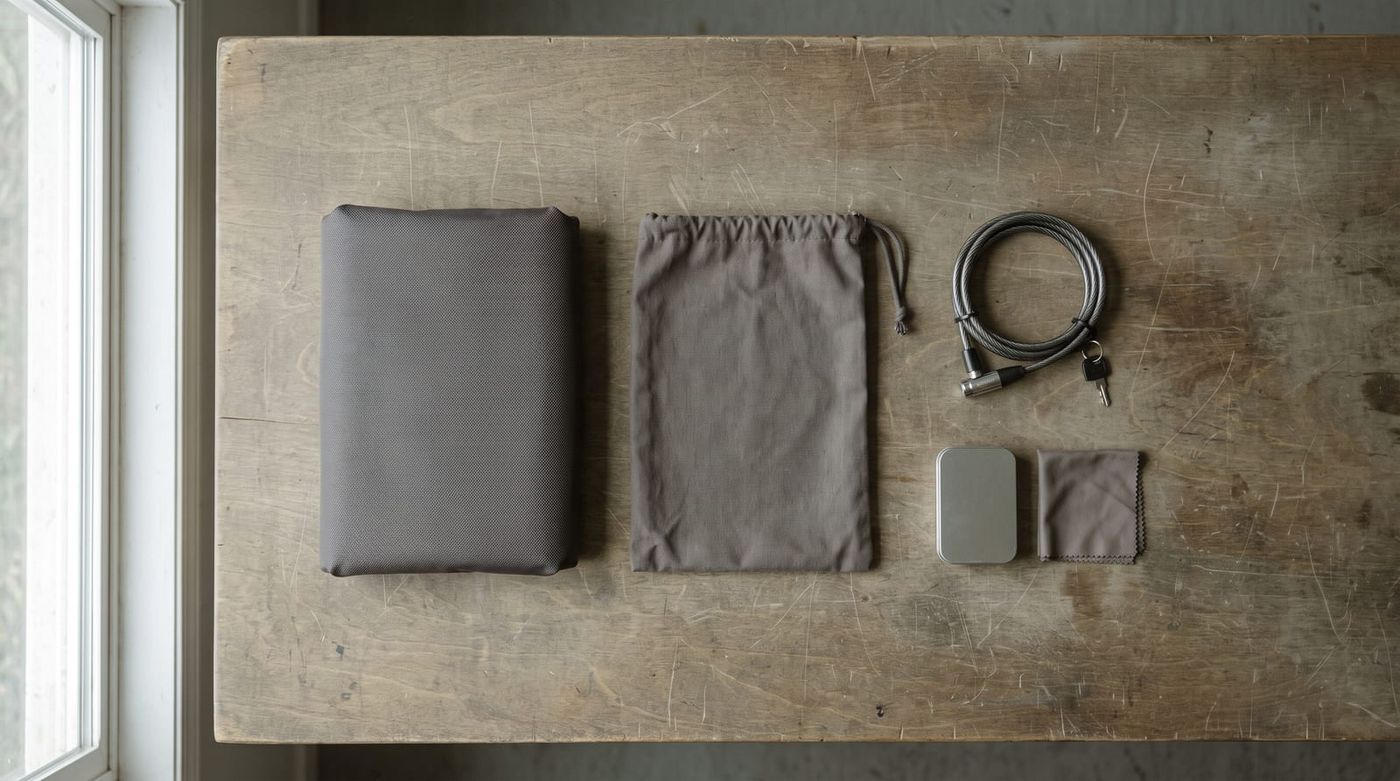
Touring bikes spend a lot of time parked in places you don't control: public lots, campgrounds, a stranger's driveway if you're staying with family along the route. A cable lock grommet on the cover is a practical feature for that reality, not a nice-to-have.
Look for a reinforced grommet near the wheel or frame. That lets you run a cable lock through the cover itself, locking it to the bike so nobody can just lift the cover off and walk away with it (or worse, use the cover coming off as a signal that the bike's unattended). Pair that with a standalone motorcycle cable lock looped through a wheel or another fixed point whenever you're parked somewhere unfamiliar. The cable lock installation guide covers how to route it correctly so the lock doesn't just sit there for show.
Be honest about what this does and doesn't do. A cover won't stop a determined thief with bolt cutters and a trailer. What it does is remove the easy option, the one where someone just grabs an uncovered, unlocked bike in thirty seconds. Combined with a lock, it's enough friction to deter casual tampering and keep the cover itself from walking off, which happens more than people expect at busy campgrounds.
Matching a Cover to Your Touring Brand and Model
Fit really does vary by brand here, more than most riders assume. A Harley-Davidson Road King, a Honda Gold Wing, a Yamaha Venture, a Kawasaki Vulcan Voyager, an Indian Roadmaster, and a BMW touring bike all carry their bulk differently: different fairing shapes, different saddlebag widths, different trunk heights. A universal "XL motorcycle" cover treats all of that as one shape, which it isn't.
Semi-custom covers built around a specific model account for saddlebag width and trunk height in a way a generic cover can't. If you ride one of these, it's worth checking the model-specific page before defaulting to a universal size: Harley-Davidson, Honda, Yamaha, Kawasaki, Indian, and BMW all have their own fit profiles worth comparing against your bike's actual measurements.
If you've added a taller windshield, extra lighting, or saddlebags bigger than stock, don't default to the listing for the base model. Size up or check the clearance notes first. Aftermarket touring gear is exactly the kind of thing that turns a "perfect fit" cover into one that won't close around the mirrors anymore.
Putting It Together: Choosing and Installing Your Cover
Work the decision in order: fit for the fairing, bags, and trunk first, then weatherproofing for whatever climate you actually ride in, then the strap and lock features that match how and where you park. Skip ahead to price or looks before nailing those three, and you'll end up with a cover that looks fine in a product photo and fights you every time you use it.
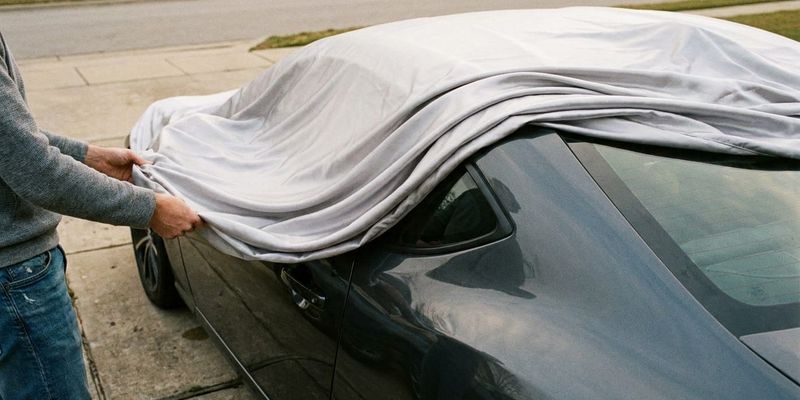
Installing it is simple once the fit is right. Drape it from front to back, seat the front panel over the fairing and windshield, cinch the wind strap under the belly, run your cable lock through the grommet, and check that the hem sits snug around both wheels before you walk away. Get in the habit of doing it the same way every time and it takes less than a minute, even at a rest stop with the clock running on your lunch break.
If you're trying to figure out exactly how far you can push a tank of gas before your next stop and cover routine, that's worth sorting out too, so you know how often this whole process repeats on a given trip. Either way, take the time to find a cover that actually matches your bike's dimensions rather than settling for the closest generic size. It's the difference between a cover that protects the bike and one that just sits there looking like it might.
If you're still narrowing things down, it's worth browsing a few options side by side and reading through an installation guide before you commit, just so you know what you're signing up for once it arrives.