
Can You Recommend a Good Car Cover for a Hatchback Parked in a Snowy Climate Like Minnesota?
Published
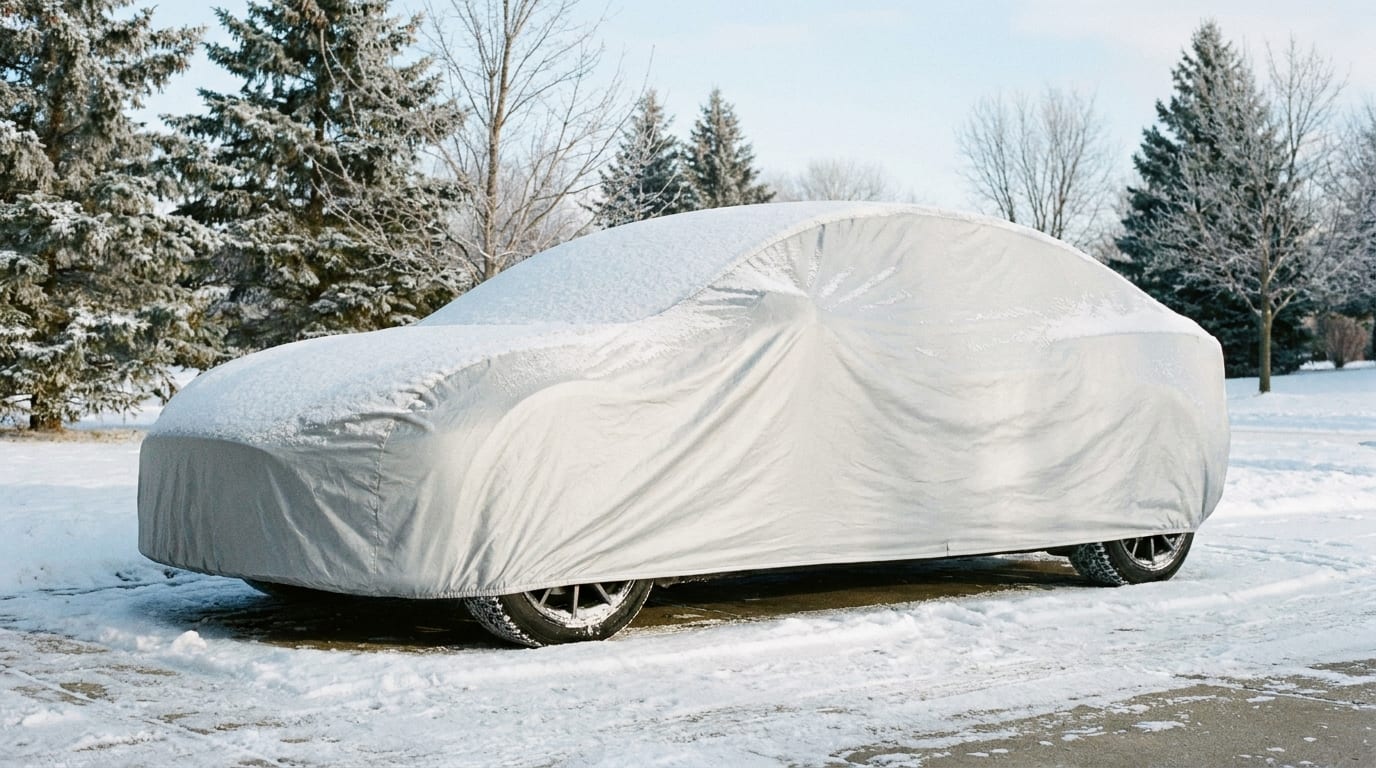
The Quick Answer: What to Buy for a Minnesota Hatchback
Yes. For a hatchback parked outdoors in Minnesota, get a custom-fit, multi-layer waterproof outdoor cover rated for snow load and freezing temps, with grommets built in for a cable lock and reinforced seams around the hatch and rear glass. That combination handles the two things that actually wreck a cheap cover out there: standing wet snow and sub-zero stiffness.
Universal covers tend to fail fast in this climate. They sag in the middle under wet snow, they don't hug a hatchback's shorter rear overhang or its steeply angled rear glass, and in extreme cold a lot of them go brittle and crack right at the fold lines. A loose cover also gives wind somewhere to grab, which is how you end up chasing your car cover across the driveway during a February gust.
So, can you recommend a good car cover for a hatchback parked in a snowy climate like Minnesota? Fit and weatherproof rating are the two variables that matter most, custom beats universal, and "waterproof" needs to mean snow and ice, not just light rain. Beyond that, it's a budget and conditions call, which is what the rest of this guide walks through.
Quick Comparison: Cover Options for a Snowy-Climate Hatchback
Here's how the three realistic tiers stack up for a Minnesota hatchback owner:
| Cover Type | Fit Accuracy | Waterproof/Snow Rating | Freeze Resistance | Typical Price Range | Best For |
|---|---|---|---|---|---|
| Universal Outdoor Cover | Loose, gaps at hatch | Light to moderate | Can stiffen or crack | Lowest | Mild winters, short-term storage only |
| Custom-Fit Outdoor Cover (mid-tier) | Precise, matches body lines | Fully waterproof, taped seams | Rated for moderate snow load | Mid-range | Regular Minnesota snowfall, daily outdoor parking |
| Custom-Fit Premium/Deluxe Cover | Tightest fit, reinforced panels | Highest, built for sustained snow load | Built for sub-zero exposure | Highest | Harsh winters, street parking, long-term outdoor storage |
One-line takeaway: for most Minnesota hatchback owners, a custom-fit car cover in the mid-to-premium outdoor tier is the sweet spot. It's not the cheapest option on the shelf, but it's the one that's still doing its job in March.
What Minnesota Winters Actually Demand From a Cover
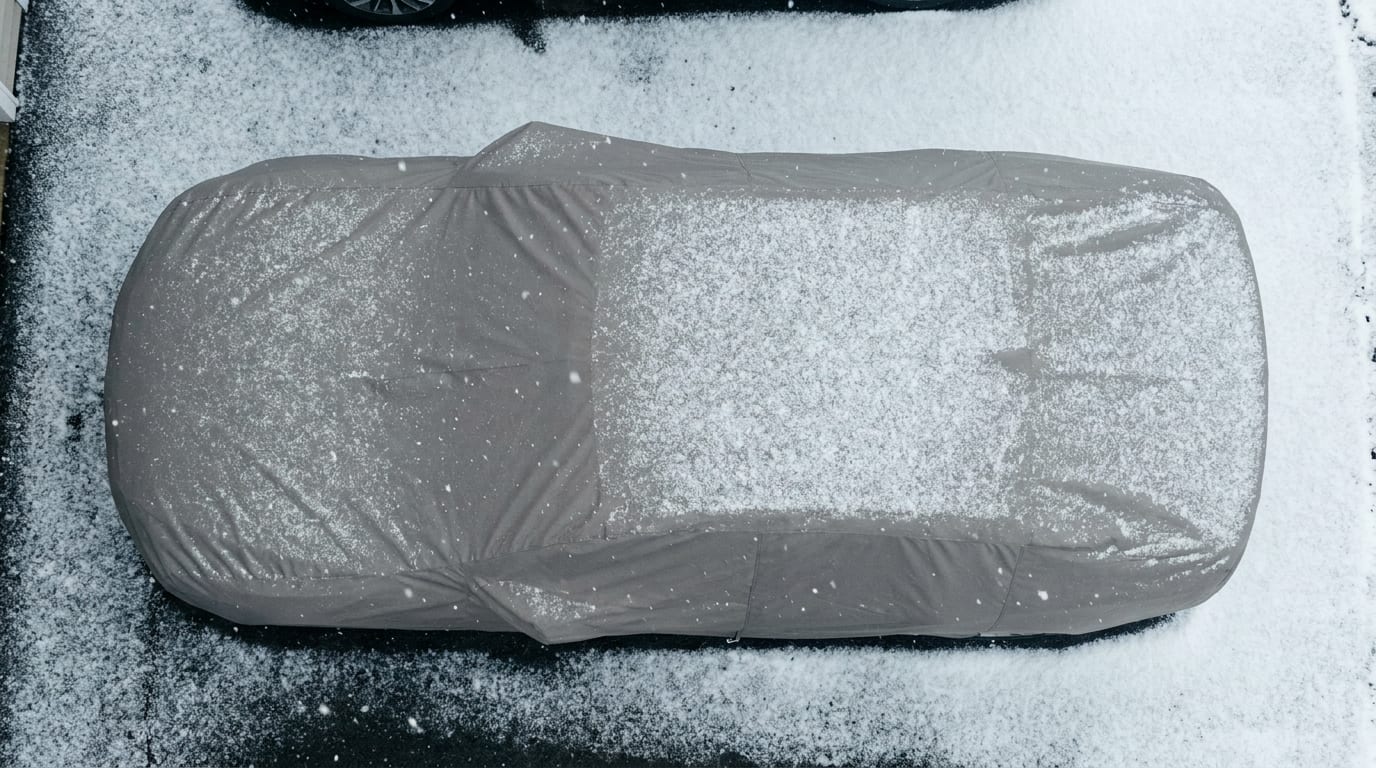
Minnesota doesn't just throw cold at your car, it throws a combination punch. Heavy, wet snow piles weight onto the roof and hood. Freeze-thaw cycles swell and contract the fabric day after day. Road salt spray coats everything parked anywhere near a plowed street. And wind chill does something sneaky: it makes fabric that'd be fine at 20 degrees turn stiff and crack-prone at negative 10.
A cover described only as "light rain resistant" or "UV protective" wasn't built with any of that in mind. Look specifically for language like snow-rated, winter-rated, or multi-layer outdoor fabric. That phrasing isn't marketing fluff here, it's telling you the manufacturer actually tested for this.
Where you park changes the math too. A driveway sees snow and cold. Street parking sees snow, cold, salt brine, and a direct blast of slush every time a plow goes by. If you're curbside most winters, lean toward the higher tier.
Hatchbacks also catch more sky than a sedan does, relatively speaking. More glass, a steep rear hatch, less overhang to shed snow off the back. A cover that fits snug around that rear section matters more on a hatchback than it would on a car with a long, sloped trunk.
Getting the Fit Right for a Hatchback
Custom-fit means a cover built to your exact year, make, and model, mirror shapes, hatch angle, roofline, all of it. Universal and semi-custom covers are cut to a general size bracket and hope for the best. On a hatchback, the fit gap shows up most at the rear hatch and roofline, which is exactly where snow drifts and wind pressure both concentrate.
If you're shopping custom-fit, you typically just select your vehicle's year, make, and model rather than pulling a tape measure. If you're going universal, measuring length, width, and height matters a lot more, and it's worth checking what size car cover fits your vehicle before you buy rather than after.
This applies across the hatchback lineup: Subaru Impreza and Crosstrek, VW Golf, Honda Civic hatchback, Mazda3, whatever you're driving. No single brand's cover is inherently better here, it's about matching the cut to your car's actual shape. Subaru, Volkswagen, and Honda all have covers built to their specific body lines, which is the point.
Too loose, and the cover flaps in wind and lets snow drift underneath where it can refreeeze against the paint. Too tight, and ice buildup can stress seams and stitching. Neither extreme is where you want to be.
Material and Weatherproofing Specs to Check Before Buying
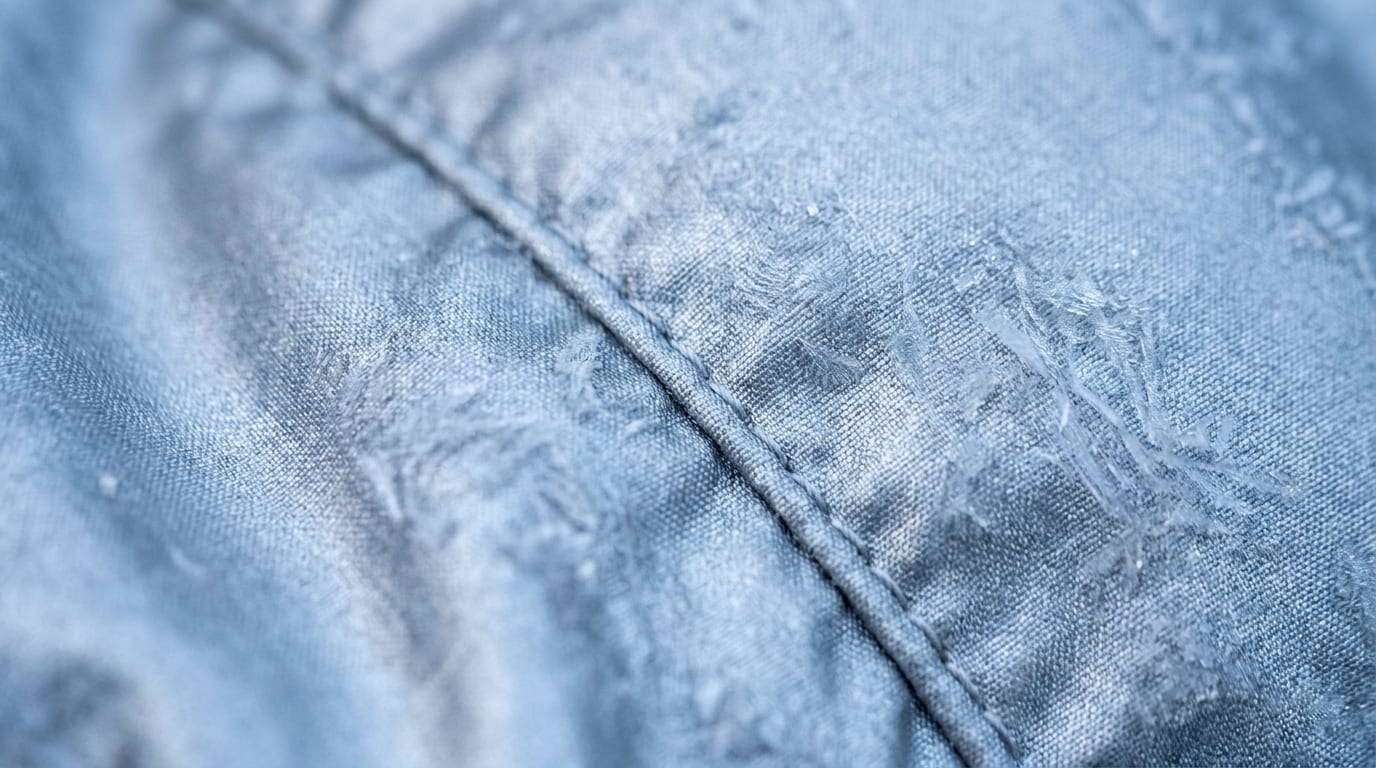
Before buying, check a few things on the product page: layer count, waterproof rating or seam taping, breathability, and UV protection. Layer count and seam taping tell you how well it'll actually keep snowmelt out. Breathability tells you whether moisture can escape instead of getting trapped against the paint, where it refreezes overnight.
Freeze resistance is its own line item. Some fabrics that handle rain fine will go stiff and brittle once temperatures drop into single digits. Covers marketed specifically for winter or all-weather outdoor use are formulated to flex in that range. A fair-weather or indoor cover just isn't.
Here's the part people miss: breathability matters even when it's snowing, not just in summer heat. A fully sealed, non-breathable cover traps condensation underneath it, and that condensation turns to ice on your paint overnight. Not exactly the protection you were going for.
For the full spec rundown, including what waterproof ratings actually mean in practice, it's worth reading through CarCovers' waterproof car cover buying guide and the breakdown of outdoor car covers built for exactly this kind of exposure.
Accessories That Matter More in Snow
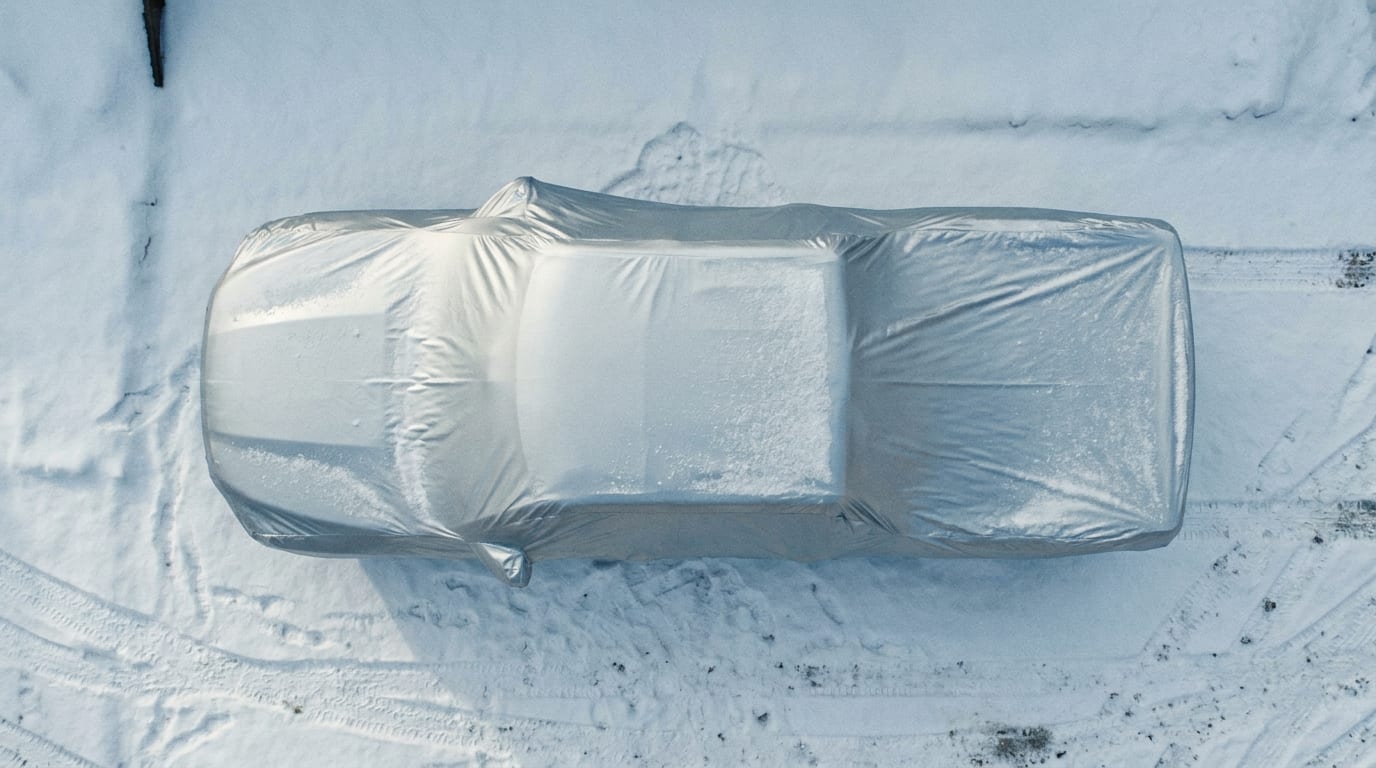
A cable lock and built-in grommets matter more here than almost anywhere else. Winter storms bring sustained wind gusts, and a gust that'd barely ruffle a cover in July can peel one off entirely during a January whiteout. Learn how to install a cable lock correctly once, and it's a five-minute job every time after.
Wind straps are worth the add-on cost if you're in an exposed driveway or an apartment lot with nothing blocking gusts. The gust strap and wind strap installation guide walks through placement, which matters more than people expect, a strap in the wrong spot does almost nothing.
If your cover tends to pool water or snow on the roof instead of shedding it, a support pole or bracket underneath fixes that by giving the fabric a peak to run off of. Small detail, but it keeps standing snow weight off the panel over your windshield.
None of this takes long to set up. But doing it right the first time means you're not re-securing a half-blown-off cover at 6am in a snowstorm, so it's worth following the simple cover installation guide if this is your first season with one.
Winter Care: Keeping the Cover (and Car) in Good Shape
Knock heavy wet snow off the cover before it compacts and refreezes into a solid sheet. Once that happens, it's a lot harder to remove without stressing the fabric, and it adds weight the cover wasn't built to hold indefinitely.
After a major storm, it's worth pulling the cover, shaking it out, and re-seating it rather than leaving compacted snow bonded to the fabric for days. That bond is what eventually works a cover loose at the seams.
At the end of the season, rinse off road salt residue before folding the cover away for summer. Salt left sitting in fabric over months doesn't do the material any favors, and it's an easy step to skip when you're just glad winter's over. For the full process, the car cover cleaning guide covers washing steps that won't damage the waterproof coating.
Bottom Line: Match the Cover to Minnesota, Not Just the Car
If you take one thing from this: a custom-fit, snow-rated, waterproof outdoor cover with a cable lock is the right setup for any hatchback living outside through a Minnesota winter. It's not overkill, it's just matched to the climate.
A simple rule to decide tier: driveway parking with occasional snow calls for a mid-tier custom-fit cover. Street parking or a genuinely harsh winter calls for the premium or deluxe tier. If you're not sure which bucket you're in, the higher tier is the safer bet, it'll outlast the lower one by a few winters at least.
Before you buy anything, run your hatchback's year, make, and model through a cover finder tool to make sure you're looking at options actually cut for your car, not just something close enough. And since this is a purchase meant to survive more than one winter, check what's backed by a lifetime warranty on car covers, that's the kind of detail that matters once the cover's three winters in.
If you found this useful, stick around and browse a few more car care guides, there's a lot more worth knowing before the next storm rolls in.






