


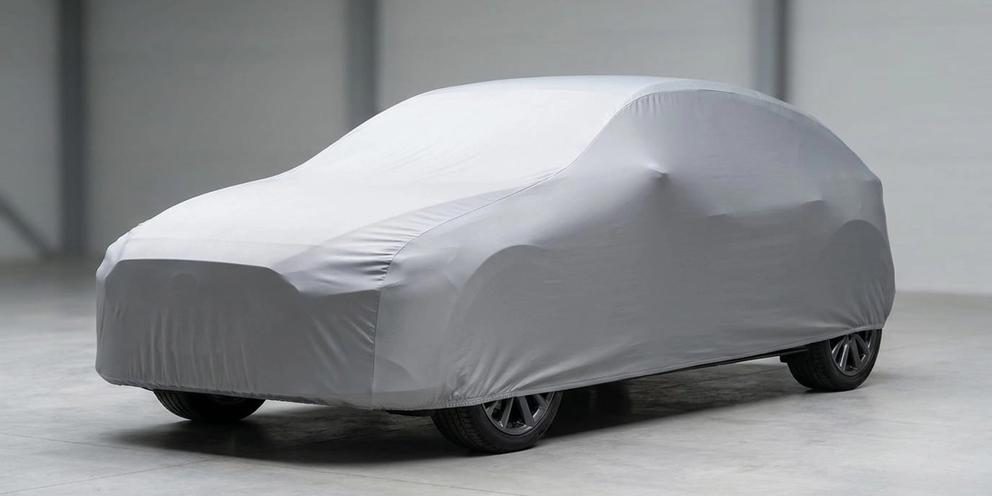
Custom-Fit vs Universal Car Cover for Toyota Camry: Which One Actually Fits?
Custom-Fit vs Universal Car Covers for the Toyota Camry: Which One Actually Protects Your Car?
You're standing in the checkout aisle (digital or otherwise), staring at two options: a universal "sedan-size" cover for $40 less, or a Camry-specific custom-fit cover that costs more but claims to actually match your car. It's a real decision, not a marketing trick, and the answer isn't the same for every driver.
Here's the thing about the Camry: its low, curved body and specific mirror and spoiler points make fit tolerance matter more than it would on a boxier vehicle like an old sedan or a truck. A generic cover cut for "large sedans" has to account for a dozen different body shapes at once. Your Camry isn't any of those shapes exactly. This article compares custom-fit and universal covers head-to-head on fit, weather protection, installation, and cost, so you can pick the right one for your Camry without guessing.
Why Fit Precision Matters More on a Camry Than You'd Think
The Camry's rear glass slopes more aggressively than older, boxier sedans, and SE and XSE trims add an integrated rear spoiler that most universal covers were never cut to clear. The front fascia sits low too. Universal covers are cut to a generic rectangle-ish shape meant to stretch over a range of sedans, and that generic cut just doesn't close these gaps.
What happens next is predictable. A loose cover doesn't lie flat against the hood or trunk, it tents. Wind gets underneath that tent, and once air is under the cover, it lifts the whole thing like a sail. You've probably seen a car cover flapping in a parking lot doing exactly this.
That flapping isn't just annoying. It's abrasive. Repeated movement against the clear coat, especially at the loose spots around the hood edge and trunk lid, is a leading cause of fine scratching and swirl marks over time. It's not just about keeping dust off anymore, it's about what the cover itself does to the paint when it doesn't fit right.
If you're still not sure why "my Camry is a mid-size sedan so a mid-size sedan cover should fit" isn't quite right, the sizing logic is worth understanding on its own. Check out what size car cover fits your vehicle for the general concept before you buy anything.
Custom-Fit vs Universal: Side-by-Side Comparison for the Camry

Fit Tolerance
- Custom-fit: Cut to Camry-specific dimensions, including mirror pockets, an antenna cutout, and allowance for the factory spoiler
- Universal: Sized to a generic "large sedan" range, often with several inches of slack in every direction
Wind and Flap Resistance
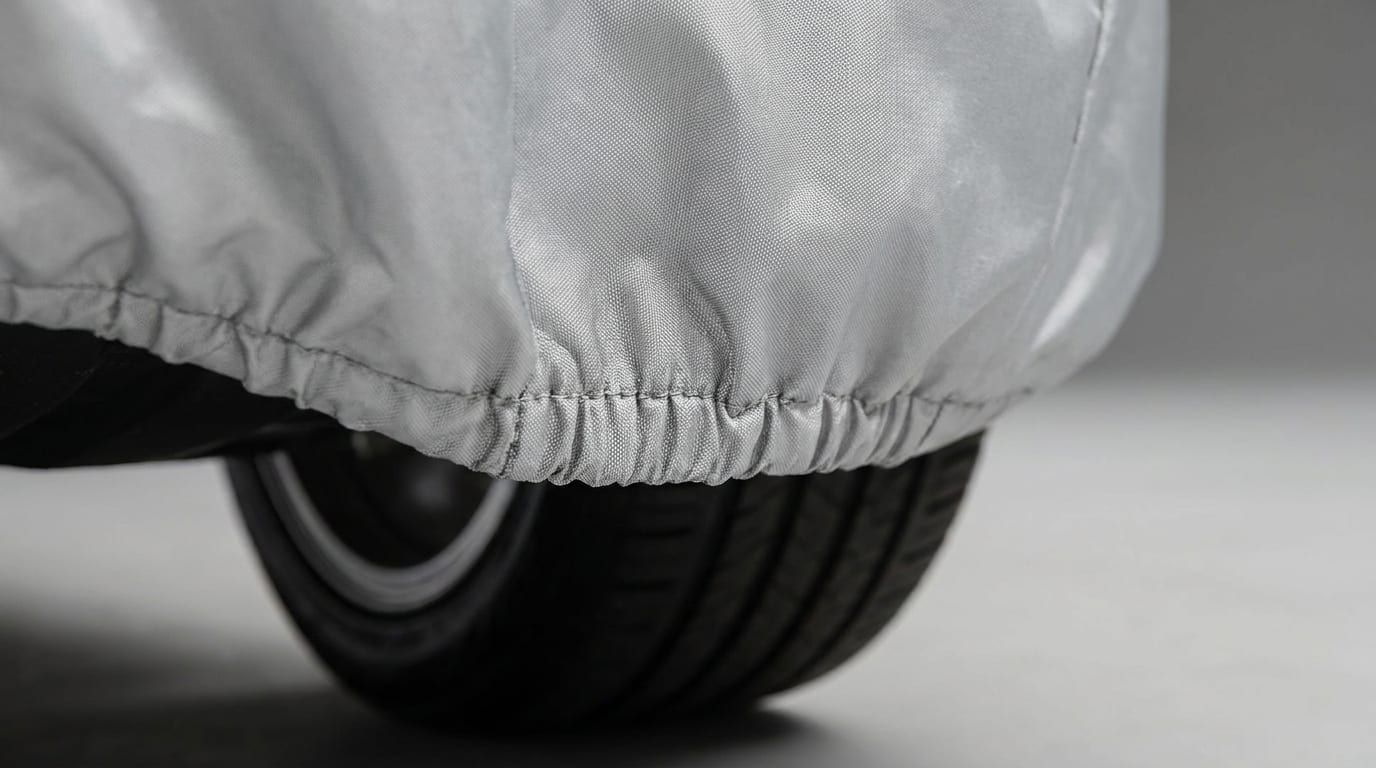
- Custom-fit: Tailored hem with elastic edges that hug the rocker panels and stay put
- Universal: Billows in sustained wind and can partially lift or blow off at the loose ends
Water and Weather Sealing
- Custom-fit: Seams follow the Camry's actual body lines, so water runs off the panels the way it's supposed to
- Universal: Loose sections over the hood or trunk let water pool instead of shedding
Installation Time
- Custom-fit: Goes on in one motion since the panel edges already line up with the car
- Universal: Needs readjusting and strap cinching nearly every time you put it on
Paint Safety
- Custom-fit: Snug, static fit means minimal surface contact and rubbing
- Universal: Looser fabric can rub against paint whenever the wind picks up
Price Range
- Custom-fit: Higher upfront cost, but it's sized once and doesn't need bungees or extra straps to compensate for excess fabric
- Universal: Lower sticker price, but often needs add-ons to work properly
Cost Per Year of Protection
- Custom-fit: Even wear pattern since the fabric isn't flapping against itself or the car
- Universal: Faster wear at the loose points from repeated flapping and concentrated UV exposure
Weigh the numbers honestly and the custom-fit's higher sticker price starts looking less like a premium and more like what a Camry cover should actually cost.
Where Universal Covers Fall Short for Camry Owners Specifically
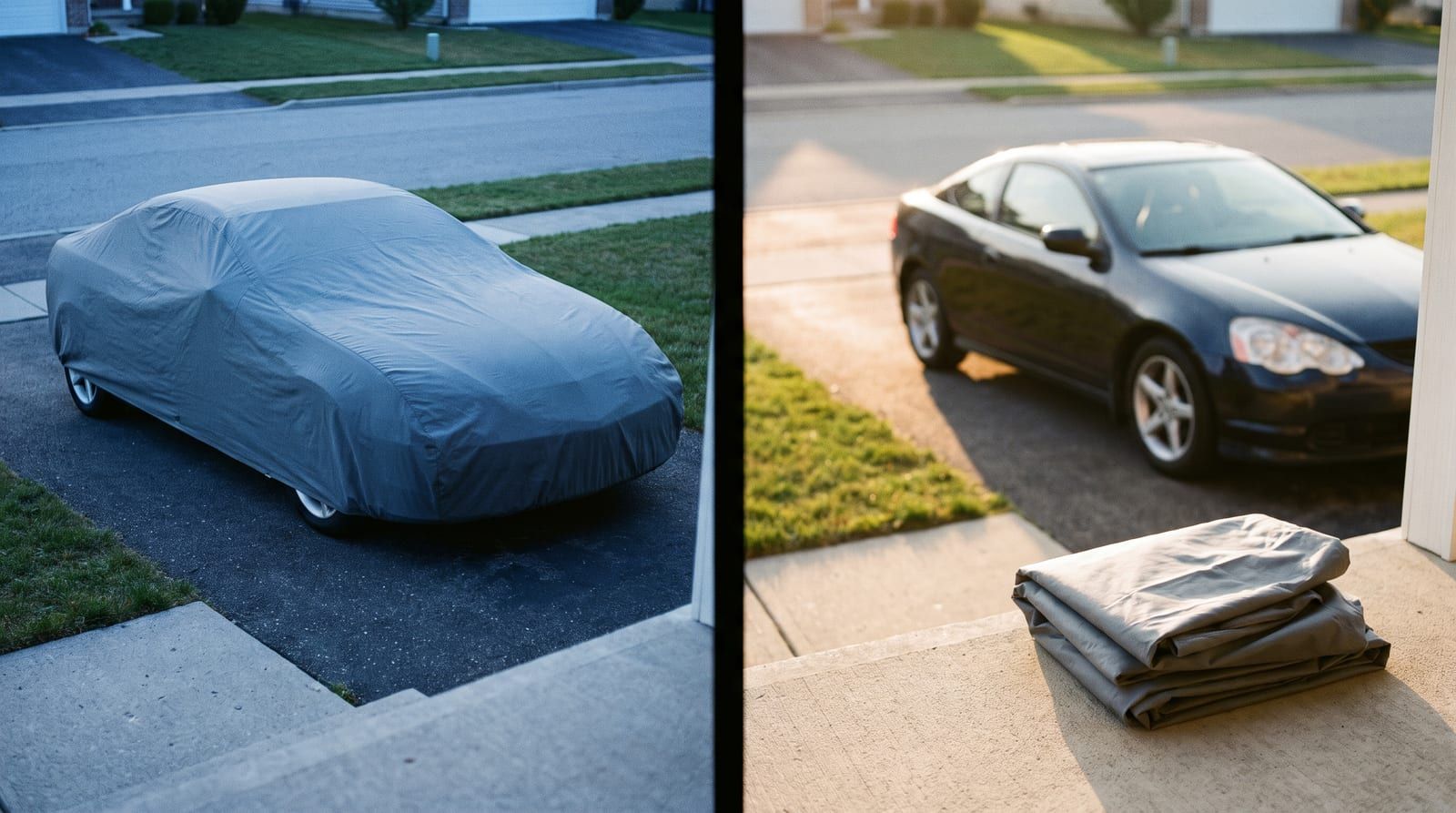
Universal covers are sized to a length and width range meant to cover several different sedans. Your Camry sits somewhere in the middle of that range, not at the center of it. That's not a flaw in the cover, it's just what "universal" means: nobody's exact fit, everybody's approximate fit.
Because of that slack, a lot of universal cover owners end up adding gust straps or bungee cords just to keep the thing on the car in windy conditions. It works, sort of, but it's an extra step and an extra cost that a properly sized cover shouldn't require in the first place. If you're already down this road with a universal cover, our guide on installing gust straps and wind straps for car covers walks through the stopgap fix.
Mirror cutouts are another spot where the gap shows. Universal covers usually have a generic slit or pocket meant to fit "most" side mirrors. The Camry's mirror housings have their own shape, and a generic slit leaves loose fabric flapping right at one of the highest-wind points on the car, which is exactly where you don't want slack.
What a True Custom-Fit Camry Cover Includes
A real custom-fit cover for the Camry starts with a Camry-specific pattern, not a resized template. From there you're looking at an elastic hem at the rocker panels to keep the bottom edge snug, tailored mirror pockets that actually match the mirror housing shape, and reinforced grommets for tie-downs so the cover stays anchored in wind.
Tiers matter here too. Entry-level custom-fit options are built for basic outdoor protection, dust and light weather, nothing fancy. Move up the lineup and you get into platinum-tier covers with FleeceGuard fleece lining, which is really built for indoor storage and scratch protection rather than outdoor elements. Knowing which tier matches how and where you park is half the battle.
Because the fit is exact, some accessories only make sense with a true custom-fit cover: an antenna patch that lines up with the Camry's antenna location, and cable-and-lock attachment points for anti-theft security that actually anchor where they're supposed to. A universal cover's imprecise geometry makes these kinds of add-ons hit or miss.
For the full construction standard, our custom-fit car covers guide breaks down what separates true custom-fit from cover designs that just say "custom" on the label. And if you want to see what's actually available for your Camry, Toyota's cover lineup by generation is the place to start.
Which Camry Generation Are You Covering?
Custom-fit patterns are generation-specific, and that's not a small detail. The XV50 (2012 to 2017), XV70 (2018 to 2024), and XV80 (2025 and up) all have different body dimensions, different curves, different spoiler placements. A universal cover can't account for any single one of them accurately, let alone all three.
Good news if you drive a Hybrid: it shares the same body shell as the gas trims within its generation, so the same custom-fit pattern applies regardless of powertrain. No separate Hybrid-specific cover needed.
What you do need to double-check is model year and trim, specifically whether your Camry came with the factory spoiler. That single detail changes the cutout requirements even within the same generation, so it's worth confirming before you order rather than after the cover shows up and doesn't sit right.
Curious how we got from the boxy '80s Camry to the current XV80 shape, and why that evolution matters for cover fit? Our look at Toyota's design history covers the generational changes in more depth.
Making the Call: Is Custom-Fit Worth It for Your Camry?
Here's a simple way to think about it. If your Camry lives outside daily, exposed to wind, sun, and rain, custom-fit is the only option that makes sense long-term. If you're storing it short-term indoors, a garage or a covered carport for a few weeks, a universal cover is more defensible since wind and weather aren't really in play.
The price objection is real, and worth addressing directly instead of waving away. Yes, a universal cover costs less at checkout. But factor in the gust straps you'll probably end up buying, the earlier replacement from flapping-related wear, and potentially paint correction if swirl marks show up from months of rubbing. The gap narrows fast, and sometimes reverses.
There's also the warranty angle. A lifetime warranty on a car cover only makes financial sense when the cover is cut correctly enough to actually last that long. A universal cover flapping itself apart in six months doesn't get much value out of a lifetime warranty, custom-fit does.
If you're weighing tiers rather than just custom vs. universal at this point, our best car cover comparison breaks down the differences between protection levels.
Bottom Line: Get the Cover Cut for Your Camry
Universal covers aren't useless. They'll keep dust off in short-term, low-wind situations. But for daily outdoor parking, a custom fit car cover for Toyota Camry is the only option that actually matches your car's body lines instead of approximating them.
Head to find your car cover to select your Camry's year and trim and see the correct custom-fit options and tier pricing laid out for you.
If you've made it this far, you already know the generic sedan-size box isn't the move. Shop the cover built for your Camry, and while you're browsing, our articles section has more guides worth a look if you want to keep your car looking right for years, not just weeks.
Updated