How Often Should You Check an RV Cover in Storage?
Quick answer: check an RV cover every 2 to 4 weeks during long-term storage, even if the RV just sits there untouched. That's the baseline. If a major storm rolls through, winds hit 30+ mph, or you get a heavy snowfall, tighten that up to weekly, or go look at it the next day.
How often should you check an RV cover in storage really comes down to two variables: how exposed the storage spot is, and what the weather's been doing. An RV parked under a carport in a mild climate can go a full month between checks. One sitting in an open lot through a windy spring can't. We'll get into both scenarios below, along with what to actually look for once you're out there and what it costs you if you skip too many visits. A quick walk-around with RV covers properly fitted takes less time than most people think, and it's the difference between catching a loose strap and finding a roof full of standing water three weeks later.
What should you look for during an RV cover check?
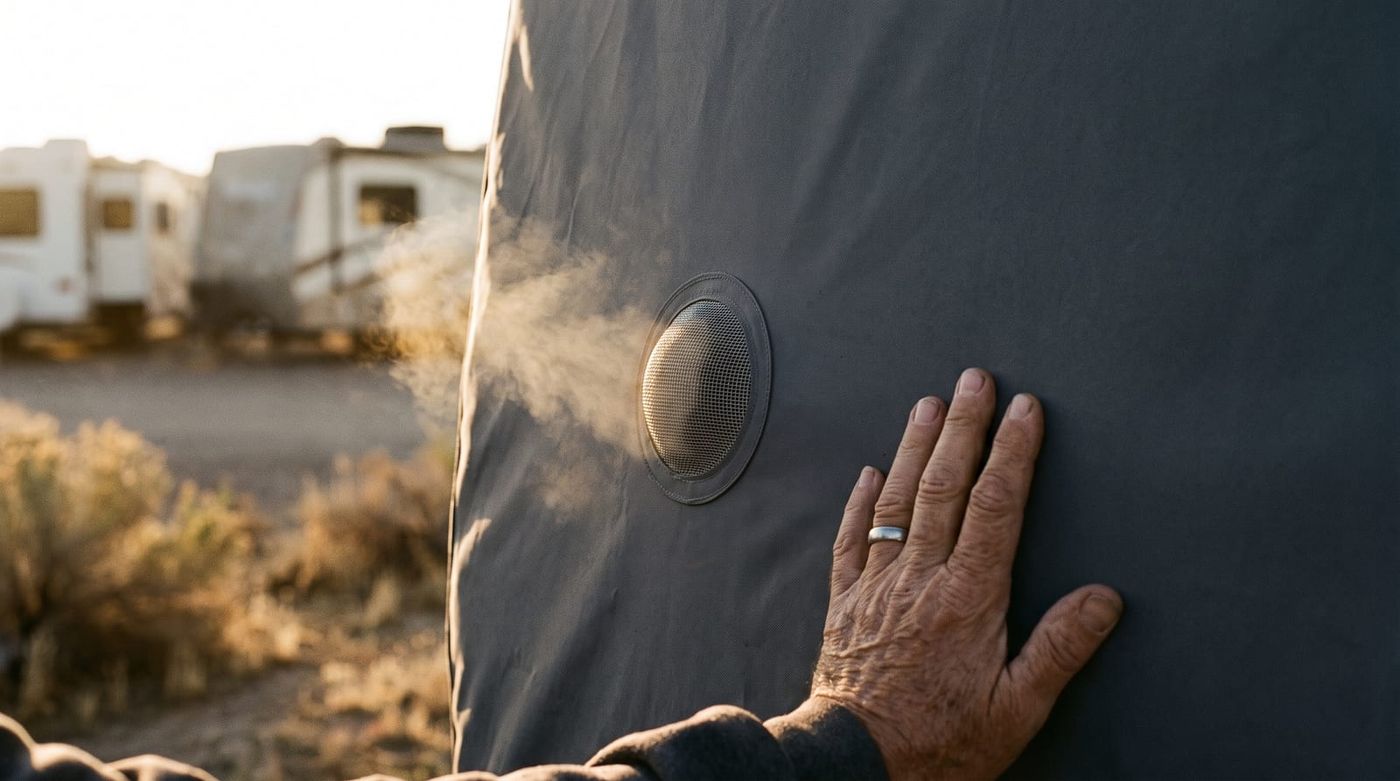
You don't need to pull the whole cover off every time. A five-minute walk-around usually tells you what you need to know.
Here's what to actually check:
- Straps and buckles. Give them a tug. Straps loosen over time from wind flex and temperature changes, even when nothing looks wrong from a distance.
- Pooling water. Look at the roofline specifically. A sagging section that's collecting water will stretch the fabric and eventually find a seam to leak through.
- Rips and abrasion. Check corners, mirror cutouts, vent covers, and anywhere the fabric rubs against a hard edge. This is where covers fail first.
- Shifting. Wind can walk a cover off a fifth wheel or travel trailer over several days without anyone noticing, especially if gust straps weren't tensioned properly during RV cover installation.
- The underside. Don't just look at the outside. Peek underneath periodically for condensation, mold spots, or signs that something's decided to nest in there.
That's it. You're not doing a deep inspection every time, just confirming nothing's shifted, torn, or pooling since the last visit.
Does storage location change how often you should check?
Yes, and it matters more than most owners assume.
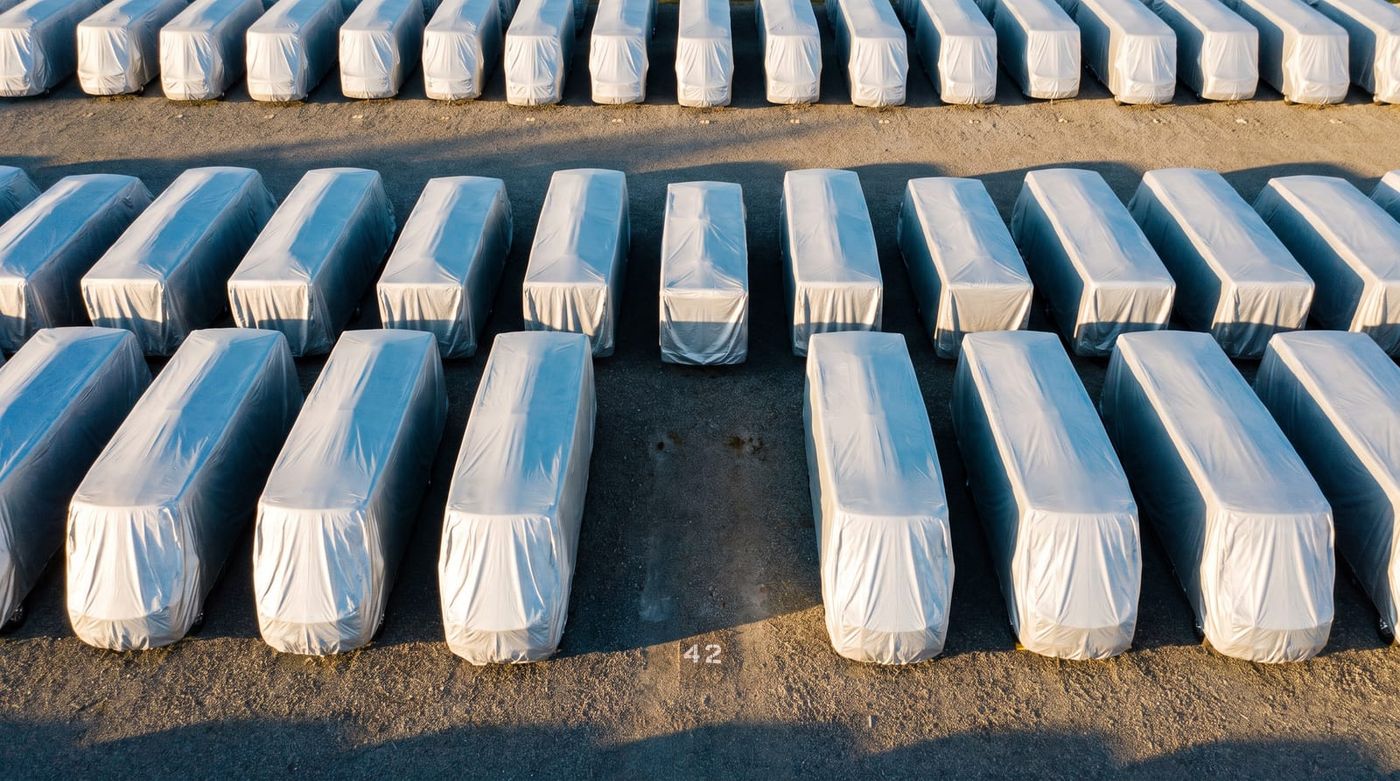
Outdoor, fully exposed storage lots need the frequent end of that range, every two weeks, because there's nothing cutting the sun, wind, or rain hitting the cover directly. Covered storage, like a carport or pole barn, or full indoor storage can usually stretch to monthly checks since UV exposure and wind stress are minimal in those spots.
Coastal regions and anywhere with regular high wind are the exception to all of this. Salt air degrades straps and hardware faster, and gusts off open water loosen buckles quicker than you'd expect even on a well-fitted cover. If you're storing near the coast, check every two weeks regardless of whether the RV is covered or exposed.
Fit also plays a role here. A Class A RV cover sits differently in wind than a fifth wheel trailer cover or a travel trailer cover, since the body shapes and ground clearance change how air moves underneath. Truck campers have their own quirks too, with truck camper covers often dealing with more corner flex since the cab-over section catches wind differently than a flat trailer roof. If your rig falls into one of these categories, it's worth reading the fit notes on that specific page before you assume your check interval matches someone else's.
What weather conditions call for more frequent checks?
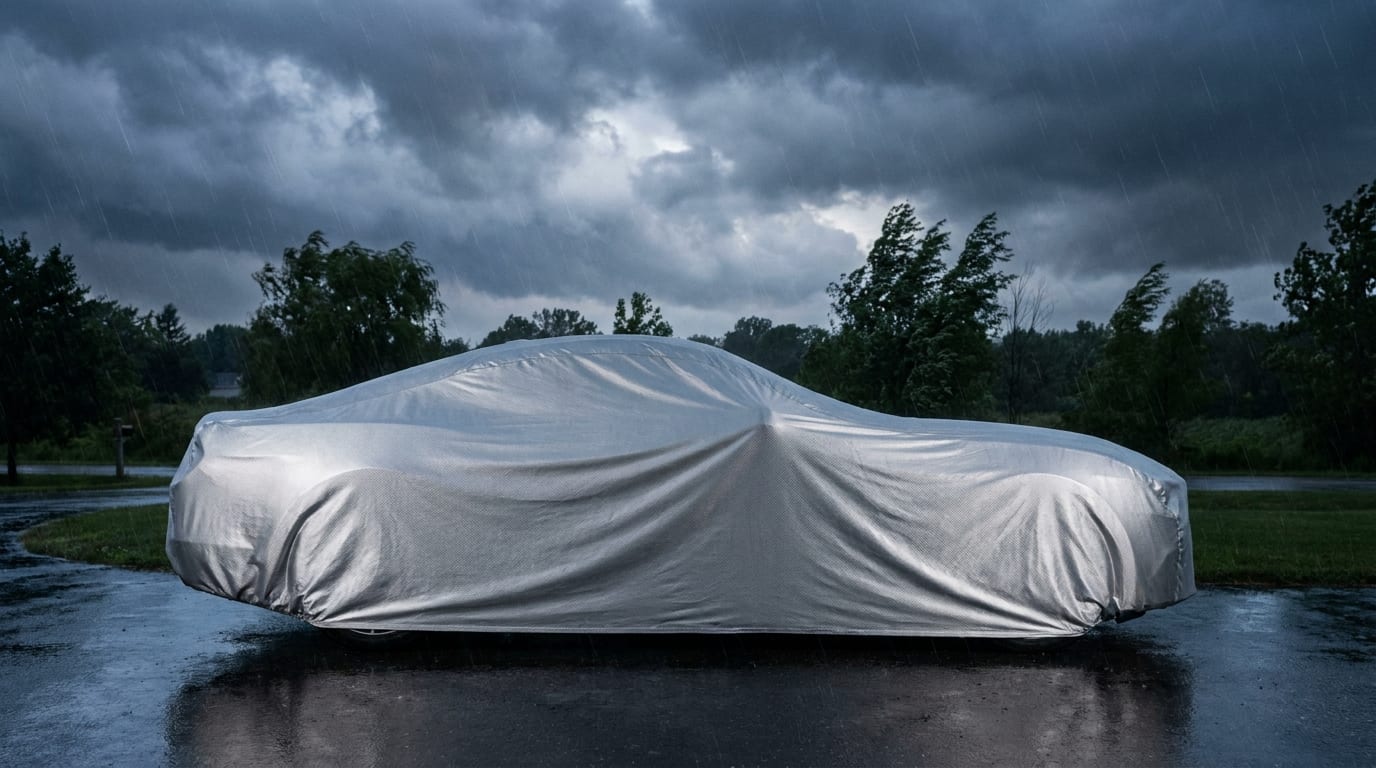
Certain conditions should move you off the standard schedule entirely.
Sustained winds over 30 mph are the big one. That's enough to work straps loose and start chafing fabric against anything rigid underneath. Hailstorms warrant an immediate check too, not for the cover's sake necessarily, but because a torn cover after hail means water's getting straight to a roof that might already be compromised.
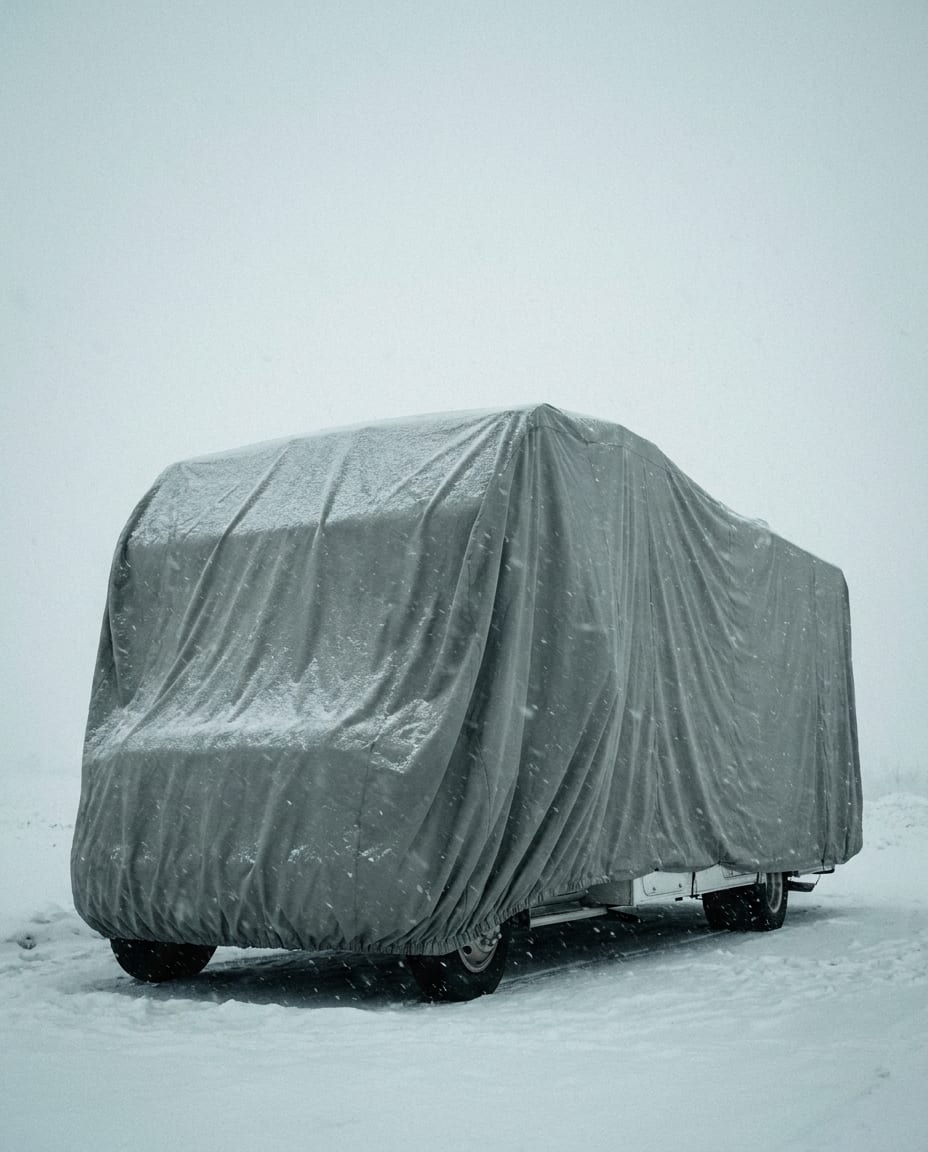
Heavy, wet snow is its own problem. Snow load can stretch or tear seams if it isn't shaken off soon, so plan to check within 24 to 48 hours of any real snowfall. Letting several inches sit on a cover for a week is asking for a torn seam at the worst possible time.
Temperature swings matter in a quieter way. Freeze-thaw cycles loosen gust straps and buckles gradually, without any visible damage prompting you to look. This is one reason a well-tensioned strap setup, like what's covered in our gust strap installation guide, matters more in climates with big day-to-night swings. It's also worth understanding how wind, UV, and moisture interact with an outdoor cover generally, since the same physics apply whether you're protecting a car or a 35-foot Class A.
What happens if you skip RV cover checks for too long?
Nothing dramatic happens the first week you skip. That's exactly the problem.
Trapped moisture is the slow one. A cover that's shifted slightly, or that's been pooling water without anyone noticing, creates the right conditions for mold and mildew to start on the RV's exterior finish and around seals. By the time it's visible, it's already been growing for a while.
Chafing is the fast one. A cover rubbing against a mirror, roof vent, or ladder mount doesn't look like much at first glance. Give it a few weeks of wind movement and that same spot turns into a tear, and a tear is how water gets in. If it's already happening, cleaning the cover properly before the stain sets in is a lot easier than trying to get mold out after it's had a month to work into the fabric.
The worst case is a cover that's partially blown off and nobody knows for weeks. At that point the roof and seams are sitting exposed to full sun and rain exactly like there's no cover at all, except you think there is, so you're not checking.
How do you handle a damaged or shifted cover during a check?
Don't wait for the next scheduled visit to fix what you find. Re-tension or replace gust straps the moment you notice slack, since a loose strap today is a missing cover next week.
Mold spots and sap buildup should get spot-cleaned right away too. The longer staining sits, the harder it is to lift later, and some of it never fully comes out once it's set. A quick cover cleaning on the spot beats a deep clean (or a replacement) down the road.
Tears are a judgment call. A small puncture or seam fray in a low-stress area is usually a patch-it-yourself fix. But if the tear's running along a seam, or it's big enough that water's clearly getting through to the roof, that's not a patch situation anymore, that's a cover that's stopped doing its job. At that point, check what your cover's warranty actually covers before you decide between a repair and a replacement.
Keep your RV protected between checks
Every 2 to 4 weeks as a baseline, tighter after any real storm, wind event, or snowfall. That's the whole schedule. It's not complicated, it just has to actually happen.
A good chunk of the problems that come up between checks trace back to how the cover went on in the first place. A properly installed cover with correctly tensioned straps simply has less to go wrong, which means your next check is a quick glance instead of a repair job. If you're due for a new one, browse what's built for long-term outdoor storage and your rig's specific body style, and feel free to poke around our other RV care guides while you're at it.
Frequently asked questions
Does storage location affect how often I should check my RV cover?
Yes. Fully exposed outdoor storage needs checks every two weeks due to sun, wind, and rain exposure. Covered or indoor storage can often stretch to monthly checks. Coastal or high-wind regions need tighter intervals regardless of cover type.
How soon should I check an RV cover after snowfall?
Check within 24 to 48 hours of a heavy snowfall. Wet snow load left on a cover can stretch or tear seams if it isn't cleared promptly.