
I Have a Convertible and Live Near the Coast — What Car Cover Should I Buy?
Published
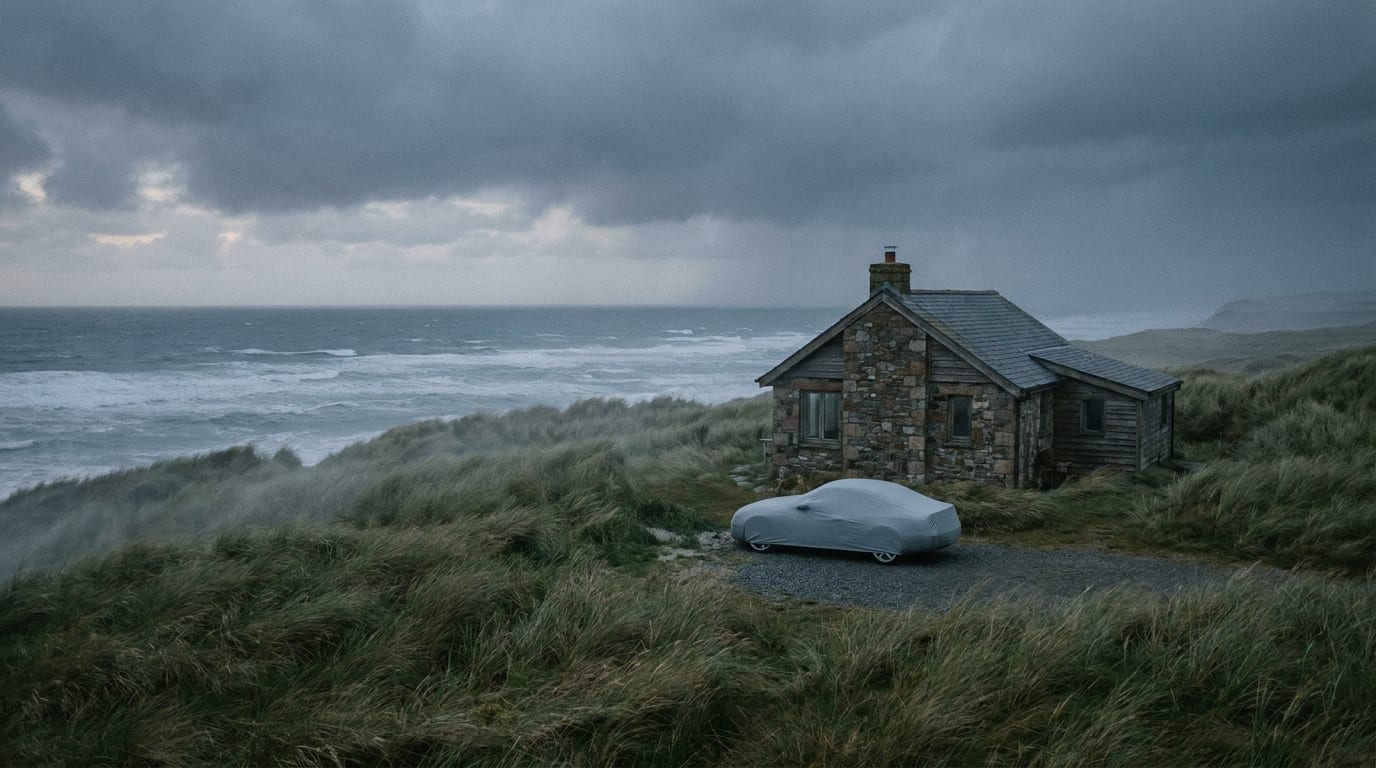
The Quick Answer
If you've asked yourself, "I have a convertible and live in a coastal area with salty air, what car cover should I buy?", here's the short version: get a custom-fit, waterproof, breathable outdoor cover made from UV-resistant, salt/corrosion-resistant coated fabric, with corrosion-resistant hardware (grommets, cable lock, buckles). Skip the universal-fit cover. Skip anything meant for indoor use only.
Salt air eats through fabric coatings, corrodes metal grommets, and wears out zippers and snaps faster than it would 50 miles inland. Combine that with a soft top, which needs to breathe so trapped moisture doesn't turn into mildew, and you can see why a generic cover just doesn't hold up near the water. Doesn't matter if your convertible sits outside every night or only comes out of storage on weekends near the coast. The salt exposure is there either way, and the right outdoor car cover is built to handle it.
Coastal/Convertible Cover Comparison
Not all covers are built for the same job, and the differences matter more once salt enters the picture. Here's how the main options stack up for a coastal convertible owner:
| Cover Type | Salt/Corrosion Resistance | Waterproofing | Breathability | Soft-Top Fit | Best For |
|---|---|---|---|---|---|
| Custom-fit outdoor waterproof cover | High (coated fabric, rust-resistant hardware) | Fully waterproof | Breathable multi-layer fabric | Contoured to soft-top shape | Daily coastal outdoor parking |
| Universal-fit outdoor cover | Moderate | Often waterproof, but loose fit lets moisture pool | Lower around the top area | Loose, generic shape | Budget or occasional use only |
| Indoor/dust cover | Low | Not waterproof | Lightweight, not for outdoor moisture | Soft, loose fit | Garaged convertibles only |
| Generic tarp | Poor | Traps condensation underneath | None | Abrasive, no contouring | Not recommended near the coast |
The pattern here isn't subtle. The closer a cover gets to "generic," the worse it performs against salt. A waterproof car cover that's also breathable is the baseline requirement, not a nice-to-have, if you live anywhere near open water.
Why Salt Air Changes the Cover Equation
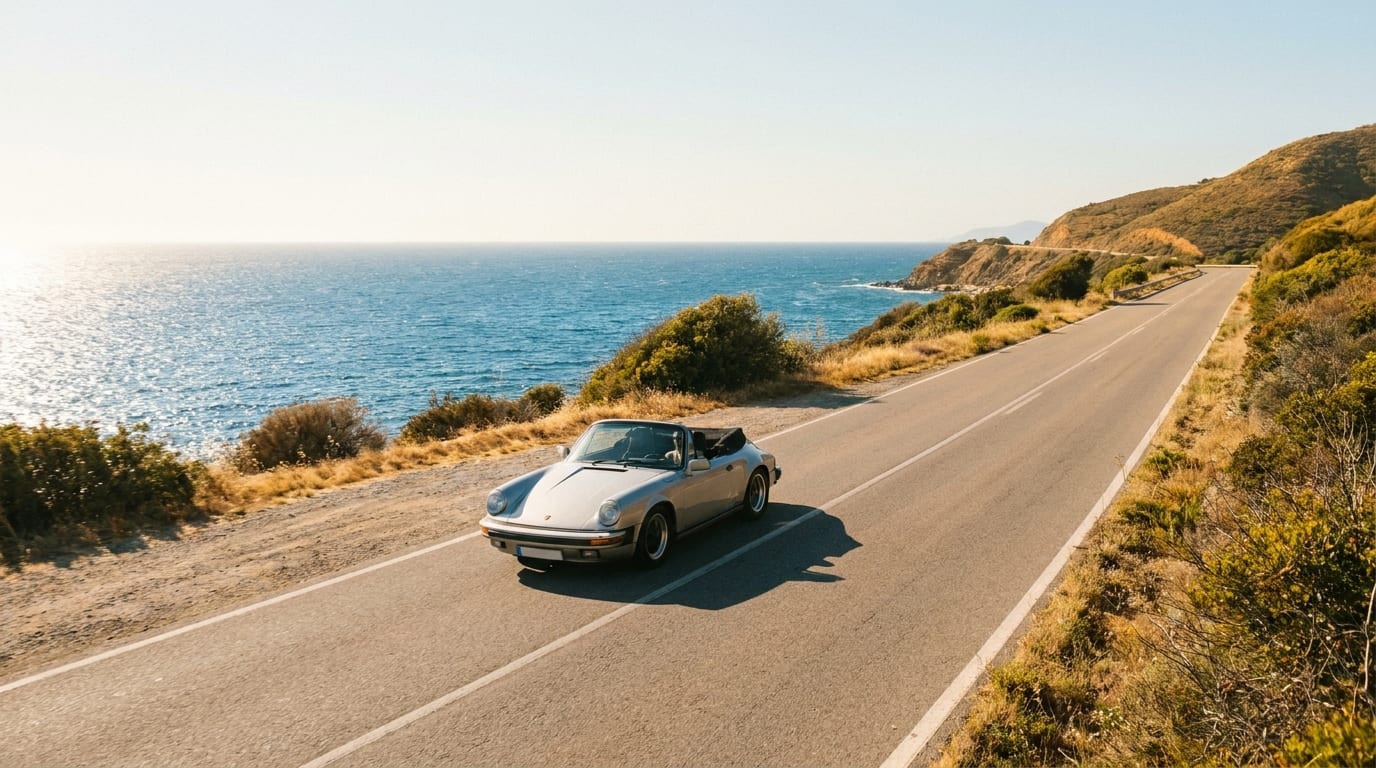
Salt doesn't need you to be parked at the beach to find your car. Airborne salt drifts for miles, settling as a fine film on fabric and metal even if you're a few streets back from the shoreline. That film sits on your cable lock, your grommets, your buckles, and it speeds up oxidation on all of it. A cover that'd last years inland can start showing rust spots and weakened stitching in a fraction of the time near the coast.
Humidity makes it worse. Salt plus moisture in the air accelerates fabric breakdown and fades color faster than a dry inland climate ever would. It's a one-two punch: the salt is corrosive, the humidity keeps it active longer against the surface.
Convertibles carry an extra risk here that hardtops don't. A soft top trapped under a cover that can't breathe holds humid, salty air right against the fabric. Mildew sets in. Seams weaken. You end up with a top that's degrading from the inside of the cover, not just from sun and rain outside it. That's the single biggest reason a non-breathable cover is the wrong call for a coastal convertible.
What to Look For in a Coastal-Ready Convertible Cover

A handful of specs separate a cover that'll actually hold up from one that'll fail within a season.
Material. You want multi-layer fabric that's waterproof on the outside and breathable underneath, not vinyl, not a single-layer poly sheet. Vinyl and cheap poly trap condensation against the paint and the soft top. That's exactly the moisture problem you're trying to avoid. If you're unsure what separates one fabric from another, this breakdown of car cover materials is worth a read before you buy, along with a look at how different waterproof fabrics actually perform in wet conditions.
Hardware. Stainless steel or coated grommets, rust-resistant buckles, a cable lock rated for outdoor or marine-adjacent conditions. This is where cheap covers fail first. The fabric might survive a season; the hardware often doesn't.
UV protection. Coastal sun is worse than people expect, because water reflects sunlight back up at the car from underneath the usual angle. A UV-resistant coating matters more here than it does for a driveway three states inland.
Fit. A loose universal cover leaves gaps where wind-driven salt spray gets underneath and settles against the paint and top. A custom-fit cover built for your exact make and model stays snug against the body, which closes off that entry point. If you're not sure what size or fit you need, this sizing guide walks through it.
Accessories. Exposed coastal parking spots catch stronger, more sustained wind than a typical suburban driveway. Gust straps keep the cover anchored instead of flapping, which also protects the paint from abrasion over time.
Installation & Care Routine for Salty Environments
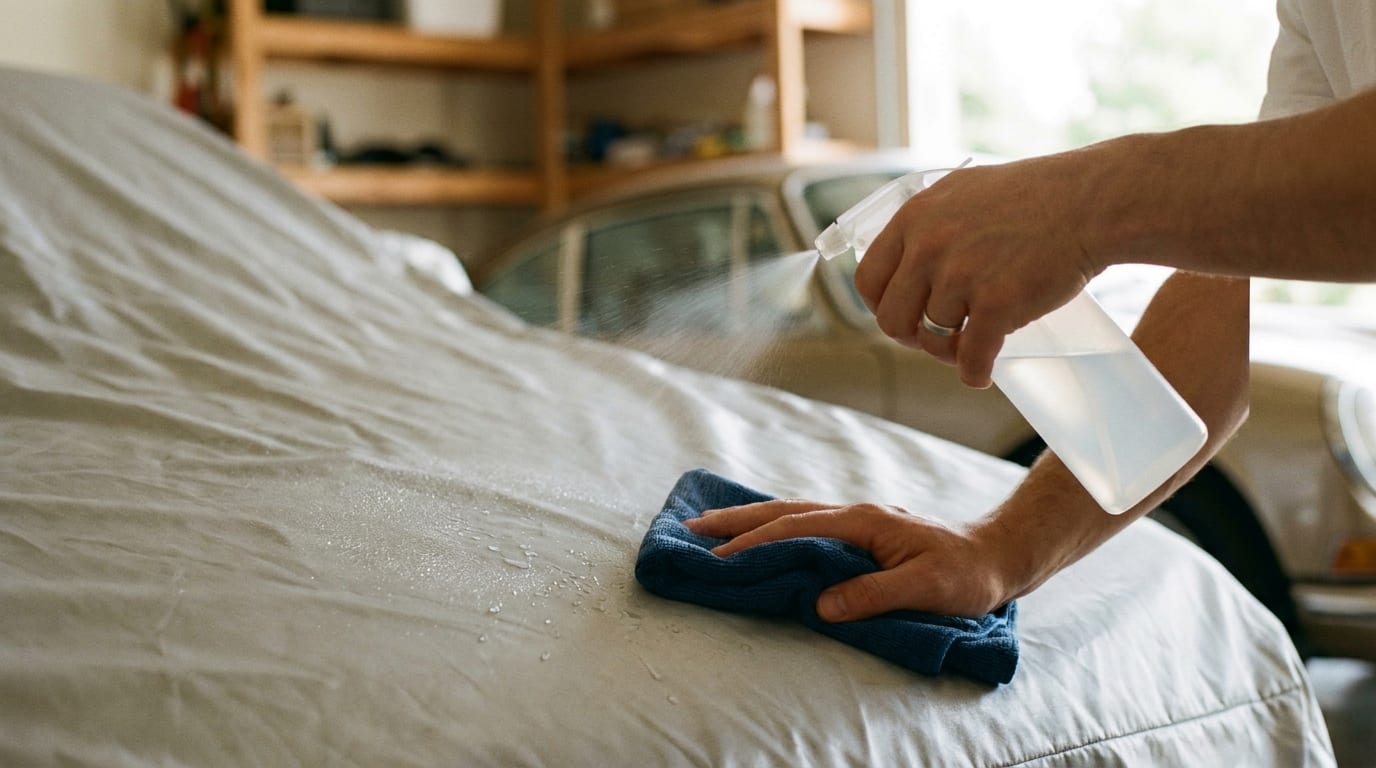
Here's where a lot of people undo all the work of buying a good cover: they throw it on over a dirty, wet car. Rinse the car and let it dry fully before covering it. Salt residue or trapped moisture under the cover does damage whether the cover itself is good or not.
Clean the cover itself more often than you would inland. A monthly rinse-down removes the salt film that builds up on the fabric surface before it has time to work into the coating. This guide on cleaning a car cover covers the basics, and there's a more detailed step-by-step cleaning guide if you want specifics on products and technique.
Check the cable lock and grommets periodically for early rust or pitting. Rinse hardware along with the fabric, not just the fabric alone. It's an easy step to skip and it's usually the hardware that fails first.
Install gust straps properly so the cover stays put during coastal wind events instead of flapping and grinding against the paint or soft top. This guide to installing gust straps covers the setup, and the broader guide to using a cover outdoors is worth bookmarking if you're new to outdoor storage in a harsh climate.
Durability & Warranty Considerations
A cover's warranty matters more here than it does for an inland buyer. Salt exposure is one of the fastest ways to wear down a cover's usable life, so you want to know up front what you're actually covered for.
Read the fine print before you buy. Some warranties only cover material defects, not wear caused by environmental exposure, which means salt-related breakdown might not be included at all. Others are more comprehensive. Check the warranty terms on any cover you're considering before you commit, especially if you're parking outdoors in a high-salt area year-round.
Bottom Line: What to Buy
So, back to the original question: I have a convertible and live in a coastal area with salty air, what car cover should I buy? A custom-fit, waterproof, breathable outdoor cover with UV-resistant fabric and corrosion-resistant hardware is the answer. It's the only setup built to handle salt, humidity, wind, and sun together without compromising on any one of them.
If you want help narrowing it down to your exact make and model, a cover finder tool can match you with the right fit in a couple clicks, or you can browse the full car cover lineup to compare materials side by side. And if you're just getting started on protecting a convertible near the water, stick around and explore a few more guides. It's worth getting this right once instead of replacing a cover every season.






