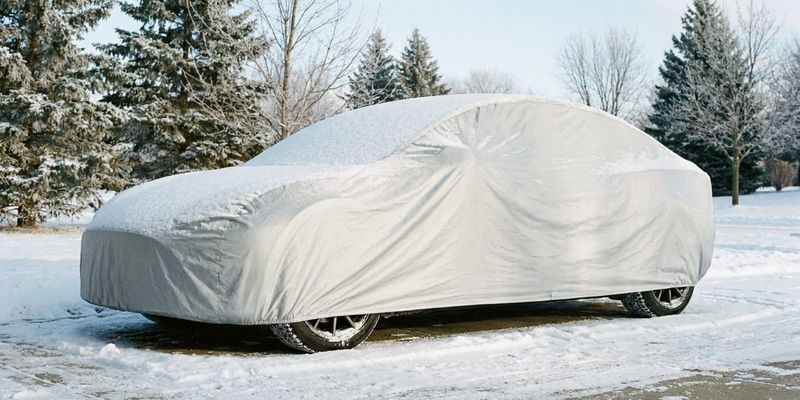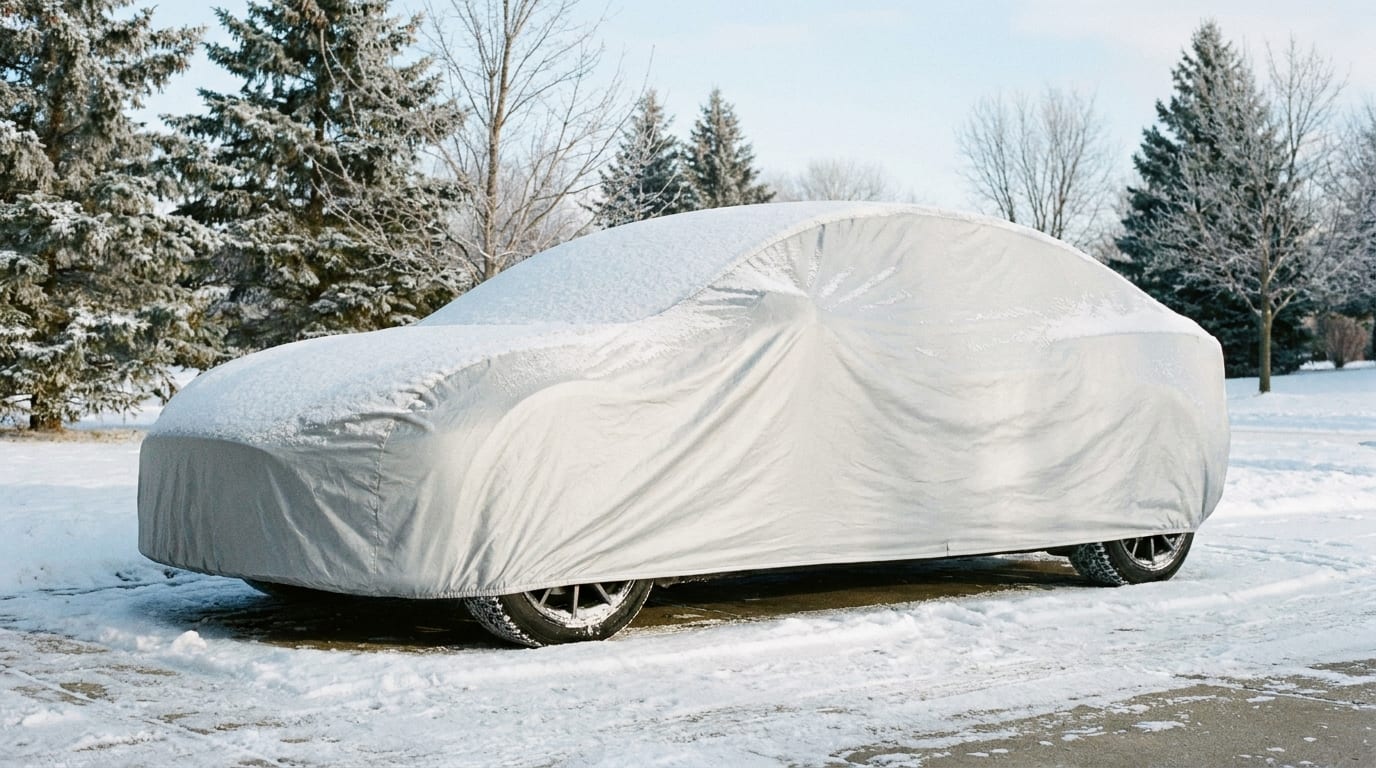
Yes, it's generally fine to leave a car cover on in freezing temperatures. As long as the cover is clean, dry, and made from a breathable material rated for outdoor winter use, there's no reason to pull it off every time the forecast dips below 32°F. People ask this question because they assume cold is the enemy. It isn't. The real risk is trapped moisture freezing against your paint, or a cheap non-breathable cover turning into a stiff ice sheet overnight.
So the short answer is yes, is it ok to leave a car cover on in freezing temperatures comes down to what the cover's made of and how you use it, not the temperature itself. Over the next few sections we'll get into why a good cover actually helps in winter, where things go wrong, what to look for in a cover, and how to use one correctly once the cold sets in.
Why a Car Cover Actually Helps in Freezing Weather
A car cover earns its keep in winter more than almost any other season. The most obvious win: no more scraping frost off the windshield at 6 a.m. If the glass never sees direct exposure, frost has nothing to form on.
It also blocks a lot of what actually damages a car in winter. Road salt, sleet, and freezing rain all sit on exposed paint and trim and speed up corrosion, especially around wheel wells and lower panels. A cover keeps that mix off the surface entirely instead of letting it dry into a salty film that just sits there until your next wash.
People forget UV damage doesn't stop in winter. The sun's lower in the sky, sure, but it's still hitting your hood and roof at an angle for hours on cold, clear days. That's enough to fade paint over a season of exposure. A cover handles that same way it would in July.
One more practical point: a properly fitted cover keeps snow and ice from bonding directly to your rubber seals and wiper blades. Anyone who's torn a wiper blade off frozen glass knows that's worth avoiding.
When Leaving a Cover on in the Cold Becomes a Problem
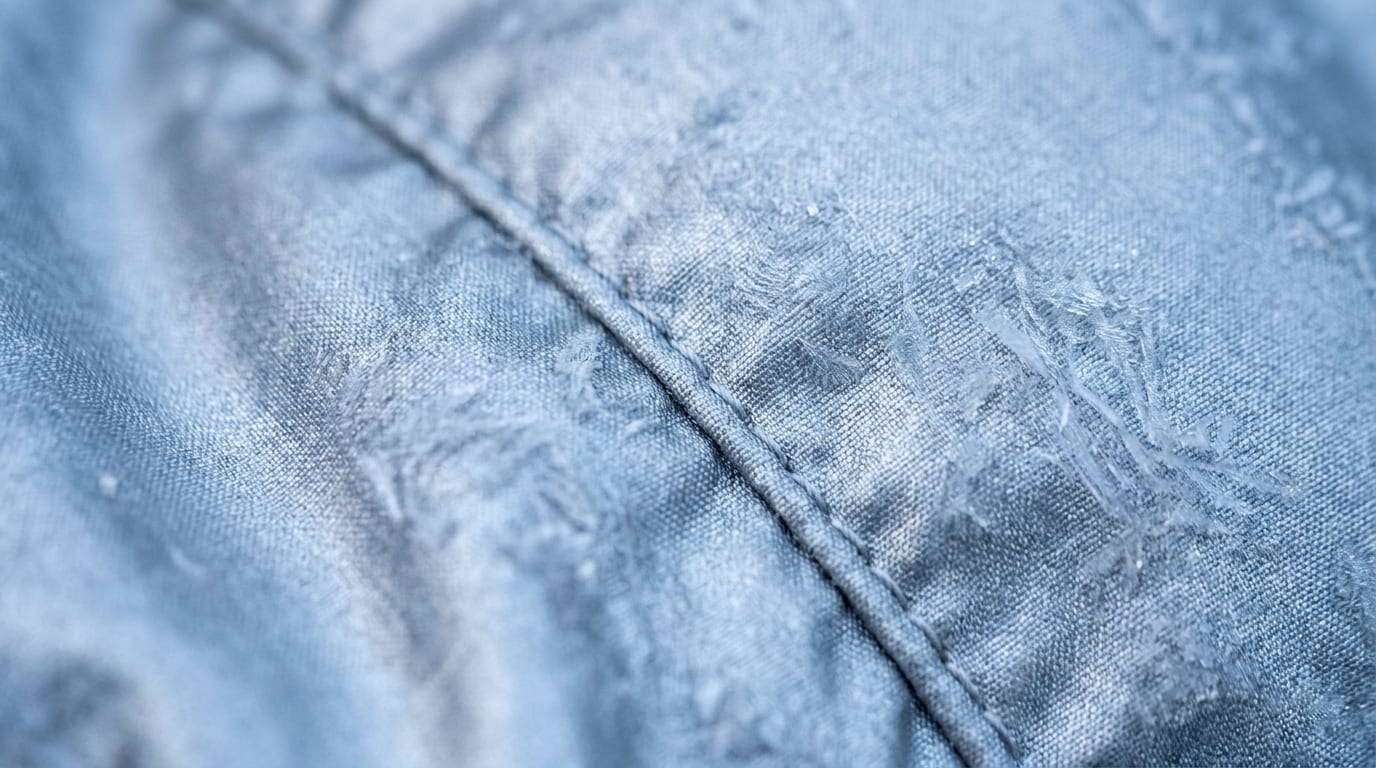
Here's where things go sideways. If you throw a cover over a wet or snow-covered car, you're sealing moisture in, not keeping it out. That water has nowhere to go, so it sits between the cover and the paint and freezes solid overnight. Now you've got ice bonded to your clear coat instead of just sitting on top of a cover you can brush off.
Non-breathable fabrics make this worse. Cheap vinyl covers and tarp-style covers are great at blocking rain, but they also trap condensation underneath with nowhere to escape. The car's own temperature swings pull moisture out of the air and it just lingers under the cover, freezing and thawing in cycles. That's arguably worse for your paint than leaving the car uncovered.
Weight is another issue people overlook. Heavy, wet snow piling up on a cover for days puts real stress on seams, mirror pockets, and antenna cutouts, the weakest points on any cover. And if the cover itself freezes stiff, pulling it off becomes its own hazard. Flexing frozen fabric at a seam or grommet is how you end up with a crack or tear that wasn't there last week.
What Kind of Cover Is Actually Safe for Freezing Temperatures
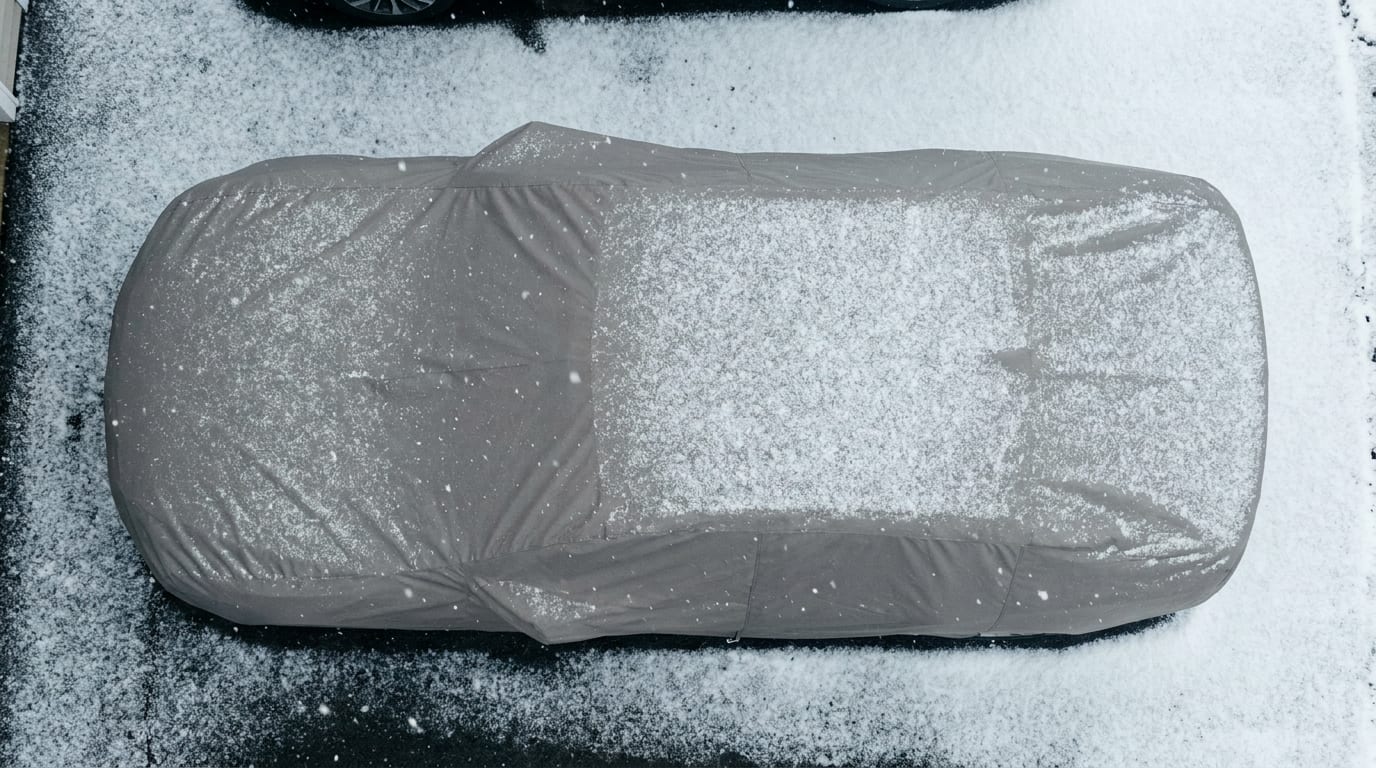
Not every cover is built for this. The ones that hold up are multi-layer, breathable outdoor covers designed specifically to let moisture vapor escape while still keeping frost, snow, and freezing rain on the outside where it belongs.
Here's the distinction that trips people up: waterproof doesn't mean breathable. A fully sealed, waterproof cover sounds like the safer bet, but if it can't vent moisture, you're back to trapping condensation against the paint. The better covers manage both sides of that equation at once. If you're not sure which category your current cover falls into, it's worth comparing the two against the outdoor car cover guide and the waterproof car cover guide before winter actually hits.
Check the manufacturer's rated temperature range too, along with any explicit winter-use claims. A cover rated for mild, dry climates isn't necessarily built for weeks of sub-freezing exposure. If you want the fuller rundown on what a cover needs to handle wind, UV, and moisture outdoors year-round, the guide to using a car cover outdoors covers that in more depth.
Best Practices for Using a Car Cover in Freezing Weather
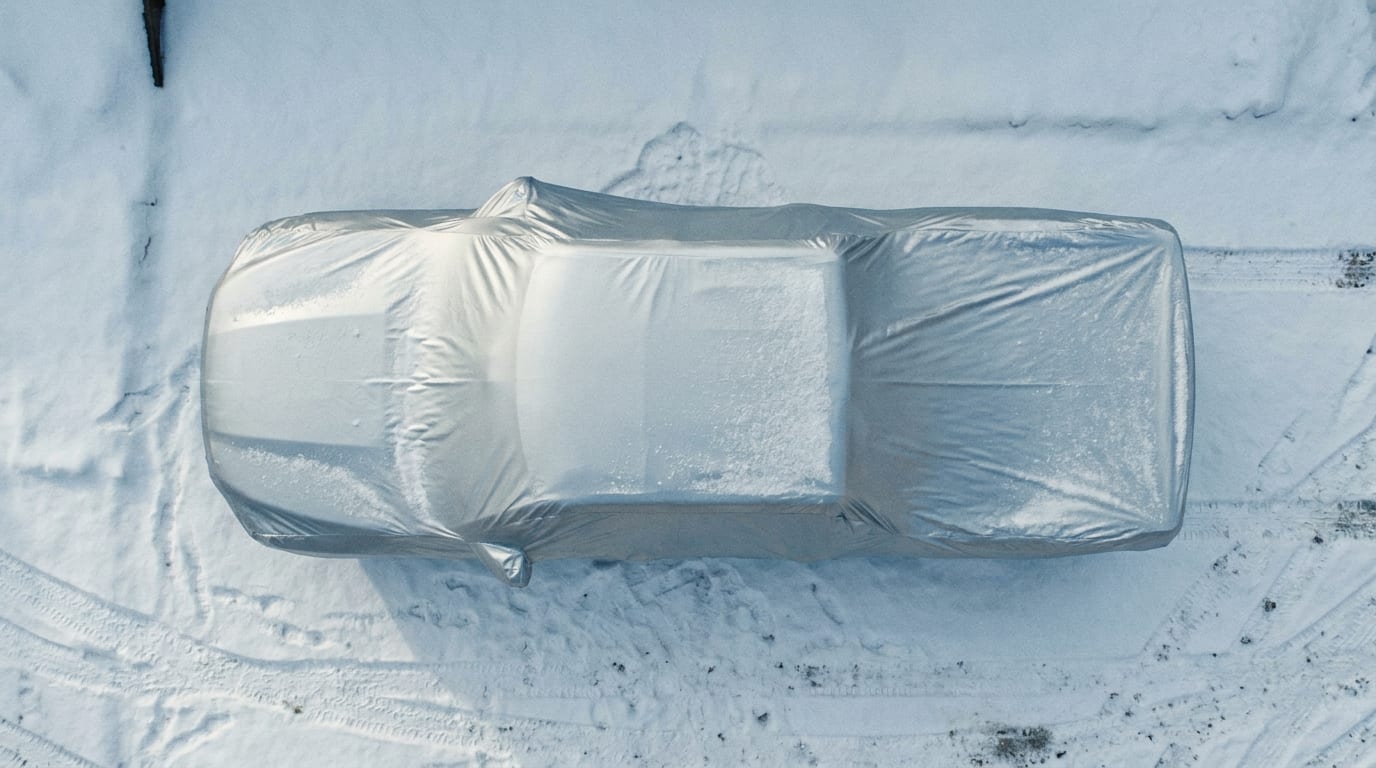
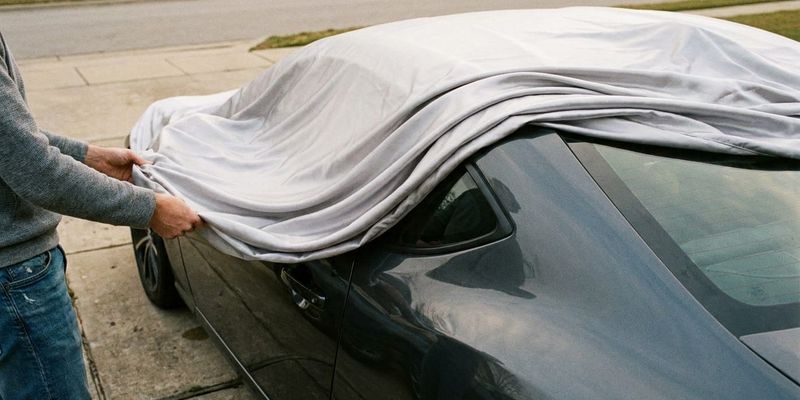
Dry the car before you cover it. Every time. Wipe down wet panels or give it a few minutes to air out so you're not sealing moisture in overnight. This one habit prevents most of the freezing-moisture problems people run into.
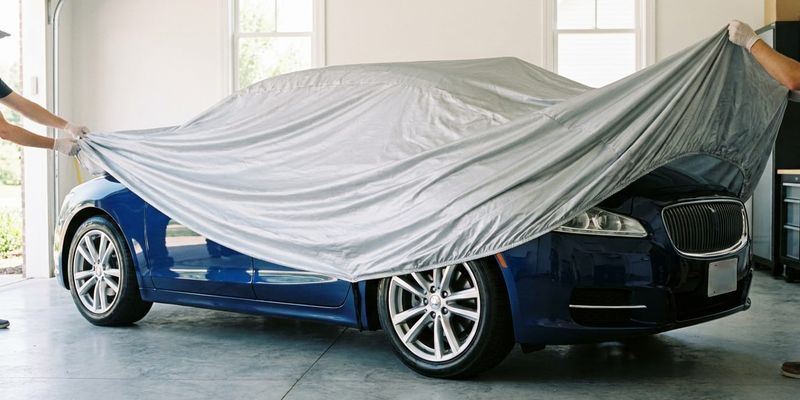
Secure the cover well. Wind-driven snow and ice will work a loose cover like sandpaper, wearing through fabric at the points where it flaps and rubs. Gust straps keep it pinned down in rough weather, and a cable lock adds security if you're parking somewhere exposed or public.
Don't let snow pile up and sit. Brush it off every so often rather than letting it accumulate into a heavy, refrozen crust that stresses the fabric and seams. A soft broom works fine, no need to scrape.
During a long freezing stretch, check the cover every few days. You're looking for ice buildup, pooling moisture, or any spot where the fabric's pulled loose. Catching that early beats discovering a frozen, torn cover in February.
When to Take the Cover Off Instead
There are moments when pulling the cover is the right call, not just an option. If you get a thaw or a stretch of sun, take advantage of it. Pull the cover, let any trapped moisture fully evaporate, then put it back on once things dry out.
If the cover's frozen stiff, don't force it. Let it thaw slightly first. Yanking on frozen fabric is how grommets snap and seams tear, and that damage doesn't happen gradually, it happens all at once.
If you're in a genuinely brutal climate and your current cover isn't breathable enough to keep up, consider garage storage or an indoor car cover for the worst stretches instead of fighting the weather with the wrong gear. Not every cover is meant to survive weeks of sustained freezing exposure, and that's fine. Match the tool to the job.
Once winter's over, clean the cover before you store it. Road salt and grime left sitting in the fabric will degrade it over time, long after the snow's gone. A proper cleaning before storage, following the basics in the cover care guide, gets you another season out of the same cover instead of replacing it early.
Bottom Line: Match the Cover to the Climate
So, is it ok to leave a car cover on in freezing temperatures? Yes, with the right cover, fitted correctly and secured against wind and snow. The cold isn't the threat. A non-breathable fabric or a car covered up while still wet is what actually causes damage.
Don't wait for the first storm to find out your cover isn't up to it. Check the material, the fit, and the rated conditions now, while you've still got time to swap it out if needed.
If you're not sure your current setup will hold up this winter, it's worth a few minutes browsing why a car cover matters in the first place, or running your vehicle through the cover finder to see what's actually built for your climate.