Is It OK to Leave Price Tags or Straps Loose on a New Car Cover?
Published
No — Here's Why Loose Straps and Tags Are a Problem
No, it's not okay. If you're asking whether it's ok to leave price tags or straps loose on a new cover, the short answer is: take care of both before you walk away from the car. Loose straps let the cover move around in wind, and leftover plastic tags or hardware fasteners can scratch or scuff your paint while they sit trapped under the fabric. Neither one is a huge job to fix. But skipping the fix turns a brand-new cover into something that's working against the car instead of for it.
A new cover needs a few minutes of setup. Not a full installation project, just a walk-around: pull it taut, tighten what needs tightening, and strip off anything that was only ever meant for shipping. Drape it on and drive off, and you're rolling the dice on wind damage and paint marks that show up weeks later with no obvious cause.
What Happens When Straps Are Left Loose

Wind doesn't need much of a gap to get under a cover. Once it does, the fabric starts flapping, and that flapping is really just friction against your paint, over and over, cycle after cycle. It's a slow sanding effect. You won't see it after one windy afternoon, but after a season of loose straps, you will.
Loose straps also let the whole cover shift. Mirrors that were tucked in get exposed. Antennas poke through gaps they shouldn't. Trim edges that were supposed to stay covered end up catching rain and road grit instead.
There's a mechanical cost too. Every time fabric flaps at a grommet or a strap attachment point, it's putting stress on stitching and buckles that weren't designed for repeated yanking. That's wear you're adding for no reason, and it shortens the life of a cover you just paid for.
And in a real storm, loose is a different kind of problem. High wind can work a poorly secured cover partway off the vehicle, or all the way off. At that point it's not protecting anything. It's just a loose sheet of fabric flapping against your hood or tangled around a side mirror.
Why Price Tags and Shipping Tags Should Come Off Before Use
Here's the part people overlook. New covers often ship with hard plastic tag fasteners, the little plastic "staples" or zip-style tags that attach a price tag or barcode to the fabric. Left in place, those press right into the paint once a strap tightens over them or wind pushes the cover against the body. Fine scratches follow, usually in spots you won't notice until you're washing the car and wondering where they came from.
Paper tags and cardboard inserts are a different kind of nuisance. Tucked into a pocket or caught under an elastic hem, they trap moisture. Moisture sitting against paint or fabric for days at a time is how you get mildew spots, which are a pain to clean off a cover and worse if they transfer to anything underneath.
Not every tag is a problem. Tags sewn directly into a seam, the ones with size or model information, are meant to stay. It's the loose, dangling, or hard-plastic attachment tags that need to go. So before you ever use the cover, spend two minutes checking pockets, grommets, and seams for anything that shouldn't be there. It's the kind of five-second oversight that's easy to fix and annoying to discover later.
How to Properly Secure a New Cover the First Time

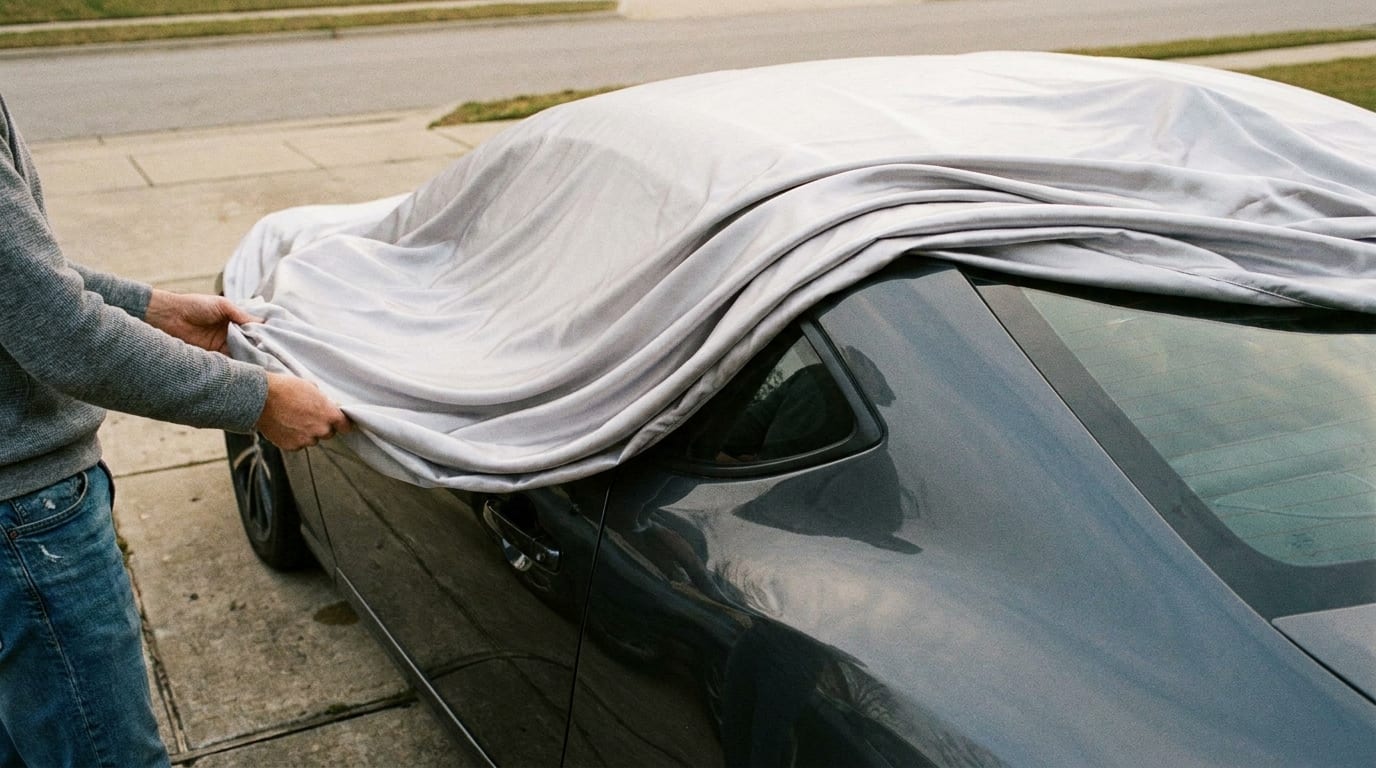
Start at the front and work your way back. Pull the cover taut over mirrors and trim pieces before you touch a single strap, that way you're not fighting bunched fabric later.
Anchor the front and rear straps under the bumper first. Those two points hold the whole cover in place while you adjust everything else, so get them snug before moving to the sides. Then work the side or belly straps for even tension across the body.
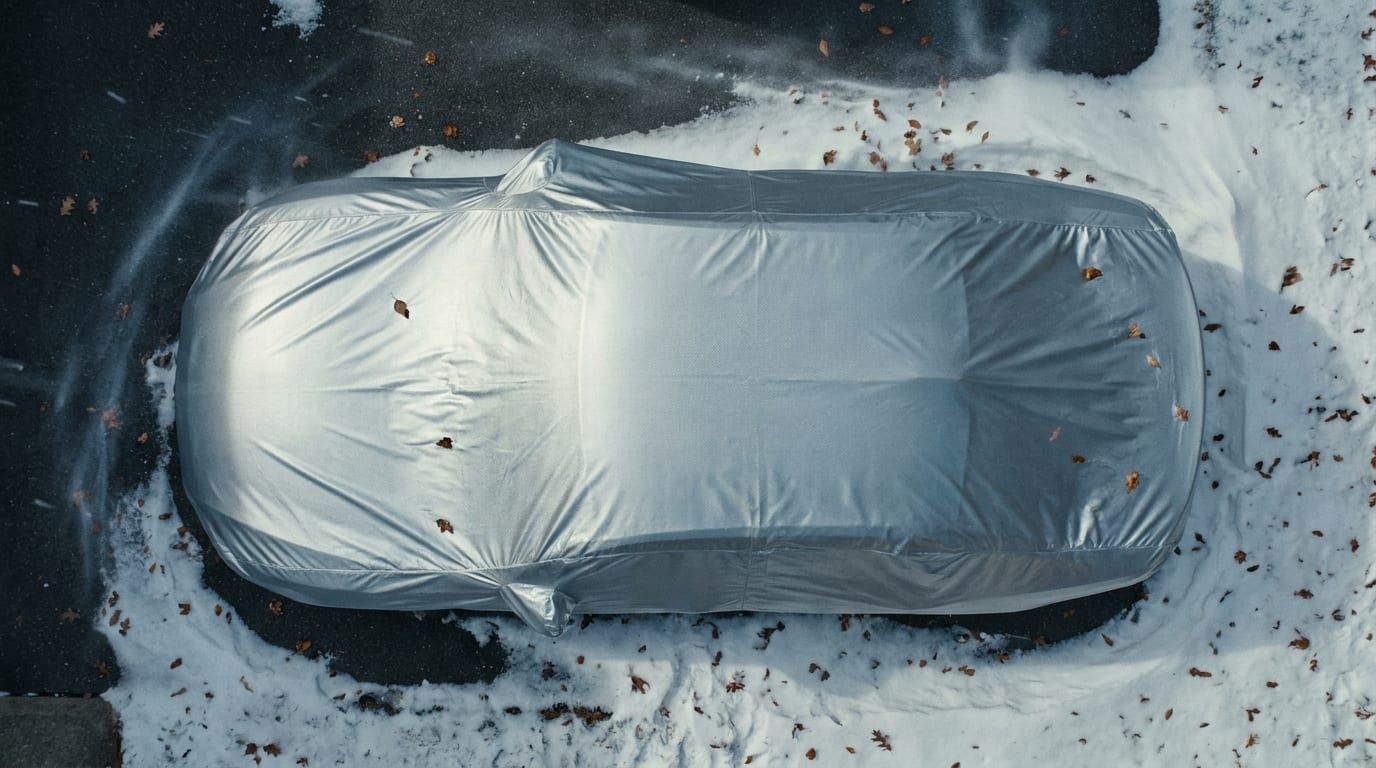
The tension you're after is firm, not aggressive. The fabric shouldn't billow if a light breeze comes through, but you're also not trying to shrink-wrap the car. Overtightening stresses seams just as much as leaving them loose, just in a different direction. If your cover came with cable locks or gust straps, use them. They add real wind security that an elastic hem alone can't match, especially if you're parked somewhere exposed.
If you want the full walkthrough, the step-by-step installation guide covers the whole process start to finish, and the gust strap installation guide is worth a look if wind is a regular issue where you park. Covers with locking cables have their own setup, outlined in the cable lock installation guide.
Quick Checklist for New Cover Setup
Run through this before you leave a new cover on for the first overnight stretch:
- Remove all hard plastic or cardboard tags and any packaging inserts
- Check that the elastic hem sits snug against the lower body line, not loose or sagging
- Confirm every strap, front, rear, and side if your cover has them, is actually buckled and tightened, not just looped over
- Walk the car and press-check each panel for flapping or movement
- Register the cover for warranty coverage so any fit or wear issue down the line is documented from day one
That last step matters more than people think. If something does go wrong with fit or materials, having the registration on file makes the lifetime warranty process a lot smoother.
When a Little Slack Is Actually Fine
Not every bit of give is a mistake. A little slack in the elastic hem is normal, that's just how the fabric is designed to move with the body of the car. It's not the same thing as a strap left completely unbuckled.
Context matters too. A breathable indoor cover sitting in a closed garage isn't fighting wind or rain, so it doesn't need the same strap tension as a cover facing the elements outside. If you're using yours indoors, the guide to using indoor car covers has more on where the line is for outdoor-specific setup versus a simpler indoor routine.
The goal, in either case, is "no flapping." Not shrink-wrapped tight. Cranking straps down as hard as they'll go puts stress on seams and buckles, and that's its own kind of damage, just slower to show up than wind flap.
Set It Up Right the First Time
So, is it ok to leave price tags or straps loose on a new cover? No. Pull every hard tag off, tighten the straps with even tension front to back, and do one walk-around check for flapping before you leave it unattended overnight. That's the whole job, and it takes less time than washing the car.
Once it's set up right, keeping it that way is mostly about regular care. If you want to get more life out of the fabric, a quick read through the car cover cleaning guide is worth bookmarking for the next time it needs a wash. And if you've gone through all of this and the cover still feels loose everywhere, that's probably not an installation problem. That's a sizing problem, and it's worth looking at a custom-fit cover built for your exact vehicle instead of a generic one.