Is It OK to Buy a Used or Secondhand Car Cover? Here's the Honest Answer
Published
Yes, it's ok to buy a used or secondhand car cover, as long as you actually check it before you hand over cash. A cover isn't a complicated product, but it's also not foolproof. Fabric degrades, coatings flake, elastic stretches out. A used cover that's still in good shape can save you real money. One that's been through three summers on a driveway in Phoenix is basically a tarp with a logo on it.
Yes, It's OK to Buy a Used Car Cover, With Conditions
So here's the direct answer: buying used is fine, but only when the fit, the material condition, and the fabric type still match what your vehicle actually needs. A used cover isn't automatically a bargain just because it's cheaper. It's a bargain only if it still does the job a cover is supposed to do.
The rest of this article is really about the conditions that separate a smart used buy from money wasted. That applies whether you're eyeing one on a local marketplace listing, picking one up at a garage sale, or finding one already in the trunk of a used car you just bought. Different situations, same checklist.
Why a Secondhand Cover Can Be a Smart Buy
The obvious draw is price. A new custom-fit cover is an investment, and if your car only needs protection a few months a year, spending full retail can feel like overkill. A used one gets you most of the benefit for a fraction of the cost.
It's also a reasonable call for short-term situations. Maybe you're storing a car while you sell it, or protecting a vehicle for a season before putting real money into a new cover. You don't need the cover to last ten years. You need it to last ten weeks.
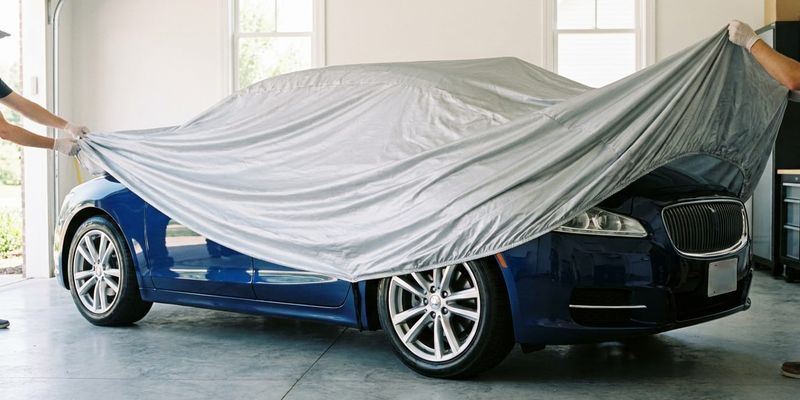
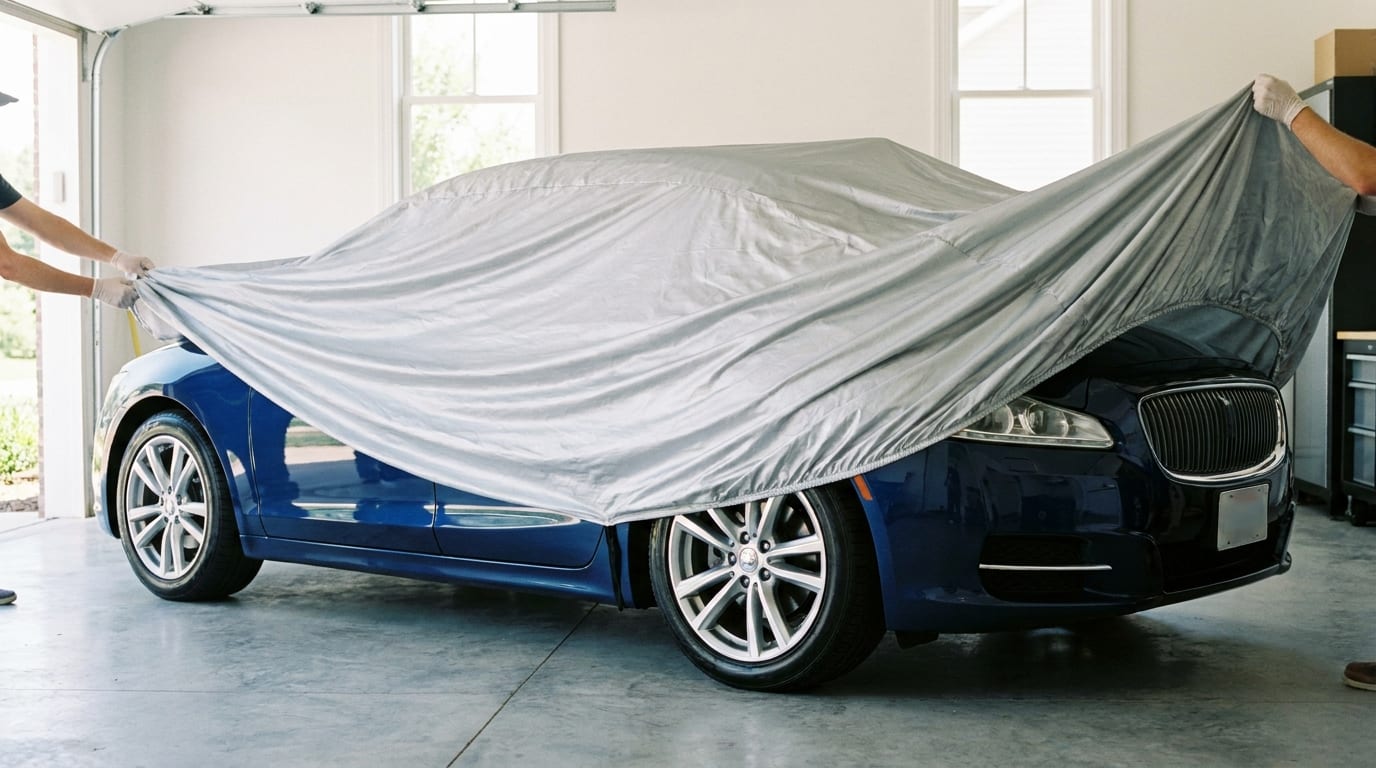
And there's one scenario where used can actually beat new on value: if the previous owner had the exact same make, model, and year as yours, a used custom-fit cover could fit almost perfectly, for a lot less than buying that same custom fit new. That's the best-case version of this whole question. It's rare, but it happens, especially with common vehicles.
What to Inspect Before You Buy It
This is where the real decision gets made. A folded-up cover in a listing photo tells you almost nothing, so you need to actually look at the thing before buying, or ask the seller specific questions if you can't.
Start with the fabric. Hold it up to a light source if you can. Thinning spots, pinholes, and patches where the UV coating has broken down won't show up in a photo, but they're obvious once light passes through them.
Give it a smell. Musty or mildewy means it was folded up wet at some point, and that's a problem that goes deeper than odor. Mold and mildew compromise waterproof coatings from the inside, and once that happens, you can't really undo it.
Check the seams, the elastic hem, and the grommets. Fraying stitching, elastic that's gone slack, straps that are frayed or missing their buckles, these are all signs of a cover that's lived a hard life. A stretched hem won't cinch down anymore, which means wind gets underneath it.
Ask about storage history. A cover that lived indoors, folded in a garage between uses, ages completely differently than one that sat outside strapped to a car through actual weather. Outdoor use is harder on a cover, full stop, even if the cover was designed for it.
Last thing: confirm the tag actually matches your vehicle's year, make, and model. Not "close enough." Body styles change in small ways between model years, and a cover made for a similar-looking sedan from two years earlier might not sit right on yours. If you're not sure how picky to be about this, our guide on what size car cover fits your vehicle walks through why that precision matters.
When a Used Cover Is Not Worth It
Some red flags just aren't worth working around, no matter how good the price is.
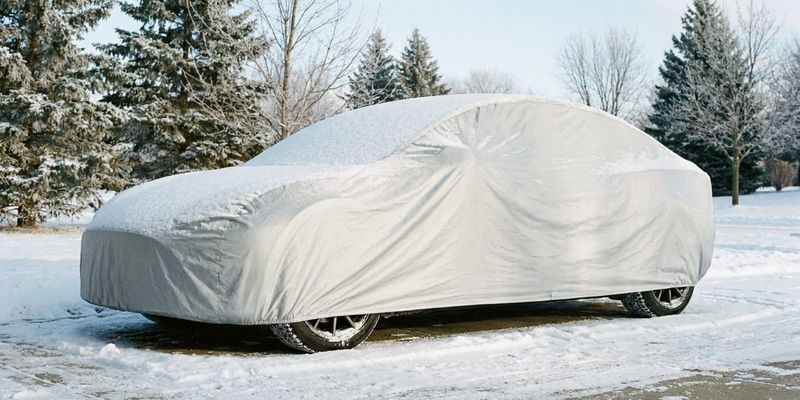
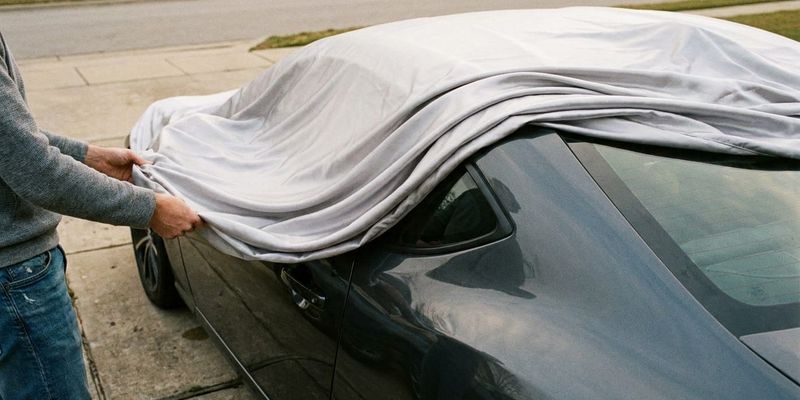
Skip it if you can't verify the exact fit. A universal cover that's a little too big will flap in wind, and flapping fabric rubs against paint for hours at a time. Over weeks, that's enough to dull a clear coat. A cover that's too loose can also pool water in low spots instead of shedding it.
Skip it if the waterproof or breathable coating looks cracked, flaky, or like it's separating from the base fabric. That's called delamination, and there's no fixing it. Once the coating's gone, water gets through and moisture gets trapped underneath, which is worse than having no cover at all.
Skip it if it smells musty or shows actual mold spotting. Mold isn't just gross, it can transfer spores onto your paint, and it's genuinely bad to be breathing in while you install and remove the thing repeatedly.
Skip it if it's missing its cable, straps, or tension system. Those parts are what keep a cover anchored in wind. Without them, you've basically got an expensive bedsheet that'll end up three driveways down after the first storm.
And just do the math honestly. If the "deal" price is close to what a new cover costs once you factor in risk, it's not actually a deal. A properly fitted new cover built for your exact vehicle and your climate removes all the guesswork the used option forces on you.
Fit Matters More Than Price

This is the part people underestimate. A custom-fit car cover is cut to your vehicle's exact dimensions, body lines included. A universal or semi-custom cover is more of an approximation, built to stretch over a range of similar-sized vehicles.
Fit isn't just about looking neat. It directly affects how long the cover lasts and how well it protects the paint underneath. A cover that's loose will rub against the body every time wind moves it, and that friction wears down both the cover's interior lining and your clear coat over time. Doesn't matter how premium the fabric was when it was new. Loose is loose, and loose wears out fast.
If you've found a used cover and you're not totally sure the listed size matches your vehicle, don't guess. Check your vehicle's actual specs against the sizing guide for car covers before you buy. It takes five minutes and it's the difference between a good deal and a cover that ends up balled up in your garage after one bad week.
Getting the Most Life Out of Any Cover, New or Used
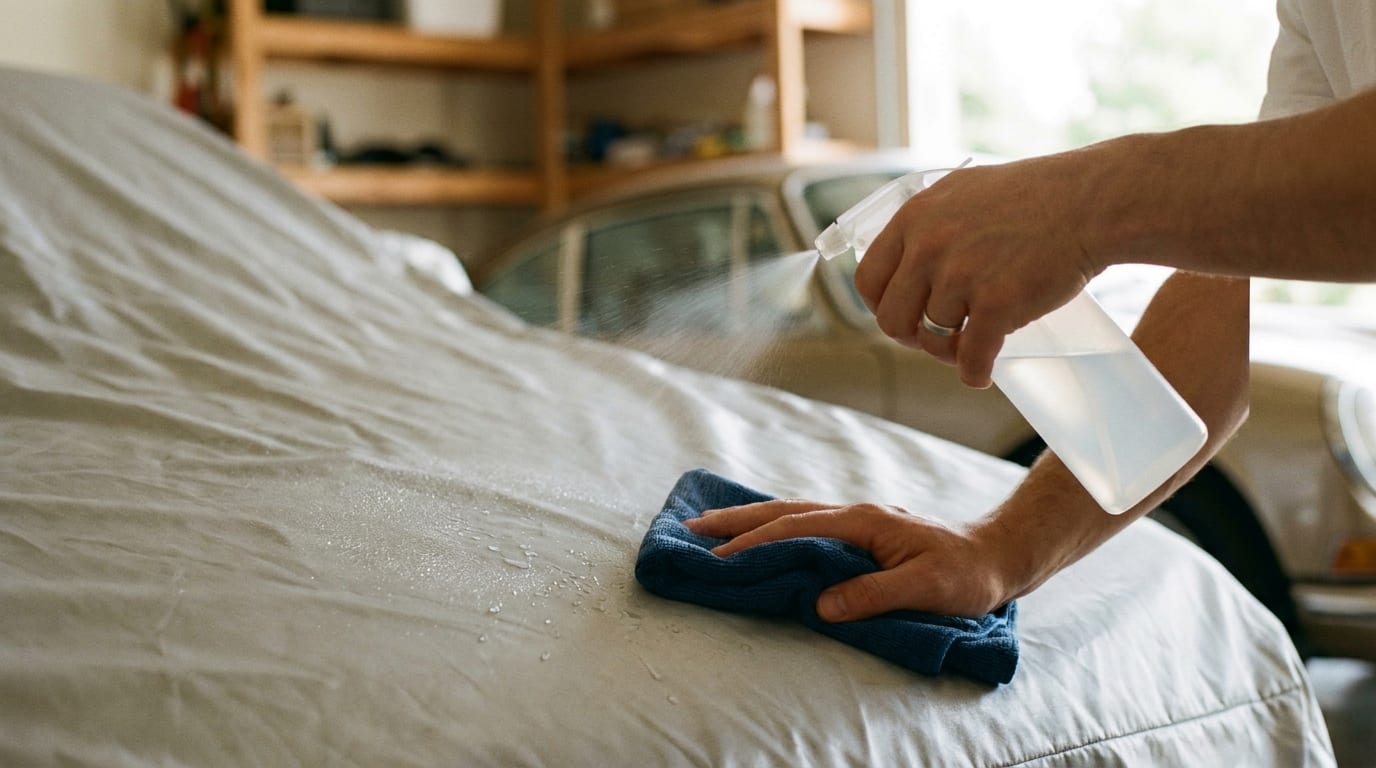
Whatever you end up with, treat day one like a clean slate. Wash a secondhand cover thoroughly before the first use. You don't know what's embedded in that fabric, road salt, dirt, mildew spores, the previous owner's driveway grime. Our step-by-step guide to cleaning a car cover covers the right method so you don't damage the coating in the process.
If the cover's more than a couple seasons old, check whether the waterproofing treatment still beads water the way it should. If it doesn't, you can usually reapply a water-repellent treatment, but check it's compatible with the fabric first.
Between uses, store it dry, folded loosely, and out of direct sunlight. Cramming a damp cover into a tight stuff sack is how mildew problems start in the first place, new cover or not.
One real tradeoff worth being honest about: warranty coverage typically doesn't transfer to a secondhand buyer. If something about the original purchase was covered under a lifetime warranty on a car cover, that protection usually stays with the original purchaser, not you. That's a real cost of buying used, even if it never shows up on the price tag.
Bottom Line: Buy Used Carefully, or Buy New with Confidence
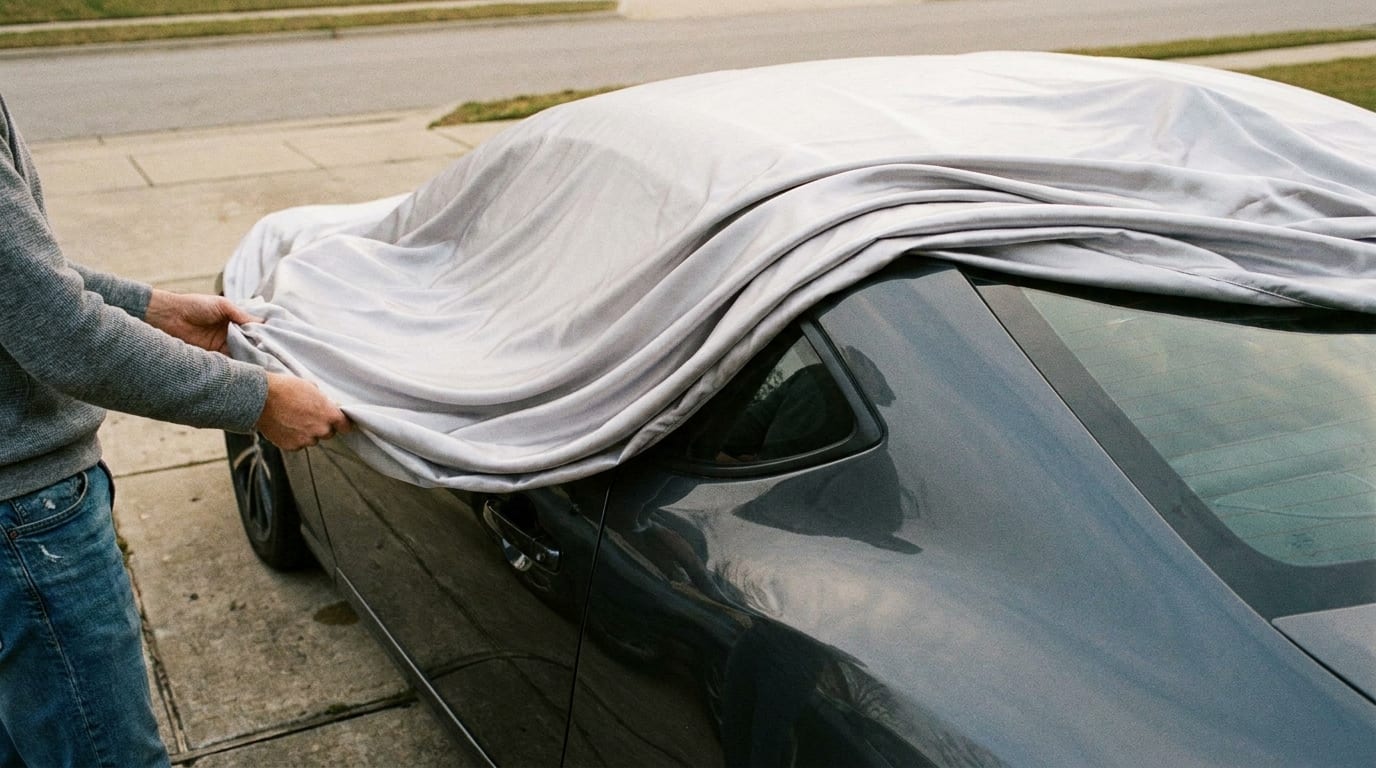
So, is it ok to buy a used or secondhand car cover? Yes, as long as it checks out: the right fit for your exact vehicle, fabric that's still intact, no mold or mildew smell, and hardware that still works the way it's supposed to. Skip any one of those boxes and you're not saving money, you're just delaying the expense.
If you own a vehicle where an exact used match isn't realistic, a new cover built specifically for your car is the safer long-term call. It's one less thing to second-guess every time the forecast changes.
If you want to browse what's actually built for your vehicle, our car covers page is a good place to start, and our articles section has more guides if you're still deciding what fits your situation best.