Is It OK to Use a Car Cover on a Car With a Dent? Yes
Yes, it's fine to use a car cover on a car with a dent. In most cases, it's actually a smart move. A cover won't fix the dent (nothing short of actual repair work will do that), but it protects the surrounding paint and metal while you figure out your next step.
The one real caveat: a cover doesn't know the difference between a smooth dent and a jagged one. If the damage has sharp edges, cracked trim, or paint that's flaking off, you'll want to check it before you throw a cover on top. So is it ok to use a car cover on a car with a dent in every situation? Pretty much, as long as you give it a quick once-over first. The rest of this article walks through why covering helps, what to look for before you install one, and how to do it without making things worse.
Why Covering a Dent Is Actually a Good Idea

A dent is rarely just a shape problem. Paint often cracks or chips right at the crease, which means the protective layer that normally keeps moisture and UV out is compromised exactly where you need it most.
That's the part people miss. An intact panel can handle sun and rain for years without issue. A dent with disturbed paint is a different story: it's a small opening for rust to get started, and once rust takes hold under paint, it spreads quietly before you ever see it on the surface.
Leaving that spot exposed to weeks of grime, dew, and road salt sitting in the crease is worse for the car than parking it under a cover. A properly fitted cover keeps dirt and moisture from settling into the dent in the first place, and it adds a layer between the damaged area and anything that might ding it again while it's waiting to get fixed. If you've been putting off the repair, that's reason enough to get the car covered now rather than later.
When to Inspect the Dent Before Covering the Car

Before you drape anything over the car, walk around and actually look at the dent up close.
Check for sharp metal edges. A clean, rounded dent is nothing to worry about, but a crease with a torn edge or lifted trim piece can snag cover fabric, and that snag turns into a scratch the next time wind moves the cover around. Cracked trim pieces near the dent deserve the same look.
If you can see bare metal, that changes the calculus a little. A cover traps air and moisture against the car's surface to some degree, and bare metal under a cover rusts faster than bare metal left in the open air, simply because it stays damp longer. That's not an argument against covering it. It's an argument for drying the area and brushing off loose debris first, every time, so you're not sealing moisture in with the cover.
If the dent has cracked paint and exposed metal, that's a good sign you should prioritize getting it addressed, whether that's a DIY dent removal method or a trip to a body shop, rather than letting a cover be the only thing standing between that spot and rust.
Choosing the Right Cover Material for a Dented Car
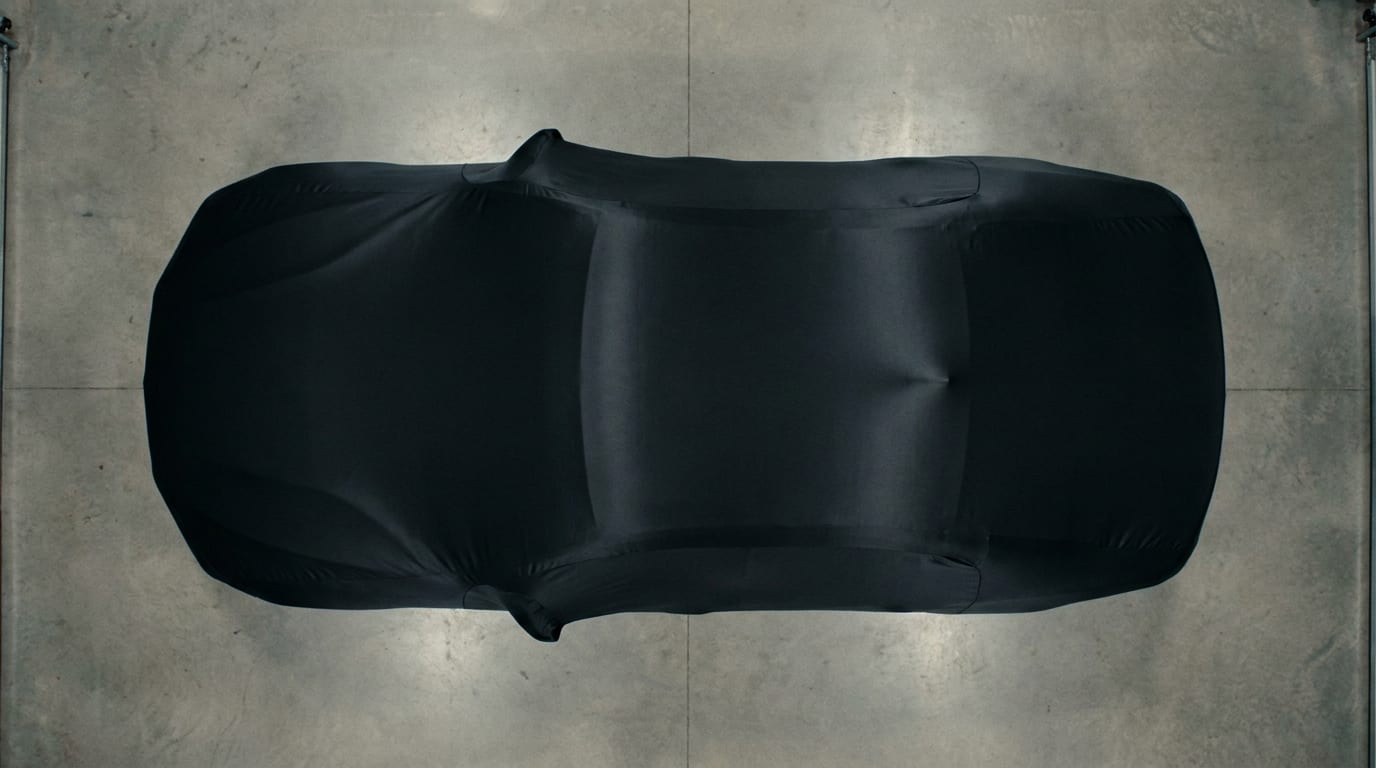
Not all covers treat a dent the same way, and the lining matters more than people expect.
A soft, non-abrasive inner lining glides over raised or cracked paint edges instead of grinding against them every time the wind shifts the fabric. Cheap, scratchy linings do the opposite: they act like fine sandpaper over months of use, and a dent's disturbed paint is the first place that shows.
Fit matters just as much as material. A loose, universal cover shifts around in wind and rubs against high spots on the body, including the raised edge of a dent. A custom-fit car cover sits close to the body and stays put, which means a lot less friction over the damaged area.
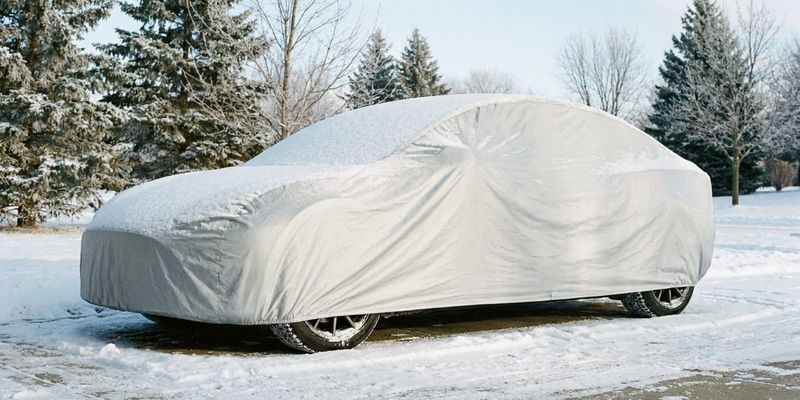
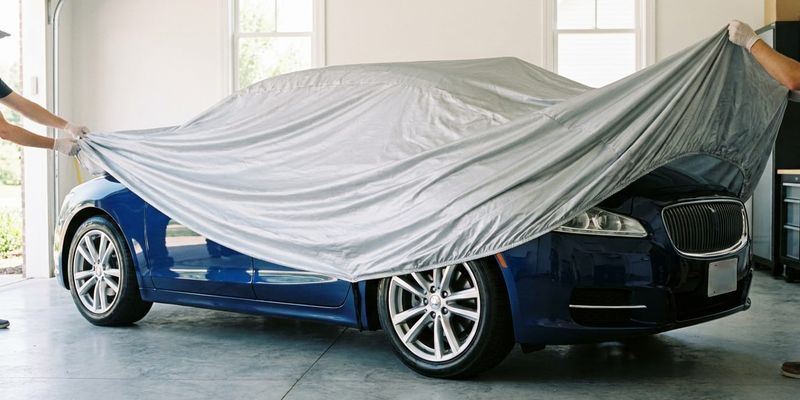
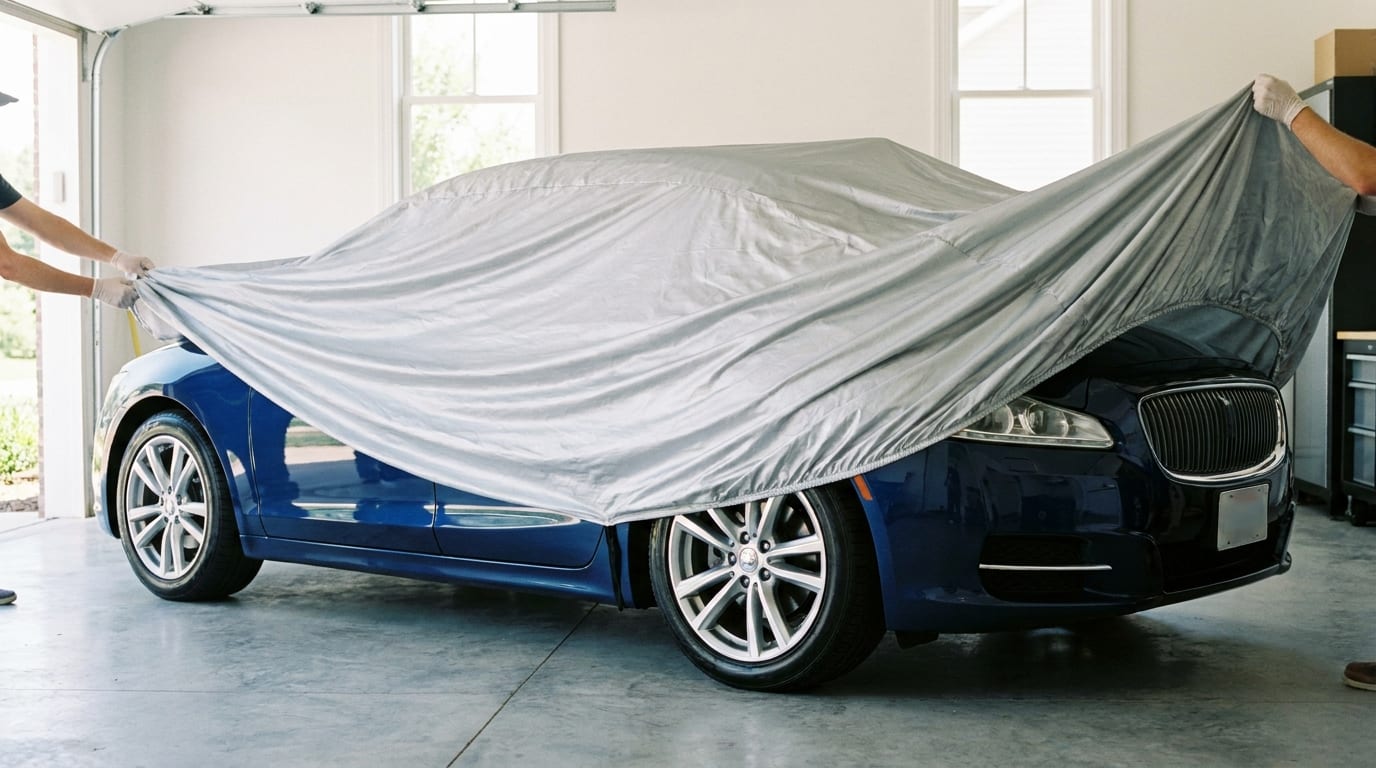
Where you store the car changes what you need, too. Parked outside, water pooling against exposed metal is the bigger risk, so a waterproof car cover earns its keep, especially for anything parked under trees or exposed to regular rain. Check the full rundown on using a car cover outdoors if you're deciding between options. Garaged, you don't need that level of weatherproofing. A lighter, breathable indoor car cover is enough to keep dust off the dent without trapping any extra moisture against it.
How to Install a Cover Without Making the Dent Worse
The install itself is where most of the risk actually lives, more than the cover sitting on the car for days at a time.
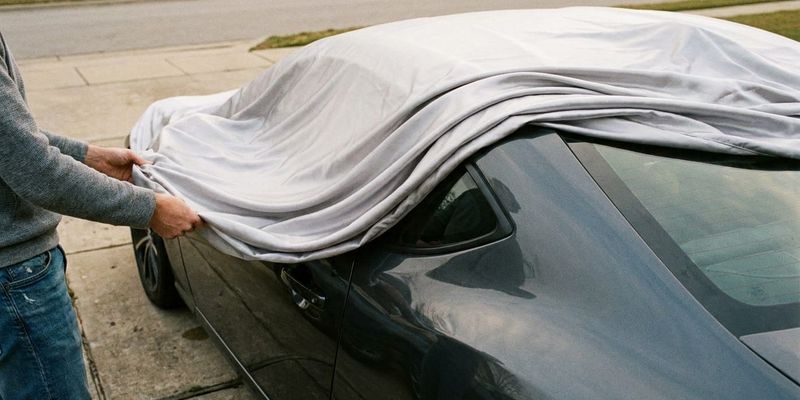
Lay the cover over the dent gently. Don't drag it across the panel to adjust position once it's down, that's exactly the motion that turns a rough paint edge into a fresh scratch. Lift and reposition instead.
Watch the straps and cables, too. It's tempting to cinch everything down tight for a secure fit, but a strap pulled hard directly over a dented section puts pressure right where the metal is already weakest. Snug is fine. Crushing tight over the damage isn't necessary.
During normal use, wipe down both the cover and the dent area every so often. Grit that builds up between the fabric and the paint is what causes slow scuffing over time, and a quick wipe takes care of it. For the cover itself, a regular cleaning routine keeps that grit from accumulating at all. If you want the full process, how to clean a car cover covers it well, and the shorter cover care guide is a good quick reference.
Last thing: check the dent periodically while it's under the cover. You're looking for new rust specks or paint starting to lift at the edges. Catching that early is a lot cheaper than catching it late.
Should You Fix the Dent Before or After Getting a Cover?
A cover is a stopgap. It buys you time, it's not a reason to let the dent sit there indefinitely.
If the dent is minor and the paint underneath is intact, there's no rush. Cover it, drive it, deal with it whenever it's convenient. The paint barrier is still doing its job, so the cover is really just extra protection on top of protection that already exists.
If the paint is chipped or cracked, that's a different timeline. Rust doesn't care whether the car is covered or not once it gets started, it just needs exposed metal and a bit of moisture. Getting it addressed sooner limits that risk no matter how good your cover is.
Before you assume it's a body shop job, it's worth trying a DIY dent removal method first. A lot of dents, especially the shallow, no-crease kind, come out with basic tools and a free weekend. It's a cheap first attempt, and if it doesn't work, you haven't lost anything by trying.
Bottom Line
So, is it ok to use a car cover on a car with a dent? Yes, and in most cases it's genuinely the better move than leaving the damage exposed. Covering it keeps moisture and debris from settling into the crease and shields the area from new dings while you decide what to do about the repair.
Just check two things first: sharp edges or exposed metal that could snag the fabric, and strap placement so nothing's cinched down tight directly over the dent. Handle those, and the cover does nothing but help.
If you're shopping for one, it's worth browsing custom-fit cover options built around how and where you actually store the car, and our car care hub has more on keeping the rest of the vehicle in good shape while you're at it.