Car Cover for Winter: Comparing Types, Materials, and Fit for Cold-Weather Protection
Published
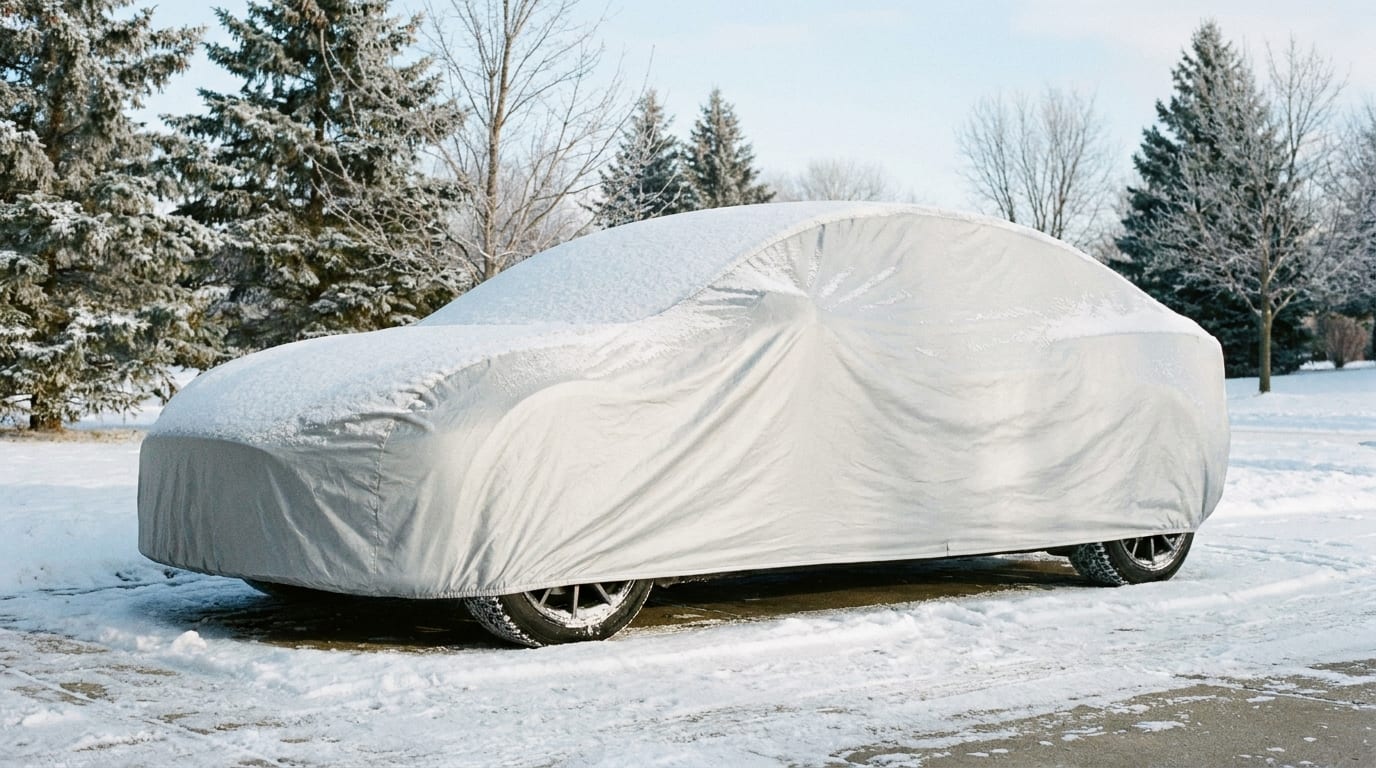
Snow doesn't just sit there and melt eventually. It packs down, refreezes overnight, and grinds against your paint every time the wind shifts it. Add road salt splashing up from the tires next to you in a parking lot, plus the freeze-thaw cycle that expands and contracts every seam and panel gap on your car, and you've got a season that's genuinely harder on a vehicle's finish than summer ever is. A good car cover for winter isn't the same product as the one you'd throw on for a dusty summer driveway. It needs to handle weight, flex in the cold without cracking, and keep moisture from turning into ice against your clearcoat. This guide compares the main types of winter-ready covers so you can match one to your climate, your parking situation, and what you're actually trying to protect against. For a broader look at outdoor exposure beyond just winter, the guide to using a car cover outdoors covers wind and UV too.
Why Winter Weather Demands a Dedicated Car Cover
A summer-weight cover is built to block sun and keep dust off. That's it. It wasn't designed to carry the weight of six inches of wet snow, and it definitely wasn't designed to stay flexible at 10 degrees Fahrenheit. Cheap vinyl and thin polyester get brittle in the cold. Fold them, snap them over a hood in freezing air, and you'll hear the fabric crack before you ever get it buckled down.
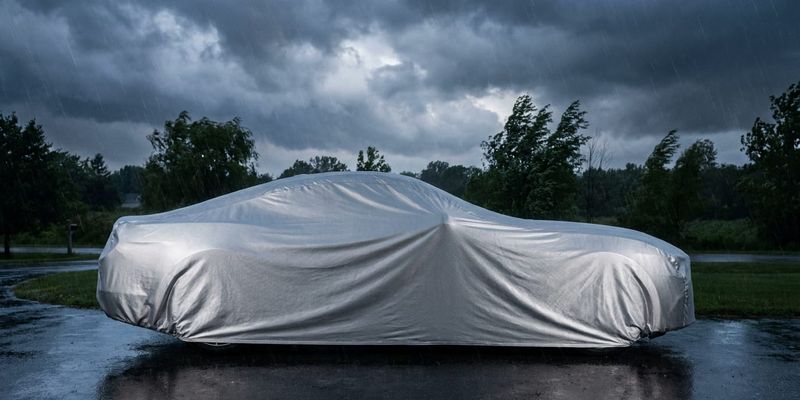
Then there's what's actually attacking your paint. Road salt is corrosive, full stop, and it doesn't care whether it's sitting on your bumper or splashed up under your wheel wells. Ice that forms and re-forms as temperatures swing above and below freezing works at seams, trim, and anywhere water can pool. None of this is dramatic on any single day. It's cumulative. A car cover for winter needs to be built for that kind of sustained, repeated stress, not just a once-in-a-while rain shower.
That's the real difference between "a cover" and a winter cover: one is rated to flex in the cold and shed snow load without tearing at the seams, the other just wasn't tested for it. The rest of this guide walks through how to tell them apart.
What to Look for in a Winter Car Cover
Start with waterproofing. A fully waterproof shell keeps melting snow from soaking through and refreezing against the paint overnight. A water-resistant coating will shrug off light moisture but can saturate under sustained snowmelt sitting on the surface, which is exactly what happens when snow piles up and slowly thaws during the day. If you're parking outside through a real winter, you want waterproof car covers, not just water-resistant ones.
Insulation matters more than people expect. A soft inner lining does two things: it cuts down on frost forming on the inside surface of the cover, and it reduces the condensation that builds up when temperature swings happen overnight. A single-layer fabric cover doesn't have anywhere for that moisture to go, so it just sits against the paint.
Cold-flex durability is the quiet dealbreaker. Fabric that's fine at 60 degrees can turn stiff and crack-prone at 20. You're going to be installing and removing this cover in genuinely cold weather, so the material needs to stay pliable through that handling, not just while it's sitting on the car.
Last, check the strap and anchor system. Grommets, cable locks, or built-in straps all need to hold under wind-driven snow, which pulls at a cover differently than plain rain does. A cover that's rated for serious durability is worth checking the lifetime warranty on car covers for, since that's usually a decent signal of how confident the manufacturer is in the materials holding up over multiple winters.
Comparison: Winter Car Cover Types Side-by-Side
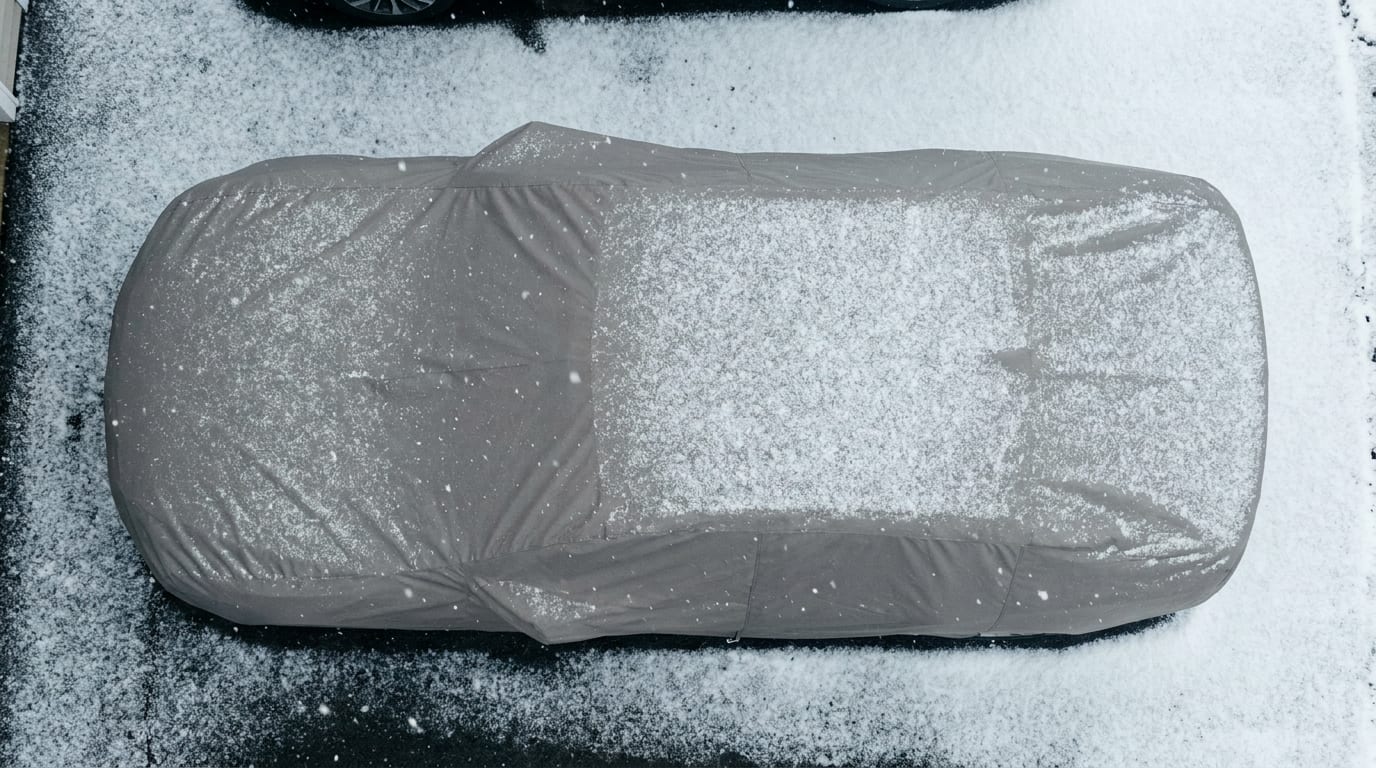
Here's how the main categories stack up against each other on the specs that actually matter in freezing weather.
| Feature | Universal All-Weather | Outdoor Waterproof | Custom-Fit Winter |
|---|---|---|---|
| Waterproofing | Water-resistant coating | Fully waterproof shell | Fully waterproof, reinforced |
| Insulation | Usually unlined | Often lined | Lined, winter-rated |
| Fit precision | Loose, generic | Semi-fitted | Tight, vehicle-specific |
| Snow/ice load handling | Basic, limited | Reinforced seams | Reinforced seams and straps |
| Typical price range | Entry-level | Mid-tier | Premium |
| Best-use scenario | Covered carport | Open driveway | Long-term outdoor storage |
A universal cover is fine if your car sits under a carport or in a garage most of the time and only sees occasional outdoor exposure. It's the budget option, and it's a reasonable one for light-duty use.
Outdoor car covers built for weatherproofing step things up with reinforced seams and a fully waterproof shell, which handles an open driveway through a real winter without much drama.
Custom-fit covers are where the fit precision really pays off: a tighter seal means less chance of wind getting underneath and lifting the cover, and less drifting snow working its way into gaps. If you've got a truck parked outside all season, something like the Platinum Shield truck cover is built around that exact scenario: heavy winter exposure, sustained snow load, no garage to retreat to. For a car, the equivalent category is custom-fit car covers, and the fit difference shows up most in high-wind conditions, which winter storms deliver more often than summer ones do.
Material & Weatherproofing Breakdown

Multi-layer laminated shells and treated polyester solve different problems. Laminated shells tend to be fully waterproof and hold up well against sustained snow sitting on the surface, but they can trade off some breathability if they're not engineered carefully. Treated polyester often breathes better, letting trapped moisture escape instead of condensing, but it may not be rated for the same level of waterproofing in heavy, prolonged snowfall.
Breathability sounds like a summer concern, but it matters just as much in winter, maybe more. If moisture gets trapped between the cover and the paint and then the temperature drops overnight, that moisture freezes right against your clearcoat. A cover that breathes lets that moisture vent out before it has the chance to freeze. For more detail on how different textile constructions handle this trade-off, the waterproof fabrics article breaks down the material science in plain terms.
Waterproof-rated covers and water-resistant ones aren't interchangeable, and winter is where that distinction shows up fastest. Water-resistant fabric holds up fine in light drizzle. It struggles once snow is sitting on top of it for hours, slowly melting and soaking through at the seams. If your winter includes heavy snowfall or freezing rain, waterproof-rated is the one to buy.
Sizing and Fit for Cold-Weather Conditions
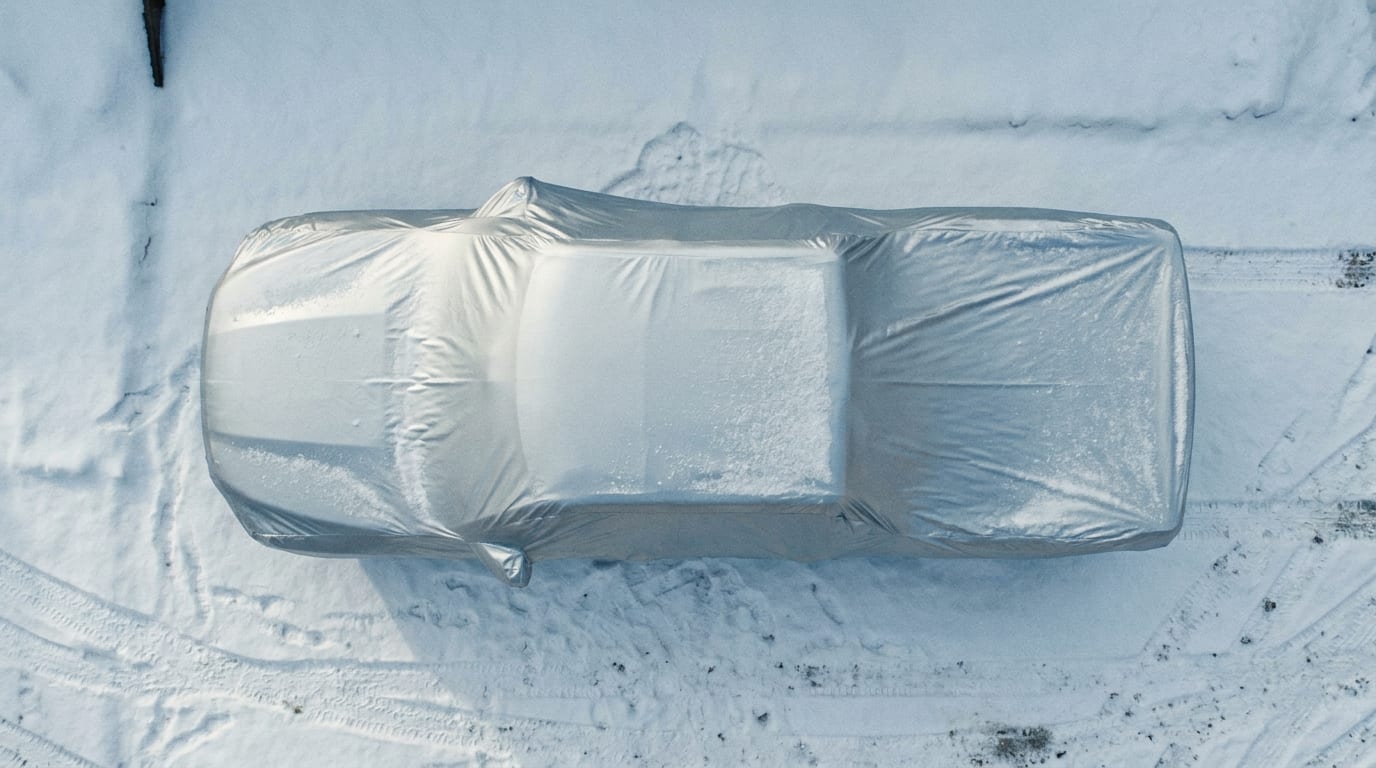
Fit matters more in winter than any other season, honestly. A loose cover flaps in the wind. Every flap is an opening for snow to drift underneath, and once it's under there, it's doing more harm than good, trapping moisture right against the paint instead of keeping it off.
Before cold weather hits, measure your vehicle or run it through a sizing guide to figure out whether a custom-fit or universal option makes more sense for your car. Custom-fit covers seal tighter at the mirrors, wheel wells, and bumper lines, which is exactly where wind gets a grip and starts working a cover loose.
Not every vehicle needs the heavy-duty version, though. If your car lives in a garage most of the winter and only sees outdoor exposure occasionally, a lighter, non-insulated option is often the better call. Indoor car covers are built for that lower-stress environment, and there's no reason to pay for insulation and waterproofing you won't actually need.
Installation and Care Tips for Winter Use
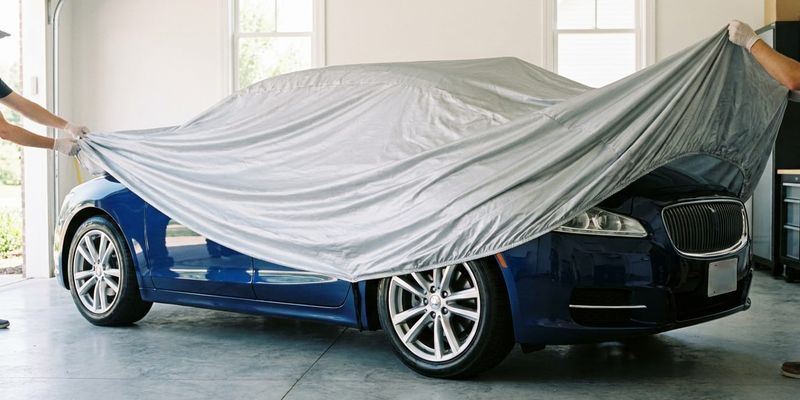
Cold fabric doesn't like being yanked around. Let the cover warm up a little if you can (even a few minutes in a heated garage helps) before stretching it over the car, and avoid forcing zippers or straps that feel stiff. Forcing a frozen zipper is how you end up replacing a cover mid-season instead of using it for years.
Clear snow off the cover before you try to remove it. Pulling a cover off while it's loaded with wet snow puts a lot of stress on the seams and straps, and that's exactly where tears start. A soft brush or your hand works fine, just get the bulk of it off first. The installation guide walks through the step-by-step process if you want a refresher before the first storm of the season.
Between uses, make sure the cover is actually dry before you fold it up and store it. A damp cover that gets folded and left in a cold garage can mildew, or worse, freeze into a stiff lump that's a pain to unfold the next time you need it. The cover care and cleaning guide has the specifics on drying and storage that keep a cover usable for multiple seasons instead of one.
Choosing the Right Winter Car Cover for Your Vehicle
Three things decide this, really: how harsh your winters actually get, where the car parks, and what you're willing to spend. A garage-kept car in a mild climate doesn't need the same cover as a truck parked outside through a Midwest winter. Match the cover to the actual conditions, not the most protective option available, and you'll save money without sacrificing protection where it counts.
If you're still not sure which category fits your situation, it's worth running your vehicle through a sizing and fit tool before you buy anything. Getting the fit right is most of the battle, more than brand or price point in most cases.
Worth browsing the waterproof and custom-fit options while you're at it, just to see what's actually built for the kind of winter you're dealing with. And if you want more seasonal care tips like this throughout the year, it's worth keeping an eye on what we publish next.