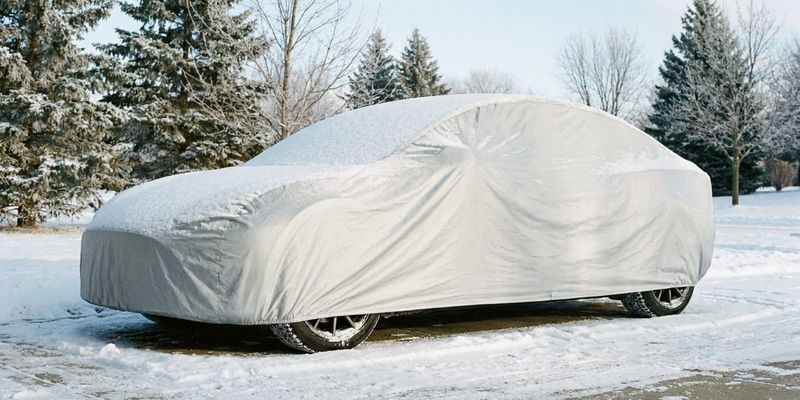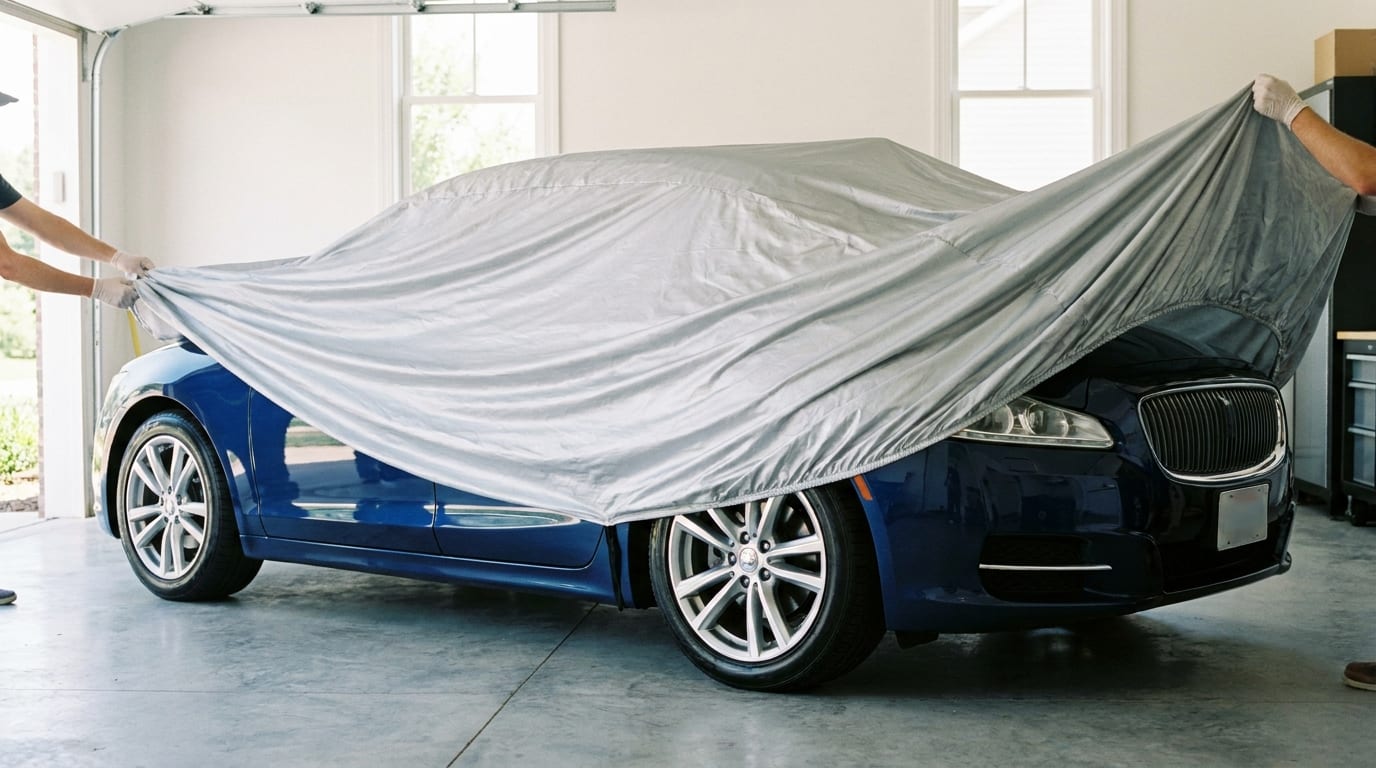
Leave a cover on a car for a weekend and nothing bad happens. Leave it on for two months without lifting it once, and the thing meant to protect your paint starts working against you. That's the honest answer to what happens if a car cover is left on too long without removal: moisture gets trapped underneath, grit grinds against the clear coat, the cover fabric itself breaks down faster, and the gap between tires and fabric turns into real estate for pests.
None of that is dramatic on day one. It builds. A cover that never comes off stops being a shield and starts acting more like a lid on a container, sealing in whatever's already there, whether that's humidity, pollen, or a family of spiders that found a quiet spot to settle in.
The good news: fixing this doesn't mean buying new gear. It's a habit, pulling the cover off on a schedule, giving the paint and the fabric a look, and putting it back on clean and dry. We'll walk through that routine later in this article. Worth noting up front, too, that "too long" isn't the same number for everyone. A breathable indoor cover in a dry garage tolerates a lot more neglect than an outdoor cover in a humid coastal climate. The FAQ section near the end gets into those differences directly, and why buy a car cover covers the bigger picture of what a cover is actually supposed to do for you.
Can a Car Cover Trap Moisture and Cause Mold or Rust?

Here's the mechanism. Overnight temperature swings cause condensation to form under almost any cover, outdoor or indoor. Normally, that moisture evaporates once the sun comes up and the cover breathes it out. If the cover never gets lifted, there's nowhere for that moisture to go. It just sits there, day after day, against your paint.
You'll notice it eventually. Water spots that won't buff out easily. A musty smell when you finally pull the cover back. Mildew spotting along trim and seams. In worse cases, surface rust starting on exposed metal edges, around wheel wells, or anywhere the factory coating is thin.
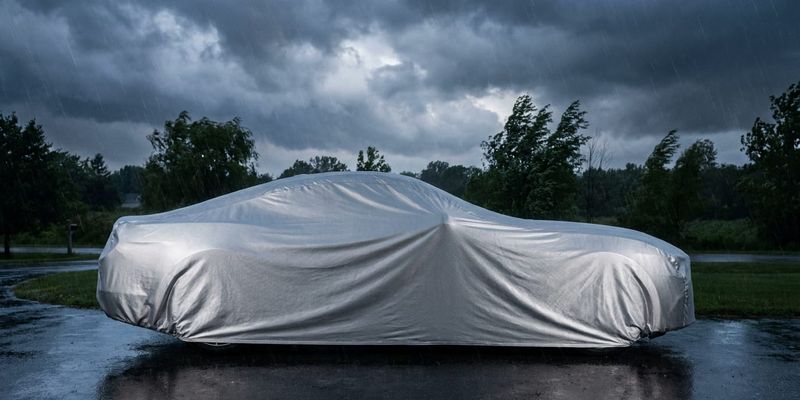
Non-breathable or cheaply made covers make this worse because they trap humidity with nowhere for it to escape. Breathable fabrics cut the risk, but they don't eliminate it if the cover sits untouched for weeks. Breathability slows the problem down. It doesn't solve it. If you're weighing material options, waterproof car covers versus breathable fabric is a real tradeoff worth understanding before you buy, and if your car lives outside, the guide to using a car cover outdoors gets specific about managing moisture, wind, and UV together.
Will Leaving a Cover On Too Long Scratch the Paint?
This one surprises people. A cover is supposed to protect paint, not scratch it, right? But dust, sand, and pollen work their way onto the fabric and under its edges constantly. Every gust of wind, every time the cover shifts against the body, that grit grinds against the clear coat like fine sandpaper.
It's slow. You won't see it happening. What you will see, eventually, are swirl marks and fine scratches across panels, the kind that show up under direct sun and make you wonder when they got there. The answer is: over the weeks the cover sat there untouched.
Rain makes it worse, oddly enough. A cover that goes through several rain-and-dry cycles without a wash collects dried dirt in its fibers, and that dried grit becomes the sandpaper for the next contact point. If pets or wildlife are part of your situation, protecting against cat and animal scratches covers a related angle: claws and paws do their own kind of damage under a cover that never gets checked.
Does a Car Cover Wear Out Faster If It's Never Removed?
A cover left on indefinitely ages faster than one that gets used normally, on and off, washed occasionally. Constant UV exposure breaks down fabric fibers. Wind flapping and friction against the same panel edges, over and over, wear through spots that a rotated or repositioned cover wouldn't hit as hard.
Straps and grommets take the worst of it. Cinched tight for months without adjustment, they stretch, fray, and eventually loosen, which means the cover shifts more, which means more chafing against the paint. It's a cycle that feeds itself.
Here's the part that's easy to miss: a degraded cover stops protecting the car well before it looks obviously worn out. The stitching might look fine. The fabric might still be mostly intact. But if it's lost its tension or its water resistance, the vehicle underneath is losing protection gradually, with no obvious warning sign. If you're relying on a lifetime warranty on your car cover, proper use matters here too. Wear from neglect isn't the same as a manufacturing defect, so keeping the cover maintained protects both the car and your claim. Getting the strap tension right in the first place also helps, and the guide to installing a car cover walks through fitting it so it isn't flapping loose in the wind to begin with.
Can Pests or Debris Build Up Under a Car Cover Left On Too Long?
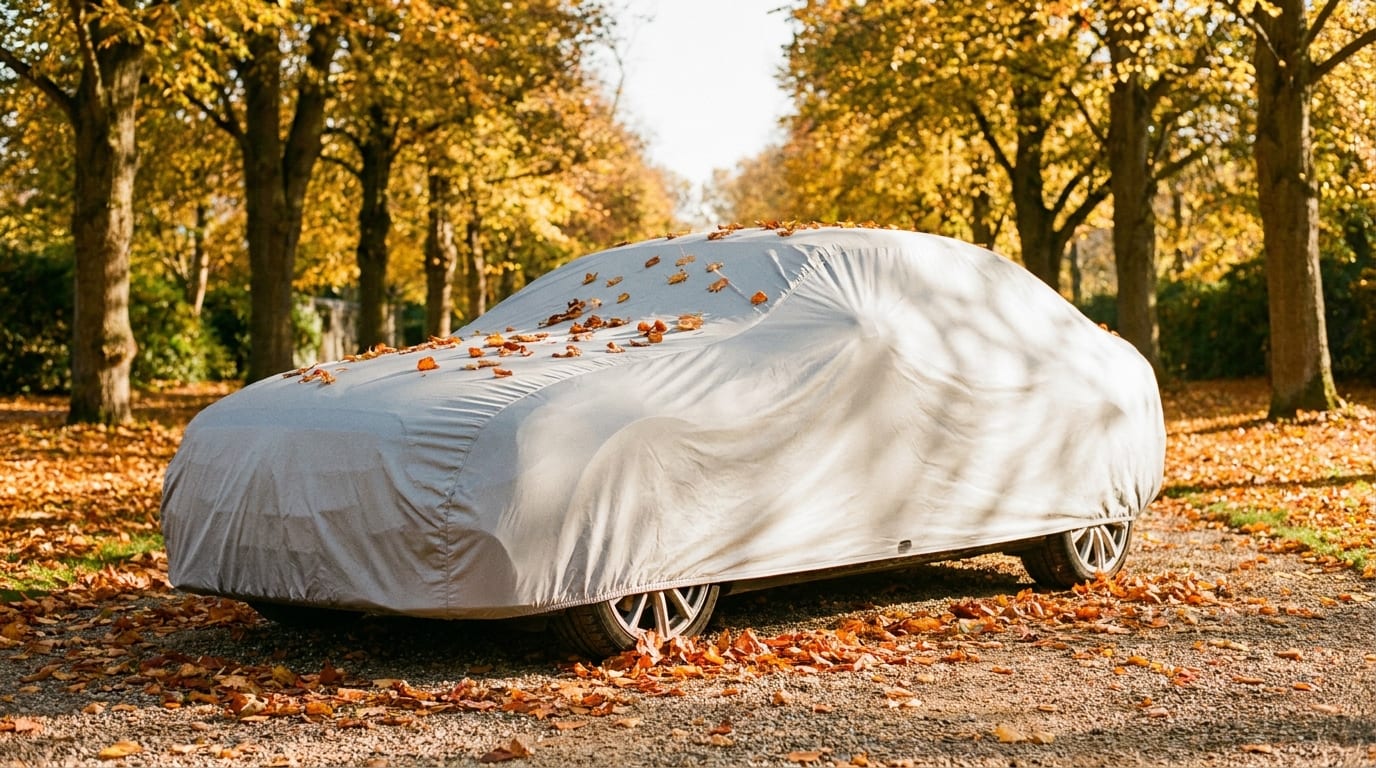
Leaves, twigs, and tree sap pile up on a cover that never gets shaken out. That debris adds weight, holds moisture against the fabric, and basically guarantees a damp spot that sits there for as long as the cover stays on.
Then there's the part nobody wants to think about: the gap between tires and cover, or the space underneath the vehicle, is exactly the kind of undisturbed, sheltered spot small animals and insects look for. Mice, in particular, love a car that doesn't move and a cover that doesn't lift. Give them a few undisturbed weeks and you've got a nesting problem, not just a dirty cover.
The fix is almost embarrassingly simple: lift the cover periodically, shake off the debris, glance underneath. Catching a nest early is a five-minute annoyance. Catching it late means chewed wiring and a much bigger repair. For the cleaning side of this, how to clean a car cover step by step covers how to clear debris and wash the fabric properly.
How Do You Fix Damage From a Car Cover Left On Too Long?
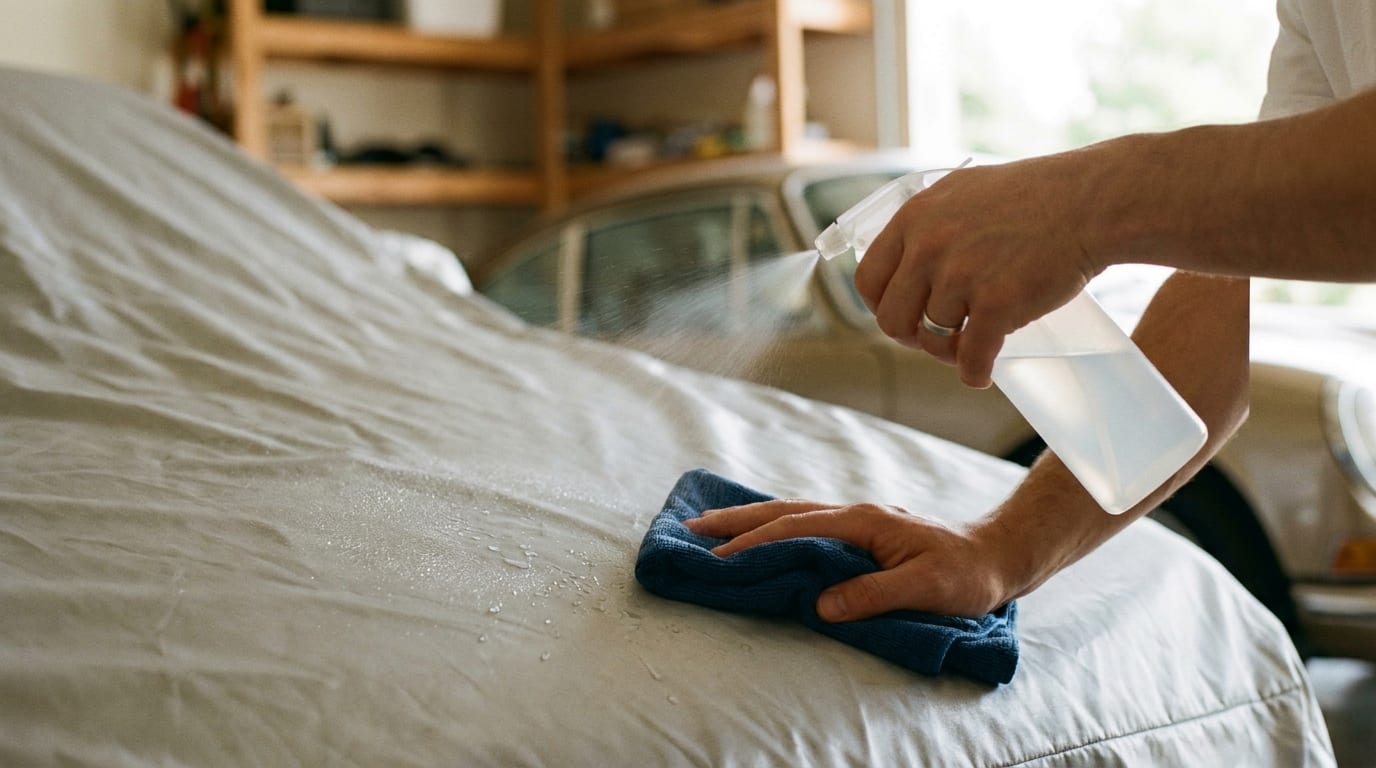
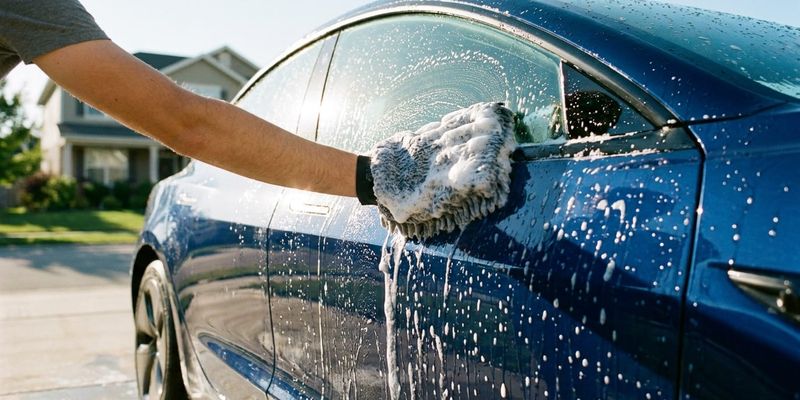
If you've already found water spots, scratches, or a musty cover, here's the order of operations. Pull the cover off completely. Inspect the paint in good light, looking for water spotting, swirl marks, or anything that feels rough under your hand. Hand-wash the affected panels, and clay-bar them if the contamination is bonded to the surface, before the cover goes anywhere near the car again.
Don't skip the drying step. Washing the car and then throwing a damp cover back on just restarts the moisture problem you were trying to fix. Wash the cover too, let both it and the vehicle dry completely, and only then reinstall.
Going forward, set a cadence and stick to it: outdoor storage calls for removal every few days, weekly at the absolute minimum. Indoor storage buys you more slack, but it's not a never-check situation either. And if the cover itself is damaged, frayed straps, torn seams, a loose fit that no longer seals against wind, replace it. A cover that isn't sealing properly isn't protecting anything; it's just fabric on top of the car. For the full maintenance routine, see cover care and cleaning, and for paint correction beyond what a wash handles, car care covers the broader picture.
How Often Should You Remove a Car Cover?
Short answer: outdoor covers, every few days to a week. Indoor covers can go longer between removals, but a monthly check is still worth the five minutes it takes.
Climate changes the math. Humid or coastal environments grow mold faster, so those covers need more frequent airing out than a cover sitting in a dry garage in Arizona. There's no universal countdown clock here. "Too long" isn't a fixed number of days, it's whatever interval lets moisture, dirt, or pests start accumulating without you noticing.
If you're deciding between storage setups, indoor car covers and outdoor car covers are built for genuinely different conditions, and picking the right one for where your car actually lives makes this whole removal question easier to manage. Browsing the full range at car covers is a reasonable starting point if you're not sure which category fits your situation.
Keep Your Cover Doing Its Job
A car cover only protects the car when it's part of a routine. Set it and forget it, and you've basically built a sealed environment for moisture, dirt, and whatever crawls in looking for shelter. Used well, with regular removal and a quick inspection, the same cover does exactly what it's supposed to.
Pair a quality cover with that habit and you'll get years out of it. Skip the habit, and even the best cover on the market will let you down eventually. If you found this useful, stick around the blog for more straightforward car care guides, we post them regularly for exactly this kind of real-world ownership question.
Frequently asked questions
What happens if a car cover is left on too long without removal?
Moisture gets trapped underneath, leading to water spots, mildew, and surface rust. Dust and grit grind against the paint, causing swirl marks and fine scratches. The cover's own fabric, straps, and grommets wear out faster, and debris or pests can build up undisturbed between the tires and the cover.
Can a car cover cause mold or rust if left on too long?
Yes. Condensation forms under the cover and has nowhere to evaporate if it's never lifted, leading to musty smells, mildew spotting, and surface rust around exposed metal edges and wheel wells.